Primary Electrical Apparatus & MV/LV Switching Systems
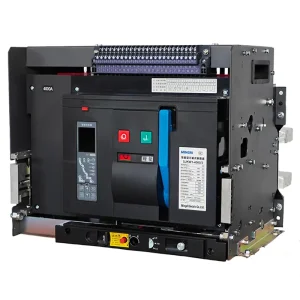
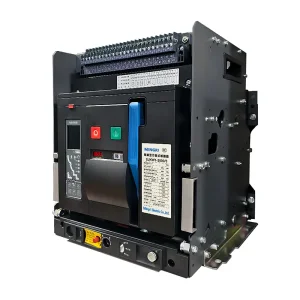
Engineered by Mingri Electric: Complete power distribution synergies coordinating directly with dry-type current limiting and filtering reactors.
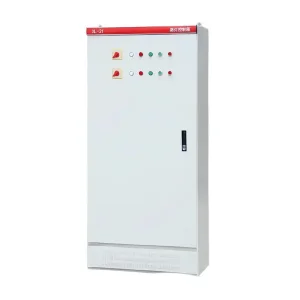
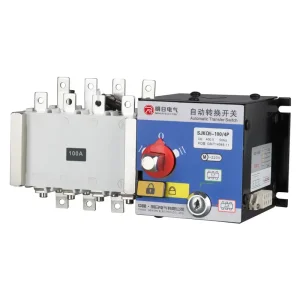
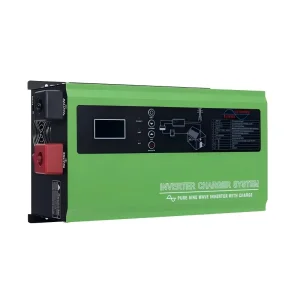
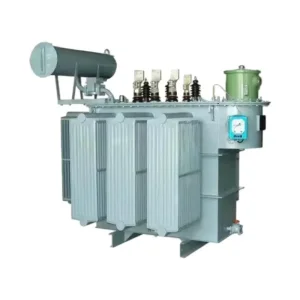
Next-Gen Dry Type Reactor Architecture for Global Power Grids
As modern power distribution confronts severe harmonic distortion from non-linear loads, high-frequency switching inverters, and massive short-circuit capacities from distributed generation, dry type reactors have evolved from standard reactive compensators into critical grid-stabilization components. Unlike oil-immersed counterparts, dry type reactors eliminate dielectric oil explosion hazards, reduce environmental containment civil costs, and deliver superior operational resilience in indoor substations, wind turbine nacelles, and compact urban underground networks.
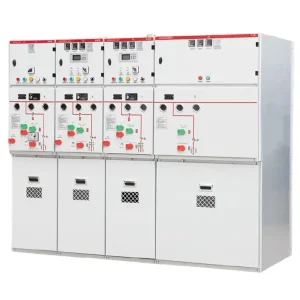
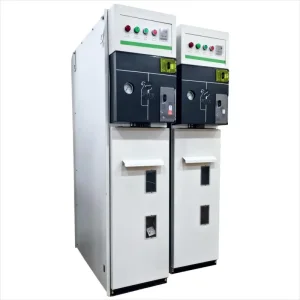
Mingri Electric pioneers advanced magnetic core and coil technologies, deploying dry-type series reactors, iron-core detuned filtering reactors, air-core current-limiting reactors, and smoothing reactors that align seamlessly with MV/LV switchgear architectures (such as SM6, RM6, KYN28-12, and prefabricated compact substations). Designed to withstand extreme electrodynamic stresses during short-circuit anomalies, each unit undergoes strict magnetic flux modeling to prevent saturation under transient surge conditions.
Critical Performance Metrics in Modern Procurement
- Linearity Under Overcurrent: Iron-core reactors maintain $L \ge 0.95 L_n$ at $1.8 \times I_n$ rated current to prevent harmonic resonance.
- Acoustic Decibel Suppression: Multi-gapped core architecture combined with high-modulus epoxy damping reduces operational noise below $55 \text{ dB(A)}$.
- Thermal Endurance: VPI (Vacuum Pressure Impregnation) or vacuum cast epoxy resin offering Class H ($180^\circ\text{C}$) thermal tolerance with UL94-V0 flame retardancy.
- Electrodynamic Withstand: Precision-wound transposed conductors resist radial and axial electromagnetic forces during symmetrical short-circuit bursts.
Engineering Classification of Dry Type Reactors
Selecting the precise magnetic and structural morphology based on physical footprint, electromagnetic field containment, and network frequency characteristics.
Dry-Type Air-Core Reactors
Characterized by complete magnetic linearity where inductance is entirely independent of current amplitude. Features no magnetic core, completely eliminating core saturation phenomena under severe fault currents.
- Encapsulated in high-strength fiberglass roving impregnated with epoxy resin.
- Naturally cooled (AN) with vertical cooling ducts for zero maintenance.
- Ideal for outdoor substations, current-limiting, and shunt compensation.
Dry-Type Iron-Core Reactors
Utilizes high-permeability cold-rolled grain-oriented (CRGO) silicon steel or amorphous alloy cores segmented with micro-air-gaps to maintain linear magnetic response while heavily constraining magnetic flux leakage.
- Extremely compact footprint—up to 65% smaller than equivalent air-core units.
- No magnetic clearance zone required; can be directly mounted inside switchgear.
- Ceramic spacer air-gaps bonded with elastic structural adhesives to eliminate hum.
Cast-Resin Detuned Filter Reactors
Specifically matched with power capacitor banks to avoid parallel resonance with grid source inductance while filtering out 5th, 7th, 11th, and 13th harmonic currents per IEEE 519 compliance standards.
- Available in standard detuning factors: $p = 5.67\%$, $7\%$, and $14\%$.
- Equipped with internal PTC / PT100 temperature sensors directly in center coils.
- High impulse withstand voltage (BIL) tested up to $95\text{ kV}$ / $125\text{ kV}$.
Global EPC & Industrial Sourcing Requirements
Procurement directors and lead electrical engineers evaluate dry-type reactor manufacturers on stringent technical vectors beyond baseline unit costs.
Harmonic THD & Resonant Safety
Global grid operators enforce Total Harmonic Distortion thresholds ($THD_i < 5\%$). Procurement requires validated frequency response curves confirming that reactor inductance does not shift under temperature excursions.
Short-Circuit Withstand Capability
Reactors placed on substation busbars or outgoing feeders must withstand thermal dynamic forces during three-phase symmetrical faults without inter-turn insulation puncturing or permanent deformation.
Total Cost of Ownership (TCO)
Continuous operational losses ($I^2R$ + eddy current losses + stray flux core losses) represent 70–80% of life-cycle expenditures. High-grade oxygen-free copper and step-lap core stacking optimize operating efficiency.
Compact Substation Modular Fit
In packaged substations (such as YB series) and medium-voltage switchgear (KYN28-12 / SafeRing), dimensions, weight distribution, and zero magnetic interference with protection relays are essential procurement mandates.
Engineered Solutions Across Critical Power Sectors
Addressing extreme inductive demands in renewables, mission-critical hyperscale data centers, and heavy electrified manufacturing.
Solar PV & BESS Step-Up Substations
Utility-scale central inverter stations experience acute harmonic amplification due to long MV collector cable capacitance. Dry-type iron-core damping reactors installed with pad-mounted step-up transformers (ZGS11-Z.T series) eliminate LC resonant spikes and ensure compliance with regional grid interconnection codes.
Hyperscale Data Center Power Quality
Modern AI computing facilities house thousands of switched-mode power supplies (SMPS) generating massive 3rd, 5th, and 9th zero-sequence and triplen harmonics. Cast resin 14% detuned filter reactors coupled with low-voltage switchboards (MNS / GCS) safeguard sensitive IT busways and UPS systems from voltage notch distortions.
Electric Arc Furnaces & VFD Heavy Industry
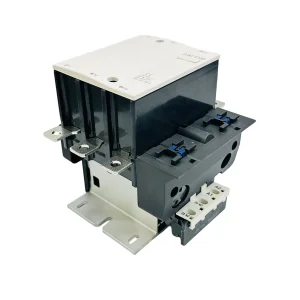
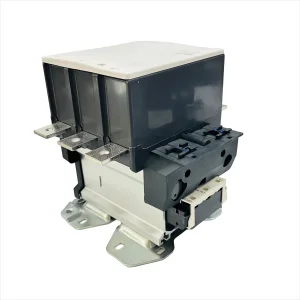
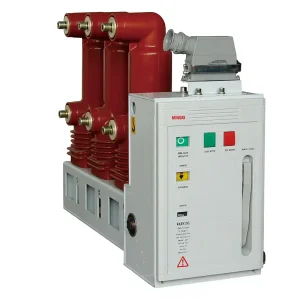
Electrified metal processing produces violent cyclic current surges, voltage flicker, and severe power factor degradation. Series current-limiting dry reactors dampen instantaneous dI/dt short-circuit surges, protecting primary VSB-12 high-voltage vacuum circuit breakers and extending contactor lifecycles.
Dry Type Reactor Engineering Specifications
Standardized technical parameters for utility, commercial, and industrial electrical balance of plant (eBoP) integration.
| Functional Category | System Voltage Class | Rated Reactance ($X_L$) | Linearity / Saturation Curve | Insulation Class & Temp Rise | Acoustic Noise (1m) |
|---|---|---|---|---|---|
| Detuned Filter Reactor | 0.4 kV – 0.69 kV (LV) | $p = 5.67\%, 7\%, 14\%$ | $I_{lin} \ge 1.75 \times I_n$ ($L \ge 0.95 L_n$) | Class H ($180^\circ\text{C}$), $\Delta T \le 100\text{K}$ | $\le 52 \text{ dB(A)}$ |
| MV Harmonic Filter Reactor | 6 kV, 10 kV, 12 kV, 35 kV | $4.5\% - 12\%$ Custom | $I_{lin} \ge 2.0 \times I_n$ ($L \ge 0.90 L_n$) | Class F ($155^\circ\text{C}$) Cast Resin | $\le 58 \text{ dB(A)}$ |
| Series Current-Limiting | 12 kV, 24 kV, 40.5 kV | $3\% - 8\%$ Busbar Limiting | Linear up to short-circuit rating ($25\times I_n$) | Class F Epoxy Impregnated Fiberglass | $\le 62 \text{ dB(A)}$ |
| Neutral Grounding Reactor | 10 kV – 35 kV Distribution | Custom Neutral Impedance | Complete air-core linearity to $I_{fault}$ | Class H Nomex® / Vacuum Cast Resin | $\le 50 \text{ dB(A)}$ (Standby) |
| Inverter dV/dt & Sine-Wave | 0.4 kV – 3.3 kV Drive | $1.5\% - 4.5\%$ Drive Output | $I_{lin} \ge 1.60 \times I_n$ at high carrier kHz | Class H High-Frequency Silicon Steel | $\le 54 \text{ dB(A)}$ |
Type Testing Verification & Compliance Assurance
Sourcing dry-type reactors requires strict adherence to international electrical safety covenants. Mingri Electric operates dedicated testing bays where every manufactured batch undergoes Routine, Type, and Special testing protocols certified in line with IEC 60076-6, IEEE C57.16, and GB/T 1094.6.
Our quality management frameworks operate under audited ISO 9001:2015, ISO 14001:2015, and ISO 45001:2018 credentials. Overseas buyers, EPC procurement engineers, and utility delegations are supported with comprehensive test documentation dossiers prior to dispatch.
Mandatory Factory Acceptance Test (FAT) Regimen
- Inductance Tolerance Measurement: Verification within $\pm 3\%$ of nominal engineering design using high-precision digital LCR bridge analyzers.
- Loss Measurement & Q-Factor: Separation of DC winding resistance loss and high-frequency eddy/stray losses at rated operating frequencies.
- Insulation & Partial Discharge: Applied power frequency AC voltage withstand test and induced overvoltage test with partial discharge verified below $10\text{ pC}$.
- Temperature Rise Simulation: Verified under continuous rated thermal current plus harmonic spectrum injection using calorimetric measurement.
Technology Roadmap: Dry Type Reactors 2025–2035
Anticipating the demands of smart digitalized grids, high-frequency solid-state topologies, and ultra-low carbon manufacturing.
Fiber-Optic Distributed Sensing
Embedding distributed fiber Bragg grating (FBG) optical sensors directly inside inner conductor layers and resin matrices enables real-time 3D thermal profiling and hot-spot detection, transmitting critical telemetry to central substation SCADA protocols.
Bio-Resin & Circular Core Materials
Replacing standard petroleum-derived epoxy with high-performance bio-based plant resins engineered for zero halogen degassing during arc flash exposure. Transitioning cores to high-silicon, ultra-thin amorphous ribbons cuts core hysteresis losses by more than 35%.
Solid-State Hybrid Current-Limiting
Synergizing fast-acting silicon-carbide (SiC) solid-state switches with dry-type air-core reactors creates ultrafast fault current limiters (FCLs) capable of sub-cycle current clipping (< 2 ms), drastically reducing mechanical stress on downstream switchgear.
Frequently Asked Questions (FAQ)
Technical guidance for EPC project directors, utility plant managers, and electrical system designers.
Medium & Low Voltage Distribution Control Apparatus
Comprehensive components providing secondary control, isolation, and intelligent switching to complete your power substation ecosystem.