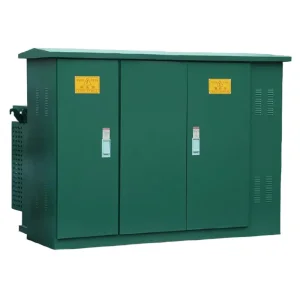
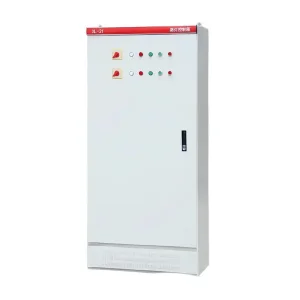
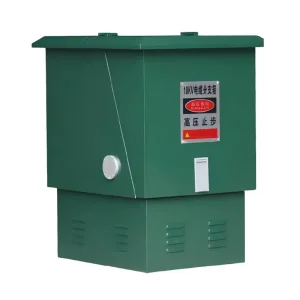
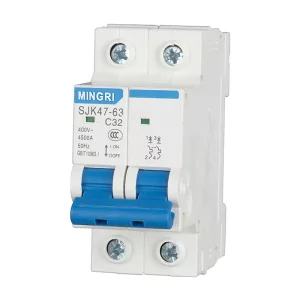
Engineered Medium & Low Voltage Distribution Solutions
Explore high-performance gas-insulated switchgear, arc suppression cabinets, transformers, and electrical controls produced under ISO 9001 and IEC manufacturing criteria.
The Engineering Evolution: Microcomputer Non-Contact Voltage Stabilization
Analyzing the architectural leap from mechanical motorized carbon-brush regulators (SVC/SBW) to high-speed SCR electronic tap-changing in modern industrial grids.
Sub-Cycle Response Velocity
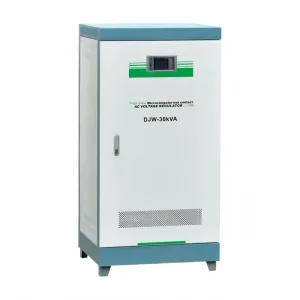
Traditional motor-driven servo regulators take between 1,000 ms to 3,500 ms to mechanical readjust carbon brushes under severe voltage sags. DJW series microcomputer regulators operate with DSP-driven thyristor (SCR) matrixes switching at instantaneous zero-crossing points, achieving total compensation response times strictly within ≤ 20 milliseconds.
Zero Contact Wear & Zero Arcing
By eliminating mechanical gearboxes, drive chains, and sacrificial carbon brushes, DJW non-contact units completely eradicate spark discharge, contact oxidation, and regular mechanical maintenance cycles. The completely solid-state power electronic switching architecture guarantees an MTBF (Mean Time Between Failures) exceeding 100,000 operational hours.
Pure Sine Wave Integrity
Unlike phase-controlled triac dimmers that cause acute harmonic pollution, DJW microcomputer non-contact regulators utilize discreet tap-winding electronic addition/subtraction. This preserves the primary utility waveform integrity, yielding a waveform distortion factor (added THD) of ≤ 1.0%, strictly meeting IEEE 519 and IEC 61000-3 harmonic restrictions.
Technical Specification & Architecture Benchmark
A rigorous comparative analysis of voltage regulation topologies utilized across heavy commercial, healthcare, and automated manufacturing installations.
| Performance / Feature Parameter | DJW Series (Solid-State Non-Contact) | SBW / SVC Series (Motorized Servo Brush) | Magnetic Saturation (Ferroresonant) |
|---|---|---|---|
| Operating Topology | DSP Microcomputer + SCR Zero-Crossing Tap | Servo Motor + Planetary Gear + Carbon Brush | Saturated Iron Core Reactor + Resonant Tank |
| Response Time | < 20 ms (Instantaneous Sub-Cycle) | 1,500 ms – 3,500 ms (Mechanical delay) | 30 ms – 50 ms |
| Stabilization Accuracy | ±1.0% to ±2.5% (Configurable) | ±2.0% to ±5.0% | ±3.0% to ±5.0% |
| Wear & Maintenance | Zero mechanical wear; zero consumable parts | Carbon brushes require inspection every 3-6 mos | Static architecture, no mechanical wear |
| Waveform Distortion (Added THD) | ≤ 1.0% (Clean sinusoidal retention) | ≤ 1.5% | ≥ 3.0% – 6.0% (Severe third harmonics) |
| Audible Acoustic Noise | ≤ 45 dB(A) at 1 meter | 55 – 65 dB(A) during motor adjustments | ≥ 65 – 75 dB(A) (Heavy continuous humming) |
| Overload Tolerance | 200% for 10 sec, 150% for 60 sec | 150% for 10 sec | 120% current limiting threshold |
| Bypass Mechanism | Independent Static SCR + Mechanical Dual Bypass | Manual knife switch bypass cabinet | External bypass switchboard required |
The Yueqing Electrical Cluster: Industrial Advantage & Factory Integration
How concentrated vertical integration in Yueqing, Zhejiang delivers unmatched component traceability, cost efficiency, and lead-time stability for global utility and industrial buyers.
Tier-1 Material Integration
Yueqing’s industrial cluster grants instant access to Cold-Rolled Grain-Oriented (CRGO) silicon steel sheet producers (such as Baosteel grade B30P105) and Class H 180°C/200°C OFHC pure copper wire winders. This proximate raw material supply eliminates inter-provincial shipping lag, lowers material overhead by 12-18%, and ensures tight dimensional control over core laminations to minimize no-load excitation losses.
Stringent Semiconductor Qualification
Modern DJW and SJW units rely on multi-channel high-amperage Thyristor (SCR) modules. Mingri Electric utilizes automated dynamic curve tracers, thermographic stress test bays, and isolated gate bipolar testing benches to grade switching pairs for reverse blocking voltage (≥1600V), thermal dissipation limits, and dv/dt transient thresholds before cabinet assembly.
End-to-End In-House Fabrication
From sheet metal CNC laser shearing, electrostatic epoxy powder coating, and busbar automated bending to digital logic SMD surface-mounting, manufacturing stages are executed within unified facility grounds. This vertical density allows custom voltage range engineering (e.g., ±30% to ±50% input swings) to move from CAD draft to production line within 7 business days.
Global Enterprise Sourcing Criteria & International Standards
A systematic technical evaluation framework for electrical EPCs, project directors, and substation consulting engineers vetting DJW series voltage regulator factories.
International Standard Adherence
DJW and SJW units must comply with IEC 60146-1-1 (Semiconductor Converters), IEC 61000-4 series (Electromagnetic Compatibility & Surge Immunity), and European Low Voltage Directive (LVD) 2014/35/EU. Factory documentation must provide verified short-circuit withstand tests, dielectric withstand certification (≥ 2500V AC/1 min without flashover), and IP-rating enclosure validation.
Environmental & Thermal Derating
Overseas project procurement schedules must audit plant testing under extreme installation criteria. Standard models are engineered for -15°C to +45°C ambient temperatures and altitudes up to 1,000 meters. For high-altitude sites (e.g., mining in the Andes >3,000m) or high-ambient tropical zones, factory engineering custom-sizes thermal dissipation channels and busbar cross-sections according to IEC 60076-11 thermal dissipation curves.
Factory Acceptance Testing (FAT)
A credible DJW series manufacturer must accommodate comprehensive third-party or remote high-definition FAT protocols. Test regimens include: full-load continuous burn-in (minimum 48 hours), transient impulse voltage response logging, phase-by-phase independent unbalance stabilization verification, audible noise measurement, and emergency static electronic bypass transfer checks under 100% nominal load.
Mission-Critical Industrial & Infrastructure Applications
Where transient voltage instability causes catastrophic product loss, equipment downtime, or safety hazards, DJW series non-contact regulators deliver uncompromised precision.
Medical Diagnostic Imaging
CT scanners, digital MRI suites, and linear accelerators require stable power during sudden high-current pulsing. DJW units provide instantaneous voltage recovery within 20ms, preventing imaging artifact distortions and tube calibration collapses.
Precision CNC & Semiconductor
High-precision 5-axis machining centers, laser cutters, and lithography toolsets suffer tool breakage and microscopic pitch errors when feeder voltages dip. Non-contact microcomputer stabilization eliminates tool chatter and drive tripping.
5G Telecom Base Stations
Remote wireless communication towers frequently connect to vulnerable rural feeders exposed to lightning and massive peak-hour drop-offs. Solid-state DJW units maintain constant 220V/230V feed without carbon brush maintenance in remote terrains.
PV & Battery Energy Storage (BESS)
Microgrids experiencing fluctuating solar irradiance and intermittent inverter switching rely on fast-acting SJW/DJW systems to stabilize islanded busbar voltages before distributing clean AC power to sensitive facility sub-panels.
Emerging Trends Shaping the Voltage Regulation Industry
Anticipating the convergence of wide-bandgap semiconductors, IoT telemetry, and decentralized microgrid integration across next-generation stabilization systems.
Edge IoT & Cloud SCADA Integration
Future DJW series architectures natively integrate dual Modbus-RTU over RS485 and direct Ethernet/MQTT interfaces. Internal microcomputers stream real-time three-phase voltage vectors, load current harmonics, internal SCR junction temperatures, and total tap actuation counts to central facility BMS or cloud-based predictive maintenance dashboards.
Wide-Bandgap (SiC) Power Topologies
While silicon thyristors remain the gold standard for heavy utility surges, R&D is rapidly integrating Silicon Carbide (SiC) MOSFET matrixes into low-power high-precision voltage conditioners. SiC delivers higher switching frequencies and nearly zero conduction losses, pushing overall operating efficiency to an extraordinary 99.2%.
Bi-Directional Grid Harmonization
With rooftop solar installations feeding excess energy back into primary distribution substations, bidirectional power flow often creates localized overvoltage conditions. Smart DJW/SJW systems now feature four-quadrant phase angle detection, automatically preventing over-voltage back-feed from tripping inverter safety locks.
Engineering & Procurement Knowledge Base (FAQ)
Authoritative technical answers to common questions raised by electrical consultants, procurement heads, and EPC project managers.
Prefabricated Substations, Breakers & Voltage Stabilization Systems
Explore Mingri Electric's integrated line of secondary substations, vacuum circuit breakers, and intelligent DJW non-contact power regulators.