High-Quality 9-400A Contactors Companies & Company
Precision Engineering, Global Supply Resilience & Next-Generation Motor Switching Architectures Under IEC/EN 60947-4-1
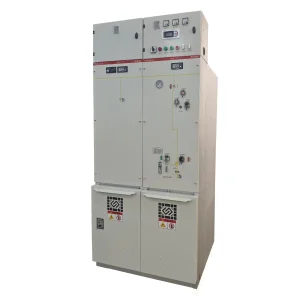
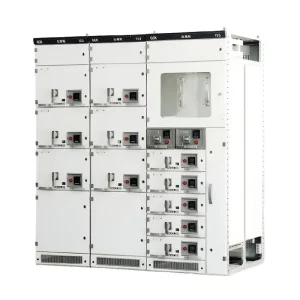
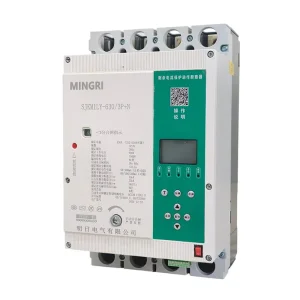
Primary Industrial Power Switching & Distribution Equipment
Explore heavy-duty contactors, vacuum circuit interrupters, gas-insulated modules, and smart protection devices engineered for mission-critical power networks.
Global Industrial Landscape of 9A to 400A Contactors
Analyzing the pivotal evolution of low-voltage electromechanical switching across electrified infrastructure, automation plants, and renewable energy grids.
Across modern industrial landscapes, low-voltage AC contactors rated between 9A and 400A serve as the critical bridge connecting control intelligence with physical motive force. From small distribution feeder control panels to high-capacity Motor Control Centers (MCCs), contactors within this operational envelope are subjected to rigorous electrical transients, severe mechanical stresses, and relentless switching cadences. The rapid shift toward industrial decarbonization, factory automation (Industry 4.0), and the integration of decentralized distributed energy resources (DERs) has drastically reshaped the performance expectations of standard AC-3 and AC-4 switching devices.
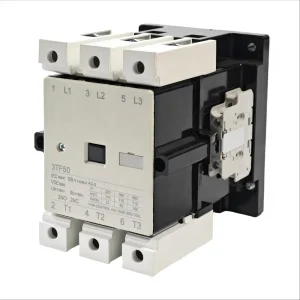
Historically governed by simple electromagnetic architectures, contemporary 9-400A contactors—epitomized by legacy and modernized series such as CJX1, 3TF, CJX2, and related modular standards—must now endure hostile harmonics, voltage fluctuations from Variable Frequency Drive (VFD) bypass networks, and elevated ambient thermal envelopes inside tightly packed electrical enclosures. Engineering procurement teams at major EPCs, switchboard panel-builders, and industrial plants no longer view contactors merely as commodity hardware. Instead, they scrutinize contact wear resistance, coil energy consumption, anti-welding contact chemistry, and dielectric recovery rates as high-impact determinants of system uptime and lifecycle operating costs.
In mature manufacturing territories such as North America and Western Europe, aging power infrastructures and surging industrial revamps have catalyzed a replacement cycle favoring high-endurance contactors with compact footprints and low coil pull-in/hold power. Concurrently, developing regions across Southeast Asia, Latin America, and the Middle East are experiencing rapid industrialization, demanding massive unit volumes of cost-effective, robust, and universally serviceable contactors capable of handling challenging grid conditions. This bifurcated global demand places stringent demands on contactor manufacturers to combine precision metallurgy, modular auxiliary options, and uncompromising thermal resilience with high manufacturing efficiency.
Engineering Principles & Material Science: 9A to 400A Range
A rigorous examination of magnetic circuits, arc splitters, contact tip metallurgy, and duty category categorizations under IEC/EN 60947-4-1.
Advanced Contact Tip Metallurgy
For contactors spanning 9A to 400A, contact material selection governs electrical lifespan. Lower ratings (9A-32A) typically leverage Silver-Nickel (AgNi) for fine electrical conductivity and ductility, whereas larger ratings (40A-400A) deploy Silver-Tin-Oxide (AgSnO2) or Silver-Cadmium-Oxide (AgCdO) composites. AgSnO2 provides exceptional resistance against material transfer, thermal contact welding, and severe erosion during high-break inrush currents typical of inductive cage rotor starts.
Deion Arc Chute Dynamics
Interrupting inductive loads generates instantaneous plasma arcs exceeding 4000K. In premium 9-400A designs, magnetic blowout fields force the electric arc into an arc quenching chamber equipped with ferromagnetic deion splitter plates. These plates segment the monolithic arc into a series of smaller arcs, rapidly cooling the plasma column, increasing arc voltage above system voltage, and forcing extinction at the first AC zero-crossing without dielectric restrike.
Optimized Core & Shading Rings
Electromagnetic drive assemblies utilize grain-oriented silicon steel laminations to mitigate eddy current losses and hysteretic heating. To counter the inherent 100/120 Hz mechanical vibration and acoustic hum during AC coil excitation, copper or brass shading rings are precisely embedded into the pole faces. In electronic coil configurations, micro-controllers drive pulse-width modulated (PWM) holding currents, slashing holding VA by up to 80%.
| Current Tier (AC-3, 380/400V) | Typical Motor Power Rating | Magnetic System Type | Contact Tip Alloy System | Primary Industrial Sector |
|---|---|---|---|---|
| 9A – 32A | 4.0 kW – 15 kW | Conventional AC / DC Plunger Core | AgNi (Fine grain) / AgSnO2 | HVAC Fans, Conveyors, Packaging Machinery |
| 40A – 95A | 18.5 kW – 45 kW | Laminated E-Core with Shading Ring | AgSnO2 (Anti-weld sintered) | Centrifugal Pumps, Industrial Compressors, Lifts |
| 110A – 205A | 55 kW – 110 kW | Reinforced Solenoid with Mechanical Latch | AgCdO / AgSnO2 In2O3 High-Density | Mining Crushers, Extruders, Main MCC Feeders |
| 250A – 400A | 132 kW – 220 kW | Dual-Coil Electronic or Magnetic Holding | AgSnO2 refractory alloy with arc runners | Chillers, Marine Propulsion Auxiliary, Heavy Cement |
Chinese Manufacturing Efficiency & Yueqing Industrial Clustering
Unpacking the engineering economics, high-precision automation, and vertical integration behind world-class Chinese contactor fabrication.
The global dominance of Chinese electrical equipment manufacturers across the 9-400A contactor spectrum is anchored in specialized geographical clustering, most prominently exemplified by the Yueqing industrial hub in Zhejiang Province. Often recognized as China's electrical capital, Yueqing has evolved from raw assembly factories into an integrated ecosystem characterized by ultra-dense vertical supply networks, robotic stamping, automated copper winding, and tier-one testing facilities.
100% Localized Bill of Materials
Within a 15-kilometer radius in Yueqing, contactor production facilities source thermoset/thermoplastic housings (PA66 with 30% glass fiber reinforcement), high-permeability silicon iron cores, stamping springs, silver tips, and enameled copper wire. This proximity eliminates logistics bottlenecks, shortens production lead times, and supports rapid response to custom coil voltage requests.
Fully Automated Coil Winding
Modern Chinese contactor factories deploy multi-axis CNC winding arrays that feed, tension, wind, insulate, and solder electromagnetic coils with sub-millimeter precision. Automated winding ensures tight winding resistance tolerances, identical thermal dissipation curves, and zero winding shorts across mass batches running hundreds of thousands of units monthly.
In-line Vision & Dynamic Testing
Quality assurance is embedded directly into assembly lines. High-speed optical CCD cameras inspect silver-point alignment, spring retention, and air-gap clearances before passing contactors to automated robotic test benches. Every single unit undergoes dielectric insulation verification, pickup/dropout voltage testing (85%-110% Us), and mechanical stroke measurement.
Global Certification Rigor
Chinese manufacturers operating in the top tier adhere strictly to ISO 9001, ISO 14001, and ISO 45001 frameworks. Flagship products, including the CJX1 (3TF) series, bear CE marks, CCC certificates, and CB scheme test reports from independent third-party laboratories (such as KEMA, DEKRA, and TÜV), demonstrating compliance with IEC 60947-4-1 and UL 508 standards.
Localized Engineering Use Cases & Field Operation Challenges
Real-world integration analysis across heavy industrial drives, commercial HVAC systems, utility solar, and automated infrastructure.
Commercial HVAC Chillers & Compressors
Scroll and screw compressors demand reliable switching under AC-4 (plugging and inching) and AC-8a duty cycles. Contactors in the 65A-250A range must withstand initial locked rotor currents (LRA) reaching 6x to 8x rated full load current (FLA). CJX1/3TF contactors designed with robust arc barriers prevent phase-to-phase flashovers under high ambient roof temperatures exceeding 55°C.
Photovoltaic & BESS AC Combiners
Utility-scale central inverters and battery energy storage skid systems utilize 200A to 400A contactors on the low-voltage AC interface (400V/690V/800V AC). Operating in remote solar farms exposes contactors to dust, thermal cycling, and high DC ripple. Silver-tin-oxide contacts prevent thermal runaway during sustained nominal current conduction in non-ventilated outdoor enclosures.
Heavy Materials Handling & Mining
Overhead bridge cranes, hoists, and ball mill conveyors impose repetitive reversing and jogging cycles on 40A to 170A contactors. Mechanically interlocked dual-contactor configurations prevent simultaneous engagement. Reinforced mechanical linkages ensure mechanical lifespans surpassing 10 million cycles under persistent mechanical vibration.
Industry Evolution: Smart Telemetry, Wide-Band Coils & Eco-Materials
Anticipating the technological disruptions and material regulations shaping next-generation contactor design through 2035.
The standard electromechanical contactor is rapidly transforming into an intelligent edge sensor within industrial IoT ecosystems. While fundamental mechanical contact operation remains the most reliable method for galvanic isolation and heavy inductive switching, digital advancements and environmental mandates are compelling major manufacturers to overhaul core sub-assemblies.
Wide-Band Universal Electronic Coils
Traditional contactors required specific coil SKUs for 24V, 110V, 220V, and 380V at 50Hz or 60Hz. Modern electronic coil architectures integrate wide-band inputs (e.g., 100V-250V AC/DC in a single unit). These intelligent coils utilize on-board microprocessors to adjust excitation current dynamically—delivering high inrush energy for rapid magnetic closure, then instantly dialing back to a minimal holding current that slashes thermal cabinet load.
Predictive Wear & IoT Telemetry
Higher amperage contactors (160A-400A) increasingly support integrated or snap-on sensing modules. By continuously tracking mechanical travel velocity, coil current waveforms, contact bounce durations, and contact tip temperature via embedded thermistors, smart contactors can calculate remaining electrical lifespan. Maintenance engineers receive predictive alerts via Modbus/Ethernet-IP prior to catastrophic contact welding.
RoHS/REACH-Compliant Green Metallurgy
Under tightening global chemical directives (EU RoHS, REACH), the historic reliance on Cadmium in Silver-Cadmium-Oxide (AgCdO) is being phased out. Chinese and international manufacturers have pioneered fine-particle AgSnO2, AgZnO, and tungsten-doped contact composites that meet and exceed AgCdO anti-welding properties without toxic heavy metal environmental risks.
Global Enterprise Sourcing Strategy: Evaluating 9-400A Manufacturers
A comprehensive assessment framework for chief procurement officers, panel builders, and international electrical distributors.
Evaluating and selecting a manufacturing partner for low-voltage contactors requires balancing initial unit purchase cost against operational reliability, compliance integrity, and total lifecycle costs. A low-cost contactor prone to contact erosion or coil burnout can trigger tens of thousands of dollars in unplanned industrial downtime.
1. Type-Test Report Verification
Procurement audits must demand complete, unabridged type-test certificates from accredited test authorities (ILAC-MRA member laboratories). Crucial sections include the verification of temperature-rise limits (IEC 60947-4-1 Table 7), making and breaking capacities corresponding to utilization categories AC-3 and AC-4, and rated conditional short-circuit current tests coordinated with specific fuses or MCCBs.
2. Supply Chain Traceability & Auditing
Verify whether the manufacturer controls key upstream processes or functions merely as a bolt-together assembler. Top-tier Chinese manufacturers maintain in-house tool and die workshops, mold injection presses, contact stamping lines, and dedicated cleanrooms for electronic board surface mounting. Raw material inspection logs for silver purity and copper wire insulation grades must be audited.
3. Modular Ecosystem & Accessories
A mature contactor platform features a unified, modular architecture. Assess the supplier’s peripheral ecosystem: instantaneous auxiliary contact blocks (top and side-mount), pneumatic and electronic time-delay relays, mechanical interlocks, surge suppression varistors (RC snubbers), and thermal overload relay coupling kits. Complete catalog availability simplifies inventory management for panel builders.
Frequently Asked Questions on 9-400A AC Contactors
Authoritative technical and procurement guidance addressing common operational dilemmas, standards compliance, and selection criteria.
Q: What is the practical difference between AC-3 and AC-4 duty ratings for a 9-400A contactor?
A: Under IEC 60947-4-1, AC-3 covers starting squirrel-cage motors and switching off during normal full-speed rotation (breaking current is 1x rated motor current FLA). AC-4 encompasses extreme starting conditions, including plugging, rapid reversing, and inching/jogging where the contactor breaks the locked rotor current (LRA), approximately 6x FLA. A contactor rated 100A for AC-3 might only be rated 35A-45A under AC-4 duty due to increased contact arc erosion.
Q: Why are electronic wide-band coils replacing traditional AC electromagnetic coils in large contactors (100A-400A)?
A: Conventional large AC coils require significant inrush VA (up to 600-1000 VA) and consume substantial holding power (30-60 VA), generating excessive cabinet heat. Wide-band electronic coils use controlled digital switching to draw high current only during the 20-30 millisecond closing stroke, dropping holding power to 2-5 W. They also withstand severe grid voltage dips without drop-out chatter, preventing contact welding.
Q: How does ambient temperature derating affect 9-400A contactors mounted in sealed switchboards?
A: Standard contactor ratings are calibrated for a 40°C ambient average (max 55°C per 24h). In sealed enclosures or tropical environments where internal temperatures exceed 60°C or 70°C, the thermal capacity of the main copper path and coil insulation decreases. Operating at 65°C requires derating continuous thermal current (Ith) by 10% to 20%, or sizing up to the next contactor frame size (e.g., specifying a 95A frame for an 80A application).
Q: What distinguishes CJX1 (3TF) series contactors from newer ultra-compact modular models?
A: The CJX1 (modeled on the legendary Siemens 3TF platform) features a heavier, robust cast-frame architecture with oversized arc chambers and massive silver-alloy mass. While newer modular contactors prioritize DIN-rail density, the CJX1 provides superior thermal mass, enhanced arc clearing in dirty or unstable industrial grids, and easily accessible, replaceable main contacts for field overhaul.
Q: What criteria determine whether to rebuild contact tips or replace the entire contactor unit?
A: For small contactors (9A to 38A), labor and component costs favor replacing the complete unit. For frame sizes from 110A to 400A, replacement contact kits (fixed and moving silver contacts, contact springs, and arc chamber liners) are economically viable. If the contact silver layer has eroded to less than 0.5mm, or severe body plastic tracking/discoloration has occurred, replacement is mandatory.
Q: How do Type 1 and Type 2 short-circuit coordination affect contactor selection?
A: IEC 60947-4-1 defines two levels of coordination with short-circuit protective devices (fuses or MCCBs). Under Type 1 coordination, the contactor must not cause danger to persons or installation in a fault, but is permitted to sustain damage and require replacement. Under Type 2 coordination, the contactor must suffer no damage or alteration of characteristics (only light contact tacking easily separated with a screwdriver is permitted), ensuring immediate return to service.
Integrated Medium & Low Voltage Power Distribution Infrastructure
Complementing 9-400A contactors with modular substations, vacuum switchgear, residual current breakers, and automatic voltage regulation systems.