Integrated Low & Medium Voltage Infrastructure
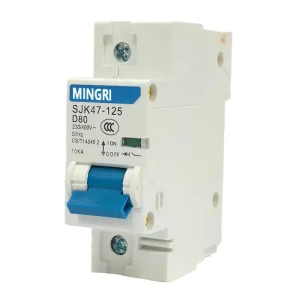
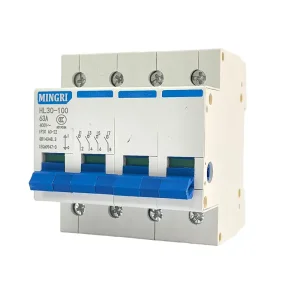
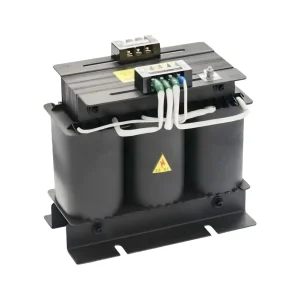
Engineered hardware complements thyristor motor starters across critical power networks, ensuring comprehensive downstream circuit isolation, line regulation, and distribution reliability.
Global Dynamics of Thyristor Soft Starter Implementations
Analyzing solid-state motor acceleration dynamics, grid stability parameters, and power electronic efficiencies across global heavy industrial automation landscapes.
The Shift from Electromechanical to Silicon-Controlled Starting
In modern industrial facilities, three-phase squirrel-cage induction motors constitute the primary mechanical driving force, accounting for over 65% of all industrial electricity consumption. Historically, starting these prime movers relied on Direct-On-Line (DOL) or electromechanical reduced-voltage starters such as Star-Delta (Wye-Delta) and auto-transformers.
Direct-On-Line starting induces massive inrush currents—frequently reaching 600% to 800% of the motor’s full-load current (FLC). This causes sharp line-voltage drops, thermal stresses on motor winding insulation, and destructive mechanical shocks through drive couplings, gearboxes, and impellers. While Variable Frequency Drives (VFDs) solve this, they introduce significant capital costs, cooling burdens, high THD (Total Harmonic Distortion), and continuous switching losses when continuous speed modulation is unnecessary.
Silicon Controlled Rectifier (SCR) Thyristor Soft Starters bridge this critical divide. By modulating the firing angle ($\alpha$) of anti-parallel thyristors on each phase, Chinese manufacturers provide precise voltage ramp-up control, limiting starting current strictly to between 150% and 400% of rated FLC, thereby protecting the electrical substation while guaranteeing mechanical equipment longevity.
Critical Electrical & Mechanical Stresses Mitigated
- Grid Sag Elimination: Stabilizes upstream busbars, preventing brownout dropouts of sensitive PLCs, DCS relays, and MCC infrastructure.
- Water Hammer Mitigation: Closed-loop torque deceleration prevents check valve slamming and pipeline bursting in high-head centrifugal pumping stations.
- Drive Train Decoupling: Eliminates high-frequency shear force spikes on conveyor chains, gear teeth, and flexible elastomer couplings.
- Thermal Dissipation Control: Decreases stator $I^2t$ heating during extended starting cycles, preserving Class F/H coil dielectric longevity.
Starting Methodology Comparative Evaluation
Evaluating electrical engineering performance vectors between Thyristor Soft Starters, Variable Frequency Drives, Star-Delta, and Direct-On-Line schemes.
| Evaluation Parameter | Thyristor Soft Starter (China OEM) | Variable Frequency Drive (VFD) | Star-Delta Starter (Y-Δ) | Direct-On-Line (DOL) |
|---|---|---|---|---|
| Typical Inrush Current | Controlled 1.5x–4.0x FLC | 1.0x–1.5x FLC (Zero Inrush) | 3.0x–4.5x FLC (Severe Current Spikes) | 6.0x–8.5x FLC (Maximum Thermal Surge) |
| Torque Transients | Smooth, stepless ramp, linear profile | Complete torque control from 0 Hz | Violent torque transient at transition | Abrupt instant locked-rotor torque |
| Capital Expenditure (CAPEX) | Low to Medium ($) | High ($$$$) | Low ($) | Extremely Low ($) |
| Full-Run Efficiency | >99.5% (With internal/external bypass) | 96.0%–97.5% (Continuous switching loss) | 99.2% (Electromechanical) | 99.5% (Uninterrupted) |
| Harmonic Generation (THD) | Negligible during steady run; minor at ramp | Requires active/passive line filters (IEEE 519) | Zero harmonic distortion | Zero harmonic distortion |
| Footprint & Cabinet Volume | Compact, modular DIN / chassis | Large, heavy cooling & chokes required | Moderate (3 Contactors + Overload) | Minimal (1 Contactor + Breaker) |
| Maintenance Burden | Virtually zero (Solid-state reliability) | Moderate (DC bus caps wear out ~7 yrs) | High (Mechanical contact arcing) | High (Frequent contact replacement) |
The Yueqing Electrical Cluster: Manufacturing Density & Vertical Integration
Why Tier-1 Chinese solid-state motor controller factories outpace international production schedules while maintaining stringent IEC/UL compliance.
Vertical Upstream Consolidation
Yueqing (Wenzhou) hosts the planet’s dense electrical manufacturing cluster. Silicon wafer slicing, thyristor chip encapsulation (puck/capsule and isolated module formats), high-purity aluminum extrusion heatsinks, and copper busbars are sourced within a 15-kilometer radius, collapsing component turnaround times from months to days.
High-Precision Automation
Modern Chinese thyristor soft starter factories utilize SMT lines with 3D AOI (Automated Optical Inspection) for DSP firing control boards, robotic selective soldering for high-current terminal lugs, and computer-controlled torque calibration for SCR clamping pressures to avoid micro-fracturing silicon substrates.
Rigorous Factory Acceptance Tests
Comprehensive FAT routines adhere stringently to IEC 60947-4-2 and GB/T 14048.6 standards. Units undergo elevated ambient heat-run tests, locked-rotor simulation current tests, lightning impulse withstand tests (up to 1.2/50µs wave profile), and high-voltage dielectric isolation integrity validation.
Engineering Architecture of Industrial Thyristor Stacks
A closer look inside the silicon gate drive electronics, snubber protection mechanisms, and modular bypass architectures engineered for heavy industrial deployment.
Anti-Parallel SCR Bridges
Each phase incorporates a back-to-back SCR configuration (6 thyristors for 3 phases). Firing angle control from 180° down to 0° provides progressive AC sine wave chopping, continuously managing the root-mean-square (RMS) voltage presented to stator windings.
RC Snubber & MOV Clamping
High inductive energy release from motors can generate destructive voltage rise rates ($dv/dt$) and reverse spikes. High-grade Metal Oxide Varistors (MOVs) and precision RC snubber networks clamp voltage spikes, safeguarding SCR junctions up to 1600V–6500V PIV ratings.
Integrated Vacuum Bypass
To eliminate continuous forward voltage drop heat losses ($~1.2\text{V} \times I_{\text{load}}$), Chinese systems incorporate intelligent bypass contactors (air break or vacuum bottles). Once synchronous speed is achieved, current transitions effortlessly from thyristors to mechanical bypass.
Inside-Delta Topology Mode
By wiring thyristor modules directly inside the delta loop of the motor stator windings rather than standard in-line supply feeders, the starter carries only 58% ($1/\sqrt{3}$) of motor line current, enabling substantial component downsizing and capex reduction.
Tailored Industrial Deployment Archetypes
Specific field configurations illustrating how Chinese thyristor soft starter manufacturing fulfills demanding operating profiles worldwide.
Municipal Water Treatment & Irrigation
Long fluid transmission conduits suffer devastating hydraulic surges (water hammer) when flow is suddenly halted. Our soft starters feature proprietary deceleration pump curves, steadily tapering flow velocity to stop check valves from slamming, preventing line fractures and joint separation.
Mining, Ball Mills & Conveyors
Mining operations require high starting breakaway torque under heavy particulate loads. Chinese soft starters deliver selectable Kick-Start torque pulses (up to 85% locked-rotor torque for 100–2000ms), dislodging settled ball mills without exceeding substation thermal breaker limits.
Centrifugal Chillers & Screw Compressors
Large-scale HVAC and petrochemical refrigeration units place severe restrictions on starting current to prevent flicker on municipal grids. Solid-state starters provide programmable current limit ramps (200%–350% FLC), guaranteeing zero disturbance to co-located process instrumentation.
Next-Generation Advancements in Solid-State Starter Tech
Anticipating the technological shift toward AI-driven thermal junction diagnostics, cloud-native telemetry, and wide-bandgap semiconductor topologies.
Real-Time Silicon Junction ($T_j$) Modeling
Next-gen Chinese DSP controllers execute dynamic thermal algorithmic models of the thyristor silicon junction in real time. Rather than relying solely on heatsink thermistors, starters estimate internal junction heat based on dynamic current waveforms, preventing gate puncture during rapid re-starts.
Industrial IoT & Predictive Asset Maintenance
Native integration of RS-485 Modbus, Profinet, and Ethernet/IP protocols allows remote soft starter switchgear to broadcast thousands of data points—including starting time trends, phase current imbalance, insulation resistance, and contactor cycle count—directly to plant edge-servers.
Eco-Friendly Hybrid Medium-Voltage Switchgear
Responding to global decarbonization mandates, manufacturers in Yueqing are transitioning MV solid-state starting switchgear away from SF6 gas insulation towards dry-air, solid-dielectric epoxy vacuum topologies with integrated vacuum contactors, eliminating greenhouse gas liabilities.
Engineering Procurement Specification Checklist
Ensure foolproof technical validation when tendering Thyristor Soft Starters from Chinese original equipment manufacturers.
Crucial Electrical Inquiries for RFPs
- Motor Rating & Duty Cycle: Explicitly state motor kW/HP, full-load amperage, starting Class (Class 10 standard, Class 20/30 heavy-duty for ball mills or crushers).
- Starts Per Hour Frequency: Specify consecutive starting limits required by plant operations, allowing suppliers to properly size thyristor heatsink thermal inertia.
- Bypass Architecture Preference: Clarify whether internal integrated bypass or external AC-3 rated magnetic contactor bypass is preferred for MCC panel layout.
- Environmental Derating: Report ambient installation temperatures (>40°C requires thermal derating) and operational altitude (>1000m requires dielectric and cooling derating).
Optimizing Total Cost of Ownership (TCO)
When sourcing industrial electrical hardware from Chinese manufacturers, the initial purchase price is merely the tip of the economic iceberg. Leading global EPC firms prioritize long-term lifecycle efficiency and spares interoperability.
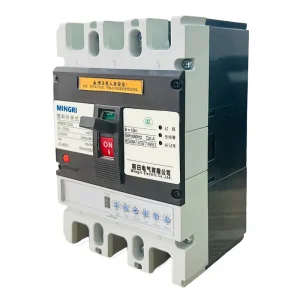
By sourcing thyristor soft starters packaged alongside upstream molded-case circuit breakers (MCCBs), miniature disconnectors, and isolation vacuum switches from the same manufacturing hub, buyers realize massive economies of scale. Unified terminal dimensions, harmonized control coil voltages (e.g., universal 110V–240V AC/DC), and synchronized lead times yield up to 35% to 50% savings across procurement, panel building, and commissioning phases.
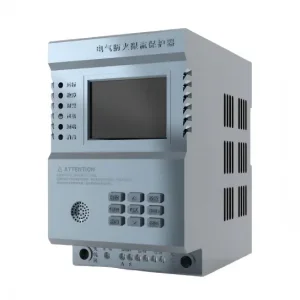
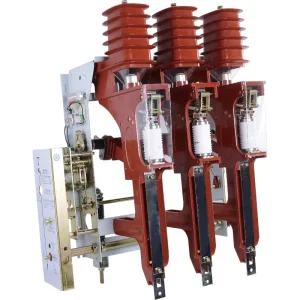
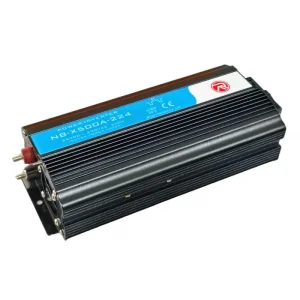
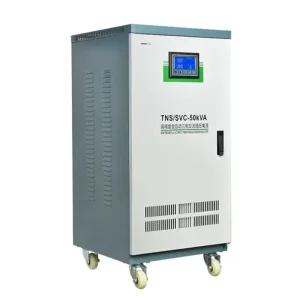
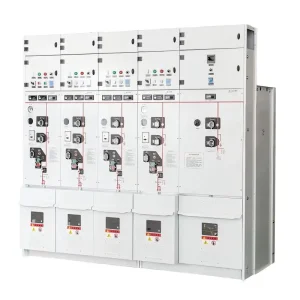
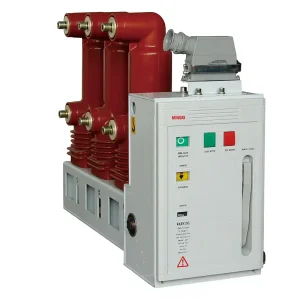
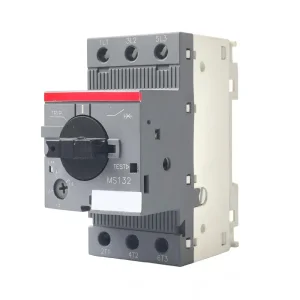
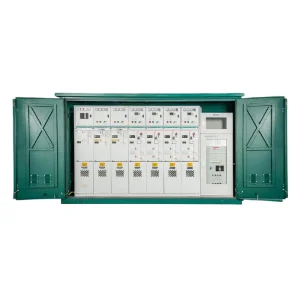
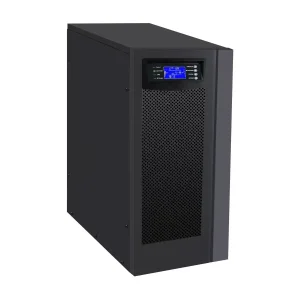
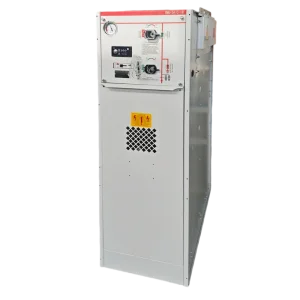
High-Voltage Vacuum & Smart Protective Apparatus
Industrial components operating in tandem with solid-state soft starters to form complete, fail-safe motor control centers and distribution substations.
Frequently Asked Engineering Questions
Addressing essential technical, commercial, and operational questions regarding China-manufactured thyristor soft starters and power equipment.
What is the fundamental difference between standard Thyristor Soft Starters and VFDs?
A thyristor soft starter regulates RMS terminal voltage via phase-angle chopping while maintaining fixed grid frequency (50/60 Hz), intended primarily for accelerating and decelerating AC induction motors smoothly. A Variable Frequency Drive (VFD) rectifies AC to DC and uses PWM IGBT inverters to control both voltage and frequency continuously, enabling variable speed operation throughout run cycles. When continuous speed control is unnecessary, soft starters provide a significantly more cost-effective, harmonic-free, and energy-efficient solution (due to run-bypass modes).
Why is internal bypass contactor integration superior to solid-state continuous running?
During operation, active SCR thyristors generate an internal voltage drop of roughly 1.0V to 1.2V per phase, creating heat dissipation equivalent to approximately 3 watts per ampere. Over prolonged industrial runs, this causes significant parasitic power loss and thermal strain inside enclosures. An integrated bypass contactor engages automatically when the motor attains full speed, bridging the SCRs and eliminating over 98% of starter heat dissipation while extending thyristor operating lifespan.
Can Chinese thyristor soft starters be configured in "Inside-Delta" arrangements?
Yes. Many high-capacity units manufactured in China feature configurable control algorithms supporting both standard In-Line and Inside-Delta (6-wire) wiring. In Inside-Delta mode, the starter is placed in series with each phase winding, exposing the SCRs to only 57.7% of the total motor line current. This allows system integrators to control larger motors with physically smaller, lower-amperage soft starter modules, minimizing capital expenditure.
What protection mechanisms safeguard the SCRs against grid surges and line faults?
Reliable Chinese manufacturers incorporate a three-tier protection architecture: 1) High-energy Metal Oxide Varistors (MOVs) to clamp fast transient overvoltages and atmospheric lightning surges; 2) Precision RC snubber circuits in parallel with each thyristor to restrict catastrophic dv/dt voltage gradients; and 3) High-speed ultra-fast semiconductor fuses (aR class) to clear extreme short-circuit fault currents before silicon junction destruction can occur.
How do environmental conditions (altitude & temperature) impact equipment ratings?
Standard ratings correspond to ambient operating temperatures up to 40°C and altitudes below 1000 meters above sea level. For installations in elevated or high-temperature regions, engineering derating is essential. Air density decreases at higher altitudes, impairing heatsink convective heat transfer and reducing the dielectric strength of clearances. Typically, current ratings are derated by 1.2% per 100 meters above 1000m, and ambient capacity is adjusted by 2% per °C above 40°C.
What quality management certifications and test reports are available for EPC tenders?
Reputable Yueqing and Chinese electrical exporters operate certified ISO 9001 (Quality Management), ISO 14001 (Environmental), and ISO 45001 (Occupational Health) facilities. Equipment complies with international IEC 60947-4-2 standards, carrying CE, CCC, and optional UL/cUL recognition marks. Model-specific type-test certificates from internationally accredited laboratories (such as KEMA, ASTA, or national high-voltage testing centers) can be provided upon inquiry during the technical evaluation phase.