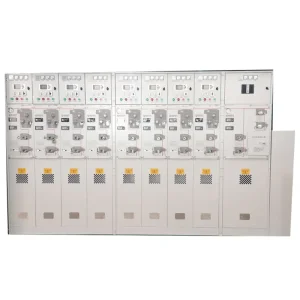
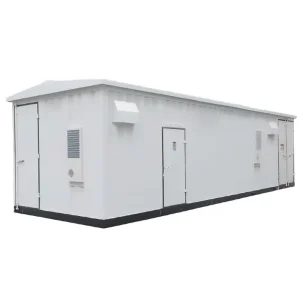
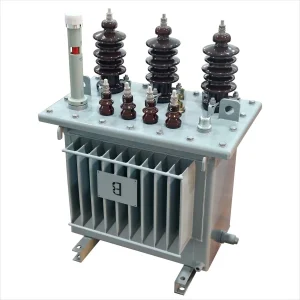
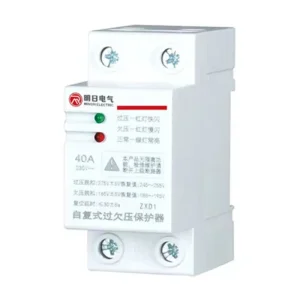
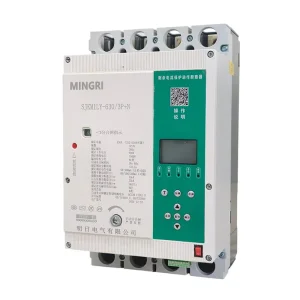
Integrated MV/LV Distribution Solutions
Engineered to operate in complete synergy with three-phase dry-type transformers, providing robust short-circuit ride-through, harmonic isolation, and uninterrupted utility-grade performance.
Global Commercial & Industrial Transformation in Three-Phase Dry Transformers
Analyzing the pivotal architectural transition from mineral oil immersion toward cast resin (CRT) and vacuum pressure impregnated (VPI) solid dielectric magnetic topologies.
Zero Catastrophic Fire & Environmental Hazard
Unlike oil-filled distribution transformers containing flammable hydrocarbon liquids, three-phase dry-type transformers utilize flame-retardant, self-extinguishing epoxy resin composites or high-temperature Nomex-based dry insulation. This eliminates the requirement for civil containment sumps, fire-suppression deluge systems, and spatial blast walls in subterranean stations and high-occupancy commercial structures.
- Certified to IEC 60076-11 Class F1 fire behavior
- Zero toxic gas emissions under arc flash
- 100% free of halogenated contaminants & silicone
Optimized Total Cost of Ownership (TCO)
The operational expenditures of three-phase dry units are fundamentally lower over a typical 30-to-40-year lifecycle. Eliminating dielectric oil maintenance (dissolved gas analysis, moisture testing, re-filtration, and gasket replacements) coupled with near-zero auxiliary equipment oversight produces up to a 42% operational expenditure reduction compared to fluid-cooled equipment.
- Zero recurring fluid dielectric sampling & testing
- Minimal downtime and simplified visual diagnostics
- High residual scrap value via segregated core/copper
Thermal Resilience & Dynamic Overload Margin
Modern vacuum cast resin encapsulation encapsulates high-voltage coils in an impermeable, monolithic solid that exhibits extraordinary mechanical strength against electromagnetic radial and axial forces during direct short-circuit conditions. Integrated forced-air (AF) cooling fans enable continuous 130% to 150% rated operation during peak demand periods without thermal breakdown.
- Dynamic short-circuit withstand capabilities
- Integrated PT100 thermal sensor telemetry
- AN to AF transition with automated control loops
Chinese Manufacturing Ecosystem: Scale, Precision, and Global Agility
How China's centralized medium-voltage supply clusters deliver unmatched production velocity, stringent automated quality controls, and customized electrical engineering.
Integrated Vertical Industrial Clusters
Centered in prominent manufacturing powerhouses such as Yueqing (Zhejiang) and the greater Yangtze River Delta, China's dry-type transformer ecosystem benefits from complete upstream supply chain verticality. High-permeability Cold-Rolled Grain-Oriented (CRGO) magnetic silicon steel, electrolytic foil copper, pure alumina fillers, and high-purity casting resins are sourced within tight geographical perimeters, drastically compressing production lead times from months to mere weeks.
Automated Static Vacuum Casting Chambers
Leading Chinese original equipment manufacturers (OEMs) operate multi-stage vacuum differential pressure casting systems from Hedrich and Hubers. Operating under rigorous vacuum thresholds (< 1 mbar), casting chambers execute automated heating, degassing, mixing, and curing cycles. This prevents the formation of micro-voids in the resin mass, guaranteeing partial discharge levels well below 10 pC—far superior to international standard limits.
Amorphous Alloy & Stepped-Lap Core Cutting
By leveraging automated CNC transverse shear and longitudinal slitting lines, Chinese suppliers deploy multi-stage stepped-lap mitred core joints. Utilizing high-grade silicon steels (such as 23Q110 and 27Q120) as well as amorphous alloy ribbons, factories achieve extraordinary reductions in core magnetic hysteresis and eddy currents, delivering no-load loss reductions of up to 70% relative to standard configurations.
| Transformer Architecture | Dielectric / Cooling Medium | Fire Classification | Maintenance Frequency | Space Footprint Ratio | Ideal Deployment Environments |
|---|---|---|---|---|---|
| Cast Resin Dry (CRT) | Solid Epoxy Resin / Natural Air (AN/AF) | Class F1 / Self-Extinguishing | Annual Visual Inspection | 1.0x (Ultra Compact) | Data Centers, High-Rise Towers, Metros, Marine |
| Vacuum Impregnated (VPI) | High-Temp Varnish / Natural Air (AN/AF) | Class H / Non-Propagating | Bi-Annual Dust Removal | 1.1x (Standard) | Commercial Facilities, Heavy Industrial Mills, Mining |
| Oil-Immersed (Hermetic) | Mineral Insulating Oil (ONAN/ONAF) | Class O1 (Flammable Fluid) | Quarterly DGA / Annual Sampling | 1.6x (Requires Sump & Blast Barrier) | Outdoor Utility Grids, Open Substations, Rural Grid |
| Amorphous Cast Resin | Solid Epoxy / Amorphous Core Ribbon | Class F1 / EcoDesign 2 | Annual Visual Inspection | 1.15x (Ultra-Low Loss) | Photovoltaic Farms, Green Hydrogen, Microgrids |
Mission-Critical Application Scenarios Across Global Sectors
Deploying specialized three-phase dry transformers engineered to withstand severe ambient extremes, harmonic distortions, and continuous load profiles.
Hyperscale Data Centers & Artificial Intelligence Clusters
High-density compute facilities demand extreme electrical stability and the capacity to handle non-sinusoidal harmonic waveforms generated by thousands of switched-mode power supplies. Three-phase dry-type transformers built with K-factor ratings (K-13, K-20) and electrostatic copper shielding between windings prevent common-mode noise transfer, guaranteeing total power reliability for mission-critical compute infrastructure.
Renewable Energy Storage (BESS) & Solar Parks
Utility-scale Battery Energy Storage Systems (BESS) and multi-megawatt PV step-up stations operate under punishing thermal cycles and frequent inverter pulse-width modulation (PWM) stress. Chinese dry-type transformers feature reinforced turn-to-turn insulation, enhanced dV/dt transient damping, and bi-directional power flow optimization to maximize renewable integration efficiency.
Offshore Platforms & Harsh Marine Environments
Marine environments impose harsh environmental stresses including salt-spray corrosion, humidity above 95%, and severe wave-induced mechanical vibrations. Specially engineered Class C2/E2/F1 dry transformers enclosed in IP44 or IP54 stainless-steel casings with pre-treated anti-fungal epoxy coatings deliver continuous power to drilling rigs, FPSOs, and containerized port cranes.
Global Enterprise Procurement: Standards, Verification, & Compliance
A rigorous decision-making matrix for international engineering, procurement, and construction (EPC) contractors sourcing medium-voltage dry transformers.
Global Certification Frameworks
Global procurement requires complete compliance with harmonized international technical standards. Verified Chinese manufacturers ensure complete conformance across IEC 60076-11 (dry-type power transformers), IEEE C57.12.01 (general requirements for dry-distribution transformers), UL/cUL recognition for North American grid tie-ins, and CE EcoDesign Tier 2 compliance for the European Economic Area.
Factory Acceptance Testing (FAT) Rigor
Overseas project buyers must mandate full routine and type test documentation prior to dispatch. Standard FAT protocols include: winding resistance measurements, voltage ratio and phase displacement verification, short-circuit impedance and load loss determination, no-load loss and no-load current analysis, separate source AC withstand voltage, induced overvoltage withstand, and calibrated partial discharge testing.
Custom Engineering & Vector Group Adaptation
From Dyn11 and Yyn0 standard vector configurations to specialized phase-shifting multi-pulse arrangements (such as 12-pulse, 24-pulse, or 36-pulse drive isolation transformers), leading suppliers deliver bespoke electromagnetic designs. Enclosure customization encompasses cold-rolled galvanized steel, marine-grade 316 stainless steel, and specialized top or bottom bus-duct entry flanges.
Technological Frontiers: Smart Dry Transformers & Digital Twins
The convergence of edge AI sensors, fiber-optic telemetry, and circular engineering shaping the next decade of power transformation.
Embedded Fiber-Optic Real-Time Hotspot Monitoring
Traditional thermal protection relies on surface-mounted PT100 resistance temperature detectors. Modern smart dry transformers embed Gallium Arsenide (GaAs) fiber-optic temperature sensors directly into the internal high-voltage winding conductors during vacuum resin casting. This provides real-time, zero-latency hotspot visualization, enabling predictive overload management and safeguarding insulation longevity.
Edge AI Telemetry & Cloud Asset Diagnostics
Next-generation dry-type units integrate intelligent gateways capable of processing acoustic vibration signatures, high-frequency partial discharge pulses, and ambient environmental parameters right at the edge. By running localized anomaly-detection algorithms, these units interface seamlessly with SCADA, BMS, and cloud ERP systems via standard IEC 61850 and Modbus TCP/IP protocols.
Circular Bio-Resins & Low-Carbon Core Materials
To align with global Scope 3 decarbonization mandates, Chinese research centers are commercializing bio-based epoxy casting matrices derived from renewable vegetable oils that can be fully depolymerized at end-of-life. Combined with laser-scribed silicon steels and low-carbon metallurgical smelting, the embodied carbon footprint of three-phase dry transformers is being reduced by up to 35%.
Frequently Asked Questions: Three-Phase Dry-Type Transformers
In-depth engineering answers addressing thermal classes, partial discharge metrics, harmonics, and installation parameters.
What is the practical engineering difference between Cast Resin (CRT) and Vacuum Pressure Impregnated (VPI) transformers?
Cast Resin Transformers (CRT) utilize high-voltage coils encapsulated under pure vacuum inside solid epoxy resin mixed with silica or alumina trihydrate. This produces a monolithic, void-free, moisture-proof structure optimal for extreme humidity, dust, and coastal environments (Class E2/E3, C2). In contrast, Vacuum Pressure Impregnated (VPI) transformers employ open-wound coils thoroughly impregnated with high-temperature varnish and baked under pressure. While VPI provides superior high-temperature thermal resilience (often Class H, 180°C), it requires a cleaner, drier operating atmosphere as it remains slightly porous compared to solid cast resin.
Why is the partial discharge (PD) metric critical when evaluating dry-type transformers?
Partial discharge measures localized dielectric breakdown in tiny microscopic gas voids within the solid insulation matrix that does not completely bridge the distance between conductors. Over time, persistent PD causes electron bombardment that erodes the resin, eventually causing catastrophic flashover failure. High-tier Chinese manufacturers ensure routine PD test levels stay strictly below 10 picocoulombs (pC) when energized at 1.30 to 1.50 times rated line-to-ground voltage, guaranteeing an operational lifespan exceeding 30 to 40 years.
How do environmental classifications E, C, and F affect transformer selection under IEC 60076-11?
IEC 60076-11 defines operational classes that ensure equipment integrity: Environmental (E0 to E3, where E2/E3 denotes operation in frequent condensation and heavy salt contamination); Climatic (C1 to C2, certifying transportation and operation down to -25°C); and Fire Behavior (F0 to F1, where F1 represents self-extinguishing materials producing zero halogen halides and minimal toxic smoke). Specifying Class E2, C2, F1 ensures the transformer can be reliably installed in underground rail transit, commercial basements, and marine substations without external fire hazard risks.
What engineering modifications are applied when sourcing dry transformers for harmonic-rich loads?
When feeding variable frequency drives (VFDs), uninterruptible power supplies (UPS), and data center server racks, non-linear harmonic currents cause excessive eddy current heating in windings and saturation in magnetic cores. Manufacturers apply K-factor ratings (K-4, K-13, K-20) by utilizing transposed rectangular copper conductors or copper foil to suppress skin effect, oversizing neutral conductors up to 200% of phase ratings, adding grounded electrostatic copper screens between primary and secondary windings, and selecting specialized low-loss CRGO silicon steel.
How does altitude impact the thermal rating and dielectric clearances of dry-type transformers?
Standard transformer ratings assume an installation altitude up to 1000 meters above sea level. At higher altitudes, the decreased atmospheric air density reduces both dielectric breakdown strength and natural convection cooling efficiency. For installations exceeding 1000m, Chinese factories de-rate temperature rises (typically by 2.5% for every 100m over 1000m) or design the transformer with increased physical air strike and creepage clearances alongside elevated insulation classes to maintain identical nominal MVA output.
Can three-phase dry transformers be paralleled directly with existing liquid-immersed transformers?
Yes, provided rigorous matching criteria are satisfied: 1) Equal rated primary and secondary terminal voltages; 2) Identical vector group and phase displacement (e.g., Dyn11); 3) Closely matched percentage impedance voltage (%Z) within ±7.5% tolerance to prevent unequal load sharing; and 4) Identical tap-changer settings. Dry-type transformers typically feature distinct thermal time constants compared to oil-immersed units, making proper setting of overcurrent and thermal protection relays essential to prevent premature thermal trip events during sustained overloads.
Power Delivery, Substation, & Smart Grid Protection Hardware
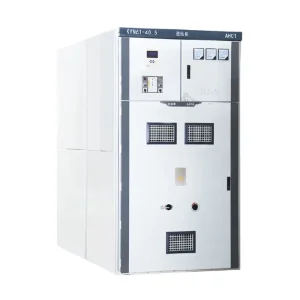
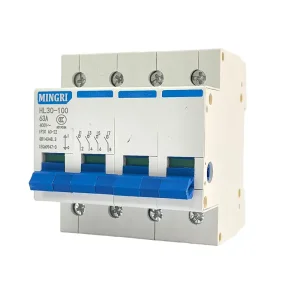
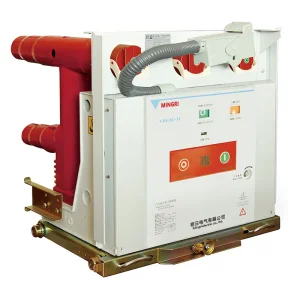
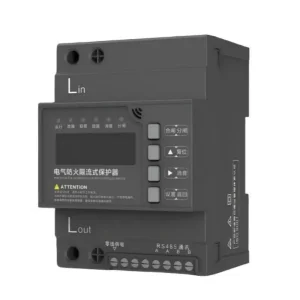
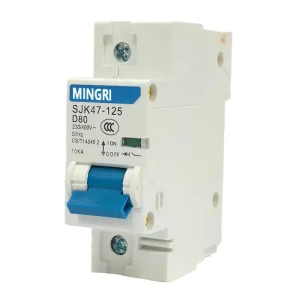
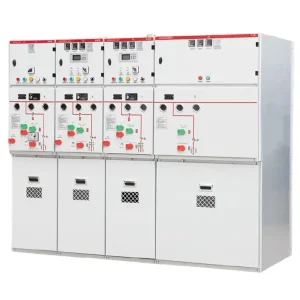
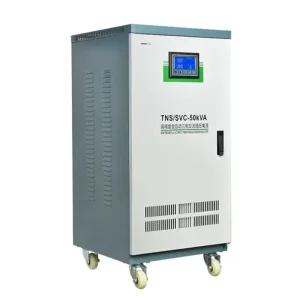
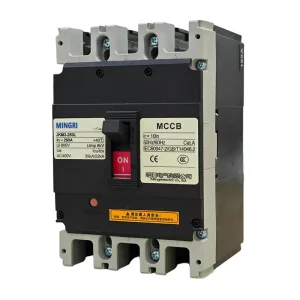
Complete medium-to-low voltage apparatus designed for turn-key deployment in heavy industrial complexes, municipal utilities, and modern microgrids.