Precision Power Distribution & Switchgear Systems
Industrial-tier conditioning assemblies, high-power regulation apparatus, and automation subsystems built to strict IEC & IEEE compliance benchmarks.
-
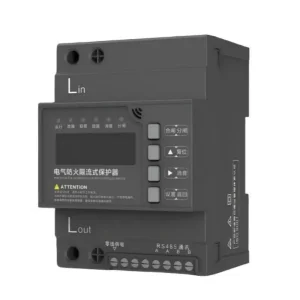
High-Quality MCC Series Modified Sine Wave Inverter Suppliers, Supplier
-
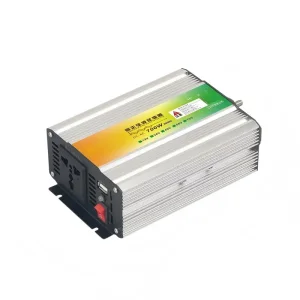
ODM SJKM1E Molded Case Circuit Breaker ECB Suppliers, Supplier
-
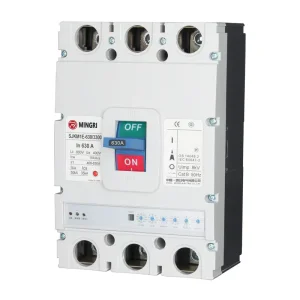
China China SJKM1LY Auto Reclosing Molded Case Circuit Breaker - Reliable Suppliers & Factory for Intelligent Protection Solutions Suppliers, Supplier
-
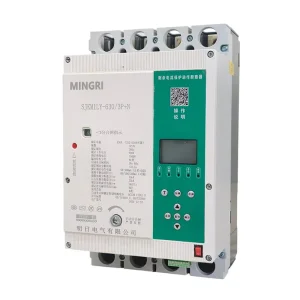
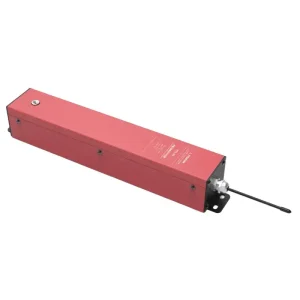
ODM Intelligent wireless automatic gas fire extinguishing device-Perfluorohexanone Series Factory, Companies
-
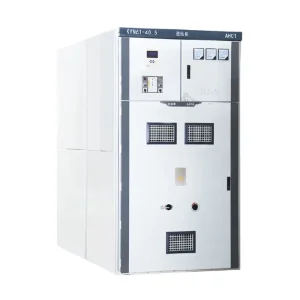
OEM KYN61-40.5 Armoured Moving Type AC Metal Enclosed Switchgear Supplier, Factories
-
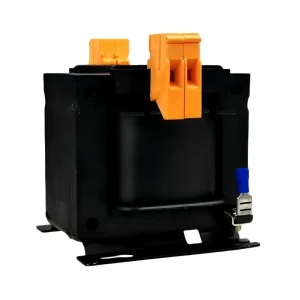
High-Quality JBK5 Series Machine Tool Control Transformer Factories, Companies
-
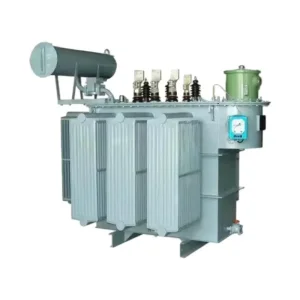
ODM SZ11 Type 10kV Series On-Load Voltage Regulator Power Transformer Factories, Company
-
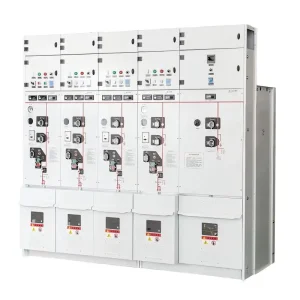
OEM Eco-Friendly Gas Insulated Switchgear MRHBXGN-12(F) from China Suppliers and Factory for Smart Power Distribution Supplier, Manufacturer
Global Industrial Status: The Imperative for Servo Voltage Stabilization
Modern electrical networks face increasing harmonic distortion, intermittent renewable power back-feeding, and rapid load variations. Reliable servo voltage regulators serve as the vanguard of industrial continuous-operation architecture.
Electromechanical Precision Architecture
Unlike electronic step-switched systems that inject stepped waveform discontinuities, servo-driven automatic voltage regulators (AVRs) utilize high-torque AC/DC servomotors coupled to variable autotransformers and series buck-boost transformers. This continuously adjusts the transformation turns ratio dynamically, achieving smooth, non-step sinusoidal regulation devoid of phase displacement.
Equipped with pure carbon roller assemblies and silver-plated contact tracks, our industrial units guarantee minimal mechanical friction, preventing localized thermal buildup even under 24/7 continuous duty cycles in high-vibration manufacturing environments.
Harmonic Immunity & Load Versatility
Non-linear loads such as variable frequency drives (VFDs), rectifiers, and industrial induction furnaces cause severe current harmonics. Our servo regulators operate independently of system wave distortion and load power factor, delivering flawless performance across leading, lagging, or purely resistive conditions.
Independent 3-phase vector regulation circuits guarantee complete phase-to-phase stabilization even under 100% asymmetric load unbalance conditions, ensuring sensitive logic controllers and automation systems operate without nuisance tripping.
Severe Grid Voltage Fluctuation Mitigation
In developing manufacturing corridors across Southeast Asia, Latin America, and Africa, primary incoming voltage can swing by over ±25%. Such severe sags cause motors to overheat, shorten dielectric lifespans, and trigger catastrophic CNC stoppage.
Our intelligent servo platforms integrate customizable input voltage windows (up to ±30% or ±40% on request) while locking the stabilized terminal output strictly within 380V/400V/415V ±1%, providing a robust line of defense for critical capital assets.
Industry Trends: Intelligent Grid Conditioning 4.0
The convergence of power electronics, industrial IoT, and digital signal processors (DSP) is revolutionizing conventional electromechanical voltage stabilization systems into smart power hubs.
DSP Microprocessor Closed-Loop Feedback
Replacing traditional analog operational-amplifier control cards, modern servo AVRs employ 32-bit high-speed Digital Signal Processors that calculate True RMS values across tens of thousands of samples per second. The controller runs optimized proportional-integral-derivative (PID) control algorithms that forecast voltage trends, dynamically modulating servomotor velocity to completely eliminate overshoot and hunting oscillations.
Industrial IoT & Predictive Fleet Telemetry
Modern switchboards cannot exist as isolated operational islands. Next-generation servo voltage regulators come natively equipped with RS-485 Modbus, Profibus, or industrial Ethernet interfaces. Critical telemetry data—including brush position wear indexes, winding hot-spot temperatures, instantaneous phase current, harmonic distortion (THD), and event waveforms—are uploaded in real time to SCADA and cloud ecosystems for condition-based preventive maintenance.
Eco-Design & High Energy Conservation
With industrial carbon reduction directives accelerating worldwide, minimizing copper and core iron losses is imperative. Mingri utilizes high-grade, cold-rolled grain-oriented (CRGO) magnetic silicon steel sheets combined with pure oxygen-free electrolytic copper windings. This lowers unit self-consumption to less than 1.5% of total rated power, directly optimizing enterprise Power Usage Effectiveness (PUE) and operational expenditure.
Localized Application Scenarios & Macro Solutions
Engineered for mission-critical reliability across harsh ambient environments, complex industrial automation layouts, and distributed energy infrastructures.
Advanced Semiconductor & Microelectronics Fabrication
Lithography scanners, wire bonders, and high-vacuum sputtering chambers cannot tolerate momentary voltage disturbances. Even minor voltage drift induces laser drift, calibration errors, and semiconductor wafer scrapping. Our servo stabilizers maintain tightly clamped line voltages with zero waveform distortion, eliminating cleanroom precision deviations.
Heavy Metallurgy, Mining & Heavy Infrastructure
Large crushing machines, high-tonnage gantry cranes, and arc welding clusters produce severe transient voltage dips. Mingri deploys high-capacity oil-immersed and heavy-duty dry-type servo regulators equipped with enhanced thermal dissipation, IP54 dust protection, and surge suppression rated for harsh outdoor mining environments.
Medical Imaging & Tertiary Healthcare Facilities
Precision medical diagnostic devices such as MRI, CT, and linear accelerators draw heavy inrush current pulses while requiring strictly regulated baseline potential to prevent diagnostic imaging artifacting. Our systems provide decoupled phase regulation that maintains medical scanner integrity under rapid load switching.
Renewable Hybrid Power Plants & BESS Integration
Distributed photovoltaic and wind generation are prone to feeder voltage rise and instability due to intermittent cloud cover and load volatility. Servo stabilizers coordinate with step-up substations and energy storage systems to maintain power quality at the point of common coupling (PCC) prior to grid dispatch.
Tier-III & Tier-IV Data Center Backup Ecosystems
Modern data centers demand continuous power purity. Our servo stabilizers sit between utility substations and static uninterruptible power supply (UPS) batteries, insulating rectifiers from prolonged voltage shifts, reducing unnecessary battery cycling, and extending reserve battery lifecycles by over 40%.
Technology Roadmap & Future Engineering Outlook
Mingri Electric drives ongoing research and development into next-generation grid adaptation, composite insulation systems, and hybrid solid-state topologies.
Phase I: Hybrid Electro-Electronic Subsystems (2024–2026)
Integrating silicon carbide (SiC) fast-switching static matrix networks in series with high-capacity servo carbon mechanisms. The solid-state stage absorbs millisecond micro-sags, while the continuous electromechanical stage manages deep, persistent high-capacity line shifts, achieving sub-cycle reaction speeds without continuous thermal semiconductor losses.
Phase II: Advanced Non-Fluorinated Dielectric Isolation (2026–2028)
Transitioning from traditional oil and gas isolation to next-generation bio-degradable synthetic ester liquids and eco-friendly gas blends. This technical evolution eliminates greenhouse gas impact (GWP < 1) while raising thermal flash points above 300°C for extreme industrial safety in enclosed facilities.
Phase III: Autonomous AI Edge Grid Conditioning (2028–2030)
Embedding neural network micro-controllers at the equipment level. Regulators will dynamically predict load surges based on historical factory operational telemetry, automatically pre-positioning servomotor brushes milliseconds prior to the start of high-tonnage heavy machinery to neutralize voltage drops completely.
Frequently Asked Technical Questions (FAQ)
Objective technical comparisons and application guidance directly from our senior electrical engineering group.
Q: How does a servo-driven regulator compare to static electronic (SCR/Thyristor) regulators?
Servo regulators utilize continuous electromechanical transformer tapping, providing pure sinusoidal output without harmonic injection, high withstand against inrush currents (up to 300% for short durations), and competitive cost structures at high kVA/MVA ratings. Static thyristor units correct within 20 milliseconds but introduce switching harmonics, step-voltage jumps, and are sensitive to heavy inductive motor starting surges.
Q: Can the servo regulator handle completely unbalanced three-phase supply lines and loads?
Yes. Mingri industrial three-phase servo regulators incorporate an independent regulation topology. Each of the three phases is monitored by its own independent microprocessor controller and driven by a dedicated servomotor-column assembly. This allows Phase A, B, and C to adjust simultaneously to different levels without mutual interference.
Q: What routine maintenance is mandatory for electromechanical servo stabilizers?
Routine maintenance is straightforward: annual inspection of the carbon roller or brush assembly, checking contact pressure springs, vacuuming particulate dust from column tracks, and verifying mechanical lubrication on drive gears. Under normal industrial conditions, Mingri high-density carbon rollers deliver a design lifespan exceeding 8 to 10 years before replacement is required.
Q: What core technical parameters are essential for factory quotation and sizing?
To specify an optimal unit, provide: the rated nominal grid voltage and distribution frequency (50/60Hz), worst-case maximum and minimum line voltage swings, total connected apparent power (kVA), nature of load (inductive, motor, electronic, or welding), required output stabilization tolerance (±1% to ±3%), environmental ambient factors (altitude, temperature, dust rating), and desired protection features (bypass, surge protection, IP enclosure class).
Medium-Voltage Switchgear & Complete Substation Solutions
Engineered in Yueqing, China by Mingri Electric: comprehensive MV/LV ring main units, vacuum interrupters, and turnkey prefabricated substations.
-
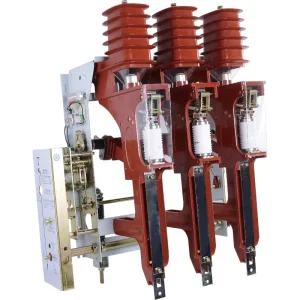
ODM FZN25-12 Indoor AC High-Voltage Vacuum Load Switch Supplier, Manufacturer
-
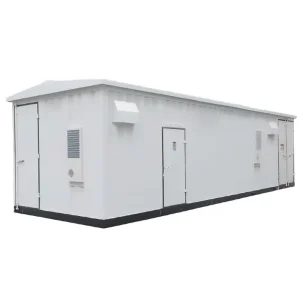
OEM Modular Intelligent Prefabricated Cabin Substation with Smart Features Manufacturers, Companies
-
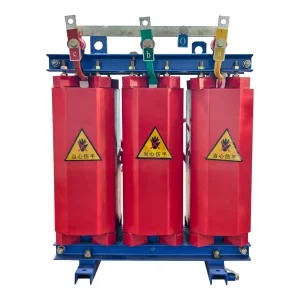
Wholesale China SC(B)11 10kv Resin-Insulated Dry Casting Transformer - Reliable Suppliers & Factory Solutions Suppliers, Supplier
-
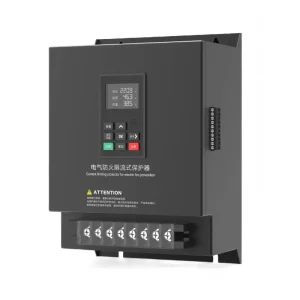
Wholesale 80A Three-Phase Intelligent Electrical Fire Current-Limiting Protector Manufacturers, Companies
-
ODM KYN61-40.5 Armoured Moving Type AC Metal Enclosed Switchgear - High-Voltage Solution from China Suppliers and Factory Manufacturer, Factories
-
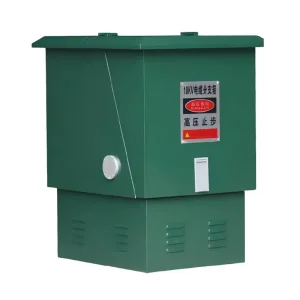
OEM China DFW Cable Branch Box - Outdoor Intelligent Power Distribution from Leading Suppliers & Factory Supplier, Manufacturers
-
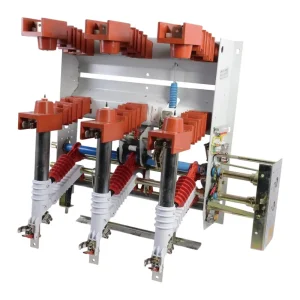
ODM High Voltage Load Breaker Switch FK(R)N12-24D - 24kV Solutions from China Suppliers and Factory Suppliers, Factory
-
Wholesale China Suppliers Factory: Single Phase Current-Limiting Protector for Electrical Fire Safety and Fast Fault Response Manufacturers, Factories