Featured Switchgear, Transformers & Isolation Systems
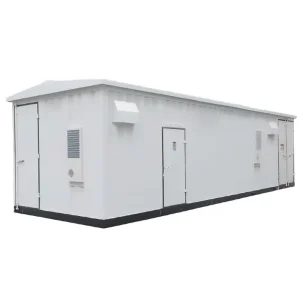
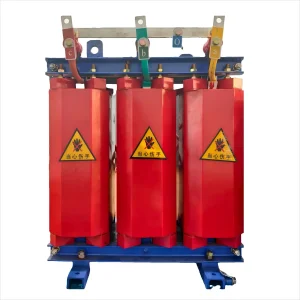
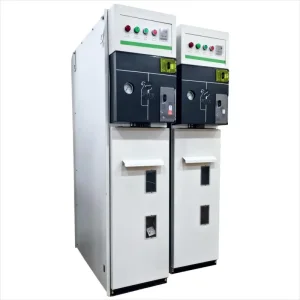
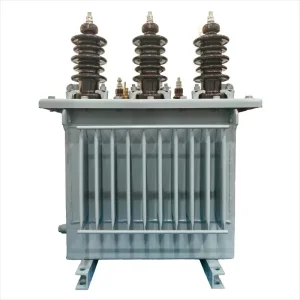
Direct factory integrated medium-to-low voltage switchgear, distribution substations, and disconnect assemblies engineered in Yueqing, China for international utilities and EPC turnkeys.
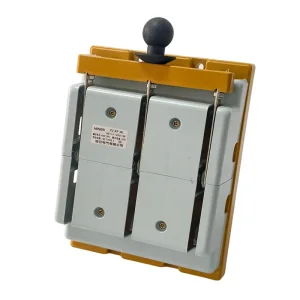
The Strategic Role of HR5 Disconnect Switches in Global Electrification
Examining how China's precision manufacturing clusters deliver cost-resilient, high-breaking capacity low-voltage fuse switch disconnectors across utility, renewable, and industrial power distribution infrastructure.
Critical Regulatory Standard Alignment
World-class China HR5 disconnect switch manufacturers manufacture, test, and certify these assemblies in rigorous accordance with IEC 60947-3 (Low-voltage switchgear and controlgear - Part 3: Switches, disconnectors, switch-disconnectors and fuse-combination units) and its direct national counterpart GB/T 14048.3. The assemblies satisfy the stringent demands of isolation characteristics (specified creepage distances, dielectric clearances across open contacts, and mechanical lockouts) essential for OSHA-compliant Lockout-Tagout (LOTO) protocols.
Thermoset Composite Base Structure
Formulated from high-grade Dough Moulding Compound (DMC) or Sheet Moulding Compound (SMC) unsaturated polyester resin reinforced with chopped glass fibers, providing exceptional CTI (Comparative Tracking Index > 600V), V-0 self-extinguishing flame resistance, and total immunity to thermal warping under high ambient temperature rise.
Silver-Plated Electrolytic Copper Contacts
Contact jaws and moving knife blades are stamped from T2 grade electrolytic copper (minimum 99.95% purity) treated with heavy electro-silver plating (5μm to 12μm). This layout minimizes contact resistance ($R_{cont} < 0.08\text{ m}\Omega$), eliminates local micro-welding during current surges, and ensures minimal thermal dissipation at rated 630A full-load currents.
De-ionising Steel Arc Chute Splitters
Each individual phase is flanked by dedicated arc-extinguishing chambers containing segmented nickel-plated deionizing steel plates. Rapid magnetic blow-out forces stretch and cool electric switching arcs instantly upon opening, ensuring safe make-and-break capabilities even under severe AC-23B inductive switching duty cycles.
China HR5 Manufacturing Ecosystem: Vertical Integration & Export Quality
How Yueqing (Wenzhou) and regional Yangtze River Delta clusters built the world's most resilient, cost-optimized supply chain for low-voltage power distribution equipment.
| Evaluation Parameter | China Tier-1 HR5 Switch Manufacturers | Conventional Knife Switches (e.g., HD11/HS) | Moulded Case Switch Disconnectors (MCSD) |
|---|---|---|---|
| Arc Containment Architecture | Fully Enclosed Multi-Plate De-ion Grid | Open-frame / Minimal ceramic barriers | Molded internal arc cassette |
| Short-Circuit Protection Integration | Direct NH00-NH3 HRC Fuse Carrier | None (Requires separate fuse block) | None (Requires external upstream protection) |
| Conditional Short-Circuit Current ($I_q$) | Up to 100 kA at 690V AC | Limited to 10 kA - 25 kA withstand | 50 kA - 70 kA depending on frame |
| Visual Break Verification | Direct Optical Sightline / Clear Shielding | Exposed visible physical blades | No visible contact gap (Blind toggle) |
| Utilization Category (IEC 60947-3) | AC-22B to AC-23B (Highly Inductive Loads) | AC-20A / AC-21B (No-load / Resistive) | AC-22A / AC-23A |
| LOTO (Lockout / Tagout) Capability | Multi-Padlock Mechanism on Rotary Handle | Manual physical locking bar (Vulnerable) | Padlockable handle accessories |
| Total Cost of Ownership (TCO) | Extremely Low (Low Initial + Fast Maintenance) | Lowest initial cost, high failure risk | High initial cost; full unit replacement |
From Passive Isolation to Intelligent Digitalized Telemetry
Exploring the technological evolution of the HR5 topology toward IoT-enabled predictive maintenance, high-voltage DC variants for renewables, and arc-flash suppression.
Integrated IoT Fuse Status Telemetry
Modern HR5 smart disconnectors incorporate integrated miniature micro-switches coupled with the mechanical striker pins of NH fuse links. When an internal fuse-element vaporizes under overcurrent or short circuit, the striker pin ejects, triggering an isolated auxiliary contact that feeds directly into PLC or Modbus/RS485 edge gateways. This provides immediate, millisecond-accurate notification of phase-loss fault locations without physical inspection.
Continuous Contact Thermography (Passive RFID)
Thermal deterioration across high-current contacts remains a primary cause of industrial electrical fires. Advanced Chinese suppliers embed passive, battery-free surface acoustic wave (SAW) or RFID temperature sensor probes directly into the terminal lugs and spring-jaw assemblies of the HR5 base. These wireless sensors communicate continuous real-time temperature data to an external monitoring hub, identifying loose bolted joints before thermal runaway occurs.
Renewable DC Topologies (HR5-DC)
With the rapid adoption of large-scale Battery Energy Storage Systems (BESS) and commercial photovoltaic arrays, the traditional AC HR5 architecture has expanded into dedicated DC variants rated up to 1000V DC and 1500V DC (utilization category DC-21B / DC-PV2). These designs incorporate permanent magnetic blowout arrays within the arc chutes and widened air breaks to suppress non-zero-crossing direct-current electrical arcs.
Macro-Industry Engineering Solutions: Mission-Critical Applications
Deploying HR5 fuse disconnect switches across diverse electrical environments: from chemical processing plants and containerized energy storage to mining motor sub-stations.
Metallurgical, Cement & Heavy Process Industries
In continuous processing operations where abrasive conductive dust, sulfurous atmospheric chemicals, and large cyclical inductive motor loads are standard, solid-state circuit breakers can suffer from electronic component degradation. The robust mechanical geometry of the HR5—protected by heavy DMC phase barriers and mechanical dead-center operating levers—delivers dependable operation, allowing quick physical isolation during critical shutdown maintenance.
Utility Substation Auxiliary & Capacitor Banks
Low-voltage distribution panels within high-voltage substations rely on HR5 disconnect switches to isolate automated capacitor banks and station power circuits. Because capacitor switching generates severe inrush transient currents and harmonics, the high short-circuit breaking capability (100kA) and thermal capacity of NH-type fuses ensure the system handles high harmonic heating without false or premature tripping.
Prefabricated Compact Substations (Kiosk Substations)
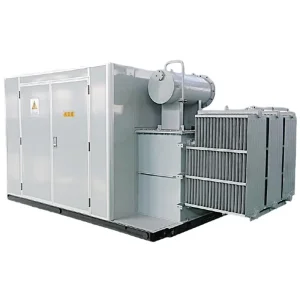
Inside European-type and American-type compact outdoor transformer kiosks (such as the YB and ZGS modular series), internal spatial volume is exceptionally limited. The compact envelope of front-operated HR5 switches allows panel engineers to pack up to 8 secondary feeder circuits into a single distribution board, giving municipal distribution networks high feeder density with dependable fuse isolation.
System Engineer’s Sizing Rule: Thermal De-rating in Enclosed Cubicles
When specifying an HR5 disconnect switch inside an IP54 or higher enclosed cubicle without forced ventilation, engineers must account for internal ambient temperature rise. At internal operating temperatures of 55°C, a 400A rated HR5 switch should typically be de-rated to approximately 0.85 × $I_n$ (340A continuous) to prevent excessive fuse-element temperature rise and premature fatigue of the copper contact spring tensioners.
Engineering Checklist: Qualifying China HR5 Disconnect Switch Suppliers
Actionable technical verification criteria for international procurement teams to distinguish premier Tier-1 manufacturers from low-grade assembly workshops.
1. Complete Type-Test Portfolio
Demand full, unredacted type-test certificates from internationally recognized, CNAS-accredited testing authorities (such as Tilva, KEMA, ASTA, or CEPREI). Verification must encompass the complete sequence: Temperature Rise Verification at rated full-load current ($I_e$), Dielectric Properties at 800V/1000V insulation voltage, and Short-Circuit Making and Breaking Capacity ($I_q$ at 50kA/100kA).
2. Contact Spring & Clamping Metallurgy
Evaluate the mechanical clamping design of the fuse-contact jaws. High-quality HR5 manufacturers employ auxiliary spring steel reinforcement clips (typically 65Mn spring steel or stainless steel) behind the copper contact fingers. This counteracts mechanical creep over years of operation and prevents terminal relaxation caused by cyclical thermal expansion.
3. Moulding Compound Formulation (DMC/SMC)
Low-tier manufacturers often blend excess calcium carbonate filler into their DMC formulations to cut raw material costs, which significantly reduces structural impact strength and makes the bases prone to cracking during bolted busbar torqueing. Request glow-wire ignition test reports (IEC 60695-2-12, minimum 960°C flammability index) and mechanical Izod impact resistance ratings.
Frequently Asked Technical & Commercial Questions
Direct engineering answers addressing configuration, safety standards, operation mechanisms, and supplier selection for HR5 low-voltage disconnect switches.
Industrial Automation, Circuit Breakers & Renewable Equipment
Complementary low-voltage and medium-voltage electrical apparatus manufactured for end-to-end industrial power distribution networks worldwide.