Precision Distribution & Protection Systems
Original factory-certified components engineered for high-precision CNC machinery, high-voltage load switching, and multi-tier network safety.
The Engineering Architecture of Industrial CNC Transformers
Understanding the electrical and thermodynamic design principles that safeguard computerized numerical control machinery from line disturbances, transient voltages, and harmonic degradation.
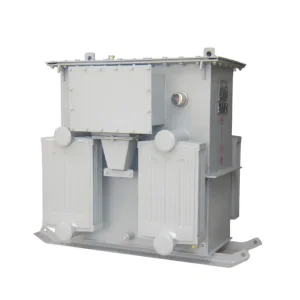
In high-precision manufacturing, a CNC transformer (Computer Numerical Control transformer) serves not merely as a galvanic stepping device, but as the foundational power conditioning barrier for high-speed multi-axis mills, laser cutters, electro-discharge machining (EDM) setups, and automated robotics. Modern industrial CNC centers incorporate sensitive servo drives, digital signal processors (DSPs), linear encoders, and variable frequency drives (VFDs) that demand unyielding voltage stability, precise wave purity, and complete isolation from external grid transients.
Unlike generic step-down transformers, specialized CNC transformers are engineered with rigorous electromagnetic compatibility (EMC) parameters. They must withstand rapid pulsed current demands during spindle acceleration/deceleration cycles, suppress dV/dt spikes caused by pulse-width modulation (PWM) switching, and prevent high-frequency harmonic feedback into the broader enterprise distribution bus. At Mingri Electric, our manufacturing processes in Yueqing, Zhejiang, integrate specialized electrostatic shielding and low-loss magnetic silicon laminations to provide high common-mode and transverse-mode noise rejection.
Electrostatic Faradic Shielding
Copper foil Faraday shields inserted between primary and secondary windings ground high-frequency capacitive coupling noise.
- Common-mode rejection ratio (CMRR) > 60 dB
- Attenuates switching noise up to 100 MHz
- Protects sensitive CNC microprocessor controllers
K-Factor Harmonic Tolerance
Engineered with oversized neutral conductors and transposed core geometries to handle non-linear rectifier loads without overheating.
- Standard designs rated for K-4, K-13, and K-20 profiles
- Mitigates 3rd, 5th, 7th, and 11th harmonic currents
- Double-sized neutral bar prevents thermal runaway
Dynamic Duty-Cycle Overload
Optimized for rapid cycling and thermal shock absorption when high-torque axes brake or accelerate instantaneously.
- Class H (180°C) and Class C (220°C) insulation systems
- Short-circuit withstand exceeds IEC 60076 standards
- Low winding impedance (typically 2.5% - 4.5%)
China Factory Supply Chain Ecosystem: The Yueqing Advantage
Leveraging decades of specialized electrical manufacturing in Yueqing, Wenzhou—the electrical apparatus capital of the world—to guarantee material integrity, scale, and cost resilience.
The procurement of high-reliability CNC transformers demands complete vertical integration. Located in the Economic Development Zone of Yueqing, Zhejiang, Mingri Electric Co., Ltd. operates at the core of an unmatched industrial cluster. Within a 30-kilometer radius, our supply chain integrates primary raw material processing—from high-grade cold-rolled grain-oriented (CRGO) electrical steel slitting to oxygen-free copper continuous drawing and automated Vacuum Pressure Impregnation (VPI) equipment.
This geographical concentration completely eliminates upstream logistical bottlenecks. Global engineering, procurement, and construction (EPC) contractors and original equipment manufacturers (OEMs) benefit from drastically compressed lead times (2–3 weeks vs. 14–20 weeks across Western suppliers) and customized coil topologies without excessive non-recurring engineering (NRE) surcharges.
Premium CRGO Cores
We utilize high-permeability, laser-scribed grain-oriented silicon steel (Baosteel/Wisco grades 23Q115, 27Q120). Step-lap mitred core construction slashes core losses by up to 25% and reduces inrush currents.
99.99% Electrolytic Copper
Windings are manufactured strictly using high-purity, oxygen-free copper (OFC) with multi-strand transposed wires. Superior electrical conductivity lowers $I^2R$ copper losses and maximizes operational life.
Automated VPI Process
Complete subjection to computerized Vacuum Pressure Impregnation (VPI) utilizing Class H solventless epoxy resin. Completely voids air pockets, ensuring high dielectric strength and moisture impermeability.
Switchgear Ecosystem
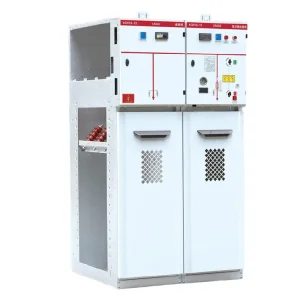
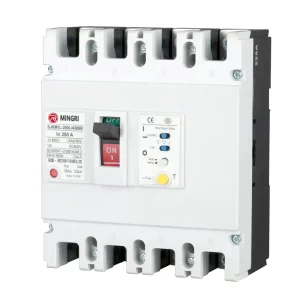
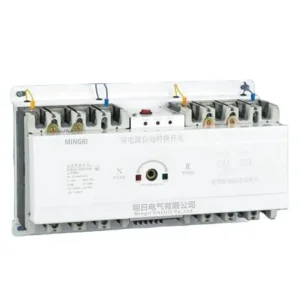
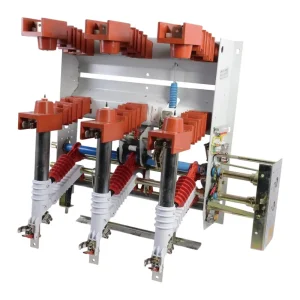
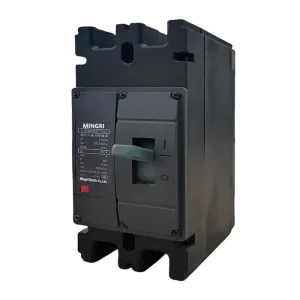
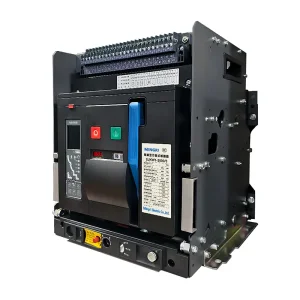
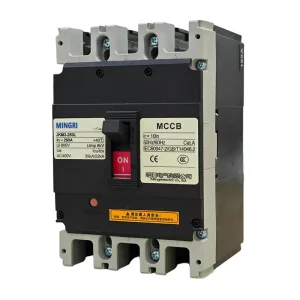
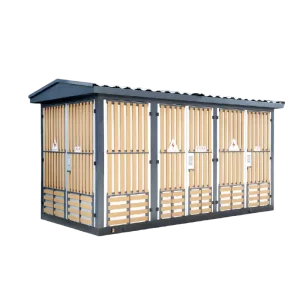
Seamless integration with Mingri's medium/low-voltage switchgear, vacuum circuit breakers, and automatic transfer switches (ATS) creates a cohesive, single-source electrical infrastructure package.
Global Enterprise Procurement Specifications Matrix
Technical baseline for mechanical and electrical procurement managers specifying CNC isolation transformers across diverse international grid configurations.
| Electrical Parameter | Standard Machine Specification | High-Precision Servo / Laser Grade | Compliance Test Method |
|---|---|---|---|
| Rated Power Range | 5 kVA – 250 kVA | 300 kVA – 2,500 kVA (Multi-System) | IEC 60076-1 Rated Output Verification |
| Primary Grid Input | 380V / 400V / 415V / 480V (±10% taps) | Universal Multi-Tap (208V to 600V Wide Bus) | Turns-Ratio & Phase Displacement Test |
| Secondary Voltage | 200V / 220V (Japanese/Korean CNC standard) | Custom Dual/Triple Output (e.g. 200V / 24V / 110V) | No-load & Rated Load Voltage Test |
| Winding Configuration | Delta / Wye-N (Dyn11) | Zigzag (Znyn) / Dyn11 with Shielding | Vector Group & Phase Angle Audit |
| Insulation Class | Class F (155°C) – Rise: 100K | Class H (180°C) or Class C (220°C) Nomex® | IEC 60085 Thermal Endurance |
| Harmonic Capability | K-4 (standard nonlinear load) | K-13 to K-20 (heavy servo dynamic feeds) | Harmonic Loss Measurement (IEEE C57.110) |
| Dielectric Withstand | 3.0 kV AC / 1 min (50/60 Hz) | 5.0 kV AC / 1 min + Lightning Impulse | Hi-Pot Dielectric Breakdown Test |
| Partial Discharge (PD) | < 20 pC at 1.2 × Um | < 10 pC at 1.5 × Um (Zero Arc Guarantee) | IEC 60270 High-Voltage PD Analysis |
| Protection Enclosure | IP20 (Indoor Open Ventilated) | IP54 / IP55 (NEMA 3R/4X Dust & Coolant-Proof) | Ingress Protection Verification (IEC 60529) |
When executing global turnkey installations, multinational corporations must reconcile grid variations across continental zones. For instance, exporting advanced 5-axis machines engineered for 200V/220V Japanese servo architecture into North American 480V/60Hz grids or European 400V/50Hz infrastructures demands precision-engineered autotransformers or double-wound isolation transformers. Failing to compensate for frequency-induced saturation, core heating, or neutral ground loops can void expensive CNC warranty guarantees.
Localized Compliance, Certification & Technical Safety
Mitigating regulatory friction and site risks through full alignment with international safety standards and type-test verification.
IEC & EN Compliance
Manufactured in strict adherence to IEC 60076 (Power Transformers), IEC 61558-2-4 (Isolating Transformers), and the Machinery Directive EN 60204-1. Fully compliant for deployment across the European Union and commonwealth markets.
UL / CSA Grid Standards
Engineered with high-clearance creepage boundaries, flame-retardant DuPont Nomex® dry barriers, and terminal lugs certified under UL 1561 and CSA C22.2 No. 47, enabling swift local AHJ (Authority Having Jurisdiction) sign-offs across the USA and Canada.
Factory Acceptance Testing (FAT)
Every unit undergoes automated end-of-line verification: winding resistance testing, turns-ratio confirmation, zero-sequence impedance check, induced overvoltage withstand, and digital oscilloscope noise attenuation validation with comprehensive FAT dossiers provided.
Industry Trends: Smart Sensing & Energy Efficiency in CNC Power
Pioneering transformations in power electronics, telemetry, and ultra-low-loss core architectures for Industry 4.0.
Amorphous Alloy Cores
Transitioning from traditional silicon steel to non-crystalline amorphous metallic alloy ribbons. By breaking molecular periodicity, no-load core losses are slashed by 60% to 75%, allowing machining factories running continuous standby shifts to curtail millions of kilowatt-hours annually.
Edge IoT & Thermal Telemetry
Embedding fiber-optic Distributed Temperature Sensing (DTS) and multi-channel PT100 RTD sensors directly into the low-voltage winding layers. Real-time RS-485 Modbus and MQTT protocol connectivity stream thermal signatures directly to machine tool screens or factory SCADA systems for predictive maintenance.
Hybrid Solid-State (SST) Integration
The emergence of Silicon Carbide (SiC) power switching stages combined with high-frequency magnetic links enables bi-directional power flow. This paradigm shift captures regenerative kinetic braking energy from massive multi-axis spindles, directly redirecting it back into the plant grid or ESS banks.
Localized Application Scenarios in Modern Automation
Field-proven deployments of Mingri Electric power conditioning hardware in harsh industrial environments.
5-Axis CNC Milling Centers
Provides pristine phase balance and prevents micro-stepping encoder glitches on DMG Mori, Mazak, and Okuma machining tools cutting aerospace superalloys.
Fiber Laser Cutting Systems
Absorbs extreme pulse-load current variations in 12kW to 30kW fiber lasers, stabilizing plasma cutting consistency and preventing auxiliary chiller trips.
Automotive Robotic Lines
Deployed within body-in-white (BIW) automated spot-welding robotic cells, eliminating heavy voltage sags induced by simultaneous multi-gun resistance welding.
Subsurface Mining Machinery
Paired with our heavy-duty KS9 series mining transformers, providing isolated step-down power inside underground conveyor drives, crushers, and ventilation fans.
Frequently Asked Questions (FAQ) for Engineering & Sourcing
Detailed technical answers addressing core sizing, harmonics, installation, and procurement procedures.
What is the difference between an autotransformer and an isolation transformer for CNC tools?
An autotransformer shares a single continuous winding per phase for both primary and secondary circuits, functioning purely as a step-up or step-down mechanism. It is physically smaller and more cost-effective. However, an isolation transformer possesses electrically separated, magnetically coupled primary and secondary windings with grounded electrostatic shielding. It completely breaks ground loops, blocks common-mode noise, prevents utility DC offset injection into sensitive servo drives, and protects the CNC controller from grid lightning or switching transients.
How should engineers calculate the precise kVA sizing for a CNC machine center?
Never size purely based on the nominal spindle power rating. Sum the continuous ratings of the primary spindle motor, auxiliary axes servo motors (X, Y, Z, A, B), hydraulic pump, high-pressure coolant units, and tool changers. Apply a power factor correction (typically $PF = 0.85$), and incorporate a service factor of 1.25 to 1.30 to absorb dynamic inrush currents during spindle acceleration or rigid tapping sequences:
kVA Capacity = [Total Connected kW / 0.85] × 1.25
Why do standard generic transformers fail prematurely when powering servo drives?
Servo drives convert incoming AC into an internal DC link, then utilize IGBTs switching at 8 kHz–16 kHz to synthesise variable AC frequencies for the servo motors. This non-linear rectification creates intense harmonic feedback (predominantly 5th, 7th, 11th). In standard commercial transformers, these high-frequency currents cause intense eddy current skin-effect losses within copper windings and hysteresis losses in standard steel cores, precipitating insulation thermal degradation and catastrophic phase-to-ground faults.
What is a K-factor rating, and what level is required for modern automated equipment?
A K-factor designates a transformer's mechanical and thermal ability to handle harmonic currents without exceeding its insulation temperature classification. While a standard resistive heater requires only K-1, automated machine tools with multi-axis VFDs, robotics, and EDM systems typically require a K-13 or K-20 rating. This is achieved via transposed conductor geometry, lower flux densities, and an oversized neutral conductor designed to accommodate twice the rated phase current.
How does Mingri Electric ensure quality across overseas container shipping?
All transformers destined for export undergo a computerized Vacuum Pressure Impregnation (VPI) cycle with thermosetting resins, forming a monolithic moisture-impermeable barrier that resists marine salt mist. Enclosures feature corrosion-resistant epoxy powder coating (thickness > 80µm). Internal windings are anchored via vibration-dampening spring cushions, and packaging conforms to ISPM 15 heat-treated wood crating with desiccants and real-time shock impact indicator tags.
Can you manufacture customized primary/secondary voltage combinations?
Yes. Through our Yueqing engineering headquarters, we build bespoke winding tap configurations. We routinely produce multi-tap primaries (e.g., 208V / 240V / 380V / 415V / 480V / 600V with ±2.5% and ±5% off-circuit tap changers) matched to secondary outputs of 200V / 220V with integrated auxiliary 110V or 24V tapping for control cabinets and indicator circuitry.
Integrated Switchgear, Regulators & Circuit Breakers
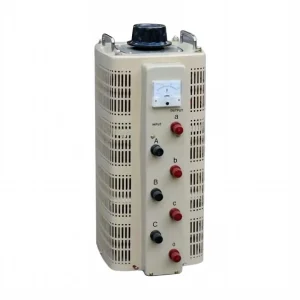
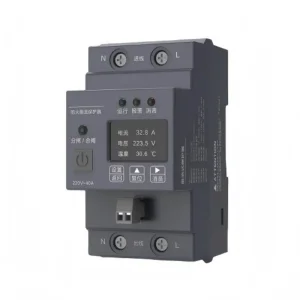
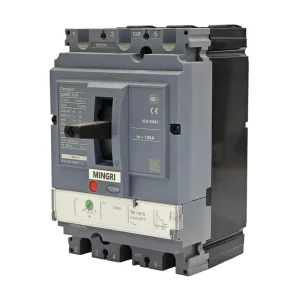
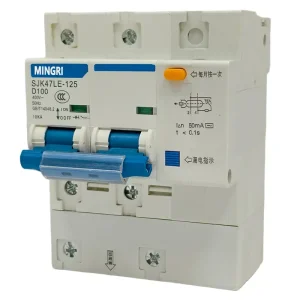
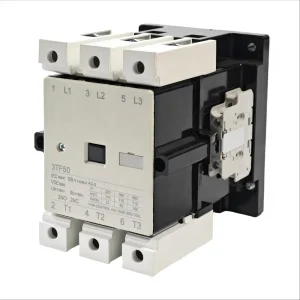
High-performance low-voltage and medium-voltage control apparatus complementing your CNC transformer and power distribution installation.