High-Performance Contactors & Protection Architecture
Explore Mingri Electric’s premier line of AC-3/AC-4 rated contactors, intelligent motor protectors, vacuum switches, and power conditioning components engineered for severe-duty 690V environments.
Engineering Architecture of 690V Switching & Breaking Physics
Analyzing why industrial power distribution systems are transitioning to elevated low-voltage operating plateaus and how cutting-edge arc-suppression technology mitigates high-transient plasma fields.
The Shift to 690V Elevation
Modern mega-scale processing facilities, marine propulsion lines, and renewable generation fields are rapidly abandoning legacy 400V/480V architectures in favor of 690V distribution. The thermodynamic rationale relies on Joule’s first law: doubling line voltage allows a 42% reduction in current for identical real power (P = √3 × V × I × cosφ). This dramatic drop in current yields an exponential reduction in conductor cross-section (I²R thermal losses plummeting by roughly 66%), cutting copper usage, busbar mass, and structural switchgear volume.
Plasma Arc Chute Dynamics
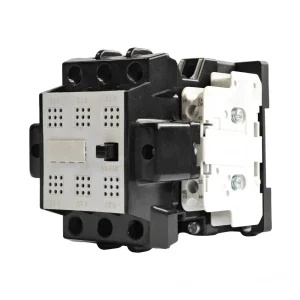
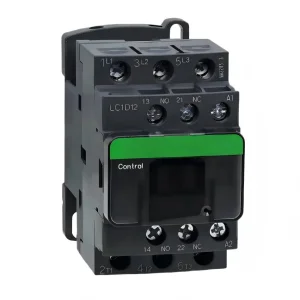
Switching 690V circuits introduces extreme plasma ionization challenges during circuit interruption. When contacts separate under an inductive AC-3 load, the voltage gradient across the dielectric gap easily sustains an electric arc. Mingri Electric’s 690V contactor architectures utilize multi-plate de-ion arc chutes constructed with ferromagnetic splitter plates. The Lorentz force drives the high-energy arc into the narrow cooling plates, segmenting it into series micro-arcs that dissipate thermal energy and elevate the total arc voltage beyond the 690V recovery peak.
Silver-Matrix Metallurgy
Traditional silver-nickel (AgNi) or silver-cadmium oxide (AgCdO) contact tips fail under repetitive 690V breaking stresses due to erosion, material transfer, and environmental restrictions (EU RoHS directives). Mingri’s modern 690V contactor portfolio adopts sintered Silver Tin Oxide (AgSnO₂) contacts fortified with refractory metal oxide dopants (such as In₂O₃ and WO₃). This matrix yields superior resistance to contact welding during locked-rotor starting currents (up to 8.5 × Ie) and drastically minimizes material ablation over millions of operational cycles.
Comparative Engineering Parameters: Standard 400V vs. Heavy-Duty 690V Contactors
When selecting low-voltage switching devices, specifying a 690V rated contactor requires careful verification of clearance, creepage distances, and electromagnetic coil holding forces to prevent phase-to-phase flashovers under altitude and humidity derating.
| Performance Dimension | Standard Commercial 400V Contactor | Heavy-Duty Industrial 690V Contactor | Engineering Benefit & Impact |
|---|---|---|---|
| Rated Insulation Voltage (Ui) | 690 V AC | 1000 V to 1200 V AC | Prevents dielectric breakdown during voltage spikes & high line transients. |
| Rated Impulse Withstand (Uimp) | 6.0 kV | 8.0 kV to 12.0 kV | Surpasses atmospheric surge & lightning strike thresholds in outdoor switchboards. |
| Contact Tip Metallurgy | AgNi (Silver Nickel) | AgSnO₂ + Refractory Dopants | Superior anti-welding characteristics during high short-circuit inrush (Ipeak). |
| Arc Chute Architecture | Single-chamber / 5-plate de-ion | Modular bifurcated / 9-13 plate multi-vent | Rapid de-ionization preventing sustained arc re-ignition at elevated recovery voltage. |
| Creepage & Clearance (Pollution Deg 3) | Creepage: 10 mm / Clearance: 6 mm | Creepage: 16 mm / Clearance: 10 mm | Safeguards tracking resistance in conductive dust and marine saline atmospheres. |
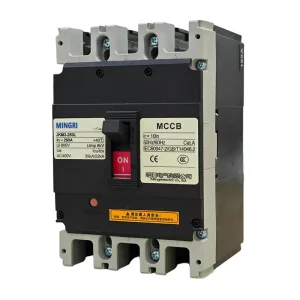
| Type 2 Short-Circuit Coordination | Conditional (Requires specific fuse rating) | Full Type 2 Certified with MCCBs (SJKM3) | Guarantees zero contact welding or housing rupture after interruption clearing. |
Global Enterprise Sourcing Trends & Supply Chain Drivers
How utility EPCs, global switchboard OEMs, and heavy industrial plant designers navigate technical trade-offs, geopolitical compliance, and localized factory integration.
Renewable Energy Storage (BESS)
Battery Energy Storage Systems (BESS) operate with Power Conversion Systems (PCS) at AC voltage baselines reaching 690V and 800V AC. Contactor failure in these bidirectional circuits results in catastrophic downtime. International EPCs require contactors capable of handling high capacitive load charging currents, elevated ambient operating temperatures inside sealed containers (up to +70°C), and continuous duty without thermal runaway.
Hyperscale Data Center HVAC
Cooling mega-watt class AI data clusters demands ultra-reliable centrifugal chillers running on 690V motors. These high-inertia compressors run continuously, requiring contactors that exhibit exceptionally low electromagnetic hum (<32 dB) and electronic wide-range coils (100–250V AC/DC) immune to grid harmonic distension, brownouts, and voltage dips commonly experienced during transformer switching.
Sourcing Agility & The Yueqing Advantage
Western engineering conglomerates are frequently constrained by 20 to 36-week lead times for high-amperage contactors. China’s electrical manufacturing epicenter in Yueqing, Zhejiang—anchored by specialized leaders like Mingri Electric—provides a complete vertical supply chain: precision stamped copper leads, in-house coil winding, automated robotic silver-brazing, and rapid-turn OEM customization delivered in 4 to 6 weeks.
Sector-Specific 690V Switchgear Engineering Solutions
From marine engine rooms to wind turbine towers, Mingri Electric delivers coordinated motor control, isolation, and circuit protection designed for extreme harshness.
Wind Turbine Nacelles
Operate in severe vibration regimes (up to 3G acceleration) from -40°C to +60°C. 690V contactors control yaw/pitch drives and bypass circuit breakers during grid fault ride-through (FRT) events without intermittent contact chattering.
- Vibration resistance: IEC 60068-2-6
- Extended operating range: -40°C to +70°C
- Mechanical interlocks for dual-direction pitch
Marine & Offshore Drilling
Naval architects require high isolation ratings and corrosion resistance against saline air. Our CJX1 and LC1D series in IP65 enclosures interface seamlessly with marine main switchboards under ABS, DNV-GL, and CCS standards.
- Anti-saline & anti-fungal insulation
- Low coil magnetic dispersion
- DNV/CCS compliant electrical endurance
Underground Heavy Mining
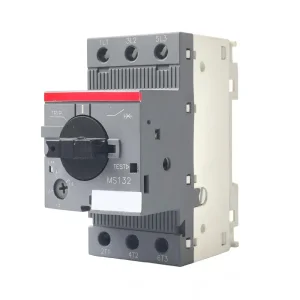
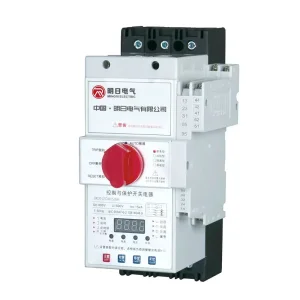
Heavy slurry pumps, ball mills, and ventilation fans run on 690V to minimize voltage drops across kilometer-long trailing cables. Paired with MS132 and SJKCPS protection units to deliver Type 2 coordination against massive locked-rotor stalls.
- Heavy-duty AC-4 inching and plugging
- Rapid fault clearing with SJKM3 MCCB
- Compact footprint for blast-proof enclosures
Utility-Scale Photovoltaics
Coupled with central inverter step-up transformers (such as ZGS11-Z.T solar substations), 690V contactors isolate grid feeders, auxiliary transformers, and harmonic filter banks during low-irradiance and anti-islanding conditions.
- AC-1 high continuous thermal rating
- Electromagnetic compatibility (EMC class A/B)
- Integrated auxiliary status feedback
Rigorous Factory Testing & Global Regulatory Frameworks
Understanding the difference between baseline factory tests and international certifications guarantees uncompromised project safety and eliminates customs clearance friction.
IEC / EN 60947-4-1 vs. UL 60947
Our Yueqing production lines manufacture switchgear tested to both IEC/EN 60947-4-1 (Low-voltage switchgear and controlgear - Contactors and motor-starters) and UL 60947-4-1 (North American industrial control panels). Testing includes verification of temperature rise limits at rated operational current (Ie), making and breaking capacities up to 10× Ie for AC-4 categories, and rigorous dielectric withstand at elevated test voltages (Ui × 2 + 1000V).
Short-Circuit Coordination (Type 1 & 2)
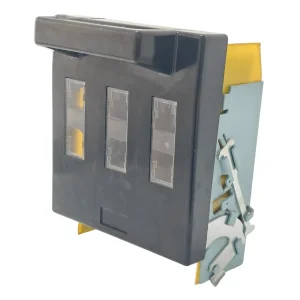
Mingri Electric engineers provide complete Type 2 coordination tables matching our CJX1 and LC1D contactors with upstream SJKM3 MCCBs and HR5 fused disconnect switches. Under IEC 60947-4-1 Type 2 criteria, following a prospective short-circuit fault clearing event (up to 100kA), the contactor must suffer no damage or alteration of calibration, allowing immediate system re-energization without contact replacement.
Factory Acceptance Testing (FAT) Protocols
Every industrial production batch undergoes rigorous 100% automated inspection: high-potential (Hi-Pot) dielectric tests, coil pick-up/drop-out voltage threshold verification (pick-up at 85%-110% Us, drop-out at 20%-75% Us), millivolt drop tests across main contact poles to confirm low contact resistance (<0.15 mΩ), and laser-guided contact travel alignment for simultaneous three-phase touch timing.
R&D Roadmap: The Future of High-Capacity 690V Contactors (2025–2030)
How the convergence of power electronics, wide-bandgap silicon carbide (SiC), and IoT edge intelligence is redefining industrial motor switching.
Hybrid Solid-State / Mechanical Topologies
Pure mechanical contactors generate electric arcs; pure solid-state contactors suffer from high conduction losses and thermal heat sinks. Mingri’s R&D division is pioneering hybrid contactor architectures. An auxiliary SiC MOSFET or IGBT module bridges the mechanical contacts exclusively during the 5-millisecond opening transition. The arc is entirely quenched electronically at zero current cross-over, after which the mechanical contacts achieve galvanic isolation with zero conduction loss.
IoT Edge Diagnostics & Contact Wear Algorithms
Next-generation 690V intelligent contactors integrate embedded microcontrollers and non-invasive Hall-effect current sensors. By tracking cumulative switching cycles, instantaneous current amplitude during breaking, and contact millivolt drop over time, the unit calculates remaining mechanical and electrical life. Predictive maintenance alerts are transmitted natively via Modbus TCP, PROFINET, or wireless BLE mesh to building management platforms.
Eco-Materials & Wide-Spectrum Electronic Coils
In accordance with global net-zero manufacturing mandates, future switchgear frames utilize halogen-free, recyclable polyphenylene sulfide (PPS) and bio-based polyamides with UL94 V-0 flame retardancy. Concurrently, universal wide-band electronic coils (24V–250V AC/DC) drastically reduce plant spare-part inventory while slashing coil holding power consumption by up to 75% compared to traditional electromagnetic laminated cores.
Frequently Asked Questions on 690V Contactors & Sourcing
Direct technical answers to critical engineering inquiries from switchboard builders, electrical estimators, and international procurement managers.
Q1: How does ambient temperature affect 690V contactor ratings?
Standard ratings under IEC 60947-4-1 are benchmarked at +40°C. In high-density switchboards or desert solar plants where internal cabinet temperatures reach +55°C or +70°C, the rated operational current (Ie) must be derated by approximately 1% to 1.5% per °C above +40°C. Alternatively, engineers can specify contactors with higher thermal current ratings (Ith) or select Class H/N coil insulation systems to prevent premature dielectric breakdown.
Q2: What is the operational distinction between AC-1, AC-3, and AC-4 at 690V?
Utilization category AC-1 governs non-inductive or slightly inductive resistive loads (e.g., industrial heaters). AC-3 governs standard squirrel-cage induction motor starting and breaking at full motor speed, handling breaking currents equal to rated full-load motor current. AC-4 applies to severe duty conditions: motor plugging, rapid reversing, and inching/jogging, requiring the contactor to make and break locked-rotor currents up to 6× to 8× Ie at elevated 690V recovery voltages.
Q3: Can 400V-rated contactors be used in 690V systems with derating?
Generally, no. Even if continuous thermal current (Ith) is derated, standard 400V contactors lack the creepage distance (16mm required for 690V under Pollution Degree 3), clearance distance, and specialized arc chute splitter plate spacing required to extinguish 690V plasma arcs. Attempting to use a 400V/500V rated device on a 690V bus introduces severe risk of catastrophic phase-to-phase flashover during full-load inductive breaking.
Q4: How do electronic coils solve contact bounce issues?
Traditional AC coils depend on laminated iron cores with copper shading rings, which cause mechanical chatter and contact bounce during zero-voltage crossings. Electronic coils convert input AC/DC via integrated microelectronics into an optimized DC holding current. This eliminates 100Hz/120Hz mechanical hum, ensures constant contact pressure, reduces bounce time from 4ms down to under 0.8ms, and prevents localized contact micro-welding.
Q5: What criteria determine Type 2 Coordination with upstream circuit breakers?
Type 2 coordination requires that under a prospective short-circuit fault (Iq), the upstream protective device (such as our SJKM3 MCCB) clears the overcurrent before the contactor suffers permanent damage. Although light contact tack welding is permissible if easily separable with a flat screwdriver, the contactor must maintain insulation integrity, withstand test voltages, and remain immediately operational without parts replacement.
Q6: How does altitude above 2000m impact 690V contactor selection?
At altitudes exceeding 2000 meters (6600 feet), atmospheric air density decreases, diminishing both dielectric insulating strength and convective thermal dissipation. For installations at 3000m or 4000m (common in Andean or Tibetan mining operations), the rated operational voltage (Ue) and operational current (Ie) must be derated by factors defined in IEC 60947-1 (typically multiplying Ue by 0.88 and Ie by 0.92 at 3000m), or an over-dimensioned contactor must be specified.
Q7: Why are vacuum contactors preferred for frequent switching at 690V/1140V?
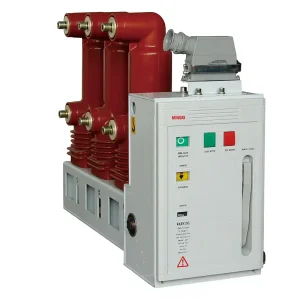
In ultra-high duty applications like underground mining conveyors or heavy metal forging where operations exceed 600 cycles per hour, vacuum contactors (such as our VSB series variants) offer distinct advantages over air-break contactors. The electric arc is contained entirely inside a hermetically sealed ceramic vacuum bottle, resulting in zero external ionization, zero open-air plasma venting, and virtually maintenance-free contact tips.
Q8: What logistics and documentation do Yueqing suppliers provide for global export?
Mingri Electric provides comprehensive international documentation packages: Certificate of Origin (Form E, CO, etc.), full test certificates according to IEC 60947-4-1, CE declarations of conformity, ISO 9001 quality audit reports, customized wooden crating for maritime transport (IPPC stamped ISPM 15 compliant), and full single-line engineering drawings to ensure seamless integration into foreign switchgear assemblies.
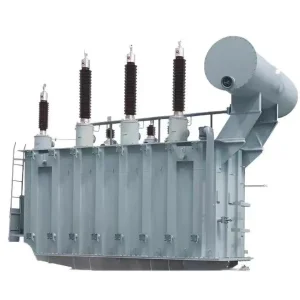
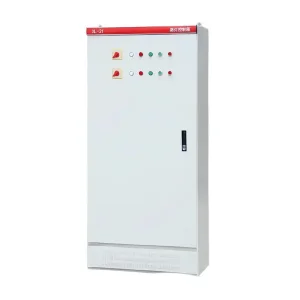
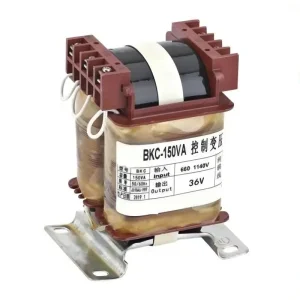
Integrated Medium & Low Voltage Power Distribution Portfolio
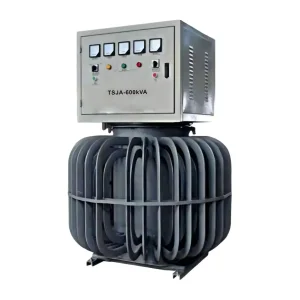
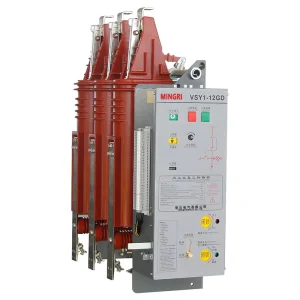
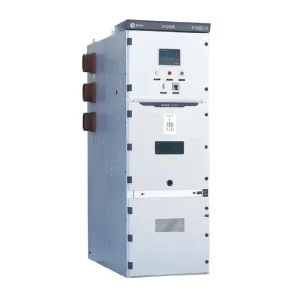
Complementing our 690V contactors, Mingri Electric engineers transformers, vacuum circuit breakers, compact substations, and distribution switchgear for utility-scale electrical infrastructures.
Supplier Qualification Checklist for China 690V Contactors
Essential audit parameters to evaluate when commissioning OEM/ODM high-capacity contactor manufacturing lines in Yueqing, Wenzhou.
1. Silver Contact Content Verification
Always verify the chemical metallurgical assay of the contact tips. Premium 690V contactors must utilize AgSnO₂ with silver content strictly between 88% and 92%. Low-tier suppliers often dilute silver content with copper alloys down to 60%, leading to rapid contact vaporization, thermal runaway, and catastrophic contact welding under severe AC-3 duty.
2. Automated Production & Coil Winding
Audit whether the supplier employs automated CNC coil winders with tension feedback and computerized vacuum pressure impregnation (VPI). Hand-wound coils exhibit varying copper turn counts and uneven varnish penetration, causing localized inter-turn short circuits and fluctuating coil pull-in voltages under unstable grid lines.
3. Type Test Certification Credentials
Require complete type test certificates issued by internationally accredited laboratories (such as DEKRA, KEMA, ASTA, or CNAS/TÜV accredited testing centers). Authentic documentation must explicitly report making and breaking capacity tests, short-time withstand current tests (Icw), temperature-rise data, and dielectric verification at full 690V / 1000V levels.