Medium-Voltage Apparatus & Core Distribution Nodes
Pre-engineered, type-tested 12kV–40.5kV switchgear, RMU modules, and auxiliary power units engineered for rapid substation integration.
Global Grid Modernization & The 40.5kV Switchgear Inflection Point
Decarbonization, high-capacity utility collector networks, and hyperscale digital infrastructure are elevating 40.5kV switchgear from a regional standard to a worldwide operational imperative.
Grid Tie-in Optimization
In massive utility-scale renewables—such as 500MW+ solar PV farms and multi-gigawatt offshore wind clusters—shifting from standard 12kV/24kV collectors to 40.5kV class trunking minimizes ohmic transmission losses by up to 64%, slashing copper balance-of-plant expenditure substantially.
Footprint & Substation Densification
High-density data campuses and urban secondary substations face severe footprint constraints. Modern Chinese 40.5kV metal-clad assemblies incorporate advanced solid-dielectric barrier technology and SF6/Eco-gas sealed tanks, reducing panel width down to 1200mm without compromising phase clearance.
Safety Integrity: LSC2B & IAC AFLR
Personnel safety governs modern power procurement. Tier-1 Chinese manufacturers build switchgear under Loss of Service Continuity class LSC2B with metallic partitions (PM). Internal Arc Classification (IAC AFLR up to 31.5kA for 1 full second) guarantees zero operator risk during maintenance events.
Engineering Architecture of Chinese 40.5kV Switchgear Systems
A rigorous comparative matrix evaluating Air-Insulated Switchgear (AIS - KYN61-40.5), Gas-Insulated Switchgear (GIS), and Solid-Insulated RMUs for utility and heavy-industry applications.
| Performance Parameter | KYN61-40.5 Armored AIS | C-GIS 40.5kV Sealed Tank | Solid-Dielectric Eco-40.5kV |
|---|---|---|---|
| Rated Voltage / Frequency | 40.5 kV / 50-60 Hz | 40.5 kV / 50-60 Hz | 40.5 kV / 50-60 Hz |
| Insulation Medium | Air + Epoxy Resin Sleeves | SF6 Gas or Dry Air / N2 Blend | Hydrophobic Cycloaliphatic Epoxy (HCEP) |
| Rated Normal Current (In) | 630 A to 3150 A | 630 A to 2500 A | 630 A to 1250 A |
| Short-Time Withstand (Ik / tk) | 25 kA to 31.5 kA / 4s | 31.5 kA to 40 kA / 3s | 20 kA to 25 kA / 4s |
| Power Frequency Withstand (1 min) | 95 kV (Phase to Earth / Across Contacts) | 95 kV (Phase) / 115 kV (Isolating Distance) | 95 kV / 118 kV |
| Lightning Impulse (BIL 1.2/50µs) | 185 kV (Phase) / 215 kV (Disconnect Gap) | 185 kV (Phase) / 215 kV (Disconnect Gap) | 185 kV (Phase) / 215 kV (Disconnect Gap) |
| Enclosure Protection Class | IP4X (External) / IP2X (Door Open) | IP67 (Gas Tank) / IP4X (Enclosure) | IP67 (Solid Core) / IP4X (Cabinet) |
| Target Industrial Environments | Dry indoor substations, utility feeds | Coastal, offshore wind, chemical corrosive | Subway tunnels, compact urban vaults |
KYN61-40.5: The Benchmark of Withdrawable Protection
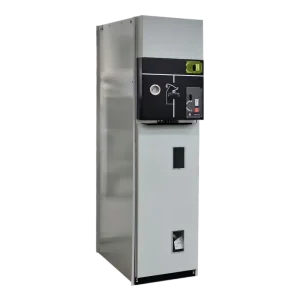
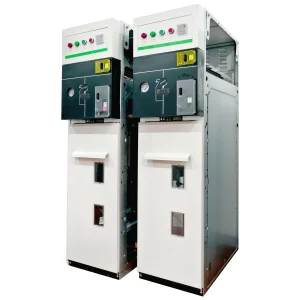
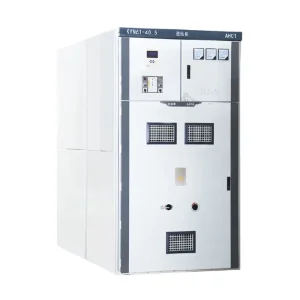
The KYN61-40.5 armored moving-type AC metal-enclosed switchgear is the workhorse of primary power distribution across China and international markets. Engineered using high-grade Alu-zinc-coated sheet steel, CNC-machined and double-bent for exceptional mechanical rigidity, the cabinet houses four distinct compartmentalized chambers: Breaker Compartment, Busbar Compartment, Cable Compartment, and Low-Voltage Relay Instrument Compartment. Each segregated volume is equipped with independent pressure-relief relief flaps oriented toward the roof, ensuring that any catastrophic internal fault event expels hot gases upwards away from maintenance personnel.
Equipped with standardized vacuum circuit breakers (such as ZN85-40.5 or customized Schneider/ABB withdrawable cassettes), the switchgear embodies an infallible "Five-Anti" mechanical and electrical interlocking chain: preventing inadvertent breaker operation with the truck in an intermediate position, preventing truck movement with closed breakers, eliminating accidental entry into energized compartments, forbidding earth-switch closure under energized states, and precluding breaker activation when the earth-switch is grounded.
China Industry 4.0: Supply Chain Resilience & Cost Velocity
How Yueqing and Zhejiang electrical manufacturing corridors transitioned from component suppliers to global leaders in automated medium-voltage engineering.
Vertical Supply Integration
Yueqing's electrical cluster congregates over 85% of critical upstream medium-voltage inputs—including silver-copper composite contacts, CT/PT instrument transformers, vacuum interrupters, and microcomputer relay protection units—within a 30-kilometer logistics radius, cutting assembly cycle times by over 40% compared to fragmented western supply chains.
Automated Sheet Fabrication
Modern factories utilize Salvagnini and Trumpf flexible sheet-metal processing cells alongside automated robotic laser welding. CNC bending ensures tolerance precision down to ±0.2mm across the entire 40.5kV cabinet frame, eliminating mechanical jamming during vacuum circuit breaker racking in the field.
Digital Quality Assurance
Every switchgear assembly undergoes automated helium mass-spectrometry leak-rate inspection (for GIS modules, ensuring leakage rates under 0.1%/year), robotic wiring-harness continuity testing, and automated partial discharge (PD) testing below 5pC at 1.1 times rated phase voltage, exceeding IEC criteria.
Global Applications & Critical Installation Scenarios
Engineered to perform in severe operational climates: from high-salinity coastal wind farms to high-altitude mining sites and mission-critical hyperscale data campuses.
Utility Solar & Wind Farms
40.5kV switchgear functions as the core step-up collector node between individual inverter stations (690V / 10kV / 35kV) and the main 110kV/220kV transmission substation. Ruggedized thermal designs dissipate peak solar midday heat while surviving nocturnal condensation without dielectric breakdown.
Hyperscale AI Data Centers
AI compute clusters consume unprecedented electric power (50MW to 200MW per facility). Direct 40.5kV medium-voltage distribution down to transformer vaults minimizes I²R heat losses, while ultra-fast vacuum circuit breakers clear faults in less than 50ms, safeguarding upstream UPS banks.
Heavy Metallurgical & Chemical Sites
Electrochemical furnaces, chlorine chlor-alkali plants, and rolling mills generate harsh harmonics, voltage sags, and corrosive airborne particulates. 40.5kV GIS sealed panels isolate all primary conductors from corrosive sulfur and dust, ensuring continuous uptime under punishing duties.
Global EPC Sourcing Matrix: Total Cost of Ownership (TCO)
Why leading multinational contractors partner with Chinese manufacturers to overcome multi-year European lead-times and inflationary project budgets.
| Evaluation Parameter | Western Tier-1 Switchgear OEM | Chinese Tier-1 Manufacturer (Mingri Electric) | Strategic Project Impact |
|---|---|---|---|
| Typical Factory Lead Times | 36 to 52 Weeks | 10 to 16 Weeks (Fast-Track Options) | Accelerates Commercial Operation Date (COD) by 6-9 months |
| Direct Equipment CAPEX | Baseline Benchmark ($$$) | 35% to 55% Cost Reduction ($) | Substantially improves project Internal Rate of Return (IRR) |
| Type-Test Documentation | KEMA / CESI Standardized | CNAS / KEMA / ASTA Equivalent Reports | Ensures frictionless local utility grid interconnection acceptance |
| Engineering Customization | Rigid catalog modularity; high NRE fees | Full bespoke busbar routing & multi-brand relays | Seamlessly matches retrofits and specific EPC single-line diagrams |
| Warranty & Spare Components | Lengthy RMA clearance; costly modules | Direct factory spares dispatch; 24/7 video support | Minimizes downtime duration and long-term OPEX maintenance |
Comprehensive Technical & Procurement Q&A
Definitive answers covering switchgear certification, installation parameters, arc containment, and custom manufacturing capabilities.
QWhat differentiates a 40.5kV system from a standard 33kV or 36kV network?
In international power systems, 33kV and 36kV represent standard nominal and highest continuous operating voltages under IEC norms. The 40.5kV rating denotes the maximum equipment insulation design ceiling (highest voltage for equipment, Um). Chinese national standards (GB/T 3906) explicitly specify 40.5kV class apparatus to provide higher insulation margins (185kV BIL / 95kV power frequency), making it significantly more resilient against switching surges, lightning transients, and altitude derating compared to tight 36kV equipment.
QWhat specific type-test certificates should international buyers mandate?
EPCs and utilities must demand full third-party type test reports conducted per IEC 62271-200. These include: (1) Dielectric tests (power frequency withstand and 1.2/50µs lightning impulse withstand); (2) Temperature-rise tests under full rated continuous current; (3) Short-time and peak withstand current tests (e.g., 31.5kA for 4s, 80kA peak); (4) Mechanical endurance tests (M2 class - 10,000 operations for circuit breakers); and (5) Internal Arc Classification (IAC AFLR) verifying pressure relief venting without door blowout or indicator burning.
QHow does altitude above 1,000 meters affect 40.5kV switchgear selection?
Air density decreases at high elevations, reducing air dielectric breakdown voltage and convective heat dissipation. For installations above 1,000 meters (such as high-plateau mining and solar projects in Chile, Tibet, or Central Asia), air clearances and creepage distances must be derated in accordance with IEC 62271-1 Ka factors, or the switchgear must employ pressurized Gas-Insulated (GIS) or solid-dielectric encapsulation which remains completely unaffected by atmospheric pressure variations.
QCan Chinese switchgear suppliers accommodate third-party numerical relays?
Yes. Chinese switchgear manufacturers routinely engineer low-voltage compartments to accommodate any specified multinational relay and automation architecture, including SEL (Schweitzer Engineering Laboratories), ABB Relion series, Schneider Micom/Sepam, Siemens SIPROTEC, or Chinese tier-1 solutions (such as NARI). Secondary wiring schematics and CT/PT burden matching are custom-tailored to EPC single-line diagrams.
QWhat is the significance of the "Five-Anti" interlocking mechanism?
The "Five-Anti" interlock system is an essential safety requirement designed into Chinese metal-clad switchgear: (1) Prevents inadvertent circuit breaker opening or closing; (2) Prevents racking the breaker carriage while closed; (3) Prevents closing the grounding switch when the breaker is energized; (4) Prevents closing the circuit breaker when the earthing switch is closed; and (5) Prevents accidental intrusion into energized primary cable or busbar compartments. This foolproof physical interlocking virtually eliminates human operational errors.
QHow do KYN61-40.5 and GIS switchgear compare in total footprint requirements?
A standard KYN61-40.5 air-insulated panel typically measures 1200mm–1400mm in width, 2600mm–3000mm in depth, and 2400mm–2600mm in height, requiring adequate front maintenance aisles. A comparable 40.5kV GIS panel occupies less than 40% of this volumetric footprint (typically 600mm–800mm wide), making GIS far superior for offshore platforms, underground metro substations, and congested metropolitan substations.
Integrated Transformers, Circuit Protection & Regulators
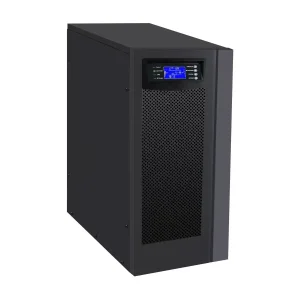
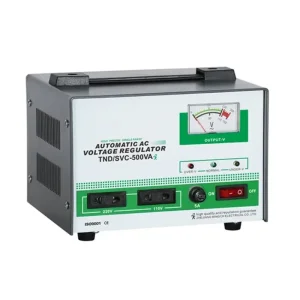
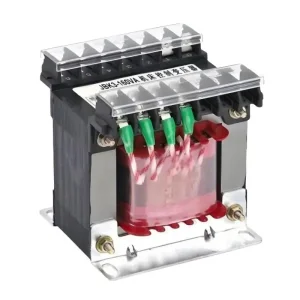
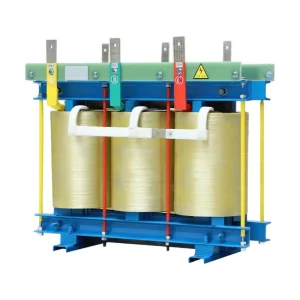
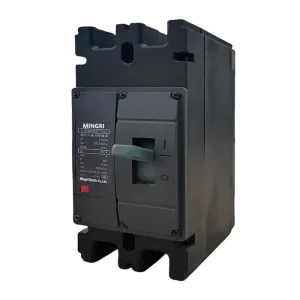
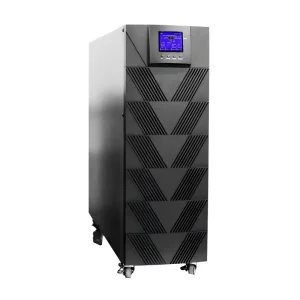
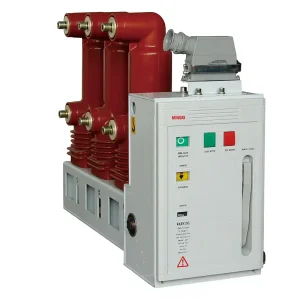
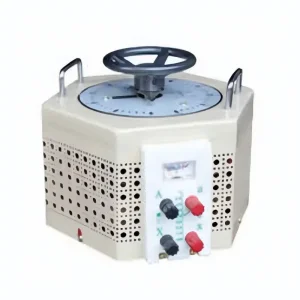
Complete your substation architecture with precision control transformers, high-capacity vacuum breakers, UPS systems, and automatic voltage regulators.