Primary Lineup
Engineered Protection & Switching Systems
Microprocessor-driven protection modules and switching assets meeting rigorous IEC & IEEE reliability standards.
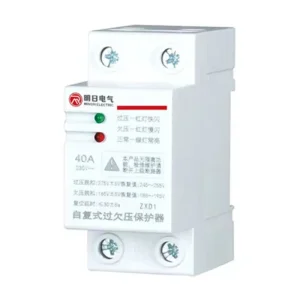
OEM MRGQ-63 Series Self-Resetting Over and Under Voltage Protector Manufacturer, Company
View Technical Specs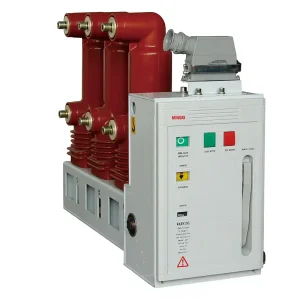
ODM China VSB-12 Indoor High-Voltage Vacuum Circuit Breaker Suppliers - Reliable Factory for 12kV Power Systems Suppliers, Factories
View Technical Specs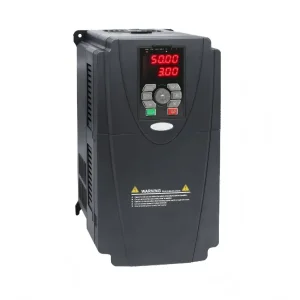
ODM MC9001 Series High Performance Frequency Converter Supplier, Manufacturer
View Technical Specs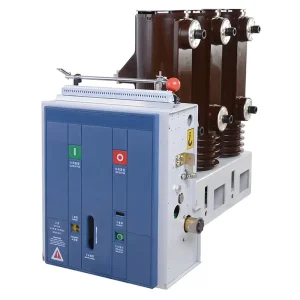
Wholesale VS1-12C Indoor High-Voltage Side-Mounted Vacuum Circuit Breaker Suppliers, Supplier
View Technical Specs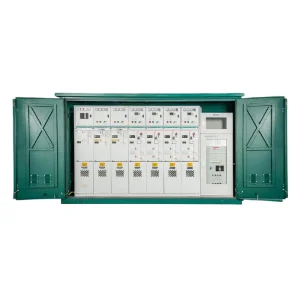
OEM High Voltage Outdoor Intelligent Switch Box - China Factory Suppliers for Reliable Power Distribution Solutions Supplier, Manufacturer
View Technical Specs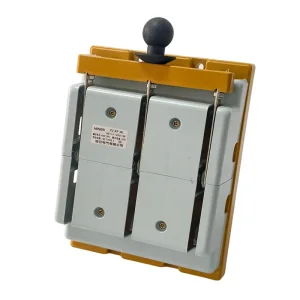
ODM China HD11F Double Throw Anti-Error Knife Switch Factory - Reliable 200A to 1500A Circuit Isolation Suppliers Manufacturer, Companies
View Technical Specs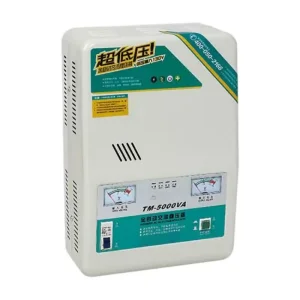
OEM TM Single-Phase Series Relay Type Fully Automatic AC Voltage Regulator Manufacturers, Factory
View Technical Specs
Industry Macro View
Global Grid Dynamics & Protection Necessities
The acceleration of decentralized energy, high-draw industrial EV infrastructure, and extreme climatic events drive unprecedented volatility across modern distribution networks.
< 0.1s
Microprocessor Trigger Latency
63A - 1500A
Current Handling Range
100,000+
Mechanical Reset Cycles
99.98%
Downstream Equipment Safety
Harmonic Grid Distortion
The worldwide deployment of switch-mode power supplies, non-linear industrial drives, and solar inverters introduces severe harmonic spikes. Dynamic adjustable voltage protectors isolate volatile surges before component breakdown occurs.
Grid Edge Fragility
Emerging markets encounter severe brownouts, phase-loss, and overvoltage events caused by uneven utility upgrades. Modern self-resetting protectors eliminate costly manual intervention through programmed recovery thresholds.
Zero-Downtime Demands
Modern data hubs, medical centers, and automated manufacturing pipelines cannot tolerate micro-interruptions. Integrating intelligent adjustable protectors preserves continuous capital operation while lowering insurance liabilities.
Industrial Scale
China Factory Advantage: Yueqing’s Integrated Precision Ecosystem
Yueqing stands as the epicenter of global low- and medium-voltage electrical manufacturing. Our state-of-the-art facilities leverage a deeply clustered supply base that enables unparalleled cycle-time acceleration from prototyping to mass distribution.
By blending automated surface-mount technology (SMT) with synchronized terminal stamping and rigorous automated optical inspection (AOI), we consistently deliver mil-spec dimensional stability and electrical tolerance.
- Vertical integration from raw alloy stamping to intelligent micro-controller calibration.
- ISO 9001, ISO 14001, and ISO 45001 fully audited manufacturing protocols.
- In-house dielectric breakdown, temperature rise, and salt-spray lifecycle testing bays.
- Scalable ODM/OEM production capacities handling volume bursts seamlessly.
Microcontroller Firmware Agility
Direct factory firmware personalization allows rapid alteration of protection response curves, reconnect delay timings, and user-facing digital readouts for specific national utilities.
Direct Cost Efficiency
Our localized cluster eliminates intermediate shipping layers, enabling Tier-1 engineering procurement contractors (EPCs) to capture substantial margin advantages on large-scale tenders.
Versatile Implementation
Application Scenarios & Tailored Configurations
Across diverse operational terrains, adjustable voltage protection shields sensitive high-capital assets against unpredicted distribution disturbances.
Industrial Automation
Safeguards programmable logic controllers (PLCs), robotic assembly drives, and sensitive servo motors from line-voltage sags and inductive spikes generated by heavy plant switching.
Renewable Microgrids
Manages unpredictable voltage swells occurring at distributed photovoltaic (PV) generation nodes and localized battery storage systems (BESS) during sudden islanding shifts.
Telecommunications
Prevents destructive overvoltages from disabling remote cellular base stations (BTS) and satellite repeaters situated in regions with unstable utility grids.
Commercial Real Estate
Protects centralized HVAC chillers, multi-zone elevator banks, and mission-critical server installations from three-phase unbalance and neutral disconnection damages.
Technology Horizon
Evolutionary Trends in Voltage Protection Systems
The convergence of power electronics, edge computing, and real-time telemetry is transforming passive relays into proactive grid defense assets.
IoT Integration & Modbus Remote Control
Emerging architectures interface directly with building management systems (BMS) via RS-485 Modbus and wireless telemetry, supplying real-time current, voltage waveforms, and fault logging straight to mobile and desktop dashboards.
Solid-State Hybrid Switching
Research is pivoting toward hybrid topologies that couple classical electromechanical relays with silicon-controlled rectifiers (SCRs). This creates sub-millisecond interruption capabilities with virtually zero contact-arcing fatigue.
AI Predictive Anomaly Detection
By assessing micro-variations in phase angles and frequency fluctuations over time, integrated machine-learning models predict imminent line failures, motor stalls, or insulation collapse before a destructive trip occurs.
Procurement Strategy
Enterprise Buyer Demands: Auditing Global Manufacturers
Strategic sourcing managers and EPC utility principals must balance stringent technical conformance with verified factory scalability.
Certification & Compliance
Direct verification of CE, CB Scheme, RoHS, and UL credentials ensures smooth customs clearance and absolute alignment with regional electrical inspection codes across North America, the EU, and APAC.
Material Grade Transparency
Auditing the purity of internal silver-alloy contact points, the flame-retardant rating of outer polymer housings (UL94 V-0), and the thermal tolerance of copper terminal lugs prevents field failures under extreme load.
Traceability & Batch Testing
Leading buyers demand comprehensive serialized lot tracking down to the microchip and relay batch, paired with certified factory acceptance test (FAT) documentation on high-voltage and low-voltage shipments.
Engineering FAQ
Frequently Asked Questions for Engineers & Procurement
Authoritative insights into equipment selection, operational mechanics, and factory integration protocols.
What is the functional difference between an adjustable protector and a fixed surge protective device (SPD)?
An SPD diverts transient microsecond surges (like lightning impulses) to ground using metal-oxide varistors (MOVs), but cannot protect against prolonged brownouts or steady-state overvoltage. An adjustable voltage protector continually monitors RMS voltage via MCU, disconnecting the line during continuous anomalies and automatically re-engaging once normal grid parameters stabilize.
How does the self-resetting reconnect delay safeguard inductive machinery?
Inductive devices, such as refrigeration compressors, commercial chillers, and heavy industrial pumps, experience severe mechanical strain and high locked-rotor inrush currents if restarted immediately after an interruption. The adjustable delay timer (typically calibrated from 2 to 300 seconds) allows line pressures to equalize and currents to normalize before reclosing the circuit.
Can three-phase adjustable voltage protectors identify neutral loss and phase asymmetry?
Yes. Premium models, such as our three-phase digital series, integrate comprehensive phase-angle and line-to-neutral monitoring. In the event of open-neutral faults, phase reversal, or unbalance exceeding pre-set thresholds (e.g., 20%), the unit trips to protect multi-phase motors from burning out under asymmetric load conditions.
What documentation and validation tests are provided with OEM bulk shipments?
Every commercial batch is supplied with Type Test Reports verifying dielectric withstand, temperature rise limits, mechanical endurance, and trip accuracy. Customers may also request specialized Factory Acceptance Test (FAT) sign-offs, material composition certs, and customized carton packaging with dedicated barcodes and serial indices.
Integrated Grid Solutions
High & Low-Voltage Power Equipment Assets
Complementary medium-voltage breakers, transformers, and automated regulation apparatus completing enterprise-level installations.
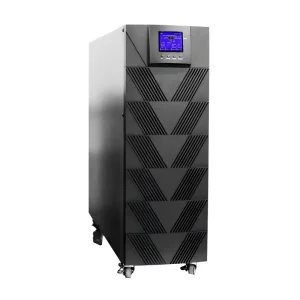
ODM MCL31 Series Low Frequency UPS Technical Supplier, Factories
View Technical Specs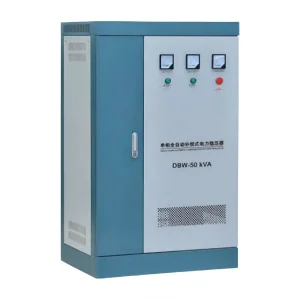
Wholesale DBW Single Phase Series Compensated Power Voltage Regulator Manufacturer, Company
View Technical Specs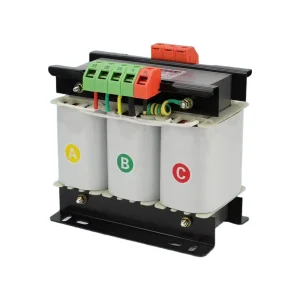
China QZB Series Auto-coupling Reduced-voltage Starting Transformer Factory, Companies
View Technical Specs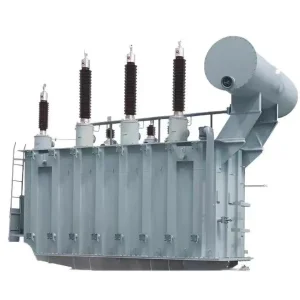
Wholesale 110kV Series Power Transformer with On-Load Tap Changer Suppliers, Factory
View Technical Specs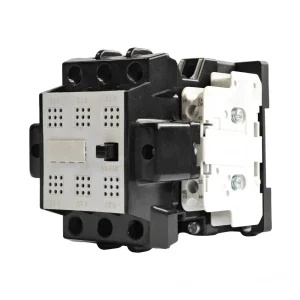
China CJX1 (3TB) Series AC Contactors 9-400A 380V AC-3 - Reliable China Suppliers and Factory for Electrical Solutions Supplier, Companies
View Technical Specs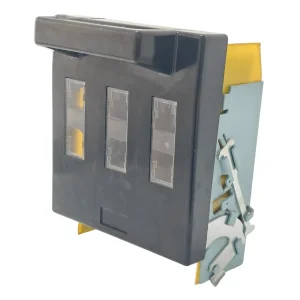
OEM HR5 Fused Disconnect Switch with Visible Contacts Supplier, Factory
View Technical Specs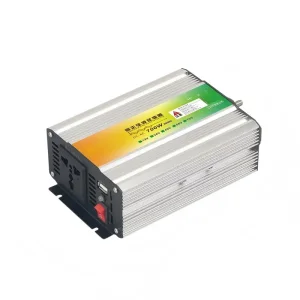
High-Quality MCC Series Modified Sine Wave Inverter Suppliers, Supplier
View Technical Specs