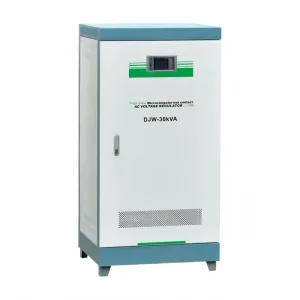
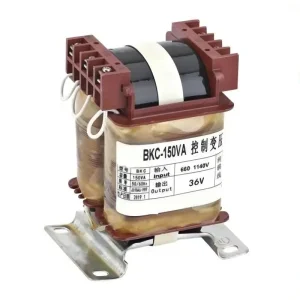
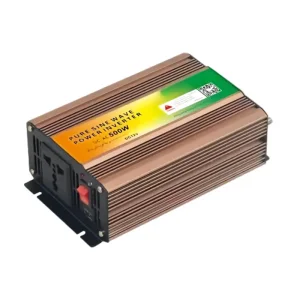
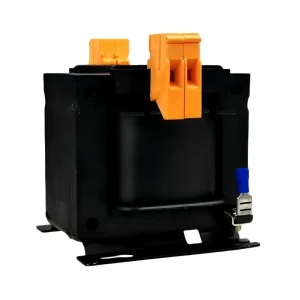
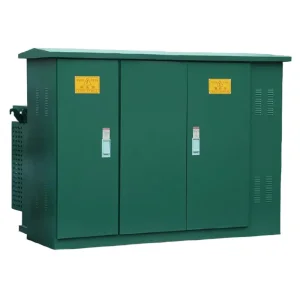
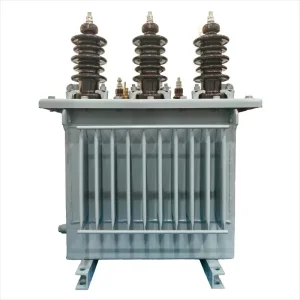
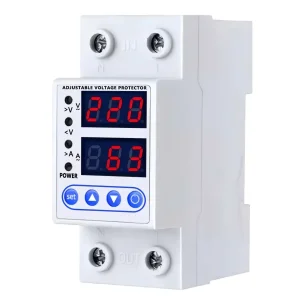
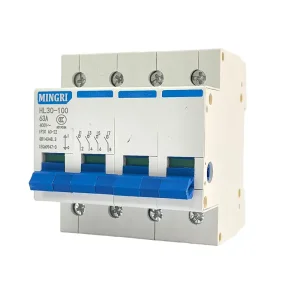
Primary Switching & Distribution Equipment Portfolio
Industrial electromagnetic controls, circuit interrupting switchgear, and safety management units engineered to exceed IEC 60947-4-1, GB/T 14048.4, and UL 60947 standards.
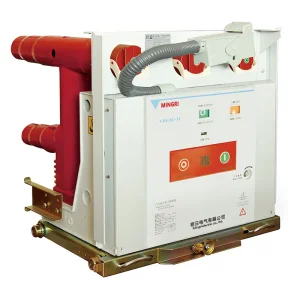
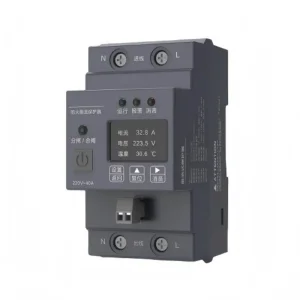
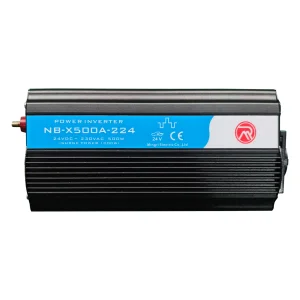
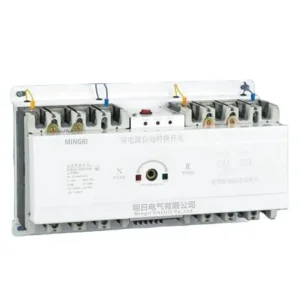
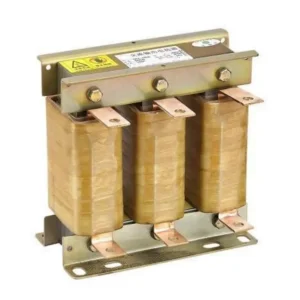
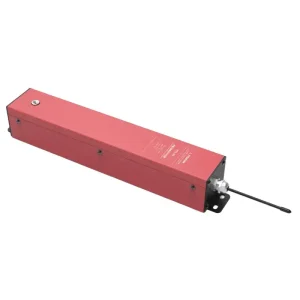
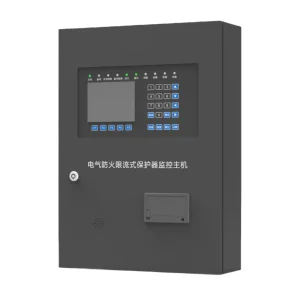
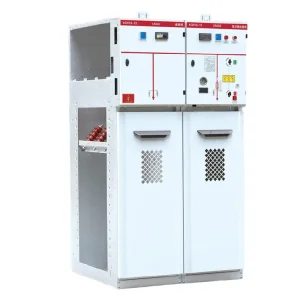
Industrial AC Contactor Architectural Engineering & Topology
Deconstructing the electromagnetic dynamics, thermal arc chute dynamics, and contact metallurgy required for continuous mission-critical industrial switching cycles.
Electromagnetic Core Dynamics
Our industrial contactors leverage laminated silicon steel E-cores engineered to minimize eddy current losses and hysteretic dissipation. Coupled with precision-calibrated copper shading rings, the magnetic circuit eliminates mechanical chatter and harmonic humming under steady-state operating voltages ranging from 85% to 110% of Us.
Advanced Contact Metallurgy
Main contact points utilize specialized Silver-Tin Oxide (AgSnO2) and Silver-Cadmium Oxide (AgCdO) micro-alloy composites. AgSnO2 contacts provide superior anti-welding properties and burn-off resistance against massive instantaneous inrush currents up to 10× Ie encountered during AC-3, AC-4 motor reversals, and capacitive switching transients.
De-ion Arc Extinguishing Chutes
Arc interruption matrices employ multi-plate nickel-plated magnetic splitter plates encased in thermoset DMC (Dough Moulding Compound). During galvanic separation, electromagnetic Lorentz forces instantly propel the electric arc into the splitter stack, splitting, cooling, and quenching the discharge within 8 to 12 milliseconds.
| Utilization Category | Typical Applications | Make Conditions (Current / Voltage) | Break Conditions (Current / Voltage) | Target Endurance Rating |
|---|---|---|---|---|
| AC-1 | Non-inductive or slightly inductive loads, resistance furnaces, heaters | 1.0 × Ie, cos φ = 0.95 | 1.0 × Ie, cos φ = 0.95 | 1,500,000 Operations |
| AC-2 | Slip-ring motors: starting, plugging, switching off | 2.5 × Ie, cos φ = 0.65 | 2.5 × Ie, cos φ = 0.65 | 1,000,000 Operations |
| AC-3 | Squirrel-cage induction motors: starting, switching off during running | 6.0 × Ie, cos φ = 0.35 | 1.0 × Ie, cos φ = 0.35 | 1,200,000 to 2,000,000 Operations |
| AC-4 | Squirrel-cage motors: plugging, inching, rapid reversing cycles | 6.0 × Ie, cos φ = 0.35 | 6.0 × Ie, cos φ = 0.35 | 250,000 Operations |
| AC-6b | Low-voltage shunt capacitor bank switching (PFC systems) | Peak current up to 30 × Ie | 1.0 × Ie, cos φ = 0.15 | 200,000 Operations (w/ pre-charge resistors) |
Supply Chain Excellence: Yueqing Industrial Cluster Synergy
Capitalizing on China's premier electrical manufacturing hub to deliver cost-optimized, vertically integrated, and rapid-response industrial power equipment.
Upstream Material Precision
Positioned directly within the Yueqing electrical manufacturing cluster, our production network secures direct tier-1 procurement of high-permeability non-oriented silicon steel sheets, electrolytic high-purity copper windings, and UL94-V0 flame-retardant polyamide polymers, ensuring batch-to-batch chemical and thermal uniformity.
Automated Robotic Assembly
Our assembly facilities employ automated continuous stamping, robotic contact welding lines, and multi-axis coil winders. Every finished contactor passes automated computerized visual inspection (AOI) alongside continuous high-voltage breakdown, pick-up/drop-out voltage threshold testing, and contact resistance verification.
Lean Lead Times & OEM/ODM Agility
By controlling tooling design, die injection, and coil encapsulation in-house, prototype-to-production cycles are compressed by up to 45%. We maintain flexible supply line scaling that seamlessly accommodates tailored coil voltages (12V to 440V AC/DC), customized terminal geometries, and auxiliary contact combinations.
Global Procurement Specifications & Compliance Frameworks
Eliminating total cost of ownership (TCO) vulnerabilities through rigorous compliance with global electrical safety, environmental, and mechanical standards.
Harmonized Regulatory Standards
Every industrial unit adheres fully to IEC/EN 60947-4-1 (low-voltage switchgear and controlgear), IEC 60947-5-1 (control circuit devices), and UL 60947-4-1 certification protocols. Routine factory dielectric testing reaches up to 2,500V AC insulation test levels, satisfying European CE Low Voltage Directive (LVD) and Eurasian EAC mandates.
Type 2 Coordination Compatibility
Modern electrical engineering tenders mandate IEC 60947-4-1 Type 2 short-circuit coordination. Under this stringent criteria, in the event of an upstream short circuit, our contactors and matched thermal overload or electronic motor circuit breakers (MCCB/MPCB) incur no contact welding or insulation degradation, ensuring immediate restart capability.
Extreme Environmental Ruggedization
Operating environments worldwide vary drastically. Our AC contactors feature galvanic gold-flashed or silver-tin contact surfaces, Class H magnet wire insulation (rated up to 180°C), and anti-corrosive chromated hardware. Designed for deployment in temperatures ranging from -35°C to +70°C and altitudes up to 3000 meters without derating.
RoHS, REACH & Environmental Stewardship
Eliminating hazardous substances is paramount for international EPC acceptance. Our factories operate ISO 14001-certified manufacturing protocols. Contact alloys are engineered cadmium-free (RoHS compliant), and polymer housings are 100% halogen-free, preventing the emission of toxic or corrosive gases in fire scenarios.
Localized Application Scenarios & Technology Trends
From centralized smart grid infrastructure to decentralized renewable storage and heavy industrial propulsion.
Renewable PV & BESS Inverter Systems
Utility-scale solar arrays and Battery Energy Storage Systems (BESS) require high-current contactors capable of handling continuous elevated ambient temperatures within IP54/IP65 sealed outdoor inverter combiner stations, managing high harmonic contents without premature contact chatter.
HVAC, Chillers & Scroll Compressors
Industrial commercial refrigeration and VRF HVAC networks subject contactors to repetitive locked-rotor current demands (AC-4 and AC-8a profiles). Our contactors integrate noise-dampening magnetic assemblies and anti-welding contact profiles to provide silent, maintenance-free indoor operation.
Intelligent IoT & Predictive Maintenance
The industry is rapidly shifting toward intelligent electronic coil control. Electronic drive modules feature ultra-wide coil voltage inputs (e.g., 100V-250V AC/DC), built-in surge suppressors, and integrated Modbus/IO-Link telemetry that monitors real-time switching cycle counts and contact wear.
Engineering Technical Inquiries & Procurement FAQ
In-depth answers to critical architectural, procurement, and field engineering challenges encountered by panel builders and system integrators.
The utilization categories defined by IEC 60947-4-1 govern the electrical duty profile that an AC contactor must handle. AC-1 applies to non-inductive or slightly inductive resistive loads (power factor cos φ ≥ 0.95), where current make and break equal nominal rated current Ie. AC-3 covers typical squirrel-cage induction motor startup and shutoff while running; it requires the contactor to make an inrush current of 5 to 7 times Ie at cos φ ≈ 0.35, but break normal rated current upon full rotation. AC-4 represents the harshest duty: plugging, rapid reversing, and inching/jogging, requiring the contactor to both make and interrupt 6 times Ie under extreme inductive back-EMF, causing severe contact erosion that demands derating the contactor frame by 50% to 70%.
Conventional electromechanical coils rely solely on line voltage and impedance to hold the armature. Under fluctuating grid conditions or heavy motor startup voltage sags (e.g., dropping below 85% Us), the electromagnetic hold force drops below the return spring tension, triggering high-frequency contact chatter, severe arcing, and contact welding. Modern electronic wide-band coils (e.g., rated 100V-250V AC/DC) utilize a microcontroller-driven PWM (Pulse Width Modulation) circuit. The circuit draws a high pull-in excitation current to snap the magnetic circuit closed, then automatically switches to a low holding current (reducing coil power consumption by up to 80%). It sustains continuous closure even during voltage sags down to 70% of nominal voltage, completely eliminating 50/60Hz acoustic hum.
Short-circuit coordination describes the behavior of a motor starter assembly (contactor + overload relay + circuit breaker/fuse) during a downstream fault:
• Type 1 Coordination: Under short-circuit conditions, the contactor or starter unit must not endanger persons or installation, but it may sustain severe internal damage, contact welding, or housing fracture, requiring repair or complete replacement before service can resume.
• Type 2 Coordination: Under short-circuit conditions, no damage to the contactor or overload relay is permitted. Light contact tack-welding is acceptable only if easily separated by a standard screwdriver without deformative contact degradation. The entire branch circuit must be capable of immediate return to safe service. This requires precise pre-engineered prospective current let-through coordination between upstream protective elements and contactor thermal withstand capacity (I²t).
Pure silver exhibits exceptional electrical and thermal conductivity, but its low melting temperature (961°C) makes it highly susceptible to contact welding during motor inrush or short transients. Silver Cadmium Oxide (AgCdO) was historically standard due to its excellent arc-extinguishing and anti-welding characteristics, where cadmium vaporizes to cool the arc root. However, under European RoHS, REACH, and environmental directives, cadmium is classified as hazardous. Silver Tin Oxide (AgSnO2) has emerged as the superior eco-friendly alternative. Tin oxide particles are thermally stable and resist material transfer under high-current DC and AC arcs, demonstrating up to 25% lower overall material erosion rates under repetitive AC-3 and AC-4 switching.
Standard contactor performance metrics apply up to 2000 meters above sea level and an ambient temperature of 40°C. Above 2000 meters, lower atmospheric density degrades convective cooling and reduces the dielectric breakdown voltage of air. For applications at 3000 meters, operational current (Ie) should typically be derated to 0.88–0.92 of rated capacity, and operational voltage (Ue) must be derated by approximately 10% to prevent arc restrike across open air gaps. Furthermore, inside sealed industrial control panels where interior temperatures reach 60°C, contactors must be derated in accordance with factory thermal dissipation curves or paired with forced cabinet ventilation.
Integrated Switchgear, Transformation & Protection Suite
Complete medium and low-voltage electrical apparatus portfolio manufactured to complement turnkey distribution substations and industrial motor control centers.