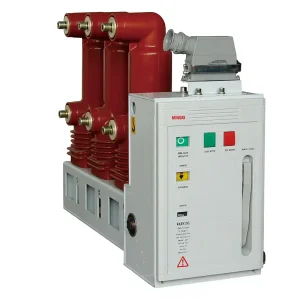
Featured Industrial Transformers & Grid Equipment
Precision-manufactured electrical components, machine tool control units, automatic voltage regulators, and modular substations direct from Yueqing's premier manufacturing base.
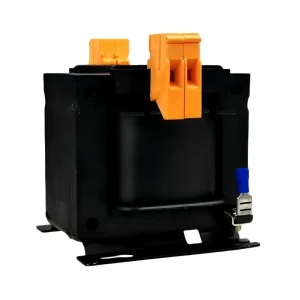
High-Quality JBK5 Series Machine Tool Control Transformers - Reliable China Suppliers and Factory Solutions
View Specifications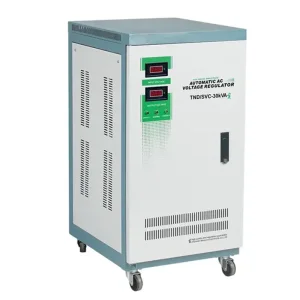
ODM TND/S Two Phase Series Fully Automatic Ac Voltage Regulator Manufacturers, Factory
View Specifications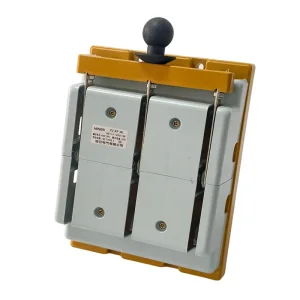
ODM China HD11F Double Throw Anti-Error Knife Switch Factory - Reliable 200A to 1500A Circuit Isolation
View Specifications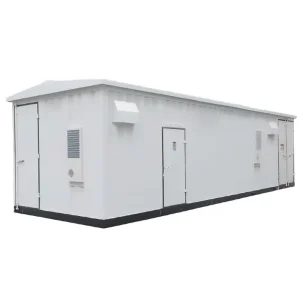
OEM China Suppliers: Smart Modular Prefabricated Cabin Substation - Factory-built Solution for Power Grids
View Specifications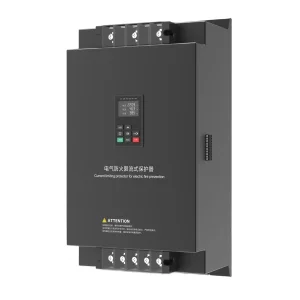
High-Quality 250A Three Phase Electrical Fire Prevention Current Limiting Protector Safety Solution
View Specifications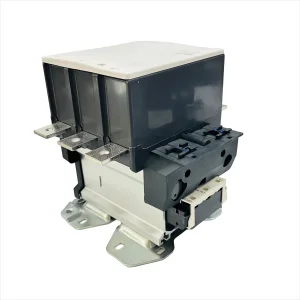
High-Quality CJX2-F Series AC Contactors for Motor Control - Reliable Industrial Solutions
View Specifications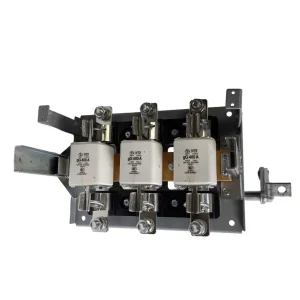
Wholesale HR3 Fuse Type Knife Switch for Motor Protection Manufacturers, Factories
View Specifications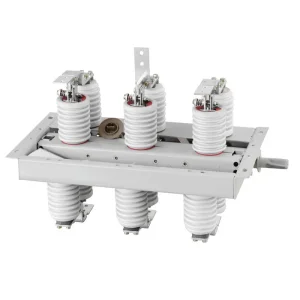
China GN30-12(D) Rotary Indoor High-Voltage Disconnector Manufacturer, Factory
View SpecificationsNavigating Industrial Transformers Suppliers: Architectural Framework
A comprehensive analysis of transformer engineering, electromagnetic materials, core loss mitigation, and procurement dynamics in the modern medium- and low-voltage energy landscape.
In high-reliability industrial automation, power transmission, and commercial infrastructure, the selection of transformers suppliers and qualified original equipment manufacturers (OEMs) dictates electrical stability, thermal safety, and overall lifecycle operating costs. Transformers serve as the fundamental electromagnetic nexus across medium-voltage (MV) and low-voltage (LV) electrical distribution networks. They step up voltages for efficient long-distance transmission, step down potential for local industrial loads, and deliver vital galvanic isolation for sensitive control circuitry, machine tool centers, and data facility server racks.
Modern procurement engineers, utility project directors, and engineering, procurement, and construction (EPC) contractors are moving rapidly beyond evaluating suppliers solely on initial purchase price. The contemporary technical evaluation framework mandates an exhaustive scrutiny of electromagnetic topology, magnetic core metallurgy, dielectric insulation systems, short-circuit withstand capabilities, and compliance with stringent harmonic distortion limits (such as IEEE 519 and IEC 61000 standards).
Engineering Criterion for Transformer Evaluation: Total Cost of Ownership (TCO) in power and distribution transformers is overwhelmingly governed by capitalized loss evaluation. The industry-standard formula TCO = Purchase Price + (A × No-Load Loss P₀) + (B × Load Loss Pₖ) establishes that operating efficiency over a 30-year lifecycle typically outweighs initial equipment procurement capital expenditure by an order of magnitude.
From compact control transformers like the JBK5 series engineered for cabinet machine-tool integration to heavy-duty cast-resin dry-type units and oil-immersed distribution transformers integrated into prefabricated modular cabin substations, selecting a capable manufacturing partner requires verified competence across magnetic design, vacuum pressure impregnation (VPI), automated coil winding, and rigorous partial discharge dielectric screening.
Transformer Architectures: Comparative Analysis for Industrial Specifiers
Detailed performance, dielectric medium, thermal insulation classes, and application boundaries across primary transformer classifications.
| Transformer Class | Primary Voltage Range | Cooling / Dielectric Medium | Insulation Class & Temp Rise | Typical Efficiency (TCO Profile) | Primary Application Scenarios |
|---|---|---|---|---|---|
| Cast Resin Dry-Type (CRT) | 10 kV – 35 kV | AN / AF (Air Natural / Forced) | Class F (155°C) / Class H (180°C) | High (Low stray losses, zero fire risk) | Commercial complexes, metro transit, indoor substations, hyperscale data centers. |
| Oil-Immersed Distribution (ONAN/ONAF) | 6 kV – 40.5 kV | Mineral Oil / Synthetic & Natural Ester | Class A (105°C), 65K Top Oil Rise | Ultra-High (Minimal no-load loss with CRGO/Amorphous) | Outdoor distribution grids, utility substations, renewable solar/wind step-up yards. |
| Industrial Control Transformers (e.g., JBK5) | Up to 1000V (Primary: 220V/380V/415V; Sec: 12V-220V) | Dry-Type VPI Air-Cooled | Class B (130°C) / Class F (155°C) | Optimized for continuous duty & inrush currents | CNC machine tools, automation panels, motor starter control circuits, switchgear auxiliary feeds. |
| Prefabricated Cabin Substations | 12 kV – 40.5 kV / 0.4 kV | Hermetic Oil or Dry-Type Transformer Cell | System integrated thermal management | Integrated system efficiency with minimal busbar losses | Urban compact networks, photovoltaic farms, mining sites, rapid deployment infrastructure. |
| Automatic Voltage Regulators / Compensators | 220V / 380V / Custom MV | Servo Motor Driven / Solid-State Thyristor | Industrial Heavy Duty (Class H magnetics) | 98%+ with dynamic harmonic filtering | Unstable grids, medical imaging facilities, semiconductor manufacturing plants. |
High-Permeability CRGO Cores
Utilizing laser-scribed, high-permeability cold-rolled grain-oriented silicon steel (CRGO) with step-lap mitered core joints drastically minimizes hysteresis loss, eddy currents, and audible acoustic noise below 45 dBA.
Electrodynamic Short-Circuit Strength
Precision circular disc and foil winding architectures reinforced with pre-compressed densified wood clamping and epoxy curing endure rigorous mechanical stress during through-fault conditions up to dynamic peak ratings.
Vacuum Pressure Impregnation (VPI)
Advanced solvent-free epoxy resin injection under rigorous vacuum cycles ensures complete void-free penetration of coils, delivering superior dielectric breakdown resistance, moisture barrier properties, and partial discharge < 5 pC.
The Yueqing Electrical Cluster: Manufacturing Velocity and Scalability
Why leading global EPCs, utilities, and electrical distributors source high-voltage, medium-voltage, and magnetic transformation gear from China's primary electrical capital.
The global power distribution ecosystem faces severe lead time volatility, with Western transformer delivery timelines frequently stretching to 80 to 140 weeks due to acute shortages in structural steel, core laminations, and skilled winding labor. Mingri Electric, positioned at the center of the world-renowned electrical apparatus manufacturing hub in Yueqing, Zhejiang, leverages an uncompromised, vertically integrated industrial cluster to deliver tier-1 quality power apparatus with 60% faster project execution cycles.
Within a 20-kilometer radius of our manufacturing facilities, the supply chain provides immediate, direct access to oxygen-free electrolytic copper rod drawn to exact tolerances, ultra-low-loss CRGO silicon steel from domestic giants (Baosteel, Shougang), high-grade Nomex aramid dielectric insulation papers, and precision CNC automated fabrication tools. This physical proximity eliminates cross-border logistics friction, suppresses raw material transit latency, and gives our engineering teams absolute quality control from raw ingot to finished factory acceptance testing (FAT).
Vertical Value-Chain Integration
From robotic core shearing and automated foil winding to CNC busbar processing and in-house tank hermetic welding, over 85% of component fabrication occurs internally under unified ISO 9001 quality supervision.
Rapid Prototyping & Agile Engineering
Custom single-line diagram (SLD) configurations, multi-tap primary windings, non-standard voltage vectors, and specialized enclosure IP ratings move from 3D parametric CAD modeling to physical prototypes in under 15 working days.
Standardized Mass Testing Infrastructure
Fully shielded routine and type-test testing bays conduct automated insulation resistance, winding resistance, voltage ratio, phase displacement vector check, load/no-load loss verification, and induced overvoltage withstand tests.
Localization Support, Grid Codes & International Compliance
Ensuring seamless operational integration with international distribution networks across North America, the European Union, the Middle East, Southeast Asia, and Latin America.
Navigating international market entry requires granular adherence to local utility codes, national technical regulations, and stringent safety directives. A transformer built to standard domestic specifications will inevitably fail inspection under regional jurisdictions without targeted localization engineering. Our engineering teams design and manufacture transformer units tailored specifically to your project's regional regulatory framework:
IEC 60076 & EU Ecodesign Tier 2
Strict adherence to Commission Regulation (EU) 2019/1783 specifying maximum permissible no-load and load losses for medium power transformers, combined with CE Low Voltage Directive (LVD) and Machinery Directive compliance.
IEEE C57 & ANSI C84.1 Conformity
North American grid compatibility, including 60 Hz system design, NEMA standard terminal spacing, ANSI standard vector groups (e.g., Dyn1 vs. YNd11), and basic impulse insulation level (BIL) ratings conforming to IEEE C57.12.00.
Seismic & Environmental Robustness
Certified for harsh environments under IEC 60068: C3/C4 industrial marine corrosion protection, Class E2 environmental withstand (condensation and heavy humidity), and IEEE 693 High Seismic Zone 4 structural anchoring.
Beyond physical hardware certification, Mingri Electric provides complete technical dossier support for international tenders. This includes CAD/BIM dimensional drawings, single-line diagrams, complete routine test reports with calibrated laboratory instrumentation certificates, certificate of origin (CO), and certified third-party short-circuit withstand dynamic type-test verification from recognized CNAS-accredited electrical testing institutes.
Mission-Critical Deployment Scenarios & Case Applications
Real-world operational engineering across renewable energy integration, heavy manufacturing, urban transit, and harsh mining installations.
Utility-Scale Solar PV & BESS Step-Up
Direct integration of dual-inverter split-secondary transformers into prefabricated skid substations. Engineered with electrostatic shielding between windings to block inverter high-frequency PWM switching transients and minimize DC current injection.
Heavy Industrial Automation & CNC Centers
Deployment of JBK5 control transformers within motor control centers (MCC) and complex automated production lines. Provides galvanic isolation, step-down voltage regulation, and high surge suppression to safeguard sensitive PLC processing units from back-EMF spikes.
Urban Rail Transit & Tunnel Infrastructure
Cast resin dry-type transformers (Class F/H) installed alongside gas-insulated switchgear (RMU) in confined underground metro stations. Delivers low smoke toxicity zero-halogen emissions, self-extinguishing fire performance, and immunity to high moisture and conductive dust.
In demanding field conditions—such as remote desert photovoltaic farms subjected to 50°C ambient temperatures or offshore maritime wind collection platforms enduring corrosive saltwater vapor—transformer failure translates into catastrophic revenue interruption. Mingri Electric engineers equipment enclosures with IP54/IP55 weatherproofing, forced-air variable-speed fan cooling with intelligent digital controllers, and C5-M high-durability marine fluorocarbon coatings to ensure uninterrupted multi-decade operating performance.
Technological Horizons: Smart Transformers, Eco-Fluids & Digital Twins
The transformation of static electromagnetic power equipment into dynamic, digitally connected, and environmentally neutral energy hubs.
IoT & Online Dissolved Gas Analysis (DGA)
Next-generation power transformers feature integrated fiber-optic distributed temperature sensors (DTS) placed directly on winding hot spots, coupled with continuous photoacoustic multi-gas DGA monitoring for proactive incipient fault prevention.
Natural & Synthetic Ester Dielectric Fluids
Transitioning from petroleum-based mineral oils to K-class biodegradable vegetable ester fluids (flash point >300°C) provides inherent 100% environmental non-toxicity, drastically reduced containment berm requirements, and superior fire safety margins.
Solid-State & Hybrid Transformers (SST)
Emerging power electronics topologies combining silicon carbide (SiC) MOSFETs with medium-frequency magnetics enable direct MV AC-to-DC rectification for ultra-fast EV charging hubs and microgrid frequency/voltage stabilization.
Frequently Asked Questions (FAQ) for Engineering & Procurement
Direct, rigorous engineering answers to complex transformer design, specification matching, and international procurement concerns.
Q1 What parameters must be provided to receive an accurate transformer technical proposal?
To provide a fully optimized electromagnetic design and commercial quote, our engineering team requires: (1) Rated capacity (kVA or MVA), (2) Primary and secondary rated voltages alongside tapping ranges (e.g., ±2×2.5%), (3) Frequency (50 Hz or 60 Hz), (4) Phase count and vector connection group (e.g., Dyn11, YNd11), (5) Cooling method (AN, AF, ONAN, ONAF), (6) Impedance voltage percentage (%Uk), (7) Operating environment (ambient temperatures, altitude above sea level, indoor/outdoor IP rating), and (8) Specific loss capitalization values or regional regulatory efficiency directives (e.g., EU Ecodesign or DOE 2016).
Q2 How does dry-type cast resin (CRT) compare with oil-immersed transformers for industrial plants?
Cast resin dry-type transformers eliminate fire hazard risks and catastrophic rupture dangers because they contain zero flammable hydrocarbon oil. They require virtually zero maintenance, require no oil catchment pits, and can be placed directly adjacent to high-density human occupancy areas or critical loads within electrical basements. Conversely, oil-immersed transformers generally offer a lower initial capital acquisition cost, higher total overload thermal inertia, superior natural cooling performance for high capacities (>3150 kVA), and easier repairability for outdoor switchyards.
Q3 What role does the JBK5 control transformer play in machine tool automation panels?
The JBK5 series is engineered explicitly as an industrial control transformer. It steps down three-phase or single-phase mains voltages (such as 380V or 415V) to standardized machine control potentials (typically 24V, 110V, or 220V AC). Its critical function is twofold: first, providing galvanic isolation that breaks electrical ground loops and prevents common-mode noise from disrupting microprocessors and PLC logic; second, maintaining strict output voltage regulation under high momentary inrush currents triggered by AC contactor and solenoid coil energization.
Q4 How does core loss optimization impact long-term operational expenditure?
Transformer losses consist of no-load losses (core or iron losses) caused by magnetic hysteresis and eddy currents in the core laminations, which occur 24/7/365 regardless of loading, and load losses (copper losses) driven by I²R conductor resistance. By investing in premium laser-treated thin CRGO silicon steel or amorphous metal alloys, no-load losses can be decreased by 30% to 70%. In utility networks and data centers with continuous continuous base-load operations, this reduction generates massive cumulative electrical utility bill savings that amortize initial capital expenditure premiums in 3 to 5 years.
Q5 Can Mingri Electric customize transformers to conform with high-harmonic loads?
Yes. Modern industrial facilities driven by variable frequency drives (VFDs), rectifiers, and large-scale IT server racks generate severe non-linear harmonic distortion that creates overheating in standard transformers due to parasitic eddy current losses in windings and structural steel. We design custom K-factor rated transformers (K-4, K-13, K-20, K-30) utilizing transposed strip conductors, electrostatic Faraday ground shields between primary and secondary coils, oversized neutral conductors rated at 200% of phase current, and specialized magnetic core geometry to mitigate harmonic thermal rise safely.
Q6 What routine and type tests are conducted prior to factory dispatch?
Every unit produced undergoes 100% automated routine testing in accordance with IEC 60076: measurement of winding DC resistance, voltage ratio and phase displacement check, short-circuit impedance and load loss determination, no-load loss and no-load current test, separate-source AC voltage withstand test, and induced overvoltage withstand test. For cast resin dry-type units, partial discharge (PD) measurements are performed with an acceptance criteria strictly below 5 pC (substantially tighter than the standard 10 pC IEC allowance). Type tests (lightning impulse, temperature rise, and acoustic noise tests) are routinely performed and documented on witness test benches.
Integrated MV/LV Distribution, Switching & Power Conditioning
Coordinate your transformers with factory-matched ring main units, high-voltage vacuum circuit breakers, automatic transfer switches, and advanced current-limiting protection.
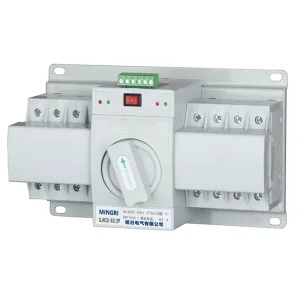
OEM SJKQ1 Manual/Automatic Dual-Use ATS Automatic Transfer Switch Factories, Companies
View Specifications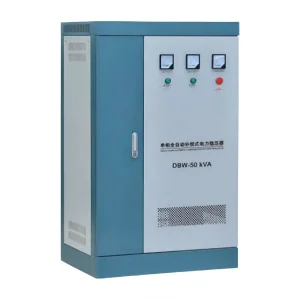
Wholesale DBW Single Phase Series Compensated Power Voltage Regulator Manufacturer
View Specifications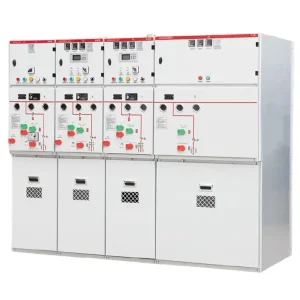
ODM GXGN-12 Solid-Insulated Fully Enclosed Ring Main Unit Switchgear Manufacturers
View Specifications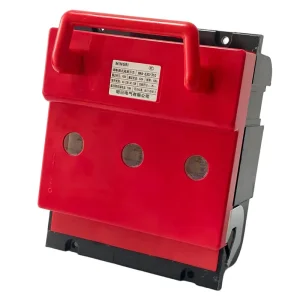
ODM China HR6 Industrial Fused Knife Disconnect Switch Factory - Circuit Protection 4A-630A
View Specifications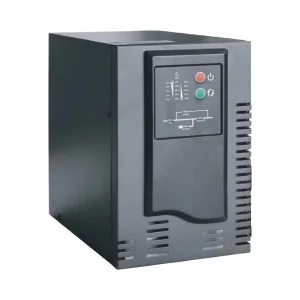
High-Quality MCHF Series High Frequency UPS Power Supply Manufacturer, Companies
View Specifications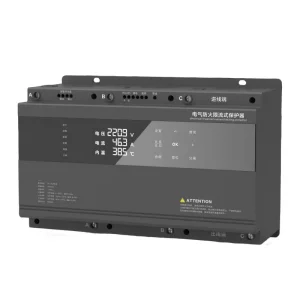
High-Quality 160A Three-Phase Fire Protection Current Limiter - Electrical Safety Solutions
View Specifications
ODM 250A three phase electrical fire prevention current limiting protector Manufacturers, Factories
View Specifications