Primary Prefabricated Substations for Marmara Power Projects
Engineered to withstand the seismic, climatic, and high-density load requirements of Istanbul’s European and Asian electrical grids.
-
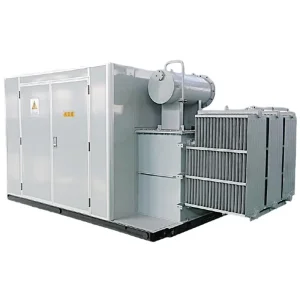
ODM ZGS11-Z.T Integrated Photovoltaic Step-up Substation for Istanbul & Marmara Renewable Feeds
View Technical Specifications -
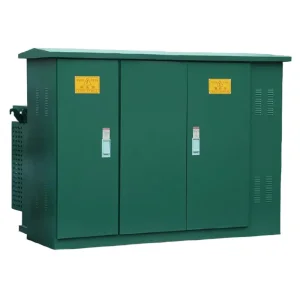
Wholesale ZGS11-12 Combined American Prefabricated Substation for Istanbul Commercial Districts
View Technical Specifications -
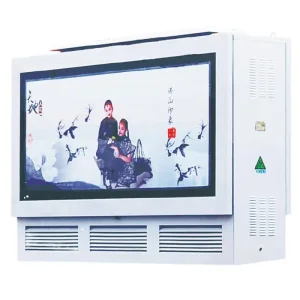
OEM YBD Landscape-Type Underground Compact Substation for Historic Istanbul Municipal Zones
View Technical Specifications -
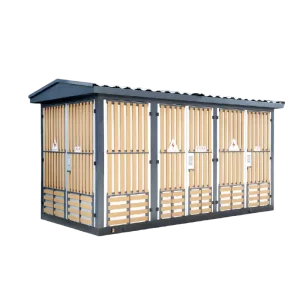
High-Quality YB□-12 Prefabricated Transformer Substation for Istanbul Industrial Grid Distribution
View Technical Specifications
Electrical Infrastructure Realities in the Greater Istanbul Metropolitan Area
Strategic analysis of grid topologies, distribution utilities (BEDAŞ vs. AYEDAŞ), and environmental stressors impacting substation procurement.
Istanbul represents Turkey’s largest economic powerhouse, generating over 30% of the national gross domestic product and consuming more than 40 billion kilowatt-hours of electrical energy annually. With a population exceeding 16 million people straddling the Bosphorus Strait, Istanbul’s distribution and transmission networks operate under unique geographical and operational conditions. The electrical grid is partitioned across two major regional distribution system operators: Boğaziçi Elektrik Dağıtım A.Ş. (BEDAŞ) covering the European sector, and İstanbul Anadolu Yakası Elektrik Dağıtım A.Ş. (AYEDAŞ) operating throughout the Asian side, both tied to the overarching national transmission grid overseen by Türkiye Elektrik İletim A.Ş. (TEİAŞ).
Engineering substations for the Istanbul market demands deep cognizance of dense urban clusters, extensive maritime humidity, aggressive saline atmospheric exposure along the Sea of Marmara and the Black Sea, and most crucially, stringent seismic safety protocols dictated by the proximity of the active North Anatolian Fault system. Turnkey prefabricated transformer substations (often designated as Compact Secondary Substations or CSS) and modular Gas-Insulated Switchgear (GIS) installations have rapidly surpassed traditional brick-and-mortar masonry substations due to land cost, space restrictions in central districts (such as Şişli, Beşiktaş, Kadıköy, and Fatih), and urgent lead-time constraints for ongoing metro expansions and industrial development zones.
North Anatolian Fault Seismic Resilience
Istanbul sits directly in an active Category-1 seismic zone. Substations supplied must be structurally engineered in accordance with IEEE 693 and Eurocode 8 seismic parameters. Equipment must endure Peak Ground Acceleration (PGA) ratings up to 0.6g without mechanical busbar displacement or transformer core rupture.
BEDAŞ & AYEDAŞ Grid Interoperability
Substation primary Medium-Voltage (MV) cubicles must seamlessly coordinate with 34.5 kV primary distribution levels common across the Marmara region, down-stepping to standard 0.4 kV industrial bus systems. Switchgear configurations must feature integrated RTU telemetry for SCADA control under IEC 60870-5-104 or IEC 61850 protocols.
Corrosion Class C4/C5 Maritime Protection
Because Istanbul is bordered by the Sea of Marmara, the Bosphorus, and the Black Sea, outdoor enclosures face continuous airborne salt mist. Chinese high-spec manufacturing integrates hot-dip galvanized steel frames and electrostatically applied polyester powder or GFRC (Glass Fiber Reinforced Concrete) structures meeting ISO 12944 C4 to C5-M durability classes.
Turkish Electrical Codes & International Standards Alignment
Entering the Istanbul substation ecosystem requires strict adherence to Turkish technical regulations published by the Ministry of Energy and Natural Resources (ETKB), in conjunction with standardizations defined by the Turkish Standards Institution (Türk Standardları Enstitüsü - TSE). Equipment deployed in commercial centers, Organized Industrial Zones (OSB), and utility substations must provide rigorous compliance documentation:
-
IEC 62271-202 Compliance: Full internal arc classification (IAC AFLR 20 kA for 1 s) for prefabricated high-voltage/low-voltage substations ensuring complete operator and public perimeter safety.
-
TEDAŞ MYD Technical Specifications: Compliance with TEDAŞ-MLZ technical norms concerning medium-voltage switchgear cubicles, transformer losses (EcoDesign Tier 2 / EN 50588-1), and grounding grids.
-
Seismic Qualification Certificate: Third-party shake-table physical test verification conforming to TS EN 60068-3-3 and AFAD Class 1 building codes for essential electrical equipment.
-
Ingress Protection & Thermal Efficiency: Standard enclosure ingress protection rating of IP54 for MV/LV electrical compartments and IP23D/IP33 for naturally ventilated or force-cooled transformer rooms.
Engineering Parameter Matrix (34.5 kV / 0.4 kV Grid)
Standard technical parameters configured for turnkey package substations supplied to the Istanbul European and Asian electrical perimeters.
Why Turkish EPCs & Industrial Giants Choose Yueqing Factory Direct Sourcing
Combining competitive capital expenditure with world-class type test credentials, agile modular design, and direct sea freight to Istanbul’s deepwater ports.
Major Turkish engineering, procurement, and construction (EPC) consortiums—such as Enka, Rönesans Holding, Tekfen, Çalık Enerji, and Limak—maintain global operations requiring high-performance electrical hardware that complies with European technical norms while delivering favorable commercial viability. Sourcing substations and power distribution units from specialized Chinese industrial ecosystems, notably Yueqing (Wenzhou), Zhejiang, provides a profound competitive advantage for infrastructure developments across Istanbul, the wider Marmara basin, and overseas projects executed by Turkish contractors.
Vertically Integrated Supply Chain
Yueqing’s industrial concentration encompasses the complete manufacturing lifecycle: laser-cut sheet metal fabrication, epoxy resin cast molding, precision vacuum interrupters, high-grade silicon steel laminations, and copper busbar extrusion. This prevents component bottlenecks and shortens standard manufacturing cycles to 4–6 weeks.
30–45% CAPEX Rationalization
Compared to domestic West European OEM switchgear assemblies, direct factory sourcing from high-tier Chinese manufacturers reduces capital expenditure by 30% to 45%. This allows Turkish developers to maintain target margin thresholds while fully meeting or exceeding client-mandated IEC parameters.
Rapid Maritime Freight to Ambarlı
With direct containerized vessel lines departing Ningbo-Zhoushan and Shanghai, consolidated shipments reach Istanbul’s Ambarlı Port (European terminal) or Kumport and Dilovası (Marmara Asian terminal) within 22 to 26 transit days, accompanied by complete customs and CE conformity dossiers.
Engineering Evaluation: Substation Architectures for Istanbul Projects
Comprehensive architectural comparison between European-type CSS, American integrated pad-mounted stations, modular E-Houses, and underground landscape systems.
| Substation Architecture | Enclosure Typology | Footprint (Typical 1000kVA) | Cooling Mechanism | Seismic Resistance | Optimal Istanbul Application |
|---|---|---|---|---|---|
| European Type CSS (YB□-12 / YB□12-0.4) | Corrugated Steel / GFRC Concrete with segregated MV, TR, LV compartments | 12–16 m² | Natural convection (AN) with thermostatically controlled forced exhaust | High (0.5g–0.6g PGA certified) | Organized Industrial Zones (İkitelli, Gebze OSB, Dudullu), utility distribution grids (BEDAŞ/AYEDAŞ). |
| American Combined Substation (ZGS11-12) | Integrated oil-immersed tank enclosing transformer, HV load switch, and backup fuses | 6–9 m² | Direct transformer oil immersion cooling (ONAN) | Moderate to High (0.4g PGA) | Suburban residential expansions (Başakşehir, Beylikdüzü, Tuzla), parklands, light commercial centers. |
| Underground Landscape Substation (YBD Series) | Semi-buried or fully underground waterproof concrete/steel pit with above-ground low-profile kiosk | Zero visual obstruction above 1.2 m | Forced underground ventilation ducts with anti-flood sump drainage | Exceptional (subsurface seismic dampening) | Historic preservation areas (Fatih, Sultanahmet, Beyoğlu), coastal walking paths, luxury waterfront sites. |
| Modular Intelligent E-House Cabin Substation | Heavy-gauge insulated shipping container architecture with integrated SCADA / HVAC | 25–65 m² | Redundant industrial HVAC systems with positive air pressure filtration | Maximum (rigid skid base tested for 0.6g+) | Metro Istanbul traction power sub-stations, high-speed rail lines, major data center hubs, mega logistics parks. |
| Integrated PV/Wind Step-Up Substation (ZGS11-Z.T) | Compact modular outdoor kiosk featuring dual LV circuit breaker inputs and high-efficiency inverter interface | 8–14 m² | Enhanced heat-sink radiators with exterior sun shields | High (0.5g PGA) | Marmara regional wind generation in Çatalca and Silivri; massive commercial rooftop PV in industrial zones. |
Specialized Substation Engineering Scenarios Across Istanbul
Real-world integration challenges and equipment solutions deployed across key commercial, infrastructural, and industrial districts.
1. High-Density Financial Hubs: Levent & Ataşehir
The Istanbul Financial Center (IFC) in Ataşehir and the established skyscraper corridor in Levent-Maslak require massive power density within restricted basements. Here, HBXGN-12(F) eco-friendly gas-insulated switchgear combined with cast-resin dry-type transformers (JSG Series) eliminate fire hazards associated with oil units, fulfilling NFPA and Turkish fire-protection regulations without releasing greenhouse fluorinated gases.
2. Organized Industrial Zones: Gebze, Tuzla & İkitelli
With hundreds of metalworking, automotive, and plastics facilities operating across İkitelli OSB and the neighboring Kocaeli-Gebze corridor, sudden inductive loads and voltage fluctuations present major challenges. The deployment of YB□-12 prefabricated transformer substations paired with GCK low-voltage withdrawable switchgear and automatic reactive power compensation ensures power factor stabilization above 0.98, avoiding severe utility penalty tariffs.
3. Transit Infrastructure: Metro Istanbul & Marmaray
Rapid transit rail extensions (such as M11 connecting to Istanbul New Airport and M7 Kabataş-Mahmutbey) depend on modular intelligent E-House cabins and high-capacity cable branch distribution boxes (DFW series). These installations utilize double-busbar topologies, vacuum circuit breakers rated for 25 kA short-circuit breaking capability, and redundant IEC 61850 fiber optic GOOSE communication links for millisecond fault isolation.
Engineered Medium & Low-Voltage Substation Components
Certified equipment modules fulfilling turnkey electrical balance-of-plant requirements for EPC contractors and municipal utility tenders.
-
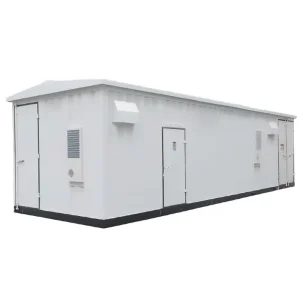
OEM Modular Intelligent Prefabricated Cabin Substation with Smart Features for Istanbul Metro & Data Centers
View Technical Specifications -
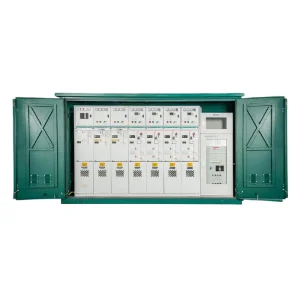
ODM DFW Outdoor High Voltage Cable Branch Box (Cabinet) for Istanbul Underground Feeder Reticulation
View Technical Specifications -
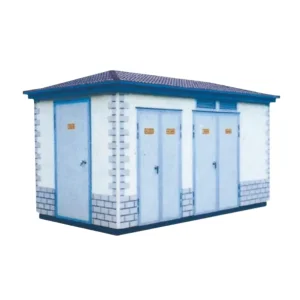
High-Quality YB12-0.4 Series Prefabricated Substation (European Type Substation) for Marmara Grid Tenders
View Technical Specifications -
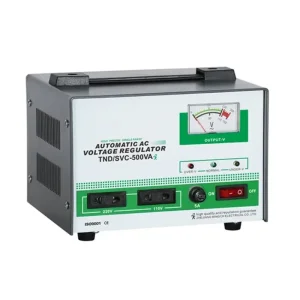
China TND/SVC Single Phase Series Fully Automatic AC Voltage Regulator for Sensitive Medical & Commercial Loads
View Technical Specifications -
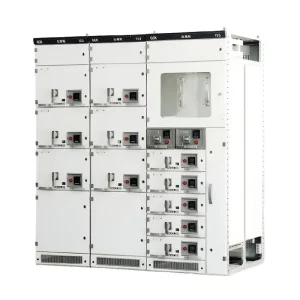
Wholesale GCK Low Voltage Withdrawable Switchgear for Industrial Plants & Wastewater Treatment in Marmara
View Technical Specifications -
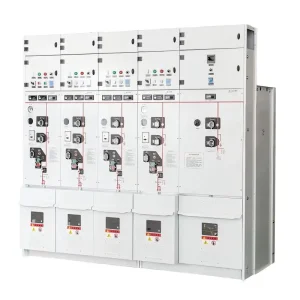
China HBXGN-12(F) Environment-Friendly Gas Insulated Metal Enclosed Switchgear for Urban Substations
View Technical Specifications -
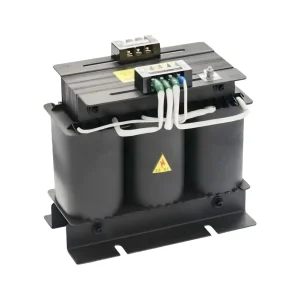
Wholesale JSG Series Three-Phase Dry-Type Transformer for Istanbul High-Rise & Commercial Substation Skid Bases
View Technical Specifications -
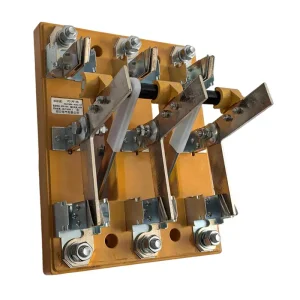
Wholesale HS13BX Double Throw Rotary Type Knife Disconnect Switch for Substation Auxiliary Isolation
View Technical Specifications
Factory Acceptance Testing (FAT) & Global Procurement Verification
Ensuring complete transparency, dimensional precision, and functional validation prior to vessel boarding at Chinese export terminals.
Procurement directors and chief electrical engineers representing Turkish EPC firms demand unconditional verification before releasing milestone payments. Our Yueqing manufacturing facilities operate in strict compliance with ISO 9001, ISO 14001, and ISO 45001 management protocols, facilitating full witness Factory Acceptance Testing (FAT) both physically in-factory and remotely via encrypted high-definition live multi-channel broadcast.
1. Type & Routine Dielectric Testing
Every substation compartment undergoes comprehensive insulation resistance, power frequency withstand (70 kV RMS for 1 minute on 34.5 kV primary busbars), and full lightning impulse withstand verification (170 kV peak) in accredited test laboratories (CNAS, KEMA test method alignment).
2. Mechanical Interlocking & Trip Sequences
Strict functional verification of five-anti-misoperation mechanical and electromagnetic interlocks between MV disconnector switches, circuit breakers, and earth switches. Simulation of overcurrent, earth fault, and differential protection trips utilizing verified secondary injection equipment.
3. Complete Engineering Dossier
All delivered hardware includes comprehensive documentation: certified schematic single-line diagrams (SLD), general arrangement (GA) layout blueprints, transformer loss test certificates conforming to EU Ecodesign directives, and bilingual (English/Turkish) operation & maintenance manuals.
Frequently Asked Questions: Substation Sourcing for the Istanbul Market
Addressing primary inquiries from Turkish project directors, consulting electrical engineers, and international procurement managers.
What primary distribution voltage ratings apply to Istanbul substations?
In Turkey, primary medium-voltage distribution operates predominantly at 34.5 kV (with historical legacy pockets at 10.5 kV or 15 kV in limited central districts). For the Istanbul market, our equipment is built with 36 kV or 40.5 kV insulation ratings to provide a robust safety margin against line surges, down-stepping via Dyn11 vector group transformers to 400 V three-phase / 230 V single-phase 50 Hz secondary power.
How do prefabricated substations comply with Istanbul seismic criteria?
Because Istanbul is classified under Turkey's highest seismic hazard zoning (Marmara Fault segment), substations feature heavy-gauge structural base frames with internal anti-vibration damping pads for transformer assemblies. Physical test reports validate non-resonance performance under horizontal Peak Ground Acceleration (PGA) up to 0.6g according to TS EN 60068-3-3 and IEEE 693 standards.
What is the key difference between European (YB) and American (ZGS) substations?
The European-type substation (YB series) houses the high-voltage switchgear, the power transformer, and the low-voltage distribution board in distinct, compartmentalized chambers within a walk-in or non-walk-in kiosk. The American-type combined substation (ZGS series) incorporates the core, windings, high-voltage load switch, and protective fuses directly into a unified sealed transformer oil tank, producing a 40% more compact footprint ideal for perimeter-constrained plots.
Can you supply SF6-free environmentally sustainable switchgear?
Yes. To meet upcoming European environmental directives and Turkish Green Deal compliance initiatives, we supply the HBXGN-12(F) series. This eco-friendly switchgear utilizes dry compressed air or nitrogen-fluoronitrile gas mixtures alongside vacuum interrupters, achieving zero global warming potential (GWP < 1) with zero toxic greenhouse emissions over a 30-year design life.
What typical lead time is expected for shipments into Ambarlı or Kumport?
Standard fabrication and assembly take approximately 30 to 45 calendar days following Single Line Diagram (SLD) drawing sign-off. Direct ocean container shipping from Ningbo or Shanghai port directly to Istanbul (Ambarlı Port on the European side or Dilovası on the Asian side) takes between 22 and 26 days on primary maritime lines, allowing delivery well inside typical 16-week project timelines.
Do you support remote SCADA and automation integration for BEDAŞ/AYEDAŞ?
Yes. Our prefabricated substations and switchgear can be integrated with Turkish utility-approved Remote Terminal Units (RTU). They support IEC 61850 MMS and GOOSE protocols, IEC 60870-5-104 over TCP/IP, and Modbus RTU RS485 communication, allowing real-time monitoring of current, voltage, temperature, gas pressure, and trip circuit status from central dispatch rooms.
Accelerate Your Istanbul Infrastructure Project
Connect with our senior medium-voltage substation engineering team to submit your Single-Line Diagram (SLD), request custom kiosk dimensional layouts, or receive an itemized factory-direct commercial quotation.
Send Inquiry Now