Specialized Mountain Grid Protection & Switching Systems
Engineered to withstand high altitude insulation degradation, thermal fluctuations, and rigorous duty cycles across Andorra's high-density urban valleys and mountain commercial zones.
Electrical Distribution Dynamics in Andorra la Vella: High Elevation & Alpine Resilience
Nestled in the high Pyrenees between France and Spain at an average elevation exceeding 1,023 meters, Andorra la Vella represents one of Europe's most unique electrical distribution landscapes. Operating under the stewardship of FEDA (Forces Elèctriques d'Andorra) alongside private industrial concessions, the municipality combines dense urban retail strips—such as Meritxell Avenue—with steep mountainous topography, demanding ultra-reliable, compact Load Isolating Switches (LIS) and Disconnector units.
Unlike lowland metropolitan centers, the power architecture in Andorra la Vella is deeply influenced by high seasonal tourist influxes, intense winter peak loads driven by electrical heating, and the extensive operation of ski resort infrastructures (e.g., Grandvalira and Vallnord) feeding from valley substations. The atmospheric pressure drops linearly with elevation, causing a direct reduction in the dielectric breakdown strength of air. Standard load isolating switches designed for sea-level installations inevitably face premature arc flashover and accelerated insulation aging unless engineered with specialized altitude derating coefficients, increased creepage distances, and optimized arc-chute kinematics.
Furthermore, urban spatial constraints in the Gran Valira river valley necessitate subterranean and compact packaged substations where footprint optimization is paramount. Switchgear specifiers in Andorra mandate load break switches that integrate positive contact indication, visible isolation gaps, zero-maintenance contact alloys, and seamless SCADA interfacing capable of handling both trans-Pyrenean French (RTE) and Spanish (Red Eléctrica) cross-border synchronizations.
Crucial Altitude Derating Parameters (Andorra Region)
According to IEC 62271-1 and IEC 60947-3, electrical installations situated above 1,000 meters above sea level must incorporate modified dielectric clearance factors. For Andorra la Vella and surrounding Pyrenean substations (1,000m - 2,500m):
- Dielectric Withstand Factor (Ka): Minimum 1.08 to 1.22 multiplier on impulse voltage insulation tests.
- Thermal Dissipation Adjustments: Lower air density decreases natural convection cooling, requiring 5% to 8% nominal current derating or oversized busbars.
- Sub-Zero Mechanical Endurance: Mechanical operating mechanisms rated down to -30°C with non-congealing synthetic lubricants.
- Seismic & Snow Load Inertia: Structural mechanical ratings compliant with alpine vibration and snow drift strains.
Load Isolating Switch Principles: Arc Quenching & Contact Mechanics
Understanding the physics of high-voltage interruption, contact metallurgy, and mechanical interlocks deployed in demanding Pyrenean alpine circuits.
Dual-Function Isolating Mechanisms
Unlike plain circuit disconnectors that operate solely under zero-load conditions, a true Load Isolating Switch (LIS) fulfills both switching duties (making, breaking, and carrying nominal load currents) and mandatory safety isolation. In Andorra's compact primary and secondary ring main units (RMU), our switches utilize rapid spring-toggle kinematic systems independent of operator handle speed. This prevents contact hovering and guarantees total mechanical travel within 12 milliseconds, eliminating the risk of human-induced arcing.
De-ionizing Arc Chute Engineering
When interrupted under nominal load (inductive or capacitive power factor down to cos φ = 0.7), the electric arc is quickly driven into a specialized arc-quenching chamber. Our ODM designs employ segmented nickel-plated copper de-ion plates paired with gas-generating polyoxymethylene (POM) wall liners. Under the high temperature of the arc, POM emits an un-ionized quenching gas blast that compresses, cools, and extinguishes the arc at the first current zero, preventing restrikes even under rarefied mountain atmospheric pressure.
Silver-Nickel Metallurgy & Low Resistance
Thermal buildup inside sealed enclosures is catastrophic in alpine underground vaults. We engineer main contact tips with AgNi0.15 (Silver-Nickel) or tungsten-silver alloys hot-pressed onto oxygen-free copper stabs. This maintains contact resistance below 28 micro-ohms throughout 5,000+ rated full-load operational cycles, minimizing thermal dissipation, preventing thermal runaway, and drastically reducing watt loss inside switchgear panels.
| Performance Characteristic | Standard Commercial Disconnector | Industrial Grade Load Isolating Switch | Our Pyrenean ODM Specification (Altitude Class) |
|---|---|---|---|
| Altitude Dielectric Rating | Up to 1,000m (Standard IEC) | Up to 1,500m (General Industrial) | Up to 3,000m without external chamber modification |
| Short-Time Withstand (Icw) | 12.5 kA for 1s | 20 kA for 3s | 25 kA / 31.5 kA for 3s (High-Stress Valley Ring Main) |
| Operating Ambient Range | -5°C to +40°C | -15°C to +40°C | -35°C to +55°C (Validated Cold-Climate Grease & Seals) |
| Creepage Distance (Phase-to-Earth) | 16 mm/kV | 20 mm/kV | 25 mm/kV to 31 mm/kV (Heavy mountain condensation) |
| Contact Indication Safety | Indirect via mechanical lever | Auxiliary micro-switch feedback | Visible dual-break knife gap + mirror-polished inspection ports |
Technological Trajectories: SF6-Free, Smart Telemetry & Microgrids
How international regulatory pressures, European F-Gas bans, and digital distribution standards are transforming medium and low-voltage isolating hardware.
Decarbonization & Eco-Gas Transition
With the European Union tightening F-Gas restrictions and Andorra's commitment to preserving pristine Pyrenean ecosystems, the phaseout of Sulfur Hexafluoride (SF6)—a greenhouse gas with a global warming potential 24,300 times higher than CO2—is accelerating. Our ODM R&D center pioneers Clean Air and Synthetic Air Solid-Insulated Switchgear (SIS). By encapsulating vacuum interrupters within hydrophobic cycloaliphatic epoxy resin, our switches achieve high insulation performance without pressurized fluorinated gasses.
Embedded IoT & Condition Monitoring
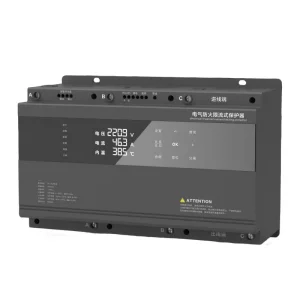
Traditional load isolating switches rely on periodic manual inspections. In contrast, modern European smart substations integrate fiber-optic thermographic sensors directly at the contact junction points, alongside contactless Hall-effect current transducers. These sensors transmit real-time thermal gradient and mechanical travel data via Modbus-TCP / IEC 61850 protocols directly to remote utility control desks, predicting contact oxidation and degradation before unscheduled trips occur.
Microgrid & Renewable Bi-Directional Stress
Andorra is steadily deploying mountain solar PV arrays and high-efficiency hydro-generation units along the Valira river. Distributed energy resources (DERs) alter traditional unidirectional power flows. Load isolating switches must now handle reverse power flow, high inrush currents from bidirectional transformer energization, and rapid auto-transfer cycling during sudden grid islanding events caused by mountain storms.
China Industry 4.0: Precision, Speed & Supply Chain Resilience
Located in Yueqing, Zhejiang—the epicenter of global electrical equipment innovation—our manufacturing ecosystem integrates automated robotic laser welding, digital twin tolerance modeling, and precision progressive stamping presses. This enables unprecedented ODM (Original Design Manufacturing) agility for European engineering contractors and distributors serving the Pyrenees.
- Full Lifecycle Traceability: Laser-etched QR identifiers on every contact arm, spring pack, and molded case.
- Automated X-Ray Inspection: Non-destructive testing of epoxy castings ensures zero voids or internal partial discharge (> 5 pC rejection limit).
- Dynamic FAT Verification: Automated high-voltage impulse test bays verify 75 kV to 95 kV BIL withstand before packaging.
- Custom Terminal Geometries: Tailored busbar connection plates designed to retrofit existing Spanish or French footprint panels without chassis alterations.
Why Global EPCs Choose Our ODM Partnership Model
Procurement executives and EPC consultants in Western Europe face high labor costs, elongated manufacturing lead times (often 24 to 40 weeks from Western OEMs), and rigid catalogue specifications. Our ODM division bridges this gap by offering:
1. 100% CAD/BIM Co-Design Support
We generate 3D STEP, Revit, and AutoCAD models within 72 hours, allowing EPC engineers in Andorra to integrate switchgear into digital substation twins seamlessly.
2. Private Labeling & Custom Branding
Full OEM/ODM badging, custom dial indicators, local Catalan/Spanish/French warning silkscreens, and specific regional barcoding according to FEDA standards.
3. Stringent European Compliance Auditing
Complete third-party type test certifications from independent laboratories (KEMA, ASTA, or CNAS-accredited facilities) covering short-circuit making, temperature rise, and mechanical life.
Key Application Scenarios in Andorra la Vella & Surrounds
Tailored engineering configurations designed for rugged topography, subterranean retail density, and seasonal industrial overloads.
Subterranean Vault Substations
Due to narrow valley floor dimensions, much of Andorra la Vella's medium-voltage distribution is positioned below street level or within underground multi-tier commercial basements. Our load isolating switches feature zero-clearance side-mounted mechanisms, compact footprint enclosures, and IP67 sealed gas/solid tanks to eliminate moisture intrusion during snowmelt infiltration.
Ski Resort Lift Substations & Snowmaking
Ski resorts around the Principality demand immediate switching capability under sudden, highly inductive motor loads from cable car winches and high-pressure snowmaking pumps. Our switches are engineered for AC-23A motor switching duty with extreme thermal shock resistance down to -35°C, ensuring no mechanical lockup during sub-zero operational emergencies.
Hospitality & Luxury Commercial Centers
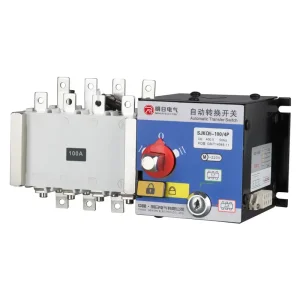
High-density retail strips and premier luxury hotels along Avinguda d'Enclar and Meritxell cannot tolerate power interruptions. We deliver motorized load isolating switches equipped with integrated mechanical and electrical interlocks, auto-throwover controllers, and rapid ATS integration to transfer hospital and hotel loads within 50ms upon primary feeder fault.
Frequently Asked Questions for Switchgear Engineers
Key technical and procurement answers regarding load isolating switches in Andorra la Vella and alpine microgrids.
At altitudes exceeding 1,000 meters, atmospheric pressure drops, reducing the dielectric strength of ambient air. According to IEC 62271-1, external insulation clearance must be increased by applying altitude correction factor Ka. For our ODM units intended for Andorra, we either enlarge phase-to-phase and phase-to-earth clearances or implement solid silicone/epoxy encapsulation, ensuring the equipment comfortably withstands required lightning impulse withstand voltages (BIL) of 75kV, 95kV, or 125kV.
A standard disconnector (isolator) can only open or close circuits under no-load conditions (negligible current) and provides a visible safety gap. A Load Isolating Switch (LIS) incorporates an arc-extinction mechanism (such as vacuum bottles, puffer chambers, or de-ion chutes) allowing it to make, carry, and interrupt full nominal load currents (AC-22A or AC-23A ratings) while still providing the required galvanic isolation gap mandated by safety codes for downstream maintenance.
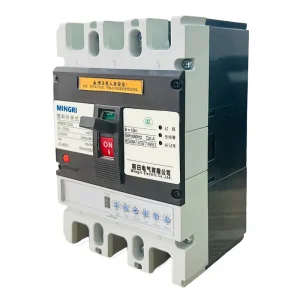
Yes. All Mingri Electric load isolating switches, circuit breakers, and switchgear comply fully with IEC 60947-3, IEC 62271-102, and IEC 62271-200. Because Andorra’s national utility FEDA interfaces with both Spanish (REE) and French (Enedis/RTE) grids, our equipment is certified for 50Hz networks with 12kV, 24kV, and up to 40.5kV systems, supporting CE marking and ISO 9001 quality management standards.
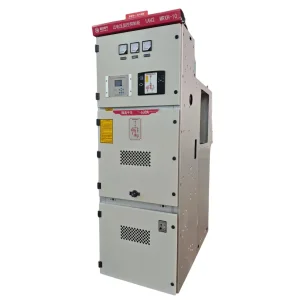
Absolutely. In alignment with European decarbonization roadmaps, we supply solid-insulated (GXGN-12) and eco-gas (HBXGN-12F) insulated load isolating switch solutions. These systems utilize dry air, nitrogen, or vacuum interrupters encased in cast resin, entirely eliminating potent greenhouse gas emissions while guaranteeing zero risk of SF6 leakage in enclosed mountain basements.
Thanks to our Industry 4.0 manufacturing baseline in Yueqing, initial 3D mechanical schematics and design adaptations take 3 to 5 business days. Prototypes or customized sample batches are typically completed within 15 to 20 days. Standard containerized production runs for complete switchgear or modular switch mechanisms ship within 25 to 35 calendar days from order signoff.
Our cold-climate variants incorporate low-temperature synthetic grease rated down to -40°C, stainless steel AISI 304/316 drive linkages, and built-in PTC hygroscopic anti-condensation heaters managed by electronic ambient hygro-thermostats. Main enclosures are built with IP54 or IP65 ingress protection to prevent powder-snow ingress during high mountain winds.
Medium & Low Voltage Switchgear & Component Portfolio
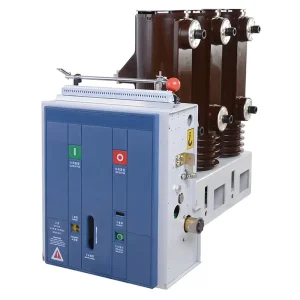
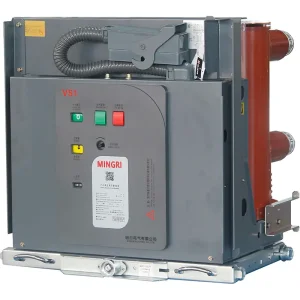
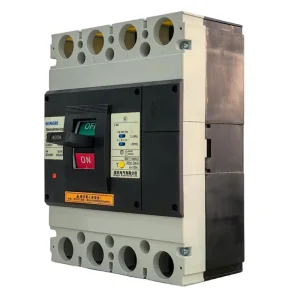
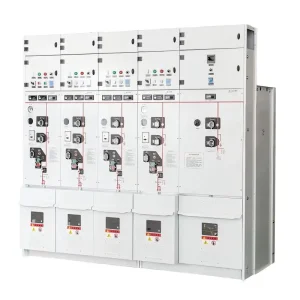
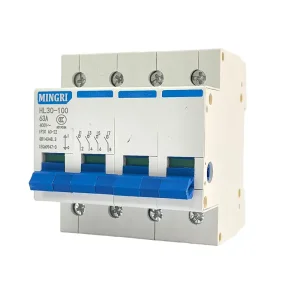
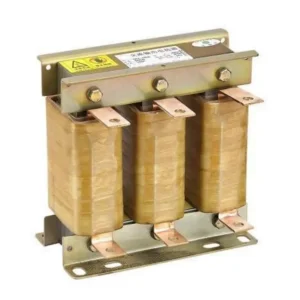
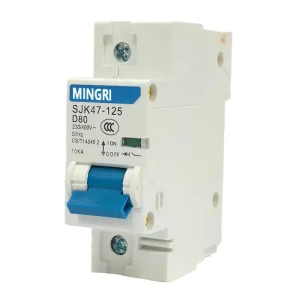
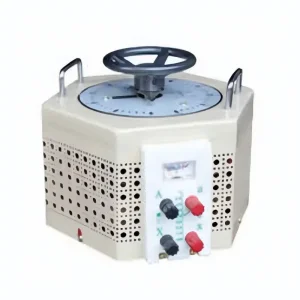
Fully integrated solutions spanning vacuum breakers, miniature isolators, eco-insulated switchgear, and reactors for complete power system protection.