Featured High-Precision Circuitry & Switchgear Hardware
Direct factory-integrated protection components, motor disconnection breakers, and automated transfer switches designed for demanding utility and industrial environments.
-
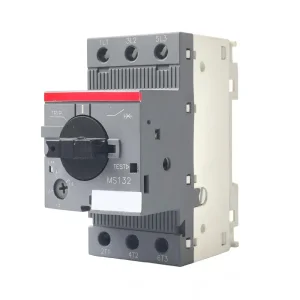
Wholesale MS132 Low Voltage Motor Protection Circuit Breaker Manufacturers, Factories
-
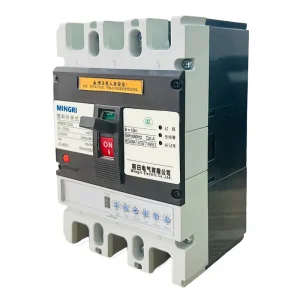
Wholesale SJKM3E Electronic Circuit Breaker (ECB) with Smart Protection Suppliers, Factory
-
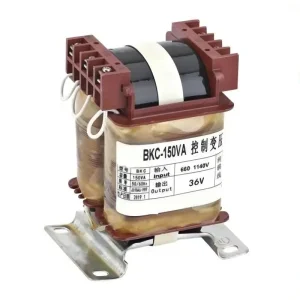
China BKC Series Control Transformers – Compact, Reliable Power Solutions Factory, Companies
-
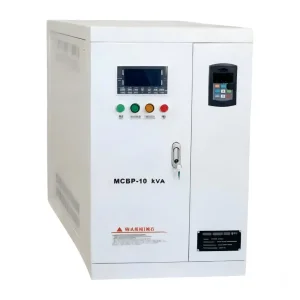
OEM MCBP Series Variable Frequency Power Supply Manufacturer, Factory
-
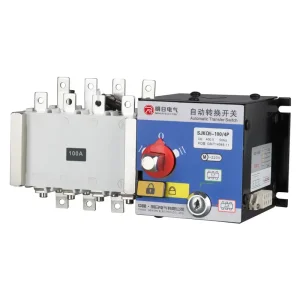
-
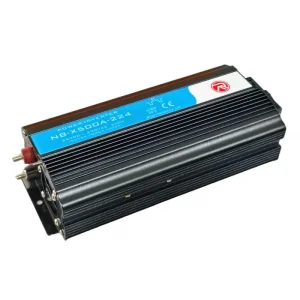
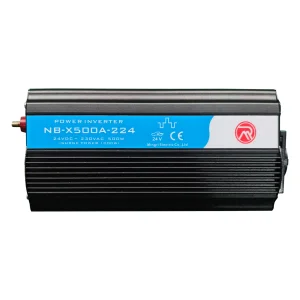
ODM DC to AC Power Inverter X500 with Built-in EU Socket Factories, Companies
-
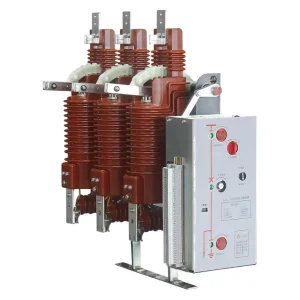
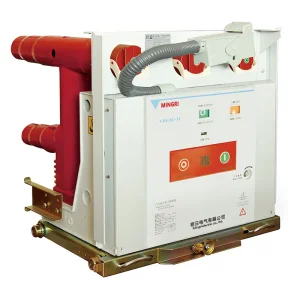
ODM VSY2-12GD Miniaturized Three-Position High Voltage Vacuum Circuit Breaker Manufacturers, Factory
-
Industrial Knife Switches: Fundamental Topology & Modern Advancements
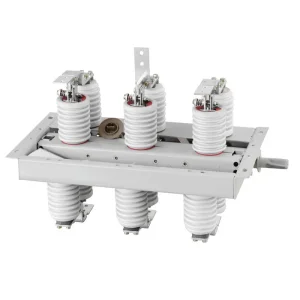
Knife switches (disconnector switches) form the foundational backbone of reliable mechanical visual isolation across transmission, secondary substations, and low-voltage heavy motor loops.
Mechanical Visible Break Architecture
Traditional breakers conceal physical conductor separation within gas chambers or vacuum interrupters. In contrast, knife switches supply unambiguous physical visible disconnection. Modern factories in China engineer these mechanisms using silver-plated electrolytic T2 copper jaws, providing ultra-low surface resistance and ensuring zero chance of stray current leakage during maintenance procedures.
Arc Quenching Dynamic Barriers
While historically relegated to zero-load or no-break scenarios, contemporary knife isolation switches feature modular arc chute attachments constructed from de-ionizing polymer matrices. Magnetic blow-out coils force destructive electric arcs into splitters, enabling load-break operational status (AC-22A/AC-23A) under severe inductive current conditions.
Ergonomic Safety Interlocking
Global electrical safety frameworks (such as NFPA 70E, OSHA 1910, and IEC 60947-3) mandate positive action locking. Industrial knife switch assemblies incorporate mechanical multi-padlock hasps, microswitch position feedbacks, and interlock linkages that prevent switchroom doors from opening while blades are under energized contact.
Sourcing Dynamics: The Chinese Manufacturing Advantage
Yueqing (Wenzhou) represents the world's most concentrated low-to-medium voltage electrical engineering nexus, offering structural efficiencies impossible to replicate elsewhere.
Full Supply Chain Integration
Within a 15-kilometer radius, factories maintain on-demand access to specialized copper cold-forging, precision automated stamping, spring tempering, specialized thermoset resin molding, and contact electroplating. This high geographic density slashes raw component transit time, enabling rapid prototype turns and highly competitive Bill of Materials (BOM) cost structures.
Precision Automation & Quality Assurance
Leading knife switch manufacturers utilize multi-axis CNC machines and robotic terminal soldering stations. Laser alignment tools test blade insertion friction and surface micro-ohmic resistance inline. Modern high-volume testing facilities run automated thermal cycle aging under full continuous thermal loads.
High Adaptability & OEM/ODM Engineering
Whether demanding custom enclosure ratings (NEMA 4X, IP66), dual-throw transfer configurations (DTKS), or integration with high-rupturing-capacity (HRC) fuse bases, Chinese manufacturing suppliers deliver agile bespoke modifications that cut engineering cycle durations by up to 50%.
| Characteristic / Specification | Conventional Knife Switch | Heavy-Duty Industrial Load Break Knife Switch | Photovoltaic / DC Ultra-High Isolation Switch |
|---|---|---|---|
| Rated Insulation Voltage (Ui) | 690 V AC | 1000 V – 1140 V AC | 1500 V DC |
| Arc Quenching Matrix | Open-air / Natural Dissipation | Multi-plate De-ionizing Chutes | Magnetic Blowout + Segmented Gap Chambers |
| Operating Mechanism | Direct Manual Lever | Quick-make, Quick-break Spring Actuated | Snap-action Rotary / Motorized Tele-control |
| Safety Standards | IEC 60947-1 / GB 14048.1 | IEC 60947-3 / UL 98 / EN 60947-3 | IEC 60947-3 (DC-PV1 / DC-PV2) / UL 98B |
Macro Industry Applications & Utility Solutions
Deploying high-reliability disconnector knife assemblies across harsh mining loops, offshore generation networks, and green energy arrays.
Mining, Metallurgical & Heavy Processing
Heavy vibrating machinery, continuous dust, and corrosive fumes demand switches that withstand mechanical fatigue. Enclosed fused knife disconnectors prevent single-phasing of high-torque motors, providing clear proof of de-energization for underground shift teams.
Utility Distribution & Compact Substations
Integrated inside modular prefabricated European-style and American-style transformer cabins, high-capacity rotary knife disconnectors provide safe upstream branch isolation ahead of air or vacuum circuit breakers during scheduled grid reconfigurations.
Solar Photovoltaic Inverters & Battery Storage (BESS)
The transition toward 1500V DC solar systems brings intense, non-zero-crossing continuous arcs. Dedicated DC knife switches utilize dual-break bi-directional contacts and reinforced ceramic barriers to deliver split-second arc extinction during emergency shutoffs.
Commercial Facilities & Dual-Power Transfer Schemes
Manual double-throw knife switches (changeover switches) guarantee a mechanical interlock between utility lines and backup diesel generators, preventing phase conflicts or unauthorized backfeeding into the utility grid.
B2B Global Procurement Guide: Technical Due Diligence
Essential technical evaluation criteria for overseas EPCs, electrical distributors, panel builders, and procurement officers.
1. Contact Resistance & Material Purity Analysis
Insist on mill test certificates confirming pure copper contacts (Cu ≥ 99.95%) instead of cheaper brass alloys. Surface plating thickness should meet a minimum of 5–8 microns of silver (Ag) or nickel (Ni) to prevent thermal rise runaway under continuous nameplate rated current.
2. Thermal Rise and Dynamic Withstand Ratings
Verify third-party type test reports (such as KEMA, ASTA, or CE/TUV) confirming that terminal temperature rise (ΔT) does not exceed 65K at full load, and verify rated peak withstand current (Ipk) capabilities match your site short-circuit calculations.
3. Environmental Sealing & Enclosure Corrosion
For installations in tropical, marine, or chemical processing plants, evaluate housing performance. Opt for hot-dip galvanized steel, 304/316 grade stainless enclosures, or UV-stabilized fiberglass reinforced polyesters (SMC) rated IP65/IP66.
Frequently Asked Questions: Technical & Sourcing Inquiries
Clear, definitive answers to technical queries encountered by electrical consultants, project engineers, and global buyers.
What is the key technical difference between a knife switch and a circuit breaker?
A knife switch is predominantly an isolation and load disconnection device engineered to provide a physical, visible air break for human safety confirmation. Circuit breakers are automated safety mechanisms with intricate trip units designed to interrupt massive short-circuit overload faults within milliseconds, typically inside closed, unviewable chambers.
Can modern knife switches safely open under heavy electric load?
Yes, provided they carry an AC-22A, AC-23A, or equivalent DC utilization category under IEC 60947-3. These switches feature spring-assisted snap-action opening arms and arc-quenching chute splitters that separate contact surfaces instantly, regardless of the manual lever speed applied by the operator.
What factors cause blade overheating, and how do factories prevent it?
Overheating occurs due to contact oxidation, spring relaxation, or insufficient terminal surface area. Top manufacturers utilize dual-clamping spring washers that preserve constant jaw pressure across thousands of cycles, paired with heavy silver plating that limits contact resistance to micro-ohm thresholds.
What certifications should international buyers require from Chinese suppliers?
Essential accreditations include corporate ISO 9001, ISO 14001, and ISO 45001. Product-specific test certificates must demonstrate compliance with IEC/EN 60947-3, CE (Low Voltage Directive), CCC, and, where applicable, UL 98 / UL 508 for North American engineering compliance.
Expanded Distribution Components & Substation Equipment
Complete your power distribution system with high-performance auxiliary contacts, rotary disconnectors, high voltage VCBs, dry casting transformers, and industrial contactors.