Engineered High-Voltage Load Break Switches & Disconnectors
Rigidly type-tested under IEC 62271-102 and IEC 62271-105 standards, our load break switch assemblies and rotary isolating units deliver optimal short-circuit making, fault-clearing, and isolation capabilities.
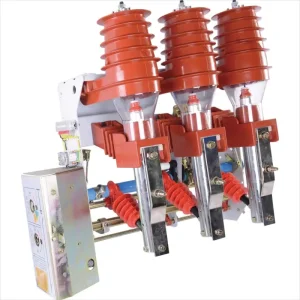
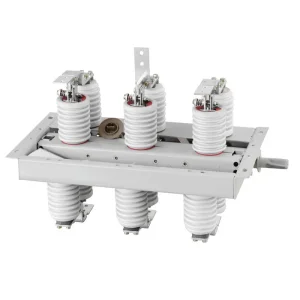
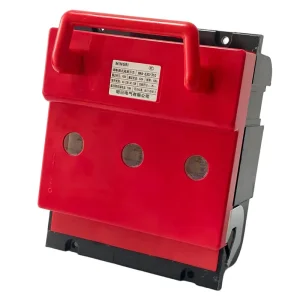
High-Voltage Load Switch Engineering & Operational Dynamics
Medium-voltage (MV) and high-voltage (HV) load switches (commonly designated as Load Break Switches or LBS) serve as indispensable switching and isolation components across primary and secondary distribution networks.
Understanding the Switch-Fuse Combination Mechanism (IEC 62271-105)
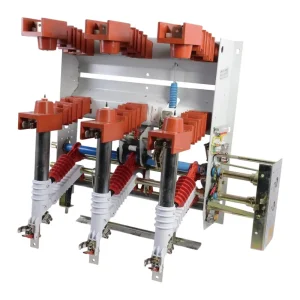
Unlike standard disconnector switches that operate solely under zero-current conditions, an HV Load Break Switch is rated to make, carry, and interrupt normal load currents, transformer magnetizing currents, and cable charging currents. When coupled with high-voltage current-limiting fuses (such as in the FKRN12-12 and FZRN21C-40.5D series), the switch-fuse combination provides instantaneous short-circuit protection, clearing asymmetric fault currents up to 31.5kA–50kA within milliseconds via striker-pin tripping mechanics.
Air-Insulated Puffer Switches
Represented by the FK(R)N12-12 and FKRN12-24D families, these utilize an integrated gas-dynamic cylinder mechanism. When operating springs release, compressed air blasts across the arcing contacts, stretching and quenching the electric arc instantly without requiring pressurized greenhouse gases.
Vacuum Interrupter Technology
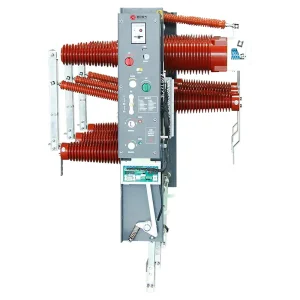
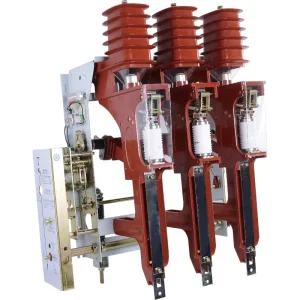
Featured in FZN25-12 and FZ(R)N21C-40.5D models, current interruption happens entirely within a sealed vacuum bottle. High dielectric strength across open contacts minimizes contact erosion, allowing up to 10,000 mechanical operations and extended electrical lifespans under frequent cycling.
Rotary Isolation & Earthing
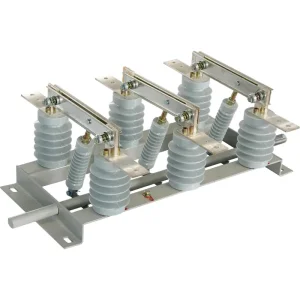
Units like the GN30-12(D) and GN19-12 provide an unmistakable physical air gap visible through inspection windows. Outfitted with heavy-duty interlocking earth blades, they eliminate flashover hazard during line maintenance and panel reconfigurations.
Technical Comparison of Industrial Load Switches
Evaluate electrical ratings, interrupting mediums, and applicable standards across our primary load switch families to select the optimal model for your power distribution architecture.
| Series Model | Rated Voltage (kV) | Rated Current (A) | Interrupting Medium | Short-Time Withstand (4s) | Making Capacity (kA Peak) | Applicable Switchgear |
|---|---|---|---|---|---|---|
| FK(R)N12-12 | 12 kV | 630 A / 1250 A | Air / Arc Chute Puffer | 20 kA | 50 kA | XGN15-12, SM6 Enclosures |
| FK(R)N12-24D | 24 kV | 630 A | Air Puffer + Earth Blade | 16 kA / 20 kA | 40 kA / 50 kA | KYN28-24, RMU Cabinets |
| FZN25-12 | 12 kV | 630 A / 1000 A | Vacuum Interrupter | 25 kA | 63 kA | Modular Ring Network, KYN28 |
| FZ(R)N21C-40.5D | 40.5 kV | 630 A / 1250 A | Vacuum Bottle + Fuse | 25 kA | 63 kA | KYN61-40.5, Prefab Substations |
| GN30-12(D) | 12 kV | 400 A – 1250 A | Rotary Knife Disconnect | 25 kA / 31.5 kA | 63 kA / 80 kA | Fixed / Withdrawable Switchgear |
| GN19-12 | 12 kV | 400 A – 1250 A | Linear Blade Air Isolator | 20 kA / 31.5 kA | 50 kA / 80 kA | GG-1A, Custom MV Panels |
Tailored Execution in Commercial & Utility Environments
From dense urban utility grids to rugged remote mining installations, our medium-voltage switchgear components are designed to withstand challenging environmental conditions worldwide.
Urban RMUs & Micro-Grids
Compact footprints make the FKRN12 series ideal for underground municipal distribution vaults and smart commercial buildings where real estate is constrained and zero SF6 leakage is mandated by municipal codes.
Renewable Solar & Wind
Integrated into prefabricated transformer substations (such as the YB-12 and ZGS11 series), 24kV and 40.5kV vacuum load switches endure daily repetitive switching cycles generated by distributed solar arrays and wind power fluctuations.
Heavy Industrial Plants
In chemical, automotive, and metallurgy complexes, load switches protect branch feeders from transient surges. Combined with high-rupture-capacity fuses, they isolate transformer faults without disturbing upstream substation breakers.
Data Centers & Hospitals
Tier III/IV data center infrastructures mandate rapid secondary bus transfers. Fast-acting vacuum load break switches provide uninterrupted line switching and high short-circuit withstand, safeguarding critical uninterruptible power paths.
Technology Roadmap & Decarbonization Outlook
The medium-voltage apparatus industry is undergoing fundamental shifts driven by environmental mandates (EU F-Gas phase-out), digitalization (IEC 61850 protocol), and smart grid predictive maintenance.
Zero-SF6 Green Switches
Phasing out sulfur hexafluoride (GWP 23,500) via compressed clean-air, synthetic air, and C4-FN fluoronitrile gas mixtures without compromising dielectric BIL levels.
Axial Magnetic Field Contacts
Deploying CuCr contact compositions with axial and transverse magnetic field geometry to sustain higher interrupting currents with zero toxic arc-byproduct generation.
Real-time Thermal & Dynamic BIL
Integrating wireless surface acoustic wave (SAW) temperature sensors and mechanical travel encoders directly into operating shafts for continuous asset health analysis.
SCADA / IEC 61850 Native Link
Direct motor-actuator interfaces with motorized charging mechanisms supporting GOOSE messaging and remote smart-grid autonomous feeder reconfiguration.
Supply Chain Resilience & The Yueqing Advantage
Strategically headquartered in Yueqing, Zhejiang Province—the global epicenter of medium and low voltage electrical apparatus manufacturing—we maintain unparalleled speed, cost-efficiency, and vertical integration.
Sub-Assembly Integration
From micro-tolerance CNC machining of copper conductive blades and epoxy-resin vacuum interrupter cast molds to spring energy storage mechanisms, 94% of sub-components are manufactured within a 15-kilometer radius, slashing lead times from months to weeks.
Scalable Tier-1 Volume Capacity
Modernized semi-automated assembly lines capable of turning out over 12,000 load switches and disconnector units annually. Comprehensive buffer stock of certified materials ensures resilience against raw material volatility (copper, silver, epoxy resin).
End-to-End Quality Assurance
Every switch undergoes rigorous routine factory testing prior to crating: power frequency withstand voltage tests, loop resistance measurement (<35 μΩ), mechanical operational timing, and automated interlock sequence checks.
Certifications, Testing & International Compliance
Our engineering conforms unconditionally to international utility standards, supported by verified type-test certificates from internationally recognized laboratories.
IEC Standards
Fully type-tested under IEC 62271-102 (disconnectors & earthing switches), IEC 62271-105 (switch-fuse combinations), and IEC 62271-200 (metal-enclosed switchgear).
Tri-System Certified
Manufactured under accredited ISO 9001:2015 Quality, ISO 14001:2015 Environmental, and ISO 45001:2018 Occupational Health and Safety management systems.
Type Test Dossiers
Certified short-time withstand tests (up to 31.5kA/4s), peak making capacity (up to 80kA), temperature rise limits, and mechanical durability (M2: 2,000 cycles minimum).
Export Engineering
Factory inspection visits welcome; dedicated video-assisted technical support for overseas EPCs, comprehensive CAD drawings, 3D STEP models, and electrical schematics.
Frequently Asked Technical Questions
Direct answers to core electrical design, selection, and operational questions asked by electrical engineers, EPC contractors, and switchboard builders.
A Vacuum Circuit Breaker is engineered to interrupt full short-circuit fault currents repeatedly (e.g., 25kA–40kA) under automated relay control. In contrast, an HV Load Break Switch is designed to make and break rated continuous load current (typically 630A or 1250A) as well as magnetizing and charging currents. To achieve short-circuit fault clearing, the load switch is paired in series with current-limiting high-voltage fuses (such as in the FKRN or FZRN combinations), offering a significantly more cost-effective and compact solution for distribution transformers up to 2500kVA.
In the FK(R)N12-12 switch-fuse combination, when any of the three-phase high-voltage current-limiting fuses clears a fault, its internal thermal element releases a spring-loaded striker pin that shoots outward. This pin strikes an interlocking trip bar across the switch chassis, instantaneously releasing the energy-stored opening spring of all three switch phases simultaneously. This positive mechanical trip prevents single-phasing on downstream transformers and loads.
Standard MV air-insulated switches are rated for operation up to 1000 meters under IEC guidelines. For installations situated at altitudes between 1000m and 4000m, atmospheric air thinning reduces external dielectric insulation and cooling efficacy. In these circumstances, derating factors according to IEC 62271-1 are calculated: insulation distance must be enlarged, porcelain/epoxy creepage distances increased, and/or switch ratings upgraded from 12kV to 24kV clearance levels.
Under IEC 62271-102/105, class M1 designates standard mechanical endurance covering 1,000 operating sequences without component failure, appropriate for substations with infrequent operational switching. Class M2 denotes extended mechanical endurance capable of 2,000 to 5,000 mechanical operations without maintenance, critical for renewable energy plants, arc furnace feeds, or distribution feeders undergoing routine load shifts.
To deliver an exact technical quote, our engineering team requires: (1) System nominal and maximum rated voltage (e.g., 12kV, 24kV, 40.5kV), (2) Continuous rated current (630A or 1250A), (3) Short-circuit making and withstand current parameters, (4) Manual handle vs. 24VDC/110VDC/220VAC motorized operation mechanism, (5) Fuse combination requirement including fuse rating in Amperes, and (6) Switchgear enclosure type and dimensions.
Complementary Transformers, Prefab Substations & Protection Gear
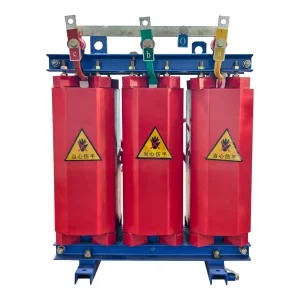
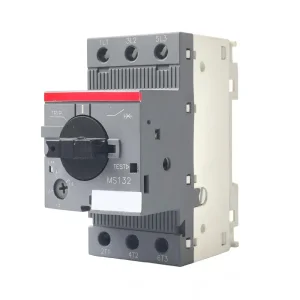
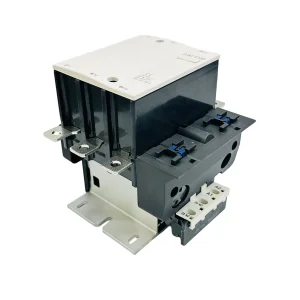
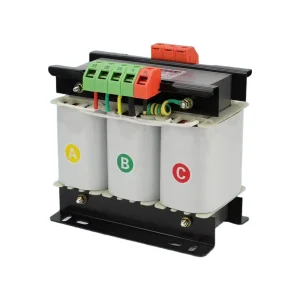
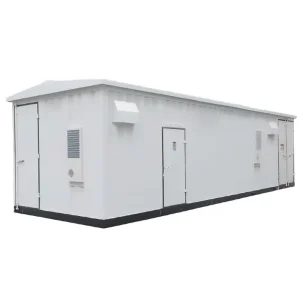
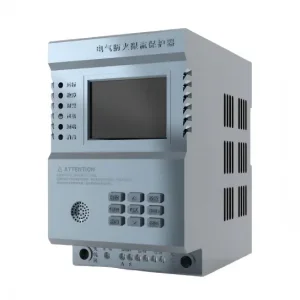
Complete your electrical substation architecture with our full suite of resin-cast dry transformers, modular prefabricated cabins, and low-voltage motor and circuit protectors.