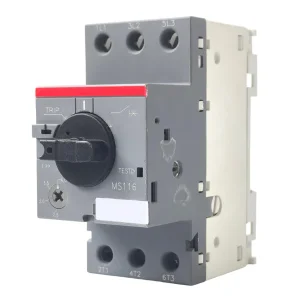
Engineered Power Protection & Stabilization Lineup
Explore our Tier-1 export units featuring industrial earth leakage protections, vacuum switchgears, solar DC breakers, and specialized current-limiting units tested to IEC and GB/T standards.
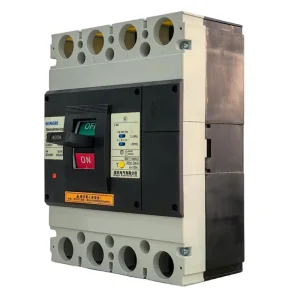
OEM SJKM3L ELCB Earth Leakage Circuit Breaker - High Sensitivity 230V/415V
View Specifications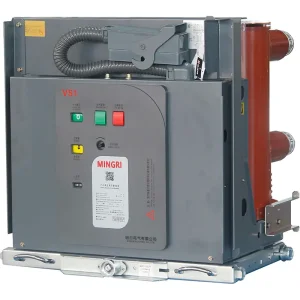
VS1-12/24 Indoor Withdrawable High-Voltage Vacuum Circuit Breaker for Reliable Power Control
View Specifications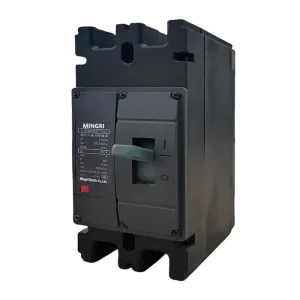
ODM SJKM5DC DC Molded Case Circuit Breaker 1500V for Utility Solar Arrays
View Specifications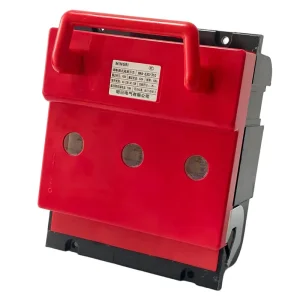
Wholesale HR6 Industrial Fused Knife Disconnect Switch for Heavy-Duty Isolation
View Specifications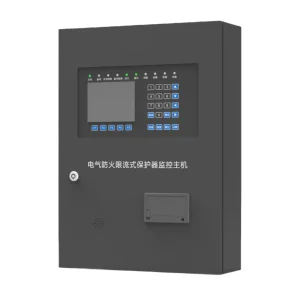
High-Quality Mingri Current-Limiting Protector System Main Unit for Arc Defense
View Specifications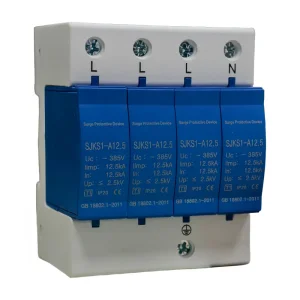
ODM SJKS1D Series Surge Protection Device (SPD) 1P-4P 50Hz Transient Suppressors
View Specifications
China Electrical Fire Current-Limiting Protector - Economical Rapid-Response Unit
View Specifications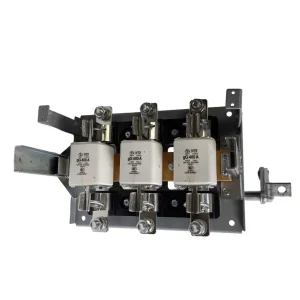
OEM HR3 Fuse Type Knife Switch for Motor Protection - Heavy Industrial Safety Switch
View SpecificationsGlobal Voltage Stability Landscape & Industrial Demand Dynamics
A rigorous engineering analysis of grid volatility, renewable penetration, and power conditioning imperatives across international manufacturing and utility grids.
In modern industrial automation and commercial energy architectures, steady-state root-mean-square (RMS) voltage stability directly dictates operational throughput, thermodynamic efficiency, and asset longevity. In developing manufacturing economies across Southeast Asia, Sub-Saharan Africa, Latin America, and select regional European nodes, electrical grids suffer from systemic imbalances. Frequent brownouts, high-amplitude transient voltage surges, sustained undervoltages, and inductive kickback from multi-megawatt motor starts inflict cumulative degradation on automated manufacturing lines, CNC milling spindle drives, PLC backplanes, and sensitive medical imaging hardware.
Concurrently, the global push toward high-penetration renewable energy—dominated by distributed rooftop photovoltaics, utility-scale solar farms, and variable-speed wind installations—has injected severe harmonic pollution and bi-directional power flows into aging distribution subnets. The resulting Total Harmonic Distortion (THD) and unmitigated voltage sags and swells necessitate robust, industrial-scale Automatic Voltage Stabilizers (AVR) and integrated power conditioning equipment. Selecting certified wholesale voltage stabilizer factories and precision switchgear manufacturers has escalated from a transactional procurement decision into a high-stakes operational continuity mandate.
Information Gain: Power Quality Engineering Impact
Every 5% uncorrected under-voltage deviation forces three-phase induction motors to draw approximately 11% higher stator currents to deliver equivalent torque, accelerating internal insulation thermal wear according to the Arrhenius rate equation. Industrial facilities that couple high-capacity servo/static voltage stabilizers with current-limiting protectors document up to a 64% reduction in unbudgeted machine stoppages and an extension of auxiliary transformer operating life by 8 to 12 years.
Topology Deep Dive: Servo-Electromechanical vs. Static SCR Voltage Stabilizers
Selecting the optimal voltage stabilizer architecture based on load sensitivity, transient response velocity, wave distortion tolerance, and operational environment.
Servo-Driven Variable Autotransformer
Combines high-torque brushless DC or AC servomotors with precision carbon roller brushes moving over toroidal or column autotransformers coupled to a series buck-boost transformer. Provides zero waveform distortion and remarkable continuous overloading margins.
Solid-State Static SCR / Thyristor Regulators
Completely solid-state electronic control with microprocessor-directed silicon controlled rectifiers (SCRs) switching buck-boost autotransformer taps at sub-cycle speed. With no moving mechanical parts, it is ideal for high-vibration sites, offshore rigs, and microchip fabrication plants.
Magnetic Induction & Ferroresonant Stabilizers
Operates on flux saturation principles with high-grade electrical steel cores. Offers exceptional inherent galvanic isolation and supreme lightning transient suppression without active switching elements, specifically engineered for remote telecom backhauls and defense radar bunkers.
| Performance Parameter | High-Precision Industrial Servo AVR | Solid-State SCR Static Regulator | Magnetic Induction Stabilizer | Relay Step-Switched Unit |
|---|---|---|---|---|
| Stabilization Accuracy | ±0.5% to ±1.5% Adjustable | ±1.0% to ±2.0% Digital | ±2.0% to ±4.0% Inherent | ±5.0% to ±8.0% Step-wise |
| Correction Velocity | 15 to 40 V / second | < 10 ms to 20 ms Complete | Instantaneous (< 25 ms) | 50 to 100 ms Step delay |
| Total Harmonic Distortion (THD) | Nil (< 0.1% added to source) | Negligible (< 1% at zero-cross) | Slight (3% to 5% non-linear) | Nil (Pure step switching) |
| Overload Withstand Capacity | 200% for 60s, 500% for 2s | 150% for 30s, 200% for 1s | 150% for 120s Continuous | 120% for 10s Low margin |
| Audible Acoustic Noise | < 55 dBA at 1 meter | < 45 dBA Silent Solid-State | 58 - 68 dBA (Magnetic hum) | Clicking during relays (< 50 dBA) |
| Recommended Field Application | Automotive CNC, Textile, Printing, Medical | Data Centers, Semiconductor, Broadcast | Mining, Harsh Outdoors, Oil Wells | Basic Residential, Budget Offices |
Manufacturing Efficiency: The Yueqing Electrical Ecosystem Advantage
Why Tier-1 Chinese voltage stabilizer factories like Mingri Electric offer unmatched economies of scale, vertical engineering integration, and rapid lead-time execution.
Localized Supply Chain Velocity
Yueqing in Zhejiang Province is recognized worldwide as the electrical epicenter of China. Over 85% of critical bill-of-materials components—oxygen-free Class H copper magnet wire, grain-oriented silicon steel (CRGO) lamination packs, microprocessor SMT boards, and silver-cadmium contacts—are sourced within a 25-kilometer radius, drastically cutting procurement cycles from months to days.
Automated Burn-In & Type-Testing
Factory-level testing protocols go far beyond basic continuity checks. Mingri Electric runs computer-controlled temperature-rise heat runs, high-voltage dielectric withstand tests up to 42 kV on medium-voltage equipment, and 72-hour full-load thermal chamber burn-in routines under simulated harmonic stress to guarantee near-zero Out-of-Box (DOA) rates.
Turnkey OEM / ODM Customization
From custom dual-voltage 380V/480V transformations for cross-border mining plants to marine-grade tropicalization varnishes resisting saline atmospheres, our R&D engineering office converts proprietary engineering drawings into functioning prototypes in under 14 days, supported by complete 3D CAD and BIM files.
Engineered Field Application Scenarios
Specific performance architectures across industries where millivolt deviations cause cascading operational failure.
Advanced CNC & Robotics
Multi-axis computerized numeric machining centers incorporate servo spindles vulnerable to phase imbalance. Our voltage stabilization units paired with SJKM3L earth leakage breakers prevent tool breakage and micro-tolerance calibration drift.
Medical Diagnostics & CT/MRI
Medical linear accelerators, MRI magnets, and 128-slice CT scanners generate massive brief pulse loads. Static SCR stabilizers correct voltage in <15ms without mechanical contact sparking, preventing artifact-riddled scan diagnostics.
Solar PV & Storage Microgrids
Intermittent cloud coverage creates voltage ramp rates exceeding 25% within seconds. Combined with 1500V SJKM5DC molded case circuit breakers, our stabilizing units maintain inverter bus voltage synchronization within utility interconnect boundaries.
Data Centers & Telecom Core
High-density GPU AI clusters demand total voltage harmonic purity. Integrated dry-type transformers, surge arresters, and three-phase stabilizers ensure power supply clean sine waves to UPS systems without tripping dual-path static transfer switches.
Technological Roadmaps & Industry Modernization (2025–2030)
How digital twins, wide-bandgap semiconductors, and IoT condition telemetry are revolutionizing industrial voltage management systems.
The voltage stabilizer industry is transitioning from isolated analog electromechanical apparatuses into connected, self-optimizing cyber-physical assets. Key technological vectors currently reshaping factory manufacturing lines include:
Wide-Bandgap Silicon Carbide (SiC) Topologies
Next-generation static voltage stabilizers are adopting Silicon Carbide MOSFETs in lieu of conventional thyristors. SiC switches enable switching frequencies up to 50 kHz with 70% lower thermal dissipation, slashing unit physical dimensions by 40% and offering sub-5 millisecond total voltage sag correction curves.
IoT Edge Telemetry & Cloud Telematics
Enterprise buyers now require standard Modbus TCP, BACnet, and IEC 61850 protocol compliance. Real-time logging of individual phase voltages, thermal gradient readings on autotransformer windings, brush wear sensors, and predictive carbon contact deterioration models enable remote predictive maintenance.
Eco-Insulation & Circular Materials
In accordance with global net-zero commitments and EU F-gas environmental directives, dry-type resin cast transformers, non-toxic plant-based dielectric ester varnishes, and SF6-free medium-voltage ring main units (such as solid-insulated and clean-air RMUs) are progressively replacing petroleum-based insulation mediums across all export-oriented Chinese factories.
Enterprise B2B Procurement Specification Matrix
A systematic technical evaluation framework for EPC contractors, electrical engineers, and wholesale importers vetting Chinese voltage stabilizer factories.
| Evaluation Parameter | Technical Baseline Requirement | Mingri Factory Premium Spec | Risk of Non-Compliance |
|---|---|---|---|
| Winding Conductor Material | Standard E-Cu (Electrolytic Copper) | 99.99% Oxygen-Free Class H Copper (180°C) | Aluminum substations suffer thermal runaway under harmonic loads |
| Core Laminations | Standard Grain-Oriented (M4/M5) | Laser-Treated High-Grade CRGO (M0/M1 Low-Loss) | Excessive no-load losses, continuous parasitic electric cost |
| Insulation Class | Class B (130°C) or Class F (155°C) | Class H (180°C) Vacuum Pressure Impregnated (VPI) | Dielectric puncture breakdown in high-humidity tropical sites |
| Dynamic Bypass System | Manual Rotational Bypass Switch | Dual Electronic Auto-Bypass + Lockable Mechanical Isolator | Total facility outage during scheduled maintenance intervals |
| Enclosure Protection Rating | IP20 (Indoor Open Ventilated) | IP31 Indoor Standard / IP54/NEMA 4X Marine Outdoor | Dust accumulation short-circuits internal brush tracking tracks |
| Harmonic Tolerance (THD-i) | Up to 10% non-linear distortion | Up to 35% with dedicated harmonic de-tuning inductors | Premature transformer saturation, overheating, false breaker tripping |
Frequently Asked Questions: Industrial Voltage Stabilizers & Switchgear
Comprehensive engineering clarifications addressing selection, international standards compliance, installation, and supply-chain logistics.
Medium & Low Voltage Switchgear, Transformers & Safety Units
Complete your facility electrical architecture with precision resin transformers, resonance elimination cabinets, fire prevention systems, and heavy-duty motor breakers.
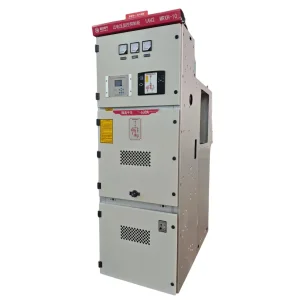
MRXH-10 Arc Suppression and Resonance Elimination Cabinet - High Voltage Safety System
View Specifications
Wholesale HR3 Fuse Type Knife Switch for Motor Protection - Factory Direct Isolation
View Specifications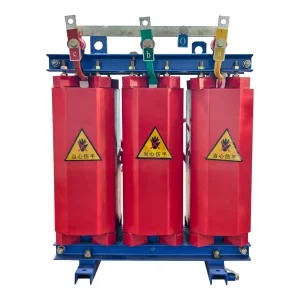
Wholesale SC(B)11 10kV Resin-Insulated Dry Casting Transformer for Substations
View Specifications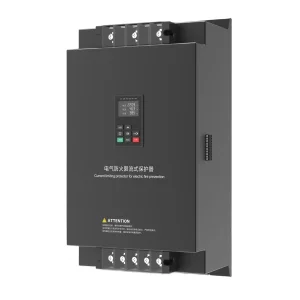
250A Three-Phase Electrical Fire Prevention Current Limiting Protector - Smart Limiter
View Specifications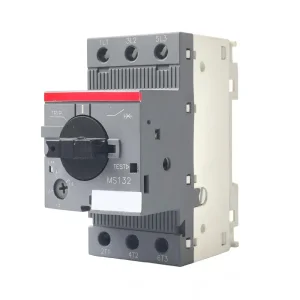
MS132 Low Voltage Motor Protection Circuit Breaker - 25A, 15kW, 100kA Industrial Safety
View Specifications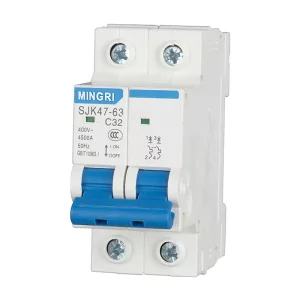
SJK47-63 Miniature Circuit Breaker MCB - High-Breaking Capacity Din-Rail Protection
View Specifications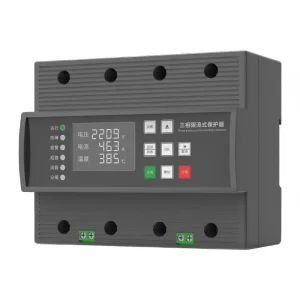
Three-Phase Current-Limiting Protector 80/125A - Advanced Safety Monitoring System
View Specifications