Precision Inverters, Compact Substations & Transfer Switches
High-performance vector frequency inverter cabinets paired with robust circuit isolation and automated transfer infrastructure for resilient industrial automation.
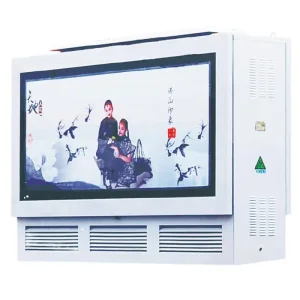
Wholesale China YBD Landscape-Type Underground Compact Substation: Innovative Design by Leading Suppliers and Factory Suppliers, Company
View Engineering Specs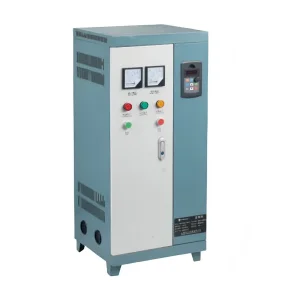
ODM MC3000 Series Variable Frequency Cabinet With Power Manufacturers, Company
View Engineering Specs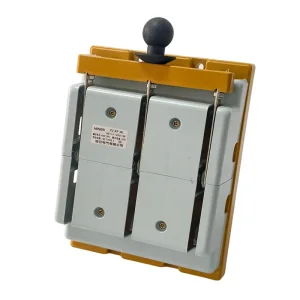
ODM China HD11F Double Throw Anti-Error Knife Switch Factory - Reliable 200A to 1500A Circuit Isolation Suppliers Manufacturer, Companies
View Engineering Specs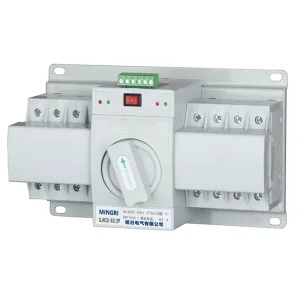
ODM SJKQ1 ATS Automatic Transfer Switch - Reliable Power Solution from China Suppliers and Factory for Seamless Power Management Suppliers, Manufacturer
View Engineering Specs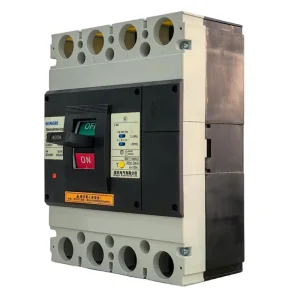
OEM High Sensitivity SJKM3L ELCB Earth Leakage Circuit Breaker - Reliable China Suppliers & Factory for 230V/415V AC Systems Factory, Company
View Engineering Specs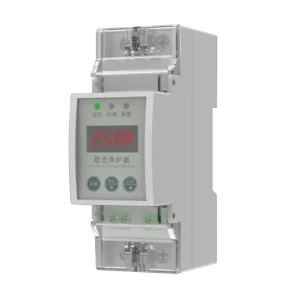
China Electrical Fire Current-Limiting Protector - Economical Type Manufacturer, Companies
View Engineering Specs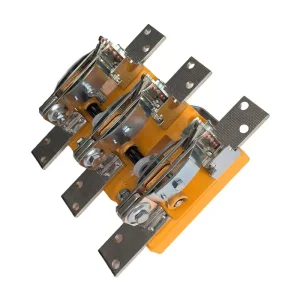
China HD13BX Single Throw Rotary Knife Switch - 100A-2000A, Reliable Circuit Isolation, China Suppliers & Factory Factory, Companies
View Engineering Specs
OEM SJKQ1 Manual/Automatic Dual-Use ATS Automatic Transfer Switch Factories, Companies
View Engineering SpecsTechnological Evolution: Scalar V/f vs. Vector Control (FOC)
Modern heavy industrial automation demands more than basic speed adjustment. Discover how Field-Oriented Vector Control mathematically decouples magnetic excitation current from torque-producing current, enabling DC-motor-like responsiveness in robust AC induction and permanent magnet synchronous motors (PMSM).
Mathematical Decoupling (Clark & Park Transforms)
Conventional scalar V/f inverters regulate voltage and frequency in proportional lockstep, which suffers from sluggish transient recovery and severe torque sag below 5 Hz. Our wholesale vector control inverters utilize advanced Digital Signal Processors (DSP) executing Clarke and Park transformations in real time (sampling cycles ≤ 100 microseconds). This transforms stator currents from a 3-phase stationary reference frame (U, V, W) into an orthogonal 2-phase rotating coordinate system (d-q frame). By isolating the d-axis (magnetic flux current, Id) from the q-axis (torque component, Iq), dynamic torque modulation achieves step response speeds under 5 milliseconds.
Sensorless Vector Control (SVC) vs. Closed-Loop FOC
In applications where installing physical rotary optical encoders is impractical or cost-prohibitive—such as deep-well submersible electric pumps, aggregate crushers, or corrosive chemical mixers—our Sensorless Vector Control (SVC) algorithms reconstruct motor rotor position via high-speed back-EMF state observers and Extended Kalman Filtering (EKF). For high-precision applications like crane hoists, paper calendering, and metal drawing machinery, our drive platforms integrate incremental ABZ and absolute Sin/Cos rotary encoder PG cards, delivering an astonishing 200% rated holding torque at 0.0 Hz with absolute speed accuracy within ±0.02%.
SVPWM Modulation & Low-Order Harmonic Mitigation
Rather than standard sinusoidal PWM, our MC3000 series and custom industrial drive enclosures employ Space Vector Pulse Width Modulation (SVPWM). SVPWM optimizes DC bus voltage utilization by up to 15.47%, maximizing motor shaft output while significantly mitigating common-mode leakage currents and motor bearing fluting. Coupled with integrated DC link reactors (≥ 30 kW models) and optional multi-pulse rectifier or Active Front End (AFE) line regenerative units, total harmonic distortion of current (THDi) is curtailed well below the stringent requirements of IEEE 519-2022.
Global Enterprise Wholesale Sourcing: Direct Factory Economics
Procuring heavy-duty industrial vector drive cabinets and integrated distribution apparatus at wholesale volume requires rigorous technical alignment, supply chain transparency, and multi-tier quality verifications.
Factory Direct Production Capacity & OEM/ODM Engineering
Operating from the electrical manufacturing capital of Yueqing, China, Mingri Electric bridges deep component fabrication with complete drive panel integration. Our high-capacity manufacturing facilities house automated Surface Mount Technology (SMT) cleanrooms, automated wave-soldering lines, and computer-controlled functional testing rigs designed for 0.4 kV, 0.69 kV, 3.3 kV, 6 kV, and 10 kV variable speed systems.
For international distributors and EPC contractors, we offer flexible OEM/ODM partnerships. Our engineering team customizes industrial inverter cabinets (such as our MC3000 series), tailoring ingress protection ratings (IP20, IP21, IP42, IP54, IP55), heat pipe ventilation systems, anti-corrosive conformal coatings (Class 3C3 and 3S3 per IEC 60721-3-3 for chemical and coastal environments), and multi-lingual HMI touchscreens (English, Spanish, Russian, Portuguese, and Arabic).
- Pre-shipment Burn-in Testing: 100% full-load 48-hour thermal burn-in chamber cycling at 50°C ambient temperature.
- IGBT Assembly Verification: Automated optical inspection (AOI) and ultrasonic wire bond testing for tier-1 Infineon and Fuji IGBT power modules.
- Volume Tier Cost Structuring: Direct factory pricing eliminates regional distributor markups, ensuring 20% to 35% margin improvements on municipal tender projects.
Drive Cabinet Specification Matrix (Wholesale Series)
| Technical Parameter | Standard Industrial (G Type) | Heavy Duty Dynamic (P/H Type) |
|---|---|---|
| Input Voltage Range | 3-Phase 380V–480V (-15% ~ +10%) | 3-Phase 380V–690V / 1140V (±15%) |
| Overload Tolerance | 120% for 60s, 150% for 3s | 150% for 60s, 180% for 5s, 200% for 1s |
| Control Methods | V/f, Open-Loop Flux Vector | Sensorless Vector (SVC), Closed-Loop FOC |
| Carrier Frequency | 1.0 kHz ~ 16.0 kHz (Auto Derating) | 0.8 kHz ~ 12.0 kHz (Thermal Adaptive) |
| Torque Response | < 20 ms | < 5 ms (Vector Closed Loop) |
| Fieldbus Protocols | Modbus-RTU, RS485 built-in | Profinet, EtherCAT, CANopen, Ethernet/IP |
| Functional Safety | External Contactor Isolation | Integrated Safe Torque Off (STO) SIL3 / PLe |
Macro Industry Solutions: Mission-Critical Power Architectures
Mingri Electric vector control solutions operate within tightly coordinated electrical ecosystems, coupling variable frequency drive units with vacuum circuit breakers, transformers, and automatic transfer switches.
Mining, Extraction & Aggregates
Underground mines and quarries subject equipment to massive particulate contamination, volatile voltage dips, and immense breakaway torque demands. We configure severe-duty drive lineups driven by our MC3000 Variable Frequency Cabinets and isolated via KS9 Mining Oil-Immersed Transformers. Features include master-slave load sharing across dual-drive longwall overland conveyors, zero-speed continuous stall tensioning, and dynamic braking resistors capable of dissipating massive regenerative kinetic energy during downhill conveyor deceleration.
Municipal Water & Wastewater Treatment
In municipal booster stations and aerated sludge basins, hydraulic water hammer and energy consumption represent major operational liabilities. Our closed-loop vector drives utilize multi-pump synchronization routines, gentle S-curve acceleration ramps, and sleep-wake PID algorithms. Coupled with our GCK Low Voltage Switchgear and SJKQ1 Automatic Transfer Switches, facilities guarantee 24/7 pumping continuity during utility grid outages while capturing 30% to 50% electrical power savings over throttle-valve systems.
Industrial Metallurgy & Crane Hoisting
Overhead bridge cranes, ladle hoists, and continuous casting rollers cannot tolerate torque latency or gravitational slippage. Mingri closed-loop vector control platforms incorporate dedicated mechanical brake logic sequences. The drive validates motor flux saturation and torque generation before generating the release signal for the electro-hydraulic thruster brake, eliminating dangerous load sag. In tandem with MRVS1 High-Voltage Vacuum Circuit Breakers, metallurgical substations achieve uncompromised operational safety.
Component Architecture, Heat Dissipation & EMC Safeguards
Industrial reliability begins at the physical layer. Explore how our wholesale vector inverter cabinets are constructed from the silicon gate level to structural thermal channels.
6th-Gen Trench Gate IGBTs
Utilizing low-loss trench-stop IGBT modules with integrated fast-recovery anti-parallel free-wheeling diodes. Junction operating temperatures withstand up to 175°C, offering supreme short-circuit withstand times (> 10 μs) under dead-short motor winding faults.
Isolated Thermal Airflow Duct
An independent, sealed rear cooling tunnel channels air directly over extruded aluminum heat sinks, completely segregating atmospheric dust, moisture, and conductive airborne lint from sensitive control logic boards and microprocessor circuits.
dV/dt Output Filtering
High switching speeds (fast rise times) can induce reflected wave overvoltages exceeding 1600V at motor terminals over long cable runs (> 100 meters). We offer built-in or cabinet-mounted dV/dt reactors and sine-wave output filters to protect motor insulation integrity.
C3 Category EMC Filtering
Built-in multi-stage radio frequency interference (RFI) filters adhere to EN 61800-3 Category C3 (Second Environment). They aggressively attenuate electromagnetic conduction and high-frequency radiation, protecting nearby PLC networks and smart sensors from interference.
International Regulatory Compliance & Engineering Assurance
Mingri Electric maintains rigorous compliance matrices across international standards bodies to ensure seamless substation and drive commissioning on every continent.
IEC & EN Directives
All drive cabinets and medium/low-voltage switchgear platforms comply strictly with IEC 61800-5-1 (Electrical, Thermal, and Energy Safety), IEC 61800-3 (EMC Requirements and Specific Test Methods), and IEC 62271-200 for metal-enclosed MV switchgear. Routine type tests are conducted in accredited third-party laboratories (CNAS-accredited and independent international bodies).
ISO 9001 / 14001 / 45001 Management
Manufacturing workflows are certified under triple ISO management frameworks: ISO 9001 for quality process governance, ISO 14001 for environmental responsibility, and ISO 45001 for occupational safety. Each batch of vector control inverters and distribution switchgear is traceable via unique barcoded serial numbers from raw component arrival to final factory acceptance tests (FAT).
Export Packaging & Tropicalization
Standard export apparatus is protected in vacuum-sealed moisture-barrier poly-shrouds with high-absorption silica desiccant, enclosed in fumigated, heavy-timber ISPM-15 compliant sea-freight crates. Cabinet structural components undergo electro-galvanization and multi-stage powder baking, offering > 1,000 hours of neutral salt spray resistance (ASTM B117) for corrosive marine transport.
Technological Roadmap: The Next Era of Industrial Power (2025–2030)
Mingri Electric’s R&D engineering center continues to expand drive capabilities, pioneering the integration of wide-bandgap semiconductors, edge predictive intelligence, and active grid support.
Wide-Bandgap Silicon Carbide (SiC) Power Stages
Progressing beyond traditional silicon IGBTs, next-generation vector control inverters in development harness Silicon Carbide (SiC) MOSFET power architectures. SiC reduces switching losses by up to 70%, enables switching frequencies beyond 40 kHz without thermal thermal runaway, drastically slashes cabinet physical footprints by 45%, and elevates inverter conversion efficiency to a world-class 99.2%.
Edge-AI Motor Bearing Prognostics & FFT
By embedding embedded micro-neural network models directly onto the DSP controller, our upcoming firmware platforms sample high-frequency phase current ripple. Real-time Fast Fourier Transform (FFT) analysis detects mechanical bearing micro-spalling, dynamic rotor eccentricity, and stator winding inter-turn insulation degradation up to hundreds of operating hours prior to catastrophic failure, transmitting proactive alerts via MQTT/OPC-UA.
Hybrid Microgrid & Solar Direct VFD Pumping
Aligning with global decarbonization initiatives, our engineering roadmap integrates dual-source DC/AC bus configurations. Vector inverters can directly intake high-voltage DC photovoltaic strings with maximum power point tracking (MPPT) alongside utility 3-phase AC power. The smart controller seamlessly blends solar power with grid power, dynamically prioritizing zero-cost renewable generation for continuous process loads.
Heavy Industrial Power Transformers & High-Voltage Switchgear
Complementing our vector variable frequency drive systems, Mingri Electric engineers rugged medium-voltage power transformers, vacuum circuit breakers, and drawout switchgear panels for end-to-end industrial power distribution.
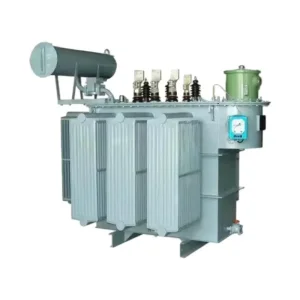
ODM SZ11 Type 10kV Series On-Load Voltage Regulator Power Transformer Factories, Company
View Engineering Specs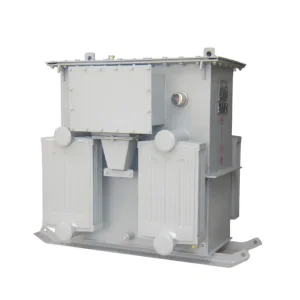
OEM KS9 Type 6-10kV Series Mining Oil-immerse Power Transformer Suppliers, Manufacturer
View Engineering Specs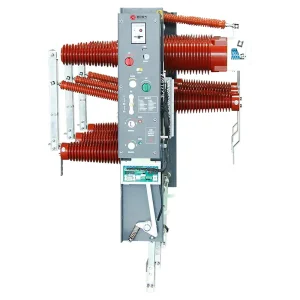
China FZ(R)N21C-40.5D AC Indoor High-Voltage Vacuum Load Switch Supplier, Companies
View Engineering Specs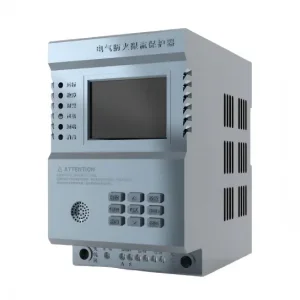
China Single Phase Current Limiting Protector 20-80A 220VAC - Reliable China Suppliers & Factory Solutions Factory, Companies
View Engineering Specs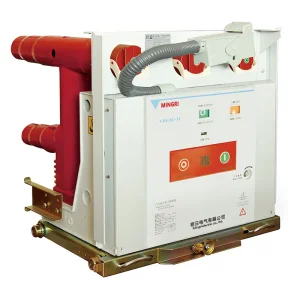
ODM MRVS1-12/24 fixed-type indoor high voltage vacuum circuit breaker Manufacturers, Factory
View Engineering Specs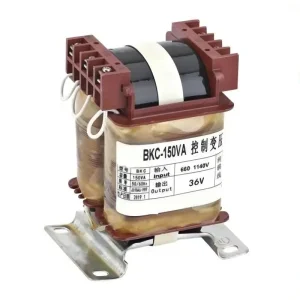
China BKC Series Control Transformers – Compact, Reliable Power Solutions Factory, Companies
View Engineering Specs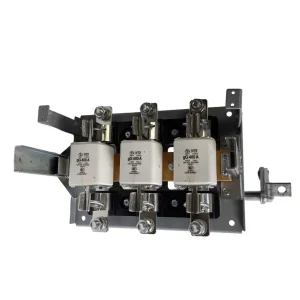
Wholesale HR3 Fuse Type Knife Switch for Motor Protection Manufacturers, Factories
View Engineering Specs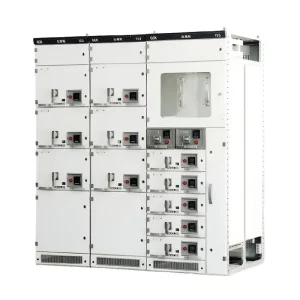
China China GCK Low Voltage Withdrawable Switchgear for Industrial Plants - Reliable Suppliers & Factory Solutions Supplier, Factory
View Engineering SpecsFrequently Asked Questions (FAQ)
Key technical, commercial, and operational questions addressed by our chief applications engineering staff for wholesale buyers and systems designers.
Standard V/f control relies purely on a pre-programmed ratio of stator voltage to supply frequency without dynamically tracking internal motor flux vectors. Consequently, below 5 Hz, the stator winding internal resistance (Rs) drop causes significant flux collapse and torque starvation. By contrast, Sensorless Vector Control (SVC) utilizes a high-speed DSP model that continuously estimates rotor flux amplitude and spatial angle using real-time terminal voltage and current feedback. This permits full automatic stator resistance compensation, enabling the inverter to deliver 150% to 200% rated holding torque down to 0.5 Hz (or 0.0 Hz in closed-loop mode), completely avoiding motor stalling under abrupt shock loads.
Fast IGBT rise times (dV/dt up to 8–10 kV/μs) induce common-mode capacitive coupling between motor windings, rotor iron, and grounded stator frames, creating Electric Discharge Machining (EDM) fluting across bearing race raceways. Mingri addresses this at three levels: (1) internal SVPWM carrier-wave phase interleaving to dampen common-mode neutral voltage peaks; (2) optional integrated common-mode toroidal ferrite chokes on the inverter output; and (3) supplying load-side dV/dt or sinus filters for motor feeder cable lengths exceeding 50 meters.
Yes. Our vector software architecture features dual control kernels: one optimized for standard asynchronous AC squirrel-cage induction motors, and a second dedicated algorithm for surface-mounted (SPM) and interior permanent magnet (IPM) synchronous motors. The PMSM algorithm features high-frequency signal injection (HFI) at zero speed to detect initial rotor magnetic polarity without motion, followed by Maximum Torque Per Ampere (MTPA) tracking in constant torque regimes and Deep Field Weakening control across extended high-speed constant power bands.
For standard modular vector inverters (0.75 kW to 75 kW), standard wholesale factory dispatch is within 7 to 14 business days. High-power cabinet systems (such as the MC3000 Series Variable Frequency Cabinets from 90 kW up to 630 kW) and customized low-voltage withdrawable switchgear lineups (GCK series) carry custom fabrication lead times of 3 to 4 weeks depending on internal component options. Our standard MOQ is flexible: sample units are available for technical validation, while tier-1 volume commercial discounts apply from 10 units or full container load (FCL) orders.
For regenerative applications such as centrifuges, downhill belt conveyors, oilfield beam pump pump-jacks, and mine hoists, our inverters below 30 kW include built-in dynamic braking units (DBU). For capacities of 37 kW and higher, heavy-duty external dynamic braking modules and high-wattage corrugated alloy resistor banks can be specified. Alternatively, for facilities targeting zero energy waste, we supply complete 4-quadrant Active Front End (AFE) regeneration drive cabinets that invert excess DC kinetic energy back into clean 50/60 Hz utility AC power at unity power factor (cos Φ ≥ 0.99).
Every shipment arrives with a full engineering binder comprising: (1) Factory Acceptance Test (FAT) reports verifying insulation resistance, dielectric withstand (2.5 kV / 1 min), and full-load thermal equilibrium; (2) complete CAD electrical schematic diagrams, terminal interconnection schedules, and mechanical dimensional drawings; (3) Certificate of Conformity (CE, ISO, RoHS); and (4) an exhaustive user operations and maintenance manual detailing all parameter function codes, fault diagnostic tables, and fieldbus mapping matrices.