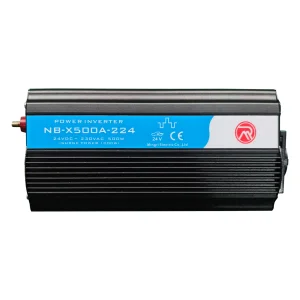
Featured Primary Switchgear & Protection Systems
Factory-direct industrial power apparatus, withdrawable switchboards, and line protection units engineered for MCC integration and critical electrical network distribution.
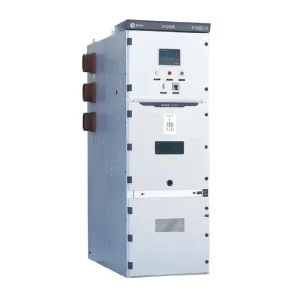
China KYN28-24 Withdrawable Armored Metal-Enclosed Switchgear - Low Current Industrial Grade
View Specifications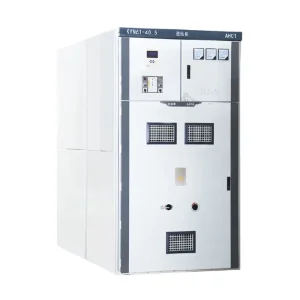
ODM China KYN61-40.5 Armoured Moving Type AC Metal Enclosed Switchgear
View Specifications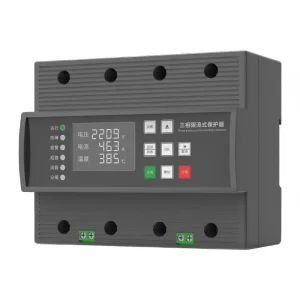
High-Quality China Economic Three-phase Current-limiting Protector 80/125A Device
View Specifications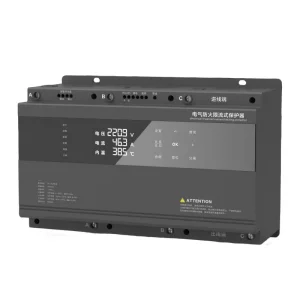
Wholesale 160A Three-Phase Molded Case Fire Protection Limiter Factory Supply
View Specifications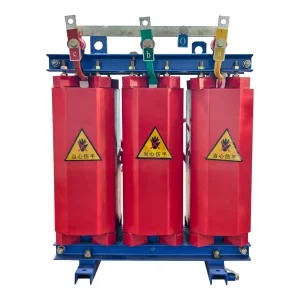
Wholesale China SC(B)11 10kv Resin-Insulated Dry Casting Transformer Solutions
View Specifications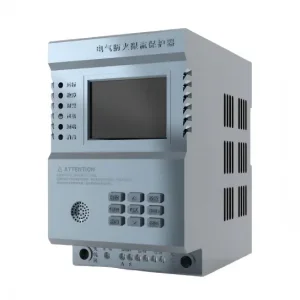
OEM Single Phase Current Limiting Protector 20-80A 220VAC Safety Device
View Specifications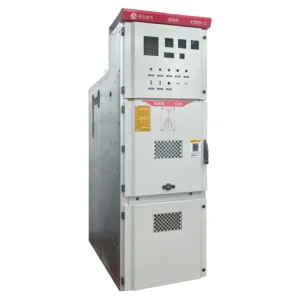
High-Quality KYN28-12 Withdrawable Armored Metal-Enclosed Switchgear 3.6-12kV
View Specifications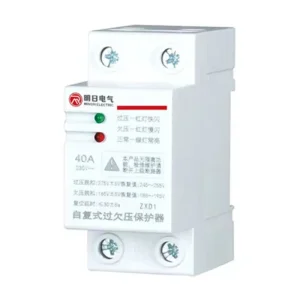
OEM MRGQ-63 Series Self-Resetting Over and Under Voltage Protector Unit
View SpecificationsThe Macro-Industrial Transformation of Motor Control Centers (MCC) & Inverters
Navigating the transition from electromechanical contactor assemblies to decentralized, silicon-carbide, and cyber-physical intelligent motor control center systems (iMCC).
From Fixed Speed to Multi-Drive Clusters
Traditional industrial topologies relied predominantly on across-the-line Direct-On-Line (DOL) starters and Star-Delta contactors, causing substantial inrush currents (up to 600-800% of nominal) and severe mechanical strain on drive chains. Modern Wholesale MCC Inverter Factories now deliver modular low-voltage (LV) and medium-voltage (MV) variable frequency drives (VFDs) nested within withdrawable MCC buckets. This transition slashes start-up peak demand charges, optimizes rotational torque curves, and slashes lifecycle operating costs by up to 34%.
Mitigating Total Harmonic Distortion (THD)
The proliferation of high-power non-linear rectifiers in heavy manufacturing introduces destructive current harmonics, threatening substation transformers and capacitive banks. Advanced MCC inverter manufacturing facilities integrate 18-pulse, 24-pulse, and Active Front End (AFE) regenerative IGBT bridge architectures. These configurations suppress Total Harmonic Distortion (THDi) to below 5%, strictly satisfying IEEE 519 standards while regenerating dynamic braking energy back into the distribution bus.
Cyber-Physical Connectivity & iMCC Systems
Modern industrial operations require continuous data integration. Tier-one MCC inverter manufacturers engineer native fieldbus gateways—supporting PROFINET, EtherNet/IP, Modbus TCP, and IEC 61850. Every discrete starter or inverter bucket functions as an IIoT node, outputting real-time winding temperatures, root-mean-square current, power factor, vibration telemetry, and estimated bearing degradation back to central DCS and SCADA clusters.
Mission-Critical Application Scenarios
Tailored motor driving and protection topologies designed to withstand extreme thermal, electromagnetic, and vibrational parameters across demanding global verticals.
Petrochemical & Oil Refining
Continuous-duty processes require non-stop uptime. Our partner-engineered MCC switchgear offers Class 1 Division 2 / Zone 2 ATEX conformity, Form 4b internal segregation, sealed thermal ventilation pathways, and isolated busbar compartments that safeguard against corrosive hydrogen sulfide environments.
Municipal Water & Wastewater Management
Wastewater pumping facilities demand high starting torque for heavy-slurry submersible impellers and precise speed regulation for centrifugal aeration blowers. Inverter-integrated MCC centers deliver multi-pump cascading controls, automated anti-jam back-spin routines, and harmonic filtering.
Mining, Heavy Aggregates & Cement
High inertia loads, severe dust, and aggressive line voltage drops characterize primary milling and conveyor drives. Heavy-duty MCC units integrate high-overload capacity variable speed drives (150% overload for 60 seconds), liquid-cooled heat exchangers, and isolated bypass vacuum contactors.
Hyperscale Data Center Infrastructure
Cooling distribution infrastructure requires uncompromised power density. Integrated low-profile MCC assemblies provide variable flow control to massive chiller plants, primary hydronic pumping loops, and computer room air handlers (CRAH), ensuring ultra-efficient PUE metrics and instant automatic bus transfer.
Comprehensive Engineering Specification Comparison
Benchmarking parameters for procurement teams, electrical engineers, and EPC contractors evaluating wholesale motor control center architectures.
| Evaluation Parameter | Conventional Fixed-Type MCC | Modular Withdrawable MCC | Smart iMCC with Inverter Integration |
|---|---|---|---|
| Internal Separation | Form 1 to Form 2b | Form 3b to Form 4a | Form 4b (Fully segregated bus, cable & functional units) |
| Mean Time to Repair (MTTR) | 4 to 8 Hours (Requires panel de-energization) | < 30 Minutes (Hot-swappable cassette) | < 10 Minutes (Self-diagnosing plug-in drive module) |
| Harmonic Mitigation | External Passive Choke (Bulky) | 12-Pulse Rectification with Line Reactor | Active Front End (AFE) / Built-in Active Harmonic Filtering |
| Telemetry & Sensing | Analog Voltmeter / Ammeter needle gauges | Basic digital multi-function power meters | Continuous thermal infrared scanning, vibration & dI/dt sensing |
| Motor Speed Versatility | Fixed speed / Dual speed wound stator only | Stepped speed via dual contactors | Continuous speed & torque vectoring (0.1 to 400 Hz) |
| Energy Efficiency Optimization | Baseline (Full speed dissipation via dampers) | Marginal improvement | Maximum (Affinity Law savings up to 50% on fluid dynamics) |
Localized Engineering Support & Rigorous Regulatory Compliance
Global project execution demands compliance across jurisdictions. Factory-direct manufacturing ensures adherence to stringent regional mandates.
IEC 61439-1/-2 & UL 845 Alignment
Every switchgear assembly undergoes comprehensive type testing, verifying temperature rise limits, dielectric withstand voltage, short-circuit withstand capabilities, protective circuit continuity, and mechanical interlock longevity under harsh seismic and vibratory profiles.
Multi-Grid Compatibility (50/60 Hz)
From 380V/400V/415V European/Asian utility grids running at 50 Hz to 480V/600V North American standards at 60 Hz, wholesale custom configurations adapt copper/aluminum busbar sizing, neutral ratings, and grounding schemes (TN-S, TN-C-S, TT, or ungrounded IT networks) accurately.
Field Commissioning & Factory Acceptance Tests (FAT)
Partnering with experienced wholesale manufacturers provides access to detailed Factory Acceptance Testing (FAT), secondary injection testing, primary busbar heat-run validations, and comprehensive remote video verification protocols before containerized dispatch to international job sites.
Technological Roadmap: The Next Era of Industrial Power Conversion
Anticipating structural shifts in power electronics, materials science, and cloud-to-edge algorithmic control.
Wide-Bandgap Semiconductors (SiC & GaN)
Next-generation motor drive units within MCC switchboards are moving toward Silicon Carbide (SiC) MOSFETs. SiC enables ultra-fast switching frequencies with fractional switching losses, decreasing thermal heat sink volume by 60% and enabling dramatically smaller footprint MCC enclosures with higher volumetric power ratings.
Digital Twin Simulation & Prognostics
By capturing edge telemetry from voltage and current sensors, real-time Digital Twins dynamically simulate electromagnetic stresses, motor winding thermal profiles, and insulation breakdown risk. Operators schedule preventive repairs weeks prior to an unscheduled motor failure, minimizing downtime risks.
Eco-Gas & SF6-Free Medium Voltage RMUs
Aligning with global decarbonization policies, medium-voltage distribution systems upstream of industrial MCC networks are replacing greenhouse gases. Solid-dielectric insulation, clean air, and synthetic fluoro-nitrile alternative gases eliminate environmental burdens while delivering uninterrupted dielectric integrity.
Frequently Asked Questions (FAQ) for Engineering & Procurement Teams
In-depth insights into equipment specifications, sourcing strategies, lead times, and engineering customizations.
Substation, Ring Main Units & Industrial Conversion Apparatus
Complementary medium-to-low voltage apparatus, transformers, vacuum circuit breakers, and precision regulators ensuring end-to-end grid reliability.
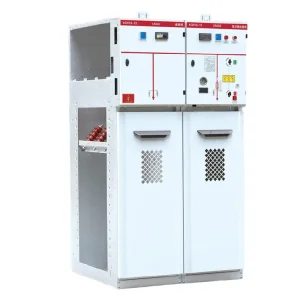
ODM China XGN15-12 Metal-Clad Fixed-Type RMU Switchgear Solid Insulated
View Specifications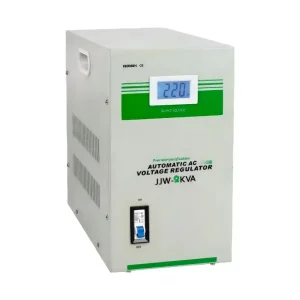
High-Quality JJW Single Phase Series Precise Purified Voltage Regulator Supply
View Specifications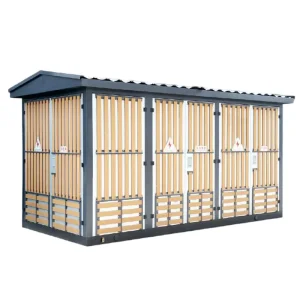
Wholesale China YB□-12 Prefabricated Transformer Substation 50-1600kVA
View Specifications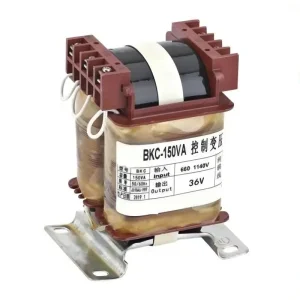
High-Quality BKC Series Control Transformers Reliable Compact Solutions
View Specifications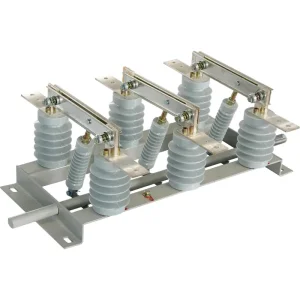
High-Quality GN19-12 Indoor High-Voltage Isolating Switch Factory Apparatus
View Specifications
China BKC Series Control Transformers Compact Reliable Power Solutions
View Specifications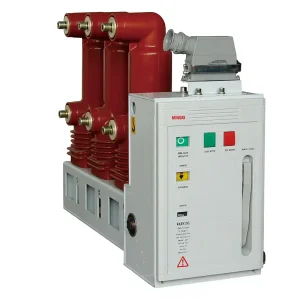
ODM China VSB-12 Indoor High-Voltage Vacuum Circuit Breaker 12kV Factory
View Specifications