Engineered Power Distribution & Transformation Systems
Factory-tested, fully certified distribution units, withdrawable switchgears, and galvanic isolation hardware tailored for extreme continuous loads and mission-critical electrical architectures.
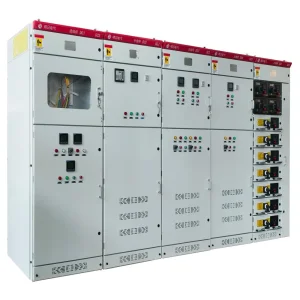
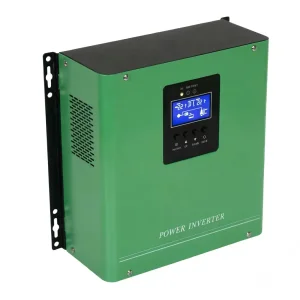
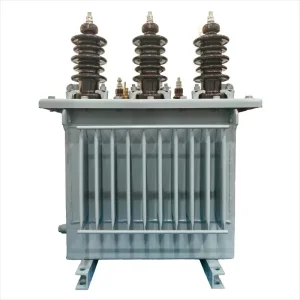
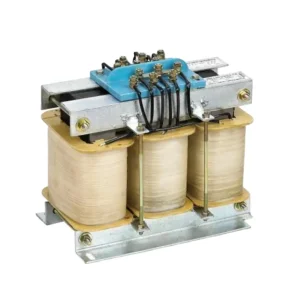
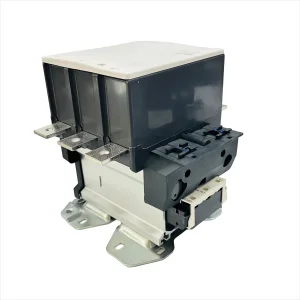
Evolution of Isolation Transformers in Modern Power Systems
The acceleration of non-linear industrial loads, variable-frequency drives (VFDs), and intermittent renewable generation requires a structural evolution from conventional step-down magnetic devices to intelligent galvanic isolation barriers.
Non-Linear Load Proliferation
Industrial automation grids are heavily saturated with power electronics, switched-mode power supplies (SMPS), and robotics. These generate severe triplen harmonics (3rd, 9th, 15th orders) that circulate within neutral lines, creating thermal runaway in unshielded transformers. Modern isolation transformers are designed with custom K-factor ratings (up to K-30) to handle excessive eddy current and stray load losses.
- Neutral sizing up to 200% phase current
- Electrostatic copper shields between windings
Renewable Grid Interconnection
In utility photovoltaic plants and Battery Energy Storage Systems (BESS), isolation transformers prevent DC injection into medium-voltage distribution systems. By establishing a galvanic separation barrier, our systems decouple ground loops, protect bi-directional inverters against high transient common-mode overvoltages, and ensure safe float-ground operation for multi-string arrays.
- Optimized for Bi-directional power flows
- Dielectric withstand up to 42 kV RMS
Common-Mode Noise Elimination
High-frequency common-mode electrical noise generated by rapid IGBT switching in high-power converters couples through standard transformers via inter-winding capacitance. Our factory utilizes multi-layered, grounded Faraday shields between primary and secondary windings, achieving common-mode noise attenuation in excess of 120 dB and transverse rejection over 60 dB.
- Inter-winding capacitance < 2.5 pF
- Full galvanic DC isolation protection
Engineering Specifications & Material Science Standards
Procuring industrial-grade isolation transformers requires evaluating raw magnetic materials, thermal dissipation mechanisms, copper purity, and insulation classes. Below is our engineering benchmark for global OEM and EPC tenders.
| Evaluation Parameter | Standard Commercial Grade | Mingri Factory Engineered Grade | Direct Strategic Value |
|---|---|---|---|
| Core Material Topology | Standard Non-Oriented Silicon Steel (M470) | Cold-Rolled Grain-Oriented (CRGO) Hi-B Steel / Amorphous Alloy | Reduces no-load hysteresis core losses by up to 38%; minimizes magnetizing inrush current. |
| Conductor Metallurgy | Commercial Aluminum or Standard Copper Wire | 99.99% Electrolytic Oxygen-Free Copper (OFC) Foil / Strip | Minimizes skin effect resistance under high frequencies; maximizes short-circuit withstand. |
| Insulation System | Class B (130°C) or Class F (155°C) Varnished | Class H (180°C) / Class C (220°C) DuPont Nomex® System | Prevents insulation degradation under continuous harmonic heat load and sudden overload cycles. |
| Faraday Shielding | None or Single Aluminum Tape | Dual or Triple Continuous Copper Electrostatic Shields | Guarantees >120 dB common-mode noise suppression; eliminates stray capacitive coupling. |
| Partial Discharge (PD) | Unmonitored or > 50 pC at 1.1 Um | Guaranteed < 10 pC at 1.2 Um rated testing voltage | Eliminates micro-arcing inside solid/dry cast resin, ensuring 30+ years lifespan. |
| Vibration & Acoustic Level | > 65 dBA at 1 meter distance | Step-lap 45° mitered core joints, < 48 dBA | Permits indoor installation in medical centers, marine control cabins, and cleanroom facilities. |
For utility and factory distribution networks, the purchase cost of an isolation transformer accounts for less than 12% of its total 25-year lifecycle expenditure. Core losses (no-load) and winding losses (load-dependent) constitute over 80% of expenditure through dissipated energy. By utilizing optimized CRGO laminations and precision precision-layered foil windings, our high-efficiency isolation transformers typically achieve capital payback within 22 to 34 months through reduced utility thermal dissipation bills.
Integrated Power Distribution Architectures
How our isolation transformer engineering teams deploy bespoke magnetic topologies across complex, high-risk industrial operating sectors.
Semiconductor Fabs & Sensitive Automation
Lithography systems and CNC machines cannot tolerate neutral-to-ground voltage float or microsecond transient spikes. Our isolation systems establish a locally derived neutral, bounding ground noise to under 0.5V. Integrated with our Low-Voltage Withdrawable Switchgear and upstream surge protection, this topology prevents erroneous PLC trips and silicon wafer etching errors.
Mining, Oil & Gas Flameproof Grid Infrastructure
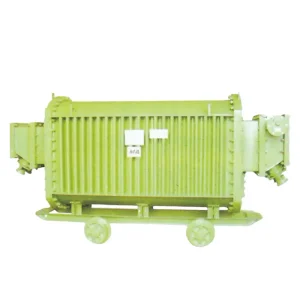
Underground mines and petrochemical refineries are prone to combustible gas hazards, extreme humidity, and severe vibration. We integrate KBSG9 explosion-proof dry-type transformers and mining-grade enclosed isolation units capable of sustaining internal arc flashes without external rupture, maintaining electrical integrity across damp shafts and explosive atmospheres.
Hyperscale Data Centers & Edge Facilities
Server racks demand uninterruptible power with ultra-low impedance at the Power Distribution Unit (PDU). By matching ultra-low impedance isolation transformers with digital trip breakers, our infrastructure mitigates transient voltage drops during major feeder transfers, protects power supplies against utility surges, and handles elevated crest factors without thermal derating.
Marine, Harbor & Offshore Platform Systems
Shore-to-ship power distribution faces acute galvanic corrosion risks when common earth references interconnect ship hulls with terrestrial grounding grids. Mingri marine isolation transformers provide galvanic boundary decoupling, eliminating galvanic DC currents in hulls while withstanding corrosive saline atmospheres via vacuum pressure impregnation (VPI).
Compliance Framework & Laboratory Testing Regimes
Every custom dry-type, cast-resin, and oil-immersed unit undergoes a documented Factory Acceptance Testing (FAT) protocol in accordance with international electrotechnical standards before containerized overseas dispatch.
Dielectric & BIL Testing
High-pot AC withstand testing up to 50 kV applied voltage, alongside Basic Impulse Insulation Level (BIL) surge simulation up to 200 kV peak to ensure protection against lightning strikes.
Winding Resistance & Ratio
Precision Kelvin bridge resistance verification across every tap step, ensuring winding symmetry, zero turn-to-turn shorts, and voltage ratio tolerances well within ±0.5%.
Harmonic Loss Analysis
Full-load temperature rise testing verified through computerized power analyzers, quantifying no-load losses, load losses, and impedance under high THD harmonic spectrums.
Global Certifications
Certified conformance to IEC 61558-2-4, IEC 60076, IEEE C57.12, UL 1561, CE Low Voltage Directive, and certified management systems under ISO 9001, ISO 14001, and ISO 45001.
Technological Innovations in Galvanic Power Engineering
As power distribution shifts towards intelligent, high-density, carbon-neutral operation, our enterprise continues to invest in next-generation material science and telemetry integration.
Embedding fiber-optic Bragg grating (FBG) temperature probes directly into high-voltage winding hotspots. Real-time Modbus/IEC 61850 data pipelines calculate real-time loss of insulation life and predict thermal maintenance thresholds before unexpected outages occur.
Transitioning sealed distribution systems to high-fire-point (>300°C) biodegradable synthetic and natural esters. These eliminate toxic spill risks, offer Class K fire safety ratings, and permit dense urban substation installations without expensive deluge infrastructure.
Engineering hybrid architectures combining physical galvanic isolation cores with silicon carbide (SiC) high-frequency switching stages. This enables bidirectional reactive power support, instantaneous voltage sag clearing, and DC microgrid interconnectivity.
Frequently Asked Engineering Questions
Detailed technical answers addressing core selection, phase configuration, harmonic isolation, and factory collaboration.
Medium & Low-Voltage Network Protection Hardware
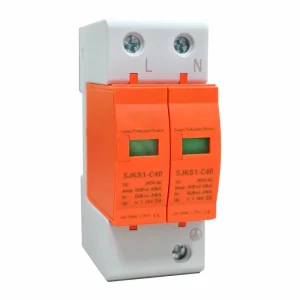
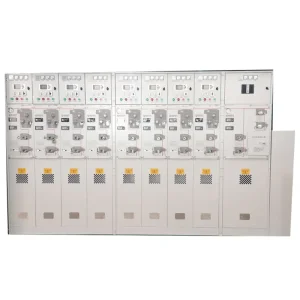
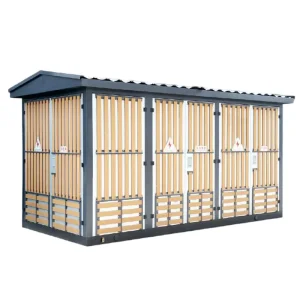
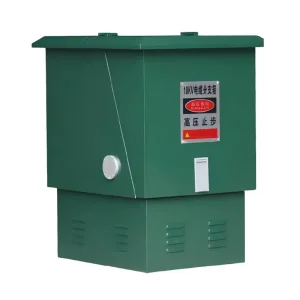
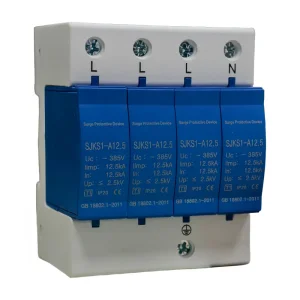
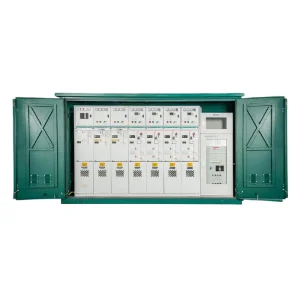
Complete turnkey electrical protection accessories, surge protective devices (SPDs), ring main units (RMUs), and prefabricated substations engineered to complement high-capacity isolation transformer networks.