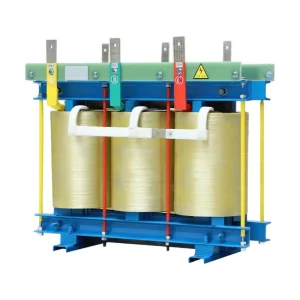
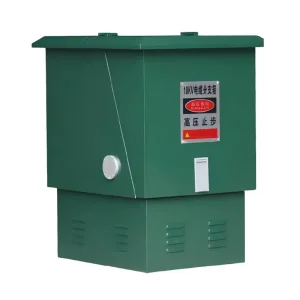
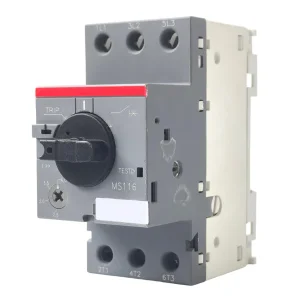
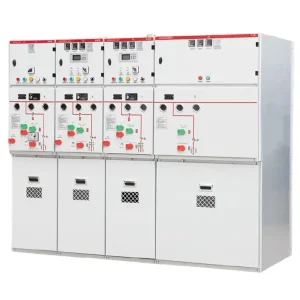
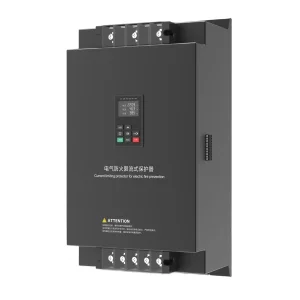
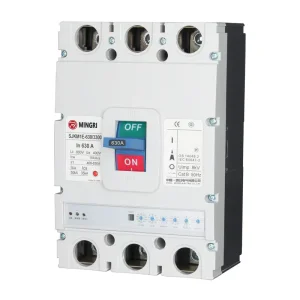
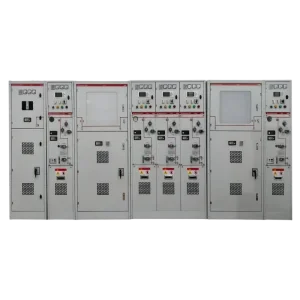
Engineered Power Solutions: Featured Production Line (Batch A)
Explore high-performance isolation switches, surge suppression devices, transformers, and switchgear assemblies manufactured under ISO 9001 quality supervision.
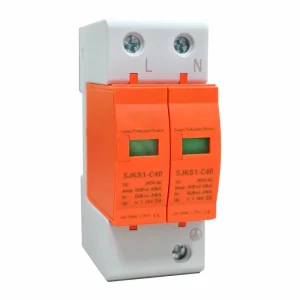
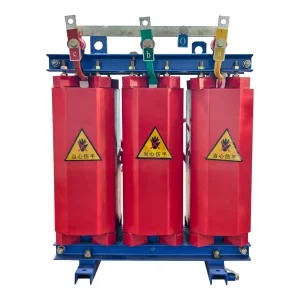
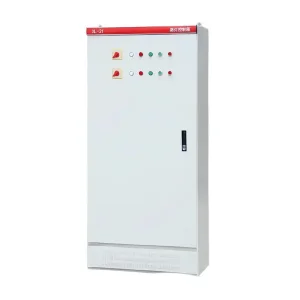
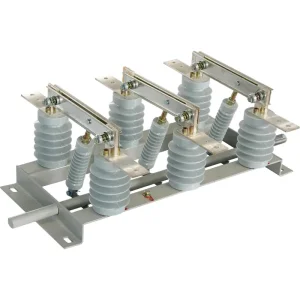
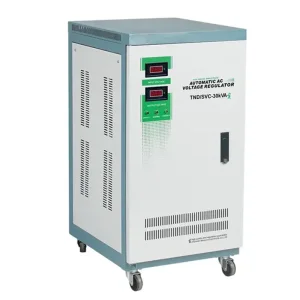
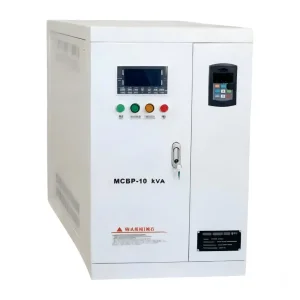
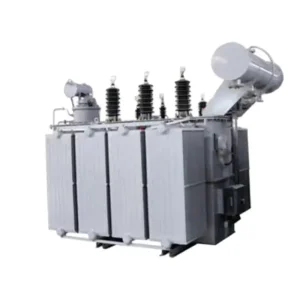
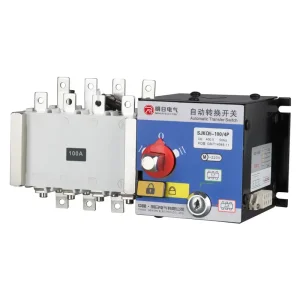
The Mission-Critical Physics of Electrical Isolation
In high-capacity distribution networks, switchboards, and renewable balance of plant (BOP), an isolation switch (disconnector) functions as an infallible physical barrier ensuring personnel life-safety and operational continuity.
Visible Physical Break & Air Clearance
Unlike standard circuit breakers whose contact separation is concealed inside vacuum bottles or dielectric chambers, industrial isolating switches provide unmistakable visual confirmation of open contact status. They comply with IEC 60947-3 and IEC 62271-102 creepage and clearance distances, preventing dielectric flashover even under transient surge conditions.
Dynamic Short-Circuit Endurance ($I_{cw}$ / $I_{cm}$)
An isolation switch must sustain immense thermal and electromagnetic stresses during downstream short-circuit faults without contact welding or mechanical distortion. Our disconnectors are rated for rated short-time withstand current ($I_{cw}$) up to 40kA/4s and peak withstand capacity ($I_{cm}$) exceeding 100kA, guaranteeing network integrity before upstream breakers trip.
Interlocking Mechanisms & Padlock Safety
Accidental energization during personnel maintenance leads to catastrophic arc flash incidents. Modern disconnectors integrate multi-tiered mechanical interlocking with earthing switches (integral ground blades) and door mechanisms, supplemented by 3-hole padlock clasps conforming to global OSHA Lockout/Tagout (LOTO) safety criteria.
The Yueqing Electrical Cluster: Manufacturing Depth & Scale
Located in the heart of China’s premier electrical engineering hub, our manufacturing facilities harness a vertically integrated ecosystem that optimizes raw component fabrication, reduces procurement lead times, and lowers project capex.
Vertical Component Synthesis
From high-purity T2 electrolytic copper processing to robotic automated silver electroplating (up to 20μm coating thickness for minimum contact resistance), all sub-assemblies are fabricated in-house to suppress defect propagation.
Tooling Agility & Rapid OEM/ODM
Equipped with 5-axis CNC machining centers and high-tonnage precision stamping presses, we engineer custom busbar terminal interfaces, unique shaft extensions, and dual-auxiliary contact arrangements with 15-day prototype turnarounds.
CNAS-Accredited QA Testing
Every disconnector batch undergoes comprehensive dielectric withstand tests, helium mass spectrometer leakage detection (for gas-sealed units), temperature rise tests under continuous rated current, and 10,000-cycle mechanical life testing.
Containerized Freight Logistics
Direct proximity to Ningbo-Zhoushan and Shanghai marine super-ports enables rapid consolidation of heavy switchgear panels, oil/dry transformers, and switch disconnectors, significantly lowering sea freight costs for international bulk buyers.
Technical Taxonomy & Disconnector Comparison Matrix
Selecting the precise isolation switch requires matching duty-cycle dynamics, breaking environment, arc extinguishing capabilities, and operational voltage classes.
| Equipment Category | Rated Voltage ($U_e$) | Rated Current ($I_n$) | Making / Breaking Arc Medium | Utilization Category | Primary Sector Application |
|---|---|---|---|---|---|
| Indoor MV Disconnector (e.g., GN19/GN30) | 12 kV – 40.5 kV | 630 A – 3,150 A | Air Break (De-energized Only) | No-Load Mechanical Disconnector | Medium-Voltage Switchgear (KYN28, XGN) |
| Enclosed Load Break Switch (LBS) | 12 kV – 24 kV | 630 A – 1,250 A | $SF_6$ Gas / Vacuum Interrupter | Class E3, M2 (Break Full Load) | Secondary RMU, Urban Distribution Substation |
| Low Voltage Rotary Disconnector | 400 V – 690 V AC | 32 A – 3,200 A | Magnetic Blowout Air Chute | AC-21A to AC-23B Heavy Inductive | Industrial MCC Panels, Main Incomers |
| Solar PV DC Isolator Switch | 1,000 V – 1,500 V DC | 16 A – 630 A | Multi-Gap Knife Rotary Rapid Snap | DC-PV1 / DC-PV2 Critical Breaking | Photovoltaic String Inverters & Array Combiners |
| Solid-Insulated Disconnector Unit | 12 kV – 24 kV | 630 A | Epoxy Resin Shielded Vacuum Break | Eco-Friendly / Zero Global Warming | Harsh Environmental RMU, Subways, Mining |
Regulatory Assurances for Multi-Jurisdictional EPCs
Procuring isolation equipment for transnational infrastructure demands rigorous adherence to international electro-technical safety benchmarks and harsh climate operational resilience.
IEC 60947-3 & IEC 62271-102
Certified for continuous dielectric creepage distances, isolating gap integrity under wet power-frequency conditions, and lightning impulse withstand voltages up to 125kV BIL for high-voltage outdoor and indoor applications.
UL 98 & UL 508I Enclosed Switches
Designed for North American OEM switchboard compliance, featuring non-defeatable interlocks, certified service entrance ratings, and dedicated wire-bending space accommodating aluminum and copper conductors.
Environmental Ingress (IP66 / NEMA 4X)
Engineered with laser-welded 304/316L stainless steel or UV-stabilized polycarbonate enclosures, fitted with fluorosilicone gaskets to defend against saline air, acidic mine dust, and tropical humidity.
Specialized Industrial Application Scenarios
Modern electrical networks subject isolation equipment to extreme operating dynamics. Here is how our switches are custom-engineered for specific operational environments.
Utility-Scale Photovoltaic & BESS Systems
Solar arrays and battery energy storage systems (BESS) generate dangerous continuous DC arc currents lacking natural zero-crossing points. Our 1500V DC isolators use multi-pole series connections and rapid magnetic blowout coils to suppress lethal DC arcs within 5 milliseconds, preserving equipment longevity.
Heavy Metallurgical & Underground Mining
Subject to severe mechanical shock, high vibration, and airborne conductive graphite/coal particles. Our cast-bronze contact terminals and hermetically sealed solid-insulated disconnectors prevent conductive ingress, ensuring high operational reliability in sub-surface mining substations.
Electric Railway Traction Substations
Electrified railways experience cyclical load spikes and high transient overvoltages. Custom 27.5 kV single-phase or two-phase motor-operated catenary disconnectors provide remote SCADA actuation, allowing operators to isolate overhead line sections in seconds for emergency maintenance.
Emerging Trends Reshaping Switchgear Isolation
The global energy transition and strict emissions regulations are pushing isolation switch technology toward eco-friendly dielectrics and digital asset monitoring.
$SF_6$-Free & Fluorinated Gas Alternatives
With the European Union F-Gas Regulation and worldwide carbon-neutral mandates targeting sulfur hexafluoride ($SF_6$, with a GWP of 24,300), we are actively mass-producing solid-dielectric shielded disconnectors and synthetic dry air (clean air) MV switches that eliminate greenhouse gases while maintaining compact clearances.
IoT-Enabled Predictive Telemetry
Next-generation disconnectors now incorporate wireless surface-acoustic-wave (SAW) temperature sensors directly on primary contact jaws. Continuous thermal telemetry detects micro-ohm contact resistance creep before hotspots cause insulation burnouts, streaming live data to supervisory SCADA platforms.
Intelligent Motorized Remote Actuation
To eliminate arc flash hazards to personnel during physical switching operations, distribution substations are standardizing on low-power motorized operating mechanisms (24V/110V/220V DC). These units support remote operation, digital interlock checks, and optical position verification.
Global Sourcing Framework: Technical Checklist for EPCs
When issuing RFQs for large-scale infrastructure or industrial panel manufacturing, evaluate manufacturers against these critical engineering and commercial benchmarks.
1. Dynamic Thermal Ratings
Verify that certified test certificates cover rated peak withstand current ($I_p$) and short-time withstand current ($I_{cw}$) under realistic durations (1s to 4s) verified by independent test bodies (such as KEMA, ASTA, or national test labs).
2. Duty Cycle & Category
Distinguish between pure no-load disconnectors (isolated maintenance) and switches with load-breaking capacity (AC-22A/AC-23A). Specifying under-rated switches for inductive motor loads risks severe arc damage.
3. Plating & Contact Finish
Demand silver-plated contact tips (minimum 15–20 microns) rather than bare copper or thin tin plating. High-grade silver prevents oxidative thermal runaway across years of service in damp switchgear rooms.
4. Terminal Flexibility
Confirm that terminal busbar bolt holes conform to standard NEMA or DIN drill patterns to accommodate dual-hole compression lugs or rigid copper risers without on-site mechanical stress.
Frequently Asked Questions: Industrial Isolation Switches
Get fast, direct answers to common questions on isolation switch design, testing, standard compliance, and wholesale sourcing parameters.
A circuit breaker is designed to interrupt heavy short-circuit fault currents using arc-quenching chambers (vacuum or $SF_6$), but its internal contacts are hidden from view. An isolation switch provides an unambiguous, visible air gap or physical disconnect to guarantee worker safety during maintenance. Most standard disconnectors are non-load break devices and must only be operated after the main circuit breaker has opened.
Pure disconnectors (such as the GN19-12 high-voltage indoor isolating switch) are rated only for de-energized operation or minute transformer no-load charging currents. However, a switch-disconnector (Load Break Switch / LBS) integrates quick-acting spring mechanisms and arc chutes (or vacuum interrupters), enabling it to make and break full rated operational current (AC-22A/AC-23A duty) safely.
At altitudes exceeding 1,000 meters above sea level, thinner air decreases dielectric breakdown strength and convective cooling capacity. For projects located at 2,000m to 4,500m (e.g., Andean or Central Asian mining basins), we configure high-altitude plateau models featuring extended creepage insulators, widened phase-to-phase clearances, and de-rated continuous thermal currents.
Standard catalog models (such as standard low-voltage disconnectors and standard 12kV GN19 isolation switches) are maintained in stock or dispatched within 7–10 days. Customized engineering orders involving motorized operating mechanisms, non-standard line voltages, special enclosure metallurgy, or tailored busbar extensions generally ship within 20–30 business days.
We supply integrated mechanical linkages with earthing switches, Castell key interlock provisions, solenoid door locks, and multi-hole padlock attachments. These safeguards prevent opening switchgear enclosure doors while the circuit is live, and block disconnector closure while the earthing blades remain connected.
Yes. Disconnectors equipped with electric motor operating mechanisms feature auxiliary microswitches (standard 2NO+2NC or optional 4NO+4NC) and optional Modbus-RTU / IEC 61850 communication interfaces. This allows central dispatch computers to monitor contact positions, issue motor actuation signals, and log operating events.
Complete Infrastructure & Switchgear Assemblies (Batch B)
Integrate our low-voltage protection devices, modular ring main units, cast resin dry-type transformers, and outdoor distribution cabinets into your next power project.