Critical Switchgear & Circuit Protection Portfolio (Batch 1)
OEM/ODM factory-direct medium and low-voltage solutions engineered with rigorous type-testing and zero-defect isolation performance.
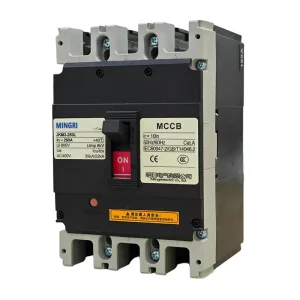
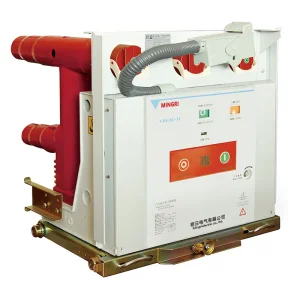
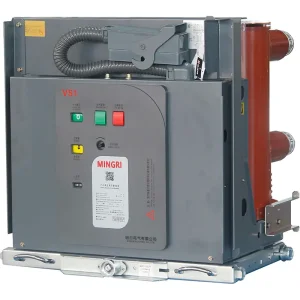
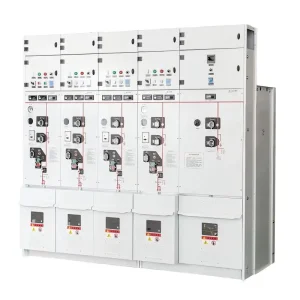
Global Industrial Context: The Strategic Role of HGL Load Isolation Switches
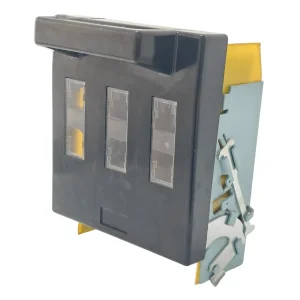
In modernized electrical engineering and high-density industrial infrastructure, the HGL series load isolation switch (switch-disconnector) serves as the primary line of operational defense and galvanic disconnection. As global electrification intensifies across automated manufacturing facilities, megawatt-scale solar installations, and high-tier data centers, the necessity for robust, maintenance-free, and visible-break switching devices has surged exponentially. The global switch-disconnector market, currently exceeding USD 3.8 billion, is driven by strict occupational safety directives including OSHA lock-out/tag-out (LOTO) requirements and IEC 60364 installation mandates.
The HGL architecture is specifically designed for AC circuits operating at 50Hz/60Hz, with rated operational voltages up to 690V / 1000V AC, and rated operational currents spanning 63A to 3150A. Unlike standard non-load disconnectors that only isolate de-energized circuits, the HGL series integrates high-dielectric arc chutes, spring-loaded quick-make/quick-break mechanics, and self-cleaning silver-alloy contact bridges. This structural superiority empowers the switch to make, carry, and break currents under specified overload conditions (Utilization Category AC-23A for inductive motor loads) while ensuring an absolute galvanic isolation gap in the "OFF" position.
Kinematic Contact Mechanics & Double-Break Extinction Physics
The mechanical integrity of an HGL switch revolves around its patented double-gap, dual-break rotary mechanism. Traditional knife-gate switches establish a single break per phase, which subjects the single contact pair to intense thermal-electric plasma degradation when extinguishing heavy load arcs. In contrast, the HGL contact arrangement splits the arc across two series gaps per phase simultaneously. This effectively doubles the total arc voltage drop ($V_{arc}$), rapidly driving the system voltage below the threshold necessary to sustain plasma conduction.
Enclosed within an ultra-durable, flame-retardant unsaturated polyester glass-mat reinforced (DMC/SMC) housing, the contact systems are shielded from environmental particulates, ionization cross-tracking, and mechanical impact. The quick-make and quick-break energy storage spring mechanism operates completely independently of manual handle operating speed. This mechanical independence guarantees that even an inexperienced operator cannot tease or stall the switch during opening, completely suppressing dangerous sustained arc flash events.
Yueqing Factory Hub: Advanced Manufacturing & Cost-Efficiency Advantages
How our integrated electrical manufacturing cluster in Zhejiang transforms supply chain lead times and delivers cost-optimized industrial reliability.
Vertical Component Integration
Our manufacturing ecosystem in Yueqing consolidates copper rod drawing, high-speed automated progressive stamping, silver-cadmium oxide (AgCdO) and silver-tin oxide ($AgSnO_2$) contact sintering, and high-pressure thermoset DMC molding under a unified manufacturing control perimeter. This eliminates middleman markups, compressing procurement costs by up to 35% compared to Western suppliers.
Precision Automated Assembly
Multi-axis robotic riveting stations calibrate torque settings and contact pressure vectors to tolerances within ±0.05 N·m. Automated optoelectronic sensors verify blade alignment and interlock gate operation across 100% of manufactured production units, guaranteeing an operational life in excess of 10,000 mechanical switching cycles without contact drift.
Rigorous In-House Type Verification
Equipped with internal short-circuit impulse test bays and precision thermal imaging chambers, each production batch undergoes temperature-rise verification at 110% rated current, dielectric tests at 3500V AC (1 min), and short-time withstand current testing ($I_{cw}$) to prove compliance prior to shipping dispatch.
Comprehensive Technical Parameters: HGL Series Load Isolation Switch
Engineered to exceed IEC 60947-3, GB/T 14048.3, and international electrical codes for low-voltage switchgear.
| Parameter / Model Frame | HGL-63 to 160A | HGL-200 to 400A | HGL-630 to 1000A | HGL-1250 to 1600A | HGL-2000 to 3150A |
|---|---|---|---|---|---|
| Rated Operational Voltage ($U_e$) | AC 400V / 690V | AC 400V / 690V | AC 400V / 690V / 1000V | AC 400V / 690V / 1000V | AC 400V / 690V / 1000V |
| Rated Insulation Voltage ($U_i$) | 800 V | 1000 V | 1000 V | 1200 V | 1200 V |
| Impulse Withstand Voltage ($U_{imp}$) | 8 kV | 8 kV | 12 kV | 12 kV | 12 kV |
| Short-Time Withstand ($I_{cw}$ 1s) | 5.5 kA | 12.0 kA | 26.0 kA | 50.0 kA | 65.0 kA |
| Rated Making Capacity (AC-23A) | 10 $I_e$ | 10 $I_e$ | 10 $I_e$ | 10 $I_e$ | 10 $I_e$ |
| Rated Breaking Capacity (AC-23A) | 8 $I_e$ | 8 $I_e$ | 8 $I_e$ | 8 $I_e$ | 8 $I_e$ |
| Mechanical Durability (Cycles) | 12,000 | 10,000 | 8,000 | 5,000 | 3,000 |
| Enclosure Protection Class | IP20 (Terminal IP40) | IP20 (Terminal IP40) | IP00 / IP20 (Optional) | IP00 / IP20 (Optional) | IP00 |
Localized Application Scenarios: Where Reliability Cannot Be Compromised
Tailored mechanical designs capable of withstanding extreme environmental stresses, from desert solar farms to hazardous industrial facilities.
Photovoltaic Combiner Boxes & Central Inverters
With modern utility PV farms expanding to 1000V/1500V DC and high AC collection voltages, HGL switches are deployed as master disconnectors between centralized inverter outputs and step-up transformers. Their high tracking index and self-extinguishing insulation prevent dielectric breakdown caused by sand, extreme diurnal thermal swings (-30°C to +70°C), and ultraviolet exposure.
Mission-Critical Data Centers (Tier III & IV)
In power distribution units (PDUs) and uninterruptible power supply (UPS) bypass modules, HGL switches facilitate maintenance isolation without transferring dangerous micro-arcs or inducing voltage sags into the server racks. Optional microswitch auxiliary contacts interface seamlessly with building management systems (BMS) for real-time contact status telemetry.
Heavy Industrial Motor Control Centers (MCC)
Installed directly within metal-enclosed withdrawable switchgear such as MNS or GCK panels, HGL switches handle frequent motor load breaking (AC-23A duties). In petrochemical refining, paper mills, and mining plants, their high short-circuit electrodynamic withstand capability ensures switch retention during severe downstream bolted fault events.
Building Mains & Emergency Generator Transfer
Available in 3-pole and 4-pole configurations (with full-rated switched neutral), HGL disconnectors serve as safe isolation points between municipal utility grid connections and auxiliary diesel/gas standby gensets. The 4P structure ensures neutral path integrity, avoiding circulating harmonic currents and ground-fault nuisance tripping.
Industry Evolution: IoT Digitization & Decarbonized Switchgear Trends
The traditional manual disconnect switch is undergoing a fundamental transformation as Industry 4.0 and the global energy transition demand higher levels of intelligence and environmental responsibility. Low-voltage electrical networks are no longer passive conduits; they are dynamic, bi-directional ecosystems requiring granular observability. To meet this evolution, next-generation HGL switch designs are integrating three transformative technological frontiers:
1. Embedded Sensorization and Thermographic Telemetry: Contact terminal degradation caused by improper tightening torque or cyclic thermal expansion has historically been the primary cause of switch failure. State-of-the-art HGL variants incorporate passive surface acoustic wave (SAW) or miniature digital thermal sensors directly at the terminal lugs. These sensors communicate via Modbus/RS485 or wireless Zigbee/LoRa networks to alert plant engineers of localized temperature elevations before insulation degradation or flashovers occur.
2. Motorized Remote Actuation for Arc Flash Mitigation: While manual side-mount or door-mount direct handles remain the benchmark for simplicity, worker safety guidelines (NFPA 70E) strongly advocate for arc flash boundary minimization. Motorized HGL (HGLZ) mechanisms enable automated or remote opening and closing commands from control rooms, removing maintenance technicians from the immediate perimeter of energized low-voltage switchboards during high-energy switching operations.
3. Eco-Friendly, Recyclable Flame-Retardant Composites: In compliance with the European Union's RoHS and REACH directives, our Yueqing production lines are systematically transitioning toward halogen-free, bio-derived unsaturated polyester resins. These advanced thermoset formulations deliver superior flammability ratings (UL94 V-0) and eliminate toxic halogenated gas emissions during high-temperature arc containment, aligning with multinational ESG decarbonization benchmarks.
Frequently Asked Technical & Procurement Questions (FAQ)
Authoritative engineering insights to assist electrical engineers, panel builders, and procurement officers.
An HGL Load Isolation Switch is a manually or motor-operated switch-disconnector designed to provide absolute galvanic isolation with a visible or positive-break mechanical gap in compliance with IEC 60947-3. It has no built-in overcurrent or magnetic thermal trip relays; its primary role is to make, carry, and break load currents (including motor overloads) and withstand short circuits for a specified duration ($I_{cw}$). An MCCB (Moulded Case Circuit Breaker), governed by IEC 60947-2, is specifically engineered to detect and automatically interrupt overloads and high-energy short-circuit faults via thermal-magnetic or electronic trip units. In modern switchgear lineups, an HGL is often installed in series upstream of circuit breakers or distribution groups to guarantee zero voltage during maintenance.
Under IEC 60947-3, utilization categories define the intended electrical stress of the application. AC-21A applies to non-inductive or slightly inductive resistive loads (power factor $\cos \phi \ge 0.95$). AC-22A covers mixed resistive and inductive loads. AC-23A is the most demanding classification, requiring the switch to repeatedly break locked-rotor currents of highly inductive electric motors ($\cos \phi \approx 0.35$ to $0.45$) at 8 times rated operational current ($8 \times I_e$). Specifying HGL switches certified to AC-23A ensures superior arc-quenching performance and contact longevity under the most severe operating conditions.
HGL disconnectors featuring extended door-mounted rotary handles incorporate a robust dual-stage mechanical interlock. When the switch is in the "ON" (energized) position, a mechanical catch physically locks the panel door shut, preventing unauthorized personnel from accessing live conductors. The door can only be swung open when the handle is rotated to the "OFF" (isolated) position. Furthermore, when the panel door is open, the interlock prevents the switch from being accidentally turned back to "ON" unless a qualified technician manually overrides the interlock release lever. Padlocking holes allow the insertion of up to three individual security padlocks in the "OFF" position (compliant with OSHA LOTO regulations).
For heavy distribution frames (HGL 1600A to 3150A), our switches deliver a rated short-time withstand current ($I_{cw}$) of up to 65 kA RMS for a full 1.0 second duration, and a rated short-circuit making capacity ($I_{cm}$) of up to 105 kA peak. This immense electrodynamic stability prevents contact welding or blade repelling during violent short-circuit transients before downstream protection clears the fault.
Yes. As a direct-factory manufacturer, we provide turnkey OEM/ODM customization services. Options include custom-length operating shafts (up to 500mm), auxiliary contact blocks (1NO+1NC, 2NO+2NC), extended terminal spreader plates for multi-cable terminations, transparent protective terminal barriers (IP40), customized handle color coding (standard Black/Grey or Emergency Red/Yellow), and specialized plating (e.g., heavy silver or nickel electroplating for corrosive offshore marine environments).
All wholesale consignments from our facility are certified under CE, CB (IEC 60947-3), and CCC (GB/T 14048.3). We provide comprehensive third-party type-test reports from accredited testing bodies (e.g., TUV, DEKRA, or CQC). For every outbound batch, our quality assurance department furnishes detailed Factory Acceptance Test (FAT) records including terminal contact resistance tests ($\le 25 \mu\Omega$ per phase depending on frame size), dielectric insulation resistance tests ($>100\text{ M}\Omega$ at 1000V DC), and mechanical torque verification logs.
Integrated Switchgear, Transformers & Protection Components (Batch 2)
Engineered power apparatus manufactured under rigorous ISO 9001 and ISO 14001 quality systems for global infrastructure.
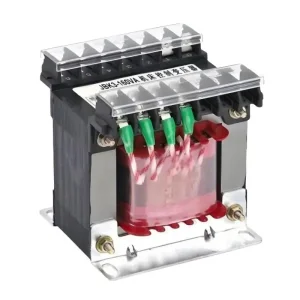
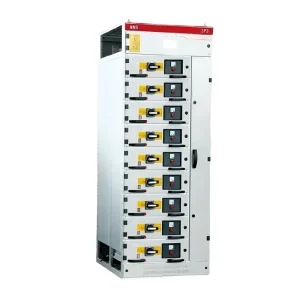
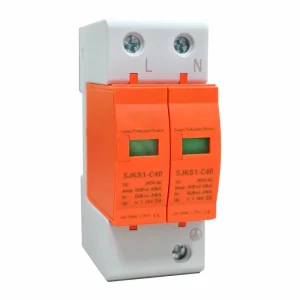
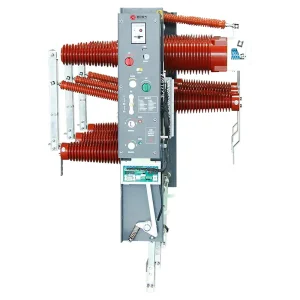
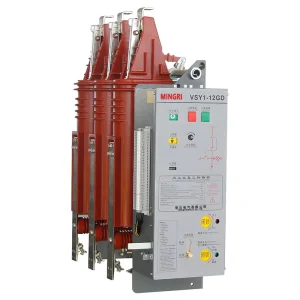
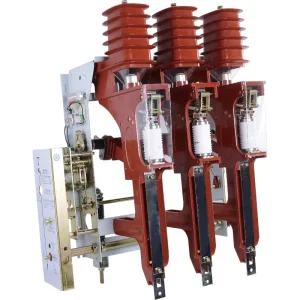
Strategic Procurement Guidelines for Global EPCs & Panel Builders
When procuring load isolation switches at wholesale scale, engineering specifications must align with strict fault-level criteria and thermal limits. Project designers should ensure their single-line diagram (SLD) parameter schedules address four key verification vectors:
Coordination with Backup Short-Circuit Protective Devices (SCPD): Where prospective short-circuit currents exceed the standalone $I_{cw}$ rating of the switch, the switch must be coordinated with upstream high-rupturing-capacity (HRC) fuses or current-limiting circuit breakers. Our engineering catalog documents certified coordination tables verifying conditional short-circuit ratings up to 100 kA at 400V, preventing contact degradation during high-magnitude faults.
Temperature Rise and Busbar Cross-Section Matching: To prevent terminal overheating, copper busbar cross-sections must conform to IEC 60947-1 Table 9 recommendations. Operating at ambient temperatures above 40°C requires appropriate derating factors (typically 0.85 at 60°C). Our precision-machined copper contact surfaces feature dual silver-inlay contact zones that maintain stable low electrical resistance over decades of continuous operation.
Containerized Export Packaging & Marine Logistics: All export shipments from our Zhejiang central facility are sealed in vacuum-barrier polyethylene inner wrappings with active desiccants to counteract maritime humidity, then secured in reinforced plywood crates compliant with ISPM-15 fumigation standards. Full traceability is maintained with serialized QR codes linking to raw material mill test certificates and final batch testing records.