Direct-Coupled Inversion, Regulation & Switching Assemblies
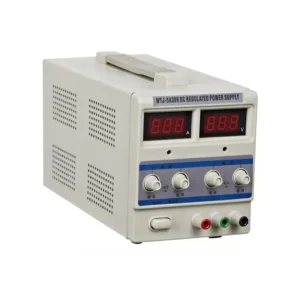
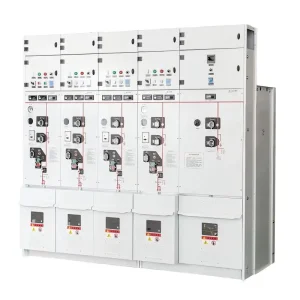
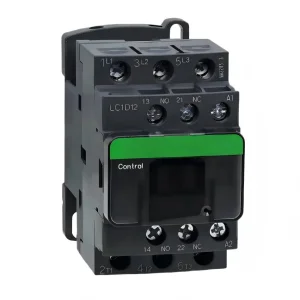
Wholesale-direct high-voltage vacuum breakers, precision DC power suppliers, eco-insulated switchgear, and contactor lines built for mission-critical conversion nodes.
The DC to AC Paradigm Shift in Global Industrial Networks
How decentralized generation, Battery Energy Storage Systems (BESS), and hyperscale data centers are elevating conversion topologies from standalone inverters to integrated medium-voltage ecosystems.
Industrial electrification has entered an epoch of structural transformation. Historically, direct current to alternating current (DC to AC) conversion was treated as an isolated power electronics function—predominantly executed by standard pulse-width modulated (PWM) solid-state inverters serving discrete motor drives or localized uninterruptible power supplies. Today, with the rapid deployment of utility-scale solar photovoltaics, multimegawatt electrochemical storage, microgrids, and electrified heavy transportation, wholesale DC to AC conversion has emerged as the definitive backbone of high-efficiency energy distribution.
Modern electrical engineering demands not merely the mathematical conversion of direct potential into sinusoidal AC waveforms, but bidirectional power dispatchability, microsecond fault isolation, low total harmonic distortion (THD < 2.5%), and seamless bridging into medium-voltage distribution infrastructure (12 kV to 40.5 kV). Sourcing wholesale DC to AC components now dictates looking beyond isolated inverter modules. Global EPC contractors and utility network operators require turnkey, co-engineered topologies that integrate wide bandgap semiconductors (Silicon Carbide SiC and Gallium Nitride GaN), robust contactor switching, precise voltage purification, surge suppression, and withdrawable medium-voltage switchgear.
Grid-Forming Resiliency
Next-generation DC to AC systems utilize virtual synchronous generator (VSG) control algorithms to provide synthetic inertia and black-start capabilities without relying on high grid stiffness.
Medium-Voltage Intertie
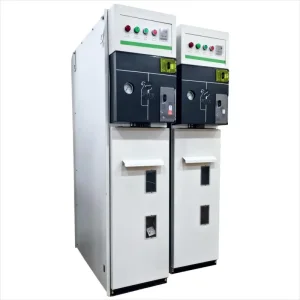
Seamless coupling with 12 kV and 24 kV gas-insulated and metal-armored switchgear (KYN28, MRHBXGN) provides short-circuit withstand capabilities up to 31.5 kA for 4 seconds.
Harmonic Elimination
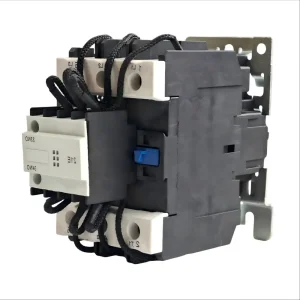
Advanced multi-level inverter designs coupled with tuned capacitor switching contactors (CJ19 series) suppress 5th, 7th, and 11th order harmonics, ensuring compliance with IEEE 519 standards.
Global Enterprise Procurement: Engineering Due Diligence
Rigorous selection criteria utilized by utility engineers, EPC procurement directors, and industrial plant managers when sourcing wholesale conversion hardware.
When procuring industrial DC-to-AC conversion hardware, failure to analyze holistic electrical performance leads to catastrophic downtime and thermal degradation. Enterprise buyers evaluate systems against strict international standards (IEC 62271-200, IEC 61439, IEEE 1547, and UL 1741-SA). Key technical factors include galvanic isolation integrity, short-circuit breaking capacity, thermal dissipation under 50°C ambient temperatures, and the modular integration of protective disconnect switches.
| Evaluation Parameter | Standard Commercial Grade | Industrial Tier-1 Enterprise Level | Engineering Impact & Compliance Target |
|---|---|---|---|
| Semiconductor Topology | Standard Silicon IGBTs (3-Level NPC) | SiC MOSFET + Hybrid NPC Multilevel | Reduces switching losses by 42%; optimizes cooling footprint |
| Insulation Class & Medium | Air Insulated / Standard SF6 | Eco-Gas / Solid Insulated / Sealed N2 | Minimizes environmental liability (EU F-Gas Directive compliant) |
| Short-Circuit Withstand | 16 kA / 1s | Up to 31.5 kA / 4s (VS1 / KYN28) | Prevents thermal flashover during catastrophic upstream busbar shorts |
| Dielectric Strength (BIL) | 42 kV (Power Frequency) | 75 kV to 95 kV (Lightning Impulse) | IEC 62271-1 certified surge resilience for outdoor substation coupling |
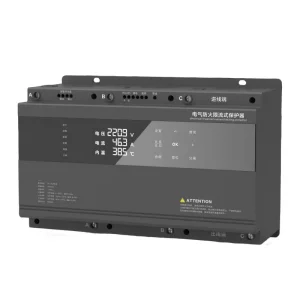
| Transient Suppression (SPD) | Type 2 (10 kA In) | Type 1+2 Heavy Duty (25 kA to 50 kA limp) | Suppresses lightning-induced overvoltage spikes on raw DC buses |
China Industry 4.0: Ecosystem Resilience & Supply Chain Agility
Inside the Yueqing electrical manufacturing hub: How vertical integration, automated robotic fabrication, and digital twins guarantee rapid dispatch and uncompromising quality.
The global energy landscape demands hardware delivery cycles that legacy Western manufacturing lines struggle to achieve. Located in Yueqing, Zhejiang—the recognized electrical equipment capital of the world—our manufacturing apparatus harnesses the world's most concentrated precision supply chain cluster. Within a 15-kilometer operational radius, every primary subsystem is co-engineered: from high-purity electrolytic copper stamping and vacuum brazing chambers to automated surface-mount technology (SMT) for digital signal processors (DSP).
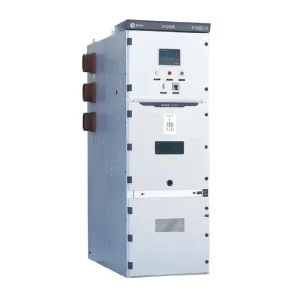
By leveraging Industry 4.0 automated production cells, our facilities combine robotic laser cutting, CNC multi-axis sheet metal folding, and automated epoxy resin vacuum casting. Every withdrawable vacuum circuit breaker (such as the VS1-12/24) and metal-enclosed switchgear panel (KYN28-24) undergoes 100% automated routine dielectric testing, partial discharge inspection (< 5 pC), and mechanical operation cycling before containerization.
Capital Expenditure Optimization
Direct OEM/ODM factory sourcing reduces procurement costs by 30-45% compared to Western branded equivalents without sacrificing technical compliance.
Lead Time Compression
Standard engineered switchgear panels ship within 3-4 weeks, eliminating the 26- to 52-week lead times commonly seen across European and American utility markets.
Turnkey Customization
Engineered-to-order (ETO) flexibility: custom busbar configurations, CT/PT ratios, dual-secondary step-up integration, and specific SCADA protocol mapping.
ISO-Certified Traceability
Full material traceability from raw copper alloy chemistry to laser-etched serial numbers tracked across ERP-connected assembly lines.
Global Commercial Landscapes & Localized Use Cases
From North American microgrids to Middle Eastern desert solar fields and European green industrial corridors, discover how our equipment thrives across hostile environments.
North America: Hyperscale & Microgrids
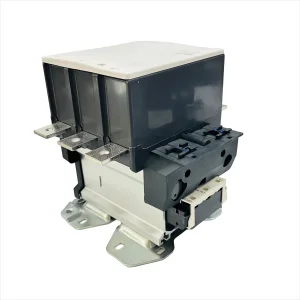
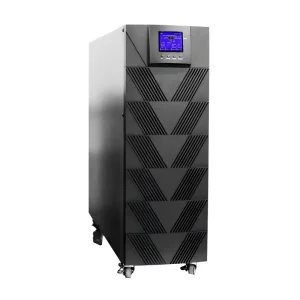
Demand centers around ultra-reliable online UPS systems (such as the MCL31 series) coupled with high-current AC contactors (CJX2-F) and surge limiters to power generative AI data centers. Stringent compliance with IEEE interconnection standards ensures seamless switching between DC backup battery banks and municipal grids.
Europe: Eco-Friendly Transition
Driven by the European Union's aggressive phase-out of fluorinated greenhouse gases (F-Gas Regulation), industrial projects prioritize eco-friendly gas-insulated switchgear (MRHBXGN-12(F)) and solid-insulated RMUs (XGN15-24) to replace legacy SF6 installations in municipal distribution loops.
MENA: Utility-Scale BESS & Solar
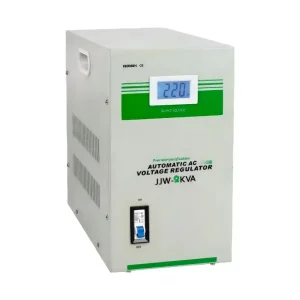
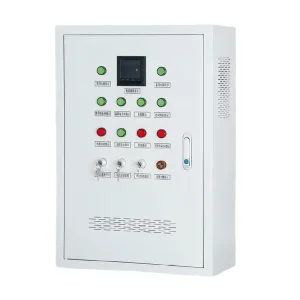
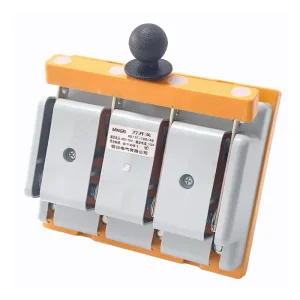
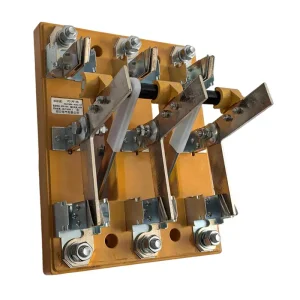
Harsh ambient thermal profiles exceeding 50°C and sand abrasion demand IP54-rated JXF industrial control enclosures, heavy-duty HS13BX rotary knife switches, and JJW purified voltage regulators engineered with forced convection thermal mitigation for large-scale utility solar plants.
Representative Installation Topology: 50MW / 100MWh Energy Storage Hub
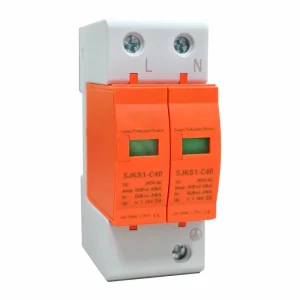
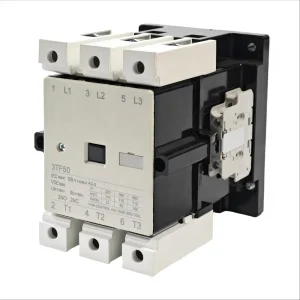
In a typical centralized utility storage deployment, high-voltage battery racks supply a 1500V DC bus. Multiple central DC to AC power conversion systems invert the power to 690V three-phase AC. Here, CJX1 and CJX2-F series contactors handle auxiliary motor and HVAC cooling management, while SJKS1-C series Type 1+2 surge protective devices safeguard against atmospheric transients.
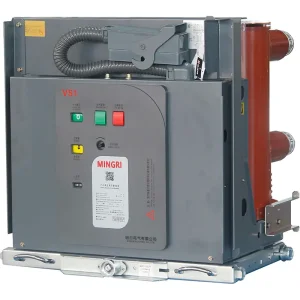
The 690V output feeds into an oil-immersed or cast-resin step-up transformer, stepping up to 24 kV. The connection to the regional utility grid is completed and isolated by withdrawable VS1-24 vacuum circuit breakers housed inside arc-resistant KYN28-24 armored switchgear cabinets. Real-time RTUs communicate via IEC 61850 protocol back to the central SCADA dispatch center.
Frequently Asked Questions (FAQ)
Clear, technically verified answers regarding wholesale manufacturing, procurement protocols, insulation technologies, and switchgear integration.
What is the standard engineering distinction between industrial DC to AC inverters and utility Power Conversion Systems (PCS)?
While standalone DC to AC inverters typically perform unidirectional DC-to-AC conversion for local AC loads or motor drives, utility-scale PCS units feature bidirectional four-quadrant operation (P-Q control). This allows the PCS to charge batteries from the AC grid (rectification) or inject power back into the grid (inversion), providing active power regulation, frequency response, and reactive power compensation.
Why is the VS1 vacuum circuit breaker preferred over SF6 circuit breakers in medium-voltage BESS coupling?
The VS1 series vacuum circuit breaker utilizes a specialized hermetic ceramic vacuum interrupter chamber, ensuring an exceptionally high mechanical endurance (up to 20,000 operations) and zero carbon emission footprint during arc extinction. In heavy cyclic charge-discharge regimes typical of modern energy storage, vacuum technology delivers virtually maintenance-free operation and eliminates greenhouse gas refill protocols.
How does the MRHBXGN-12(F) eco-friendly gas-insulated switchgear comply with international environmental mandates?
The MRHBXGN-12(F) employs dry air or eco-gas mixtures (fluoronitrile/CO2 blends) possessing a Global Warming Potential (GWP) of less than 1, entirely eliminating sulfur hexafluoride (SF6, GWP = 23,500). This ensures complete regulatory immunity under the European F-Gas Regulation and similar global emissions-reduction directives while sustaining 12 kV / 630A / 20kA dielectric breaking performance.
What role do CJ19 capacitor switching contactors play in DC to AC power quality management?
Capacitor banks used for power factor correction and harmonic absorption draw massive inrush current peaks (up to 200 times rated current) during energization. The CJ19 contactor incorporates leading auxiliary contacts and damping resistors that insert into the circuit milliseconds ahead of main contact closure, suppressing inrush transients, preventing contact welding, and protecting sensitive DC-AC inverters.
What technical data must an EPC provide to receive an engineered-to-order switchgear or substation quote?
Clients should submit a detailed Single-Line Diagram (SLD), nominal system voltage and operational frequency (50 Hz or 60 Hz), short-circuit withstand requirement (kA/s), incoming and outgoing feeder quantities, protection relay preferences (e.g., Schneider, ABB, or domestic high-performance microprocessor relays), enclosure IP rating, and environmental parameters (ambient temperature and elevation).
What quality assurance and type-test certifications accompany wholesale equipment shipments?
All units are manufactured under certified ISO 9001, ISO 14001, and ISO 45001 management frameworks. Products are backed by third-party type-test reports from accredited laboratories (such as KEMA, ASTA, or national high-voltage apparatus testing stations) covering temperature rise, dielectric withstand, short-circuit withstand, and mechanical life verification.
Industrial Protection, Isolation & Distribution Assemblies
Wholesale low-voltage contactors, heavy-duty disconnect switches, surge protection devices, and withdrawable medium-voltage switchgear cabinets.
Connect Directly with Engineering & Factory Sourcing
Submit your electrical single-line diagram (SLD), procurement bills of materials (BOM), or project tender specifications for factory-direct wholesale pricing, CAD layouts, and type-test documentation.