Enterprise Power Management & Voltage Stabilization Units
Direct manufacturer deployment of low-to-medium voltage switchgear, contactors, and high-efficiency transformers designed for demanding operating parameters.
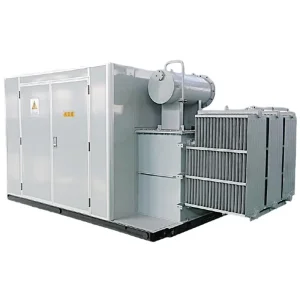
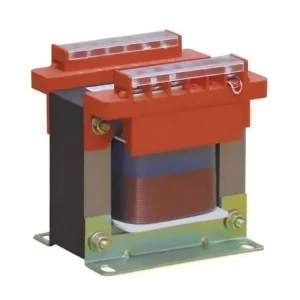
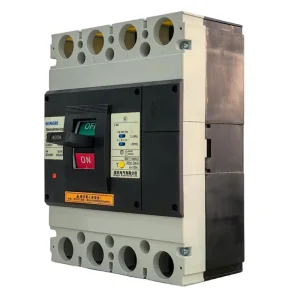
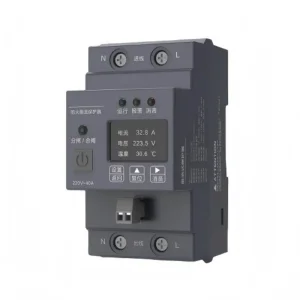
Industrial Landscape: The Dynamic Need for High-Power AC Stabilizers
Addressing transmission losses, extreme phase imbalances, and load irregularities in global automated factories and energy distribution networks.
Severe Grid Sags & Surges
Modern distribution grids in rapidly industrializing regions encounter frequent root-mean-square (RMS) variations. Industrial AC Stabilizers (Automatic Voltage Regulators - AVR) provide continuous real-time correction, eliminating costly PLC crashes, CNC machining errors, and variable-frequency drive (VFD) bus trips.
Nonlinear Harmonic Mitigations
The proliferation of robotic cells, power electronics, and high-frequency smelters injects substantial 5th, 7th, and 11th harmonic currents into common couplings. Our heavy-duty industrial stabilizers integrate high-permeability grain-oriented silicon steel cores with thermal bypass circuits to neutralize thermal stress.
Asymmetrical Three-Phase Regulation
Unbalanced branch loading leads to neutral-point drift and phase-angle distortions. Our industrial stabilizer units utilize independent phase-by-phase compensation topologies, ensuring that line-to-line and line-to-neutral voltages remain strictly regulated even under 50% structural unbalance.
Technology Topologies: Solid-State vs. Servo-Motor AC Stabilizers
A technical engineering comparison for procurement directors, utility engineers, and system integrators.
| Performance Characteristic | High-Power Servo Carbon-Brush Regulator | Microprocessor Solid-State (SCR/IGBT) Stabilizer | Ferroresonant Constant Voltage (CVT) |
|---|---|---|---|
| Correction Speed | 20V to 40V per second (Mechanical) | <10ms to 20ms (Static Electronic) | Instantaneous (<1.5 cycles) |
| Output Regulation Precision | ±1.0% to ±1.5% | ±1.0% to ±2.0% (Programmable) | ±1.0% to ±3.0% |
| Waveform Distortion (THD) | Nil (<1% added THD) | Virtually zero distortion | Moderate (3% - 5% dependent on tank tuning) |
| Overload Withstand | 200% for 30 seconds; 500% for 1 second | 150% for 10 seconds; electronic trip bypass | 110% continuous (inherent current limiting) |
| Maintenance Profile | Periodic brush inspection, mechanical lubrication | Maintenance-free solid-state architecture | Maintenance-free, passive inductive design |
| Optimal Enterprise Applications | Large factory mains, mines, heavy spinning motors | SMT lines, hospitals, data centers, sensitive radars | Industrial telemetry, critical instrumentation loops |
Tailored Global Application Architectures
Engineered to adapt to disparate regional grid conditions, climate extremes, and process-critical demands.
Medical Diagnostics & Imaging
CT scanners, MRI machines, and linear accelerators require dynamic voltage stability within 1% to prevent imaging artifacts and power-stage trips during steep current surges.
Automated Semiconductor Fabrication
High-precision photolithography and wafer-handling robotics require immune power supplies protected from sub-cycle transients, micro-outages, and phase fluctuations.
Mining & Extraction Complexes
Heavy inductive loads such as crushers, slurry pumps, and draglines induce severe transmission droop across rural grid connections, necessitating rugged centralized step-stabilization.
Data Centers & Telecommunications
High-density computing facilities pair bypass-stabilizers with UPS topologies to optimize cooling infrastructure, prolong rectifier life, and boost enterprise power usage effectiveness (PUE).
Technological Roadmap: The Evolution of Intelligent Grid Conditioning
Transitioning from electromechanical correction to digital twin-enabled power intelligence.
Wide-Bandgap (SiC) Power Switching
Next-generation stabilizers deploy Silicon Carbide (SiC) MOSFETs to enable switching frequencies exceeding 50 kHz. This reduces unit footprint by 45%, accelerates sub-cycle voltage reconstruction, and cuts internal thermal losses by half.
Edge Telemetry & IoT Predictive Maintenance
Microcontroller modules integrate RS-485 Modbus, Ethernet, and cloud-native MQTT interfaces. Facility operations teams gain real-time visibility into contact temperature profiles, harmonic trends, brush mechanical wear, and load transients.
Bidirectional Distributed Energy Support
As industrial rooftop solar arrays and localized battery energy storage systems (BESS) expand, stabilizers must accommodate bidirectional power flows. Our smart units prevent voltage escalation during reverse-power feed-in conditions.
Frequently Asked Questions (FAQ)
Essential guidance on selecting, deploying, and maintaining high-capacity AC Stabilizer equipment.
How do I calculate the required capacity for an industrial AC stabilizer?
Calculate the combined continuous load in kVA and apply an engineering safety margin of 25% to 30%. For inductive motor loads with direct-on-line (DOL) start profiles, factor in inrush currents (typically 3x to 5x nominal current) or specify an integrated bypass and motor soft-start configuration to avoid nuisance tripping.
What distinguishes a standard servo stabilizer from a static electronic stabilizer?
Servo stabilizers use a servomotor to mechanically reposition carbon brushes along a variable autotransformer. They offer high surge tolerance and low cost per kVA for large mechanical plants. Static stabilizers utilize solid-state electronic switches (SCRs) without moving components, correcting sags within 10-20ms for microsecond-critical automated lines.
Can three-phase stabilizers handle severe single-phase imbalances?
Yes. Our industrial units feature independent, three-phase vector correction configurations. Each phase monitors its neutral point separately with dedicated servo drives and controller channels, ensuring 220V/230V line-to-neutral stability regardless of load asymmetry across phases.
What routine maintenance is required for long-term continuous operation?
For servo designs, perform scheduled inspections every 6 to 12 months to check brush alignment, vacuum dust, and confirm terminal torque specifications. Static solid-state systems require only periodic filter replacements and cooling fan checks, minimizing planned facility downtime.
Complete High-Performance Electrical Protection Hardware
Integrated switchgear, high-breaking circuit breakers, and specialized starting assemblies direct from our production lines.