High-Reliability Power & Distribution Assemblies
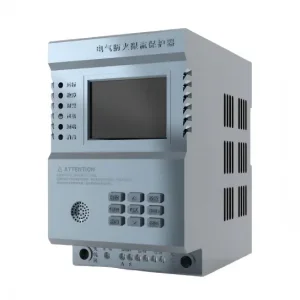
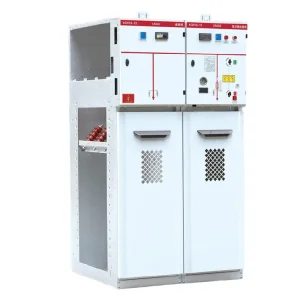
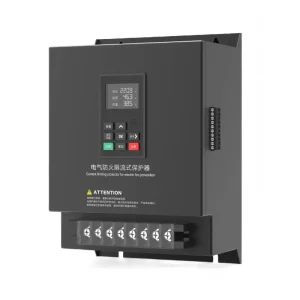
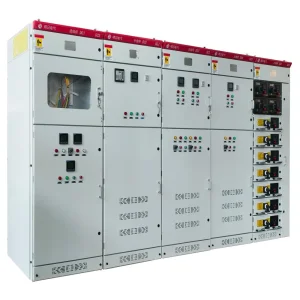
Explore our synchronized ecosystem of switchgear, intelligent fire limiters, combined transformer substations, and automated industrial electrical control mechanisms.
TSGC2J Engineering Principles & Topologies
A rigorous industrial perspective on why continuous contact voltage autotransformers remain an irreplaceable cornerstone of precision testing and industrial process control.
Toroidal Continuous Magnetic Circuit
The TSGC2J Series utilizes continuous, high-permeability cold-rolled grain-oriented silicon steel (CRGO). By eliminating cut joints and magnetic gaps common in standard laminated transformers, no-load excitation current is cut by up to 45%, while maintaining high magnetic saturation thresholds even under intense heavy-inductive loads.
High-Purity Oxygen-Free Copper
Every phase features Class H (180°C) insulated flat and circular oxygen-free copper conductors. Windings undergo computerized tension control and double-layer vacuum impregnation. The exposed track is precision-milled and polished with sub-micron uniformity to eliminate contact resistance anomalies and ensure thermal equilibrium across high-duty operational profiles.
High-Density Carbon Commutation
Equipped with proprietary silver-copper-graphite dynamic brushes, our proprietary contact assembly distributes current density evenly over the commutating turns. This balances contact drop with inter-turn circulating current suppression, preventing localized sparking, brush sintering, or thermal galling during continuous fine adjustment under rated current loads.
| Model Parameter | TSGC2J-3kVA to 9kVA | TSGC2J-15kVA to 30kVA | TSGC2J-45kVA to 100kVA+ |
|---|---|---|---|
| Nominal Input Voltage | 380V / 400V / 415V AC ±10% (3-Phase 4-Wire) | 380V / 400V / 415V AC ±10% (3-Phase 4-Wire) | 380V / 400V / 415V / 440V AC ±15% |
| Stepless Output Range | 0V – 430V / 0V – 500V Adjustable | 0V – 430V / 0V – 500V Adjustable | 0V – 450V / 0V – 650V Optional High-Ratio |
| Operating Frequency | 50Hz / 60Hz Universal | 50Hz / 60Hz Universal | 50Hz / 60Hz / 400Hz (Aviation Tier Option) |
| Waveform Distortion | None (Preserves Original Supply Sine Wave) | None (Preserves Original Supply Sine Wave) | None (THD < 0.5% added above incoming line) |
| Dielectric Strength | 2000V AC / 1 min (No Flashover) | 2500V AC / 1 min (No Flashover) | 3000V AC / 1 min (Core-to-Winding) |
| Cooling Mechanism | Natural Air Convection (AN) | Enhanced Natural Convection / Perforated Chassis | Forced Air Convection (AF) with Smart Thermal Interlocks |
Global Enterprise Procurement & Sourcing Drivers
Why modern engineering procurement managers, system integrators, and plant directors are shifting toward direct-from-factory OEM/ODM manufacturing partnerships.
Grid Volatility & Industrial Reshoring
As modern semiconductor fabs, pharmaceutical synthesis plants, and automated battery cell assembly lines expand across North America, Europe, and Southeast Asia, local municipal distribution networks experience severe sag and surge events. Enterprises procure customized TSGC2J units to stabilize manufacturing tolerances and run endurance tests without relying on electronic solid-state switches that introduce parasitic harmonics into sensitive cleanroom buses.
Total Cost of Ownership (TCO) Prioritization
Traditional electronic regulators suffer high failure rates when exposed to ambient dust, high humidity, or electromagnetic interference (EMI). The rugged mechanical design and high thermal inertia of copper-wound autotransformers allow them to withstand transient short-circuits up to 15 times nominal current for cycle bursts. For heavy equipment builders, OEM integration of TSGC2J ensures field warranty service costs remain negligible across the entire lifecycle.
Stringent Tier-1 Factory Audits
Leading EPC contractors require verified material traces: origin certifications for non-recycled copper, laser-calibrated automated winding tension reports, and 100% full-load thermal burn-in data under IR thermographic monitoring. Modern OEM factories must provide transparent QA inspection checkpoints, modular customized sheet metal enclosures, and turnkey custom dial calibration for specialized industrial consoles.
Macro-Industry Deployment Scenarios
Deploying TSGC2J platforms to resolve mission-critical electrical calibration, automation, and conditioning challenges across core industrial sectors.
Industrial Electric Furnaces & Metallurgy
Precision resistance and induction furnaces demand continuous, stepless voltage adjustment to manage thermal ramp-up rates and prevent microstructural cracking during alloy annealing. TSGC2J autotransformers deliver seamless power control without introducing chopping harmonics, ensuring optimal bath chemistry and prolonged heating element lifespans.
High-Voltage Laboratories & Testing Stations
Dielectric testing equipment, switchgear withstand rigs, and motor dyno facilities mandate pure sine-wave test signals. TSGC2J provides the smooth primary regulation needed to drive step-up cascades, enabling high-voltage engineers to pinpoint breakdown voltages without false triggers caused by PWM or inverter-induced EMI.
Automotive & Battery Formation Lines
During secondary cell formation and high-capacity battery pack charging-discharging qualification runs, localized test grids face massive, fluctuating DC power converter loads. Centralized TSGC2J banks allow facility engineers to fine-tune supply buses, matching specific line impedances and preventing phase-voltage unbalances.
Engineering Roadmap & Next-Gen Upgrades
Bridging traditional electromagnetic mastery with edge telemetry, advanced metallurgy, and zero-carbon industrial imperatives.
Edge-Telemetry Integration & Modbus IoT Sensors
Next-generation TSGC2J assemblies integrate non-invasive Hall-effect current sensors, brush contact thermal imaging RTDs, and vibration micro-sensors directly linked to an onboard micro-RTU. Communication via RS-485 Modbus and industrial Ethernet delivers real-time thermal profiles directly to supervisory SCADA platforms, enabling condition-based preventive brush maintenance.
Hybrid Solid-State Assisted Commutation
To eliminate electrical micro-arcing during rapid regulation cycles, advanced hybrid configurations combine servo-motorized carbon brush sweepers with antiparallel silicon-controlled thyristor (SCR) snubber taps. The solid-state sub-circuit absorbs transient switching voltages during tap transitions, extending dynamic brush wear lifespans past 150,000 continuous full-stroke cycles.
Nanocrystalline & Amorphous Magnetic Cores
Our ongoing metallurgical research program focuses on adopting non-crystalline ribbon alloys for high-capacity regulator cores. These materials deliver higher saturation flux densities (up to 1.56T) combined with one-third the eddy-current loss of conventional silicon steel, targeting a full 25% physical footprint reduction for space-constrained containerized microgrid installations.
Worldwide Compliance & Local Support
Ensuring complete operational alignment across regional electrical safety codes, customs standards, and on-site deployment requirements.
International Standard Adherence
Every custom OEM TSGC2J platform is fully certified and tested in accordance with IEC 61558-1, IEC 60076-11, and low-voltage electrical safety standards under the CE LVD Directive (2014/35/EU). Units destined for the North American market are engineered to satisfy UL 508A industrial control panel integration guidelines.
Factory Acceptance (FAT) & Rigorous SAT
Clients are provided with comprehensive Factory Acceptance Test protocols, including real-time video-monitored dielectric proof runs, partial discharge verification, and full-load temperature rise reports. Overseas engineers receive comprehensive bilingual single-line electrical schematics, 3D STEP models, and interactive commissioning guides.
Rapid Spares & Local Consignment Support
Recognizing that industrial continuous-casting and test lines cannot tolerate extended downtime, our global OEM support framework maintains regional carbon brush, roller mechanism, and servo drive consignment inventories through strategic distribution partners across key hubs in the EU, Middle East, and the Americas.
Frequently Asked Questions
In-depth engineering answers covering operational safety, selection methodologies, and maintenance protocols for TSGC2J contact regulators.
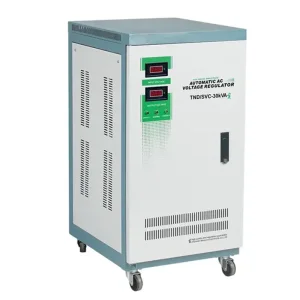
The TSGC2J Series is a mechanical autotransformer that alters voltage by physically moving a graphite contact brush along the exposed, precision-milled copper conductor track of a toroidal electromagnetic core. This design produces zero harmonic distortion and preserves the pure incoming sinusoidal waveform, which is vital for testing and inductive motor loads. In contrast, electronic solid-state regulators rely on triacs, IGBTs, or magnetic saturation, which frequently introduce high-frequency switching noise, EMI, and chopped waveforms into the circuit.
No. By definition, an autotransformer shares a common electrical winding between the input and output circuits. While this provides superior efficiency (exceeding 98%), lower excitation loss, and a much smaller physical footprint than an isolation transformer, it does not isolate the secondary circuit from common-mode line transients or ground faults. Where strict galvanic isolation is mandatory (such as medical rooms or specific wet test bays), we supply a dual-stage system integrating a dedicated isolation transformer ahead of the TSGC2J regulator.
Standard TSGC2J units use a mechanically ganged three-phase shaft system driven by a single adjustment wheel or common servo motor, meaning all three phases sweep together. If your facility runs severe single-phase load unbalances, we provide customized OEM configurations featuring decoupled, independently controlled motorized assemblies. Each phase is regulated via its own dedicated controller and feedback loop, compensating for supply or load unbalance down to ±1% line-to-neutral variance.
Under normal rated industrial operation, our proprietary silver-graphite composite brushes deliver between 50,000 and 100,000 sweep cycles. Routine maintenance requires visual inspection every 6 to 12 months (or 2,000 operational hours): cleaning accumulated graphite dust from track grooves with dry compressed air, checking spring tension, and verifying brush wear limits. When worn down past 50% of the initial carbon block length, brushes can be swapped via quick-release clips in under 15 minutes per phase.
We offer comprehensive OEM engineering customization: custom line voltage ratings (208V, 380V, 400V, 415V, 480V, 600V), extended output voltage ratios (e.g., 0V up to 650V stepless), integration of variable-speed AC/DC servo actuators, high-resolution rotary encoders, custom-branded IP20 to IP54 powder-coated enclosures, digital voltage/current metering consoles, and RS-485 Modbus telemetry connectivity.
Downstream Circuit Protection & Switching Systems
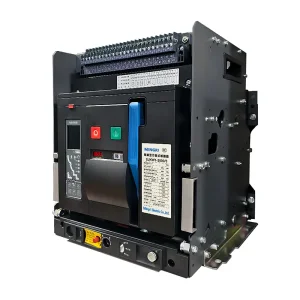
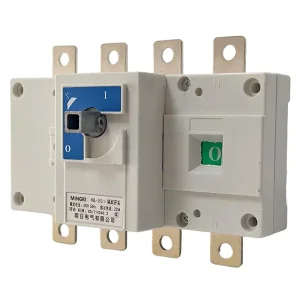
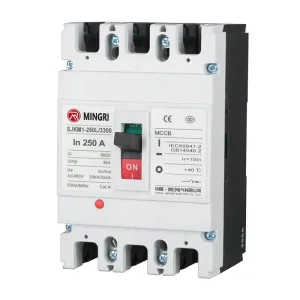
Pair your TSGC2J voltage regulation equipment with our field-proven universal air circuit breakers, molded-case switchgear, and isolation components.