High-Performance Power Distribution & Stop Equipment
Explore our core medium-voltage and low-voltage distribution frameworks, incorporating advanced mechanical interlocks, emergency trip mechanisms, and rapid fault isolation devices.
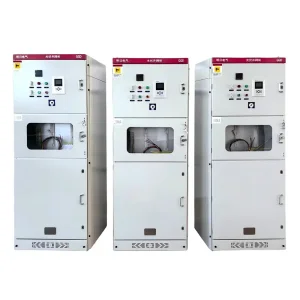
China China GGD AC Low Voltage Distribution Cabinet 380V/50Hz - Reliable Power Solution from Trusted Suppliers & Factory Manufacturer, Factory
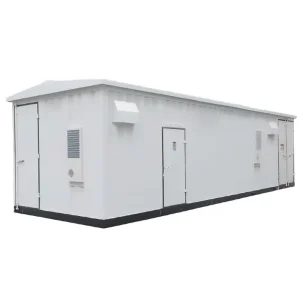
OEM Modular Intelligent Prefabricated Cabin Substation from China Suppliers - Factory-Built Solution for Smart Grids Manufacturers, Manufacturer
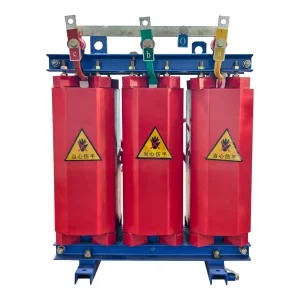
High-Quality SC(B)11 10kv Resin-Insulated Dry Casting Transformer for Electric Supply Supplier, Manufacturers
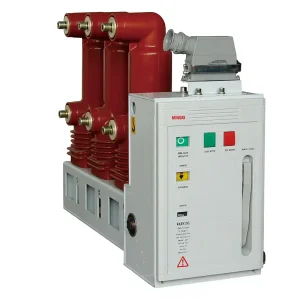
ODM China VSB-12 Indoor High-Voltage Vacuum Circuit Breaker Suppliers - Reliable Factory for 12kV Power Systems Suppliers, Factories
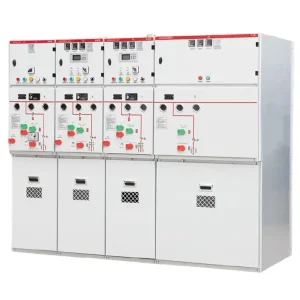
High-Quality China GXGN-12 Solid-Insulated Ring Main Unit Switchgear - Eco-Friendly, Maintenance-Free, Factory Supplies Manufacturers, Manufacturer
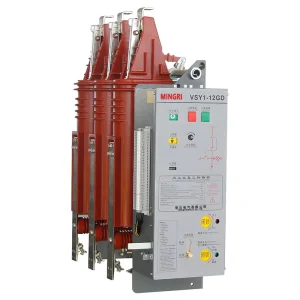
ODM China VSY1-12 12kV Mounted Vacuum Circuit Current Breaker VCB - Reliable Suppliers and Factory Solutions Factories, Factory
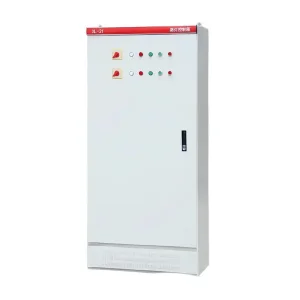
Wholesale XL-21 Power Distribution Cabinet Low Voltage Switchgear Factory, Companies
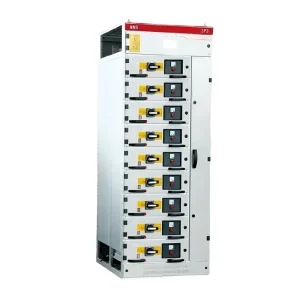
Wholesale China MNS Low Voltage Withdrawable Switchgear Suppliers | Factory-assembled Power Control Solutions Suppliers, Company
The Global Commercial & Industrial Landscape of Electrical Stop Devices
Analyzing critical power isolation architectures, fault interruption physics, and international compliance mandates across industrial and utility ecosystems.
Deterministic Circuit Interruption
In modern industrial electrification, a "Stop Device" transcends a simple push-button. It represents the entire fail-safe interruption architecture—including shunt releases, undervoltage trip units, and vacuum circuit interrupters (such as the VSB-12 and VSY1-12)—engineered to extinguish dangerous electric arcs and decouple power within milliseconds under catastrophic short-circuit conditions.
Stringent Regulatory Mandates
Global regulatory frameworks including IEC 60947-3, IEC 62271-100, OSHA 1910.147 (LOTO), and NFPA 79 demand verified visible breaks, mechanical positive break indication, and automated five-anti interlocks. High-voltage metal-clad assemblies like KYN28-12 and KYN61-40.5 prevent maloperation, ensuring operator safety during routine maintenance and emergency plant shutdowns.
Grid Decarbonization Pressures
The global push away from sulfur hexafluoride (SF6) due to greenhouse gas regulations (such as EU F-gas protocols) has accelerated the adoption of eco-friendly stop and isolation equipment. Solid-insulated ring main units (such as GXGN-12) eliminate potent global warming gases while maintaining superior dielectric strength and explosion-proof containment.
Engineering Classification of Industrial Stop Devices
Understanding the interplay between mechanical disconnectors, dynamic vacuum breakers, electronic release units, and switchgear interlocking mechanisms.
| Equipment Category | Representative Models | Interruption Medium | Typical Breaking Time | Safety Interlocking Role |
|---|---|---|---|---|
| Medium-Voltage Vacuum Circuit Breakers | VSB-12, VSY1-12 | High Vacuum (<10⁻⁴ Pa) | 20 ms – 45 ms | Automated primary fault trip; shunt/undervoltage emergency plant trip. |
| Solid-Insulated Ring Main Units | GXGN-12 | Solid Epoxy Resin + Vacuum | <50 ms | Zero-SF6 green ring network stop; environmental gas containment. |
| Armored Metal-Clad Switchgear | KYN28-12, KYN61-40.5 | Composite Air/Vacuum | 35 ms – 60 ms | Five-anti mechanical anti-misoperation interlocking system. |
| Knife Melt & Miniature Disconnectors | HH15 (QSA), HL30 | Air Break + Fuse Link | Manual / Fuse Microsecond | Physical visible isolation, Lockout/Tagout (LOTO) maintenance barrier. |
| Smart Electronic Circuit Breakers | SJKM3E Series | Molded Case Air Quench | 10 ms – 25 ms | Microprocessor-governed selective trip, ground-fault & thermal stop. |
| Low-Voltage Modular Power Centers | MNS, GGD, XL-21 | Air / Copper Bus Compartment | Dependent on ACB/MCCB | Withdrawable cassette racking stop, MCC emergency motor decoupling. |
Vacuum Arc Quenching Technology
Utilizing special chromium-copper (CuCr) contact alloys inside sealed ceramic vacuum bottles, our vacuum circuit breakers dissipate arc energy within the first current zero crossing. This provides unmatched dielectric recovery rates, preventing reignition and ensuring instantaneous circuit stoppage even under 31.5kA to 40kA prospective fault currents.
Five-Anti Mechanical Interlocking
Built into every KYN28 and KYN61 metal-enclosed cabinet, this rigid mechanical interlock prevents: 1) closing the breaker when the truck is in transition, 2) moving the truck while closed, 3) closing the earth switch when energized, 4) energizing with the earth switch on, and 5) opening live door compartments.
Intelligent Tripping Architectures
Electronic devices like the SJKM3E incorporate digital DSP processing that measures actual RMS current wave-shapes. When harmonic distortion, severe asymmetrical short-circuits, or phase imbalances occur, the unit calculates precise I²t energy thresholds and triggers an instantaneous magnetic trip coil for localized shutdown.
The Yueqing Advantage: Industrial Efficiency & Supply Chain Resilience
How Mingri Electric leverages China's electrical capital to deliver unmatched production velocity, stringent quality control, and superior cost-to-performance ratios for global OEMs.
Full Vertical Integration
From our headquarters on 16th Wei Road in Yueqing's Economic Development Zone, we control the entire manufacturing lifecycle: laser sheet-metal cutting, busbar CNC punching, automated coil winding, vacuum chamber brazing, and secondary wiring harness assembly.
Certified Quality Systems
Our manufacturing protocols are certified under ISO 9001:2015 Quality Management, ISO 14001 Environmental Protection, and ISO 45001 Occupational Health & Safety systems. Every production batch undergoes comprehensive routine power-frequency withstand and contact resistance testing.
Agile Customization (OEM/ODM)
Global procurement teams encounter diverse local standards. We support tailored busbar schemes, specialized control voltages (24VDC, 110VDC, 220VAC), customized current transformer (CT) ratios, and tropicalized insulation designs adapted to challenging ambient environments.
Extensive Test Laboratories
In-house testing facilities simulate extreme mechanical and thermal stresses, including temperature rise limits under continuous rated current, mechanical endurance beyond 30,000 switching operations, and lightning impulse breakdown simulations up to 95kV BIL.
Localized Applications & Global Deployment Blueprints
Engineered stop devices and switchgear operating reliably across harsh desert heat, sub-zero wind farms, offshore environments, and dense urban infrastructure.
Renewable Energy & Solar Parks
Prefabricated modular cabin substations combined with SC(B)11 cast resin transformers and automated circuit trip switches ensure seamless integration into 1500V DC and 35kV AC collector grids, delivering instantaneous disconnect during line ground faults.
Hyperscale Data Centers
Tier III and Tier IV facilities depend on MCHF high-frequency online UPS platforms, MNS withdrawable switchboards, and selective SJKM3E circuit breakers to provide zero-transfer interruption stops, isolating faulty server branches without causing facility-wide brownouts.
Heavy Industrial Manufacturing
Steel rolling mills, chemical processing plants, and cement works face extreme cyclic mechanical loads and dust. Rugged GGD low-voltage distribution cabinets, CJX2 contactor arrays, and HH15 knife-fuse switches deliver robust emergency motor trip protection.
Urban Metro Rail & Infrastructure
Electrified railways and underground transport require compact footprints and total arc-flash containment. Our KYN28-12 switchgear and dry-type cast resin transformers deliver safe traction stepping and instant breaker lockouts during catenary line incidents.
Next-Generation Technology Trends Shaping Electrical Stop Devices
How the convergence of Internet-of-Things (IoT) sensing, solid-state interruption, and ecological insulation is transforming modern switchgear design.
IoT Predictive Health Diagnostics
Traditional passive stop mechanisms are evolving into smart predictive nodes. By integrating wireless passive temperature sensors at primary contact fingers and continuously monitoring the operating coil's current profile, digital switchgear predicts contact erosion and mechanical stickiness before an emergency trip failure occurs.
Eco-Gas & Pure Air Ring Units
With stringent global carbon accounting and emissions penalties, utilities are rapidly shifting toward synthetic air, fluoronitrile gas mixtures, and solid-dielectric encapsulation (such as our GXGN-12 series). These units eliminate greenhouse SF6 while matching its compact dimensions and lightning impulse withstand performance.
Solid-State Microsecond Decoupling
For sensitive power electronics in DC microgrids and battery energy storage systems (BESS), mechanical disconnects are too slow to limit peak short-circuit currents. Emerging hybrid breakers merge fast IGCT/SiC solid-state switches with mechanical isolation disconnectors, cutting interruption times to below 2 milliseconds.
Enterprise Procurement Framework for Power Interruption Devices
A systematic checklist for consulting engineers, procurement directors, and switchboard builders selecting OEM/ODM partners.
1. Short-Circuit Breaking (Icu / Ics)
Verify that the stop device's rated short-circuit breaking capacity matches or exceeds the calculated prospective fault current at the point of installation, ensuring service breaking capacity Ics is 100% of Icu for critical installations.
2. Dielectric & BIL Levels
Examine the Basic Impulse Insulation Level (BIL) and power-frequency withstand voltage across open contacts. Isolation switches must provide verified clearances to act as guaranteed personnel safety barriers during maintenance.
3. Environmental Protection (IP / IK)
Select enclosure ratings tailored to site conditions: IP4X for standard indoor air-insulated switchgear, IP54 for dusty or outdoor installations, and hermetically sealed stainless-steel tanks (IP67) for ring main units in flood-prone vaults.
4. Auxiliaries & Protocol Support
Confirm auxiliary switch contact configurations (NO/NC), coil voltages for shunt trips and undervoltage releases, and digital communications support (Modbus-RTU, IEC 61850) for integration into modern SCADA architectures.
Specialized Isolation, Control & Power Protection Devices
Complementary low-voltage switching devices, high-frequency uninterruptible supplies, heavy-duty disconnects, and metal-enclosed distribution panels.
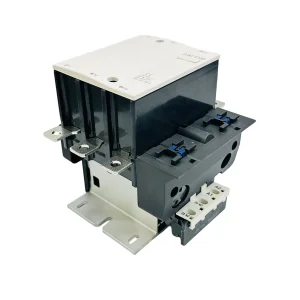
OEM CJX2 (LC1-D) Series AC Contactor 50/60Hz Suppliers, Manufacturers
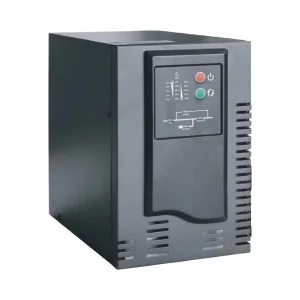
High-Quality MCHF Series High Frequency UPS Power Supply Manufacturer, Companies
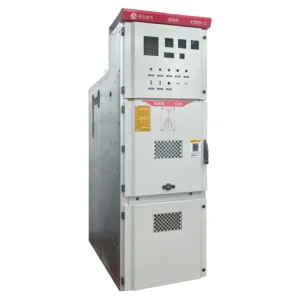
High-Quality KYN28-12 Withdrawable Armored Metal-Enclosed Switchgear - Trusted China Suppliers & Factory for 3.6-12kV Power Systems Suppliers, Manufacturer
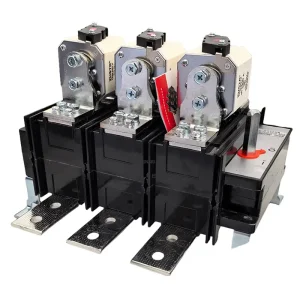
OEM HH15(QSA) Knife Melt Isolation Switch with Fuse - Reliable Circuit Protection from China Suppliers and Factory Factories, Factory
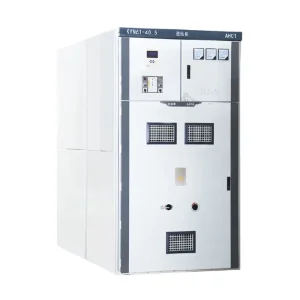
ODM China KYN61-40.5 Armoured Moving Type AC Metal Enclosed Switchgear - Suppliers & Factory for High Voltage Solutions Suppliers, Companies
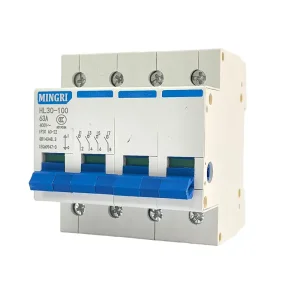
Wholesale High-Performance HL30 Miniature Disconnect Switch 1-4P 6-100A from China Factory & Suppliers for AC Systems Factories, Company
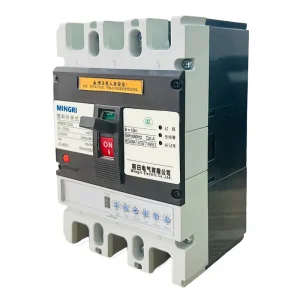
Wholesale SJKM3E Electronic Circuit Breaker (ECB) with Smart Protection Suppliers, Factory
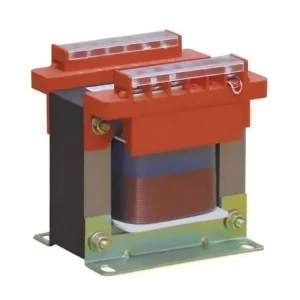
High-Quality Reliable BK Series Control Transformers from China Suppliers – Efficient Power Solutions for Factories Suppliers, Manufacturer
Frequently Asked Questions: Stop Devices & Switchgear Engineering
In-depth technical answers addressing specifications, standards compliance, isolation philosophy, and factory customization.
What is the distinction between an emergency stop device and an isolating switch?
An emergency stop device (such as a shunt-tripped VCB or an emergency stop push-button interface) is designed to interrupt active electrical current rapidly to neutralize hazardous electrical or mechanical events. An isolating switch (such as the HH15 knife switch or HL30 disconnector) is intended to provide a verified, visible galvanic break in a de-energized circuit, ensuring zero creepage voltage for maintenance personnel under Lockout/Tagout (LOTO) protocols per IEC 60947-3.
What voltage classes and current capacities do Mingri stop and switchgear devices support?
Our medium-voltage switchgear and breakers cover rated voltages of 12kV, 24kV, and 40.5kV with continuous rated currents up to 4000A and short-time withstand currents up to 40kA/4s (e.g., KYN28-12 and KYN61-40.5). For low-voltage distribution, panels such as MNS and GGD accommodate 380V/400V/690V systems with busbar capacities up to 6300A, compliant with IEC 61439-1/2.
How does the "Five-Anti" interlocking system prevent catastrophic operator error?
The mechanical five-anti interlock is a mandatory failsafe framework integrated into all metal-clad switchgear. It physically blocks: 1) operating the circuit breaker truck while closed, 2) closing the earth switch when the circuit is live, 3) energizing the line when the grounding switch is closed, 4) racking in the breaker while the grounding switch is engaged, and 5) opening live compartment doors. This ensures zero operator exposure to active high-voltage arcs.
When should an engineer specify Solid-Insulated (GXGN-12) over Gas-Insulated (RM6/SafeRing) RMUs?
Solid-insulated RMUs (such as GXGN-12) encase all high-voltage conductive parts and vacuum bottles in solid epoxy resin. Engineers choose solid insulation for projects subject to strict environmental regulations (such as EU F-gas phase-outs), sub-zero environments where SF6 liquefies, high-altitude installations where air density impairs insulation, or remote sites where gas pressure monitoring is difficult.
How does the SJKM3E Electronic Circuit Breaker improve emergency stop selective coordination?
The SJKM3E features microprocessor-governed release units that permit adjustable long-time delay (L), short-time delay (S), instantaneous pick-up (I), and ground-fault protection (G). During downstream fault spikes, the SJKM3E holds for a coordinated time window, allowing branch protective devices to isolate the fault locally without triggering an upstream plant-wide blackout.
What quality documentation and testing reports are supplied with OEM/ODM orders?
Every shipment is accompanied by comprehensive Factory Acceptance Test (FAT) dossiers, including routine test certificates for power-frequency dielectric withstand (up to 95kV BIL on MV gear), main circuit resistance tests (micro-ohm values), mechanical timing curves (opening/closing speeds), and schematic wiring verification. Full third-party type test reports (KEMA, ASTA, or national laboratory alignments) are available upon request.
Partner with Mingri Electric for OEM/ODM Switchgear & Stop Systems
From single-line engineering and single-component supply (vacuum breakers, contactors, disconnectors) to fully customized prefabricated substations and switchboards, our engineering team in Yueqing provides 24/7 technical support and global logistics coordination.