⚡ Core Transient Mitigation & Medium-Voltage Solutions
Explore advanced distribution, transformer, and circuit protection systems configured by specialized OEM facilities.
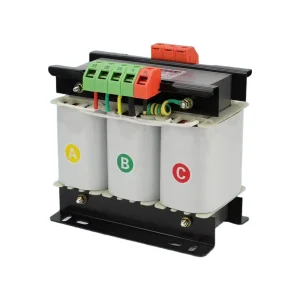
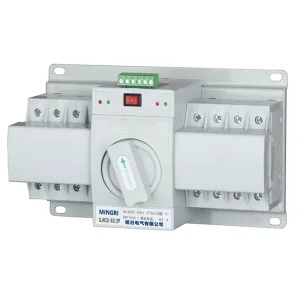
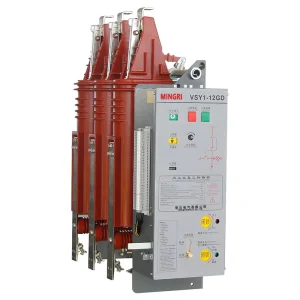
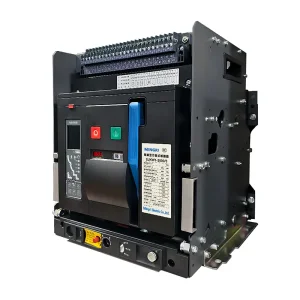
🌐 Global Industrial Landscape: The Escalating Surge Challenge
Modern electrical infrastructure operates in an environment characterized by increased electrification, sensitive microelectronics, and volatile climate impacts.
📊 Electrification of Heavy Industry
Global industrial facilities are transitioning rapidly from mechanical actuation to automated solid-state architectures. This shift amplifies exposure to transient overvoltages induced by lightning strikes and switching surges. Industrial sites require coordinated multi-stage surge protection devices (SPDs) and surge arresters integrated directly within their main incoming switchgear assemblies.
☀ Renewable Energy Integration
Utility-scale photovoltaic farms and wind generation installations operate across exposed, flat terrains with high ground flash densities. Without custom OEM lightning dissipation systems, metal-oxide surge arresters (MOVs), and DC-rated isolation switches, step-up transformers and string inverters face catastrophic insulation failure and downtime.
🏢 Urban Critical Infrastructure
Hyperscale data centers, metropolitan hospitals, and automated transit systems require continuous power quality. Direct strikes or induced atmospheric discharges bypass standard grounding grids if not mitigated by coordinated low-impedance bonding, intelligent reclosers, and isolated transient earth clamps.
⚙ Precision OEM Manufacturing & Supply Chain Efficiencies
Leveraging Yueqing’s electrical manufacturing ecosystem for cost performance, rapid prototype iterations, and rigorous validation.
🔬 End-to-End Component Sourcing
Integrated manufacturing pipelines allow factory-floor assembly of varistor blocks, spark gap triggers, arc-chute systems, and vacuum interrupters within a singular cluster. This tight integration significantly minimizes bill-of-materials (BOM) overhead, reduces lead times from months to weeks, and allows seamless customization for bespoke utility engineering orders.
🛡 High-Voltage Impulse Testing
Every certified OEM lightning protection device undergoes rigorous test procedures replicating severe atmospheric transients, including 8/20 µs current impulses and 10/350 µs direct-strike waveforms. High-energy impulse current generators verify clamping voltage precision, residual voltage thresholds, and thermal disconnection safety mechanisms.
🤖 Automated Quality Assurance
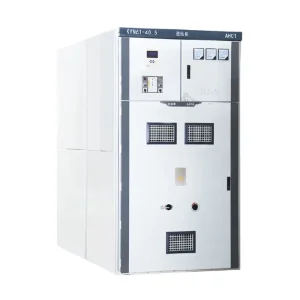
Surface-mount technology (SMT) and automated laser-welded copper bussing ensure consistent contact resistance across every switchboard panel. Microprocessor-based diagnostic verification checks response curves before components are integrated into medium-voltage ring main units and modular compact substations.
🗺 Engineered Deployment Across Critical Environments
Custom OEM protection designs matched to operational conditions, environmental severity, and regional grid topologies.
Coastal & Offshore
Heavy salt mist, high humidity, and oceanic thunder activities demand marine-grade C5 corrosion coatings, hermetically sealed gas-insulated switchgear (GIS), and polymer-housed lightning arresters with high creepage distances.
Mining & Extraction
Deep-pit operations and processing mills present severe inductive loads, heavy dust, and rough earthing conditions. Custom-engineered transient suppression modules protect variable frequency drives and high-capacity winding motors from recurring back-EMF spikes.
High-Altitude Plants
At altitudes exceeding 2,000 meters, reduced atmospheric air density compromises standard dielectric clearances. OEM engineering adapts lightning protection devices with widened strike margins and modified gas or solid-insulated architectures.
Railway Traction
Electrified railways experience continuous switching surges and high-frequency harmonics caused by pantograph bounces. Heavy-duty trackside surge suppression cubicles and auto-reclosing circuit breakers maintain rail network reliability.
📈 Emerging Trends: Smart & Eco-Conscious Protection
The progression of lightning mitigation from passive components toward intelligent, connected asset monitoring networks.
📡 IoT-Enabled Surge Monitoring
Modern switchgear is increasingly fitted with connected sensors that log surge events, record timestamped discharge magnitudes, and measure varistor leakage currents. Facility managers receive predictive wear warnings via industrial IoT protocols before components reach end-of-life status.
🌿 SF6-Free Insulation Alternatives
As international environmental regulations tighten regarding greenhouse gases, switchgear manufacturers are transitioning toward solid-insulated and synthetic clean-air gas mixtures. These systems retain high dielectric strength and lightning impulse withstand voltages (BIL) up to 200 kV without environmental penalties.
🔄 Modular Hybrid Protection
Next-generation surge suppression boards incorporate hybrid topologies that combine fast-acting silicon avalanche diodes (SAD) with heavy-duty metal-oxide varistors and encapsulated gas discharge tubes (GDT), ensuring seamless nanosecond-level response and massive discharge capacity.
📝 Strategic Procurement: What Engineering Teams Look For
A checklist of critical engineering parameters evaluated by global EPCs, grid contractors, and system integrators.
✅ Standards Compliance
Full conformance with IEC 62305 (Protection against lightning), IEC 61643-11/21/31 (Low-voltage surge protective devices), and IEEE C62.41. Certified test reports by accredited laboratories provide the technical assurance needed for project acceptance.
✅ Coordinated Protection Logic
Selection of upstream Type 1 spark-gap arresters coupled with downstream Type 2 MOV components and localized Type 3 fine suppressors, ensuring voltage protection levels ($U_p$) remain safely beneath the impulse withstand capability ($U_w$) of critical equipment.
✅ Turnkey OEM/ODM Capability
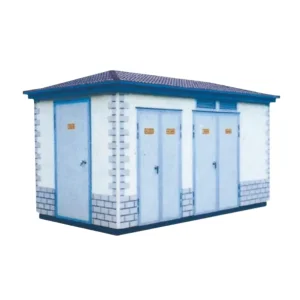
The ability to adapt busbar geometry, mechanical dimensions, enclosure IP ratings (IP54 to IP67), and auxiliary signaling dry contacts to fit existing switchboards, ring main units, and outdoor pad-mounted transformer substations without on-site modifications.
❓ Frequently Asked Questions (FAQ)
Answers to technical questions regarding lightning mitigation, circuit protection, and factory OEM sourcing.
Q: What is the fundamental difference between Type 1 and Type 2 Surge Protective Devices (SPDs)?
A: Type 1 SPDs are designed to handle direct lightning strikes, characterized by the 10/350 µs current waveform, and are installed at the primary service entrance. Type 2 SPDs protect against indirect lightning effects and operational switching surges, tested using the 8/20 µs impulse waveform, and are installed in sub-distribution switchboards.
Q: How do OEM factories coordinate surge protection with vacuum circuit breakers (VCBs)?
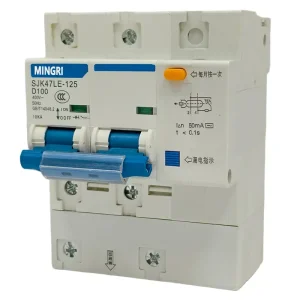
A: Vacuum circuit breakers can generate steep-front transient overvoltages during inductive load breaking (such as no-load transformers or motors). OEM factories install coordinated metal-oxide surge arresters and RC snubber circuits immediately adjacent to the breaker's load terminals to prevent inter-turn insulation breakdown.
Q: What documentation is typically required for international utility project approval?
A: International EPC projects require type test certificates from accredited independent labs, ISO 9001 quality management records, comprehensive single-line diagrams (SLD), dimensional general arrangement drawings, and calculated protection coordination curves demonstrating safe energy let-through thresholds.
Q: Can factory-installed lightning protection systems be retrofitted to aging substations?
A: Yes. OEM suppliers design compact, plug-in or bracket-mounted surge arrester kits tailored to retrofit older air-insulated or oil-immersed switchgear. These assemblies update older installations to modern transient protection levels without requiring complete cabinet replacement.
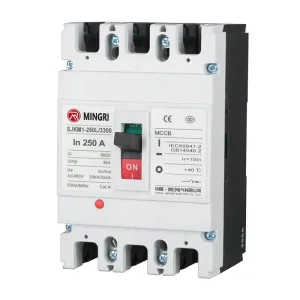
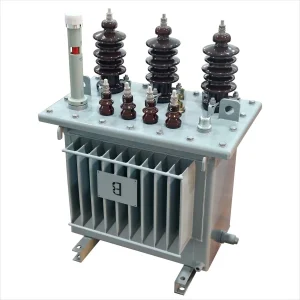
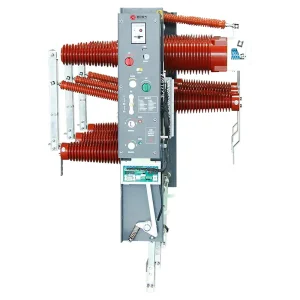
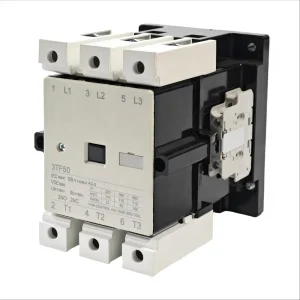
⚡ High-Capacity Switchgear, Breakers & Industrial Assemblies
Complete medium and low-voltage modular distribution hardware manufactured to rigorous international standards.