Integrated Core Components & MV/LV Power Systems
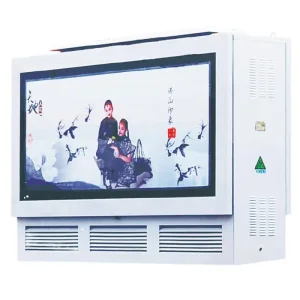
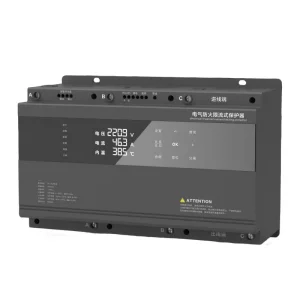
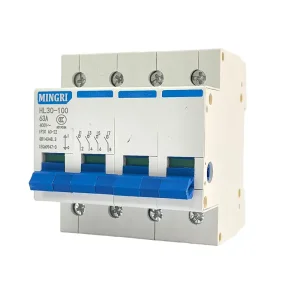
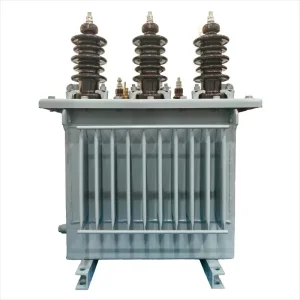
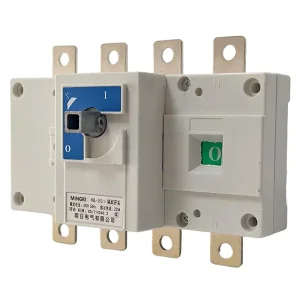
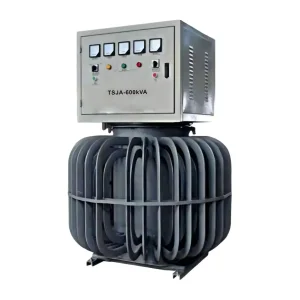
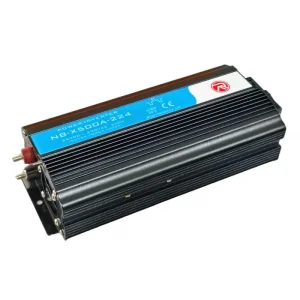
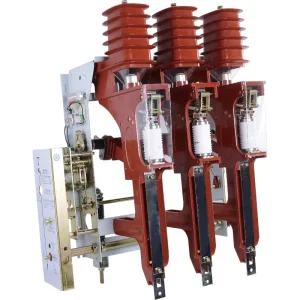
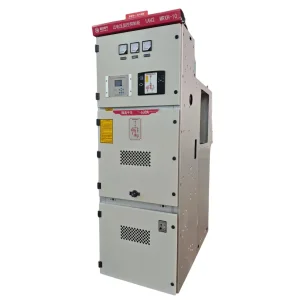
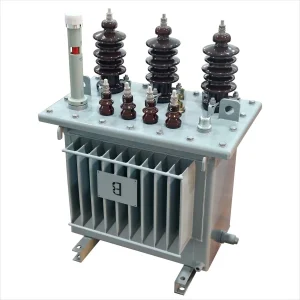
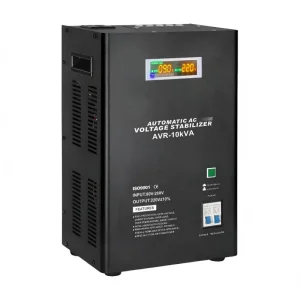
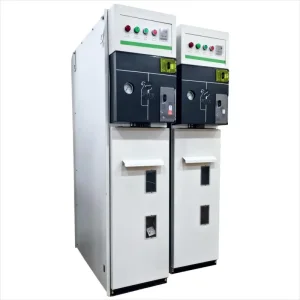
Manufactured under stringent magnetic permeability tolerances, our OEM iron core architectures serve as the physical foundation for the comprehensive line of medium and low voltage distribution solutions showcased below.
Precision OEM Iron Cores: The Heart of Modern Grid Efficiency
In high-stakes power distribution and industrial electrical machinery, the electromagnetic core functions as the decisive thermodynamic and kinetic anchor. As a specialized OEM iron core manufacturer based in Yueqing, China's capital of electrical engineering, we engineer magnetic circuits designed specifically to counteract no-load losses ($P_0$), eliminate excessive magnetostrictive acoustic emissions, and provide uncompromised saturation flux density ($B_s$) up to 1.95 Tesla under continuous duty.
Whether configuring high-permeability Cold-Rolled Grain-Oriented (CRGO) steel sheets for 10kV–35kV oil-immersed transformers (such as our S11-M and S13-M series), or fabricating wound toroidal cores for sensitive potential transformers within SF6/gas-insulated ring main units, metallurgical precision dictates operational lifespan. We combine automated CNC transversal shear slitting lines, continuous nitrogen-protective annealing furnaces, and precise step-lap robotic stacking to deliver custom iron core configurations tailored to international OEM specifications.
Engineering Benchmark: Minimizing anomalous eddy current dissipation via precision-engineered surface insulation coatings (Carlite / C5 over inorganic phosphate) reduces total core loss to under 0.85 W/kg at 1.7T/50Hz.
Technical Core Geometry Capabilities
Our Yueqing facilities maintain end-to-end tooling for diverse magnetic topological assemblies:
-
Step-Lap Mitered Cores: 5-to-7 stage automatic multi-step lap stacking minimizing gap flux leakage and core excitation VA in distribution transformers.
-
Toroidal & Uncut Wound Cores: Grain alignment completely parallel to magnetic flux path; ideal for high-precision measurement CTs and TSJA/AVR regulators.
-
Rectangular & C-Cores: Resin-impregnated, precision cut, and polished air gaps calibrated down to ±5 μm for high-frequency inverters and resonant reactors.
Why Yueqing, China Leads the Global OEM Iron Core Supply Chain
Procuring custom electrical steel cores demands more than raw slitting capability; it requires frictionless integration with specialized steel mills, precision toolmakers, thermal annealing facilities, and full-spectrum testing laboratories.
Direct Mill Allocations & Material Traceability
We source master electrical steel coils directly from tier-1 global producers including Baosteel and Shougang. With guaranteed access to laser-scribed high-permeability domain-refined grades (23Q080, 23Q085, 27Q100), our factory eliminates raw material supply variances while providing mill heat certificates, complete B-H hysteresis loop curves, and Epstein frame batch validation for each OEM dispatch.
End-to-End Vertical Manufacturing Cluster
Located in the heart of Zhejiang's power apparatus industrial corridor, our manufacturing infrastructure operates in direct tandem with specialized switchgear casing builders, vacuum cast epoxy molders, and conductor wire winders. This localized clustering reduces component lead times by up to 45% compared to Western counterparts, accelerating prototyping cycles for customized three-phase transformers and specialized current sensors.
Stringent Automated Dimensional & Burring Controls
Mechanical micro-deformations induced during shear cutting damage crystalline grain orientation, multiplying local core losses. Our factory deploys carbide-tipped rotary shears paired with automated laser surface sensors. This holds edge burr tolerances below 0.02 mm, preventing inter-lamination micro-short circuits while maximizing the active cross-sectional stacking factor ($k_F$) up to 0.975 for compact enclosure compatibility.
Electromagnetic Substrates: Comparative Performance Matrix
Selecting the optimal core substrate involves balancing total life-cycle loss costs against initial capital expenditure. Our engineering team helps international OEMs evaluate cold-rolled grain-oriented silicon steels alongside advanced amorphous and nanocrystalline alloys.
| Material Classification | Typical Alloy / Composition | Saturation Induction ($B_s$) | Specific Core Loss @ 50Hz | Primary Industrial Application | OEM Value Quotient |
|---|---|---|---|---|---|
| Standard CRGO Silicon Steel | Fe-3%Si (Goss Texture 110[001]) | 1.95 - 2.03 T | 1.05 - 1.20 W/kg @ 1.7T | Standard Distribution Transformers (S11), Low-Voltage Regulators | High Cost-Efficiency |
| High-Permeability (Hi-B) CRGO | Laser-scribed domain refined Fe-Si | 1.90 - 2.00 T | 0.75 - 0.90 W/kg @ 1.7T | High-Efficiency Tier-2/Tier-3 Eco-design Transformers (S13, S20) | Grid Compliance Standard |
| Amorphous Metal Alloy | Fe-Si-B Metallic Glass Ribbon | 1.56 T | 0.20 - 0.28 W/kg @ 1.4T | Ultra-Low-Loss Rural Distribution Transformers, Underground Substations (YBD) | Lowest Standby Loss |
| Nanocrystalline Soft Magnetic | Fe-Cu-Nb-Si-B Crystallized Ribbon | 1.23 - 1.25 T | < 0.15 W/kg @ 20kHz, 0.2T | High-Frequency Inverters (X500 Series), Common-Mode Chokes, EV Converters | Optimal High-Frequency |
| Nickel-Iron Alloys (Mu-Metal) | 80% Ni, 15% Fe + Mo/Cu | 0.75 - 0.85 T | Ultra-Low Coercivity | Zero-Phase Sequence CTs, Arc Suppression Monitoring (MRXH-10) | Precision Metrology |
Thermodynamic Stress Relief: Protective Atmosphere Annealing
Even the highest-grade Hi-B electrical sheet suffers crystal lattice dislocation under mechanical shearing, punching, or winding stresses, which can increase no-load losses by as much as 30%. Our Yueqing facility features specialized continuous mesh-belt and bell-type annealing furnaces operating under pure nitrogen ($N_2$) and dry hydrogen atmospheres at controlled temperatures exceeding 800°C.
This automated thermal treatment fully restores magnetic domains, relives internal mechanical tension, eliminates carbon contaminants, and establishes peak magnetic permeability prior to transformer coil insertion or resin encapsulation.
Vibration, Magnetostriction & Acoustic Attenuation
Substation noise pollution regulations in urban residential installations (such as European YB landscape substations) mandate transformer sound profiles below 45 dB(A). Magnetostriction—the microscopic dimensional contraction and expansion of the core along the magnetization vector—is the fundamental generator of transformer hum.
By enforcing 45-degree full-mitered cutting geometries combined with specialized silicon steel coatings and uniform multi-tier step-lap stacking, our cores minimize localized air-gap magnetic flux concentrations. This directly eliminates harmonics and dampens operating acoustics across medium-voltage utility networks.
Global Industry Evolution: The Next Decade in Core Technology
The transformation of global power transmission networks—driven by renewable energy generation, decentralized microgrids, and aggressive government energy-efficiency directives—is changing iron core engineering requirements worldwide.
Tier-2 / Tier-3 Ecodesign Mandates (EU 2019/1783 & DOE 2016)
International environmental regulations have sharply reduced acceptable no-load ($P_0$) and load ($P_k$) losses in distribution equipment. Standard non-oriented or lower-tier grain-oriented steels are rapidly being phased out in favor of domain-refined 0.20mm and 0.23mm Hi-B materials. Our factory works hand-in-hand with EPC contractors to engineer custom transformer cores that satisfy the European Union's strictest Stage 2 ecodesign benchmarks without requiring prohibitive structural redesigns.
Renewable Interconnection & DC Bias Resiliency
Large-scale solar and battery storage plants introduce significant DC bias and harmonic distortion into collector substations, potentially saturating traditional iron cores and generating destructive thermal runaways. We integrate specialized step-gap configurations and high-permeability silicon steels to prevent core saturation, ensuring clean, continuous operation across utility-scale photovoltaic step-up substations and industrial wind farm switchgear.
Miniaturization in Compact Modular Substations
Urban real estate constraints require dramatic footprint reductions in secondary distribution kiosks and underground landscape substations (such as our YBD series). By engineering high-flux magnetic iron cores with high stacking factors, we help equipment designers reduce total core volume by up to 18%, freeing internal enclosure volume for air conditioning, vacuum circuit breakers, and integrated remote terminal units (RTUs).
Localized Engineering Applications & Macro Solutions
Our OEM magnetic cores serve as the foundational electromagnetic building blocks across primary energy infrastructure, industrial process control, and commercial facility management.
1. Arc Suppression & Neutral Grounding Systems
In medium-voltage non-effectively grounded distribution networks, single-phase grounding faults generate sustained capacitive arcs and ferroresonance phenomena. In our MRXH-10 Arc Suppression and Resonance Elimination Cabinets, our engineered iron cores with precisely calibrated, adjustable air gaps deliver reliable linear inductances. These cores withstand severe thermal and electromagnetic shock without saturating, enabling rapid neutral-point ground current compensation within 20 milliseconds.
2. Rural & Urban Underground Power Transformation
For municipal utilities deploying underground landscape substations (YBD series) and hermetically sealed pole-top transformers (S13-M, S11-M), moisture intrusion and heat retention present severe long-term hazards. Our wound silicon cores are vacuum impregnated with Class H epoxy resins, maintaining high mechanical integrity during high short-circuit load surges while resisting oxidation and thermal degradation in completely submerged or unventilated enclosures.
3. Heavy Industrial Voltage Regulation & Drive Systems
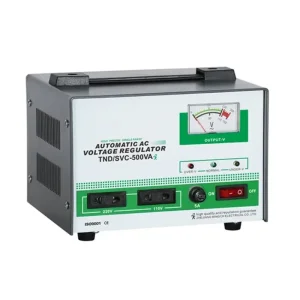
Automated manufacturing environments subject machinery to sudden load shifts and voltage instability. Within our TSJA oil-immersed voltage stabilizers and automated AVR assemblies, our custom-wound toroidal and cylindrical iron cores provide uniform magnetic flux distributions with minimal harmonic generation. This ensures continuous, non-chattering contact roller operation and tight ±1% output regulation under fluctuating factory loads.
4. Medium-Voltage Gas-Insulated Switchgear (GIS / RMU)
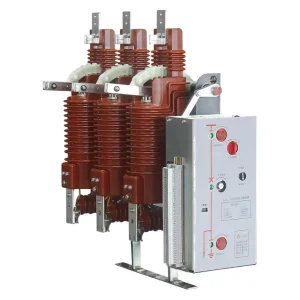
Compact SF6 switchgear installations, like the XGN15-24 and vacuum load break units (FZN25-12, VSY2-12GD), require instrument transformers (CTs and PTs) with zero spatial redundancy. Our precision toroidal cores feature high permeability at low excitation currents, ensuring accurate metering Class 0.2S performance while remaining immune to stray magnetic fields generated by adjacent high-current vacuum interrupters.
Global EPC & OEM Procurement Technical Specifications
Purchasing directors and chief electrical engineers evaluate potential iron core manufacturers on strict physical, metallurgical, and magnetic criteria. We operate transparent quality audit frameworks aligned with international standards.
Interlaminar Insulation Resistance
According to IEC 60404-2 and ASTM A717, surface insulation on grain-oriented sheets must withstand continuous immersion in hot dielectric oil or dry-type resin cast temperatures without degradation. We test every production lot using Franklin testers, ensuring minimum surface breakdown insulation values of 50 Ω·cm² post-annealing to prevent parasitic eddy current loops across the core stack.
Burr Height & Stacking Quality Index
Microscopic burrs created by dull cutting tooling punch through interlaminar phosphate coatings, creating localized hot spots and increased no-load loss ($P_0$). Our ISO-calibrated quality procedures mandate carbide blade resurfacing whenever cutting burr heights approach 0.02 mm, verified across batch samples via laser optical profile projectors.
Excitation Power & Specific Core Loss
Using 25cm Epstein frames and comprehensive single-sheet magnetic measurement instruments, our quality engineering group verifies continuous magnetic performance. Every coil slitting dispatch provides guaranteed values for specific core loss ($W_{1.7/50}$) and apparent power dissipation ($VA/kg$), ensuring full traceability to accredited national metrology standards.
Frequently Asked Questions on OEM Iron Core Engineering
Detailed technical answers for transformer engineers, electrical equipment manufacturers, and procurement specialists.
Switching, Regulation & Protection Apparatus Portfolio
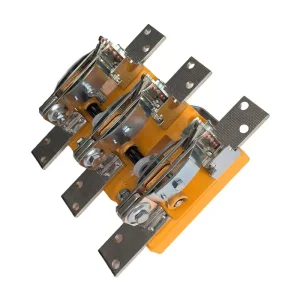
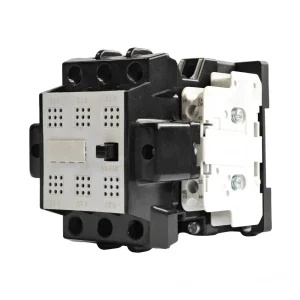
Explore our integrated portfolio of switchgear, magnetic contactors, disconnectors, and underground substations—engineered to integrate directly with our OEM core designs.