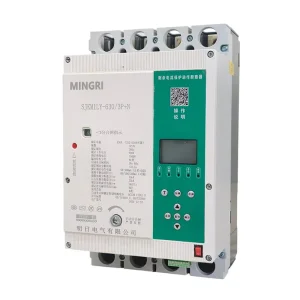
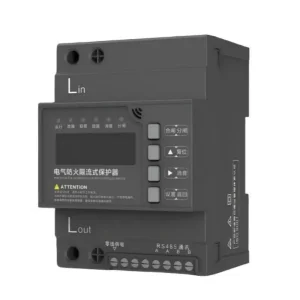
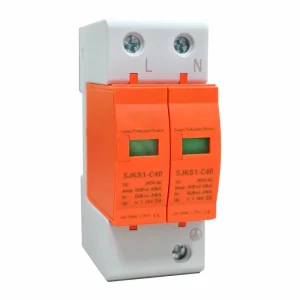
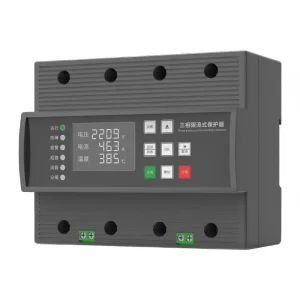
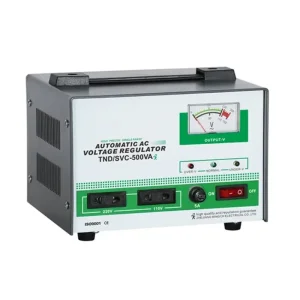
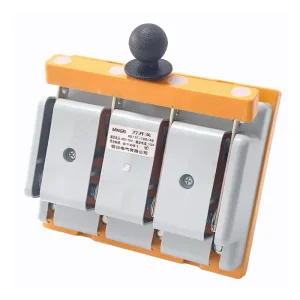
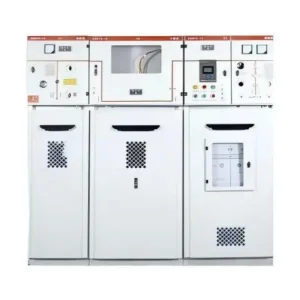
Integrated OEM Distribution & Protection Portfolio
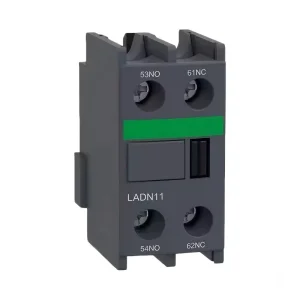
Engineered hardware compatibility spanning low-voltage current-limiting protectors, industrial rotary isolation switches, and intelligent intelligent switchgear.
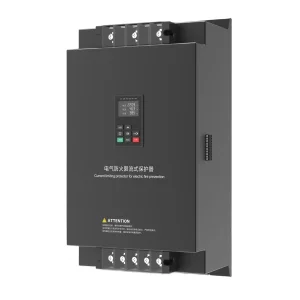
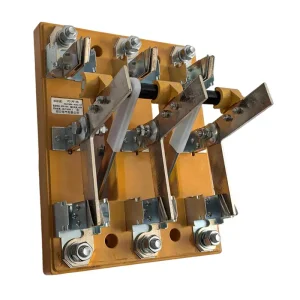
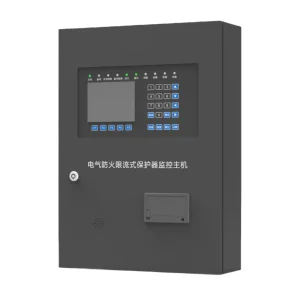
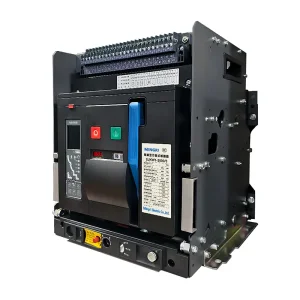
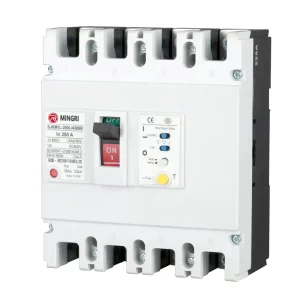
Engineering Principles: The OEM Auto-Coupling Advantage
Decoupling capital expenditure from power density via co-axial single-winding electromagnetic configurations.
In high-capacity commercial, utility, and heavy-industry distribution topologies, the search for maximum electrical efficiency and optimized footprint has led procurement engineers back to the foundational physics of electromagnetic transformation. An auto-coupling transformer (commonly designated as an autotransformer) departs from standard double-wound isolation transformers by utilizing a singular, contiguous continuous winding per phase wound around a common grain-oriented silicon steel (CRGO) magnetic core. In this design, primary and secondary electrical circuits share a designated portion of the common turns, introducing both direct galvanic conduction and mutual induction into the power transfer mechanism.
When engineering an auto-coupling transformer where the primary voltage ($V_1$) and secondary voltage ($V_2$) are closely aligned (for instance, stepping down from 40.5 kV to 24 kV, or converting 480V to 380V in cross-border equipment deployments), the transformed power constitutes only a fraction of the total throughput power. The equivalent physical core and coil rating—often termed the equivalent transformed rating ($S_{trans}$) or design frame rating—is governed by the relationship:
As the transformation ratio approaches unity, the physical size, magnetic mass, winding conductor volume, and core excitation losses fall dramatically compared to a standard two-winding transformer. As an established tier-1 OEM auto-coupling transformer supplier, Mingri Electric engineers these magnetic structures to maximize the advantages of conductive transfer, driving full-load operational efficiency rates past 99.2% while yielding up to a 40% reduction in total enclosure mass and thermal dissipation footprint.
Material Optimization (Copper & Core)
By leveraging a unified winding path where the common section conducts the vectorial difference of line currents ($I_2 - I_1$), winding cross-sections are tailored precisely to instantaneous ampere-turns, decreasing raw copper/aluminum expenditure by up to 35%.
Minimal Series Leakage Reactance
The close spatial coupling and physical co-location of primary and series turns on identical limbs inherently limits leakage flux, leading to lower percent impedance ($%Z$), vastly reduced voltage drop under dynamic load swings, and superior regulation characteristics.
Substation Footprint Conservation
Because the physical frame requirement scales with the transformed rating rather than the throughput kVA, autotransformers allow EPCs to package higher total capacity into standardized European-type (YB series) or American-type combined compact substations.
Global Commercial & Industrial Macro Landscape
Navigating varying regional grid codes, decarbonization initiatives, and large-scale industrial electrification.
The global demand for high-performance auto-coupling transformer infrastructure is accelerated by three converging industrial macro trends: the widespread modernization of aging transmission and distribution (T&D) grids, the aggressive ramp-up of large data centers requiring intermediate step-down voltages, and the integration of mega-scale renewable photovoltaic and energy storage assets (BESS).
Across regional jurisdictions, engineering compliance manifests distinct challenges. In North America, compliance with IEEE C57.12.80 and DOE 2016 efficiency benchmarks dictates aggressive core-loss reduction, pushing OEM suppliers toward laser-scribed, high-permeability grain-oriented silicon steels. In Europe, the Ecodesign Directive (Tier 2 / EN 50588-1) imposes strict regulatory caps on no-load and load losses, penalizing conventional architectures. Simultaneously, developing infrastructure hubs throughout the Middle East, Southeast Asia, and South America prioritize robust thermal performance under extreme ambient baselines (+50°C) and high seismic or coastal salt-fog environments.
| Grid / Industrial Metric | Standard Dual-Wound Substation | Mingri OEM Auto-Coupling Solution | Engineering Benefit |
|---|---|---|---|
| Nominal System Losses | 1.8% – 3.2% total core/copper losses | 0.8% – 1.4% total combined losses | Reduces thermal dissipation load inside enclosed switchrooms. |
| Internal Impedance (%Z) | Standard 5.5% – 8.0% | 2.5% – 4.5% (customizable) | Minimizes bus voltage droop during high motor inrush transients. |
| Footprint / Weight Ratio | 100% baseline volume | 60% – 75% relative frame size | Lowers foundation load-bearing requirements and transport logistics costs. |
| Tertiary Stabilization | N/A (Galvanically Isolated) | Integrated Δ (Delta) Tertiary Winding | Absorbs 3rd-order harmonic currents and mitigates unbalance zero-sequence flux. |
| Short-Circuit Protection Pairing | Standard upstream breakers | Paired with SJKW1 ACB & SJKM1L ELCB | Safeguards lower impedance coils against high fault-current energy. |
Technical Blueprint: Switchgear Coupling & Industrial Protection
Bridging auto-coupling architectures with medium/low voltage switchgear, current-limiting protection, and circuit isolation.
Because an auto-coupling transformer possesses electrical continuity between high-voltage (HV) and low-voltage (LV) circuits, transient overvoltages, switching surges, and line-to-ground faults on the HV side directly couple into the downstream LV infrastructure. Consequently, selecting an OEM auto-coupling transformer supplier requires evaluating their broader switchgear, protection, and switchboard manufacturing integration.
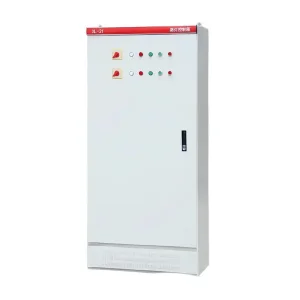
Mingri Electric solves this systemic engineering challenge by designing integrated autotransformer subsystems fully synchronized with our medium-voltage metal-clad withdrawable switchgear (such as KYN28-12 and KYN61-40.5), compact ring main units (RM6, SM6, SafeRing-12), and low-voltage power distribution cubicles (XL-21, MNS, GCS). By combining current-limiting protection, high-breaking intelligent air circuit breakers (such as the SJKW1-2000), and specialized surge suppression (SJKS1-C Series SPD), the system architecture ensures full electrical protection across all operating parameters.
Tertiary Delta Harmonic Stabilization
In three-phase autotransformer configurations connected in Star/Star ($Yy0$ or $YNyn0$), third-harmonic currents cannot flow in isolated neutrals. Mingri integrates a buried or externally brought-out Delta-connected ($\Delta$) tertiary winding to circulate triple-n harmonics, stabilizing the neutral point voltage and suppressing line-frequency phone interference.
Dynamic Short-Circuit Mechanical Bracing
Because the internal impedance of an autotransformer is inherently lower, maximum prospective short-circuit fault currents ($I_{sc} = I_{fl} / \%Z$) can be exceptionally severe. Mingri utilizes hydraulic pre-stressing clamping structures, densified laminated wood spacers, and epoxy-impregnated transposing conductors to withstand peak electrodynamic bursting forces.
Integrated Tap-Changer Automation
For installations subject to dynamic line load swings, our transformers incorporate vacuum-interrupter On-Load Tap Changers (OLTC) or robust De-Energized Tap Changers (NLTC). Synchronized via industrial Modbus/IEC 61850 protocol units, automated voltage regulation ensures seamless primary grid balancing.
Engineered Industrial Application Scenarios
Real-world implementations across electrified traction, heavy motor starting, and inter-tie microgrids.
2x25 kV High-Speed Rail Traction Feeds
Railway electrification systems frequently deploy autotransformer (AT) schemes along catenary alignments. By placing 50 kV transmission between the catenary wire and feeder, with center-tapped autotransformers referencing the rail return, inductive interference to adjacent telecom circuits is virtually eliminated while extending substation spacing up to 50 km.
Korndörfer Reduced-Voltage Motor Starting
For high-inertia induction and synchronous motors (megawatt-scale water pumps, mine ball mills, cement kilns), direct-on-line (DOL) start causes severe bus voltage sags. Korndörfer autotransformer starting applies 65% to 80% reduced voltage taps to control starting kVA without open-circuit transition torque spikes.
Microgrid Step-Down & Regional Interties
Facilitating intermediate interconnection between 35 kV sub-transmission feeders and 10 kV/12 kV regional distribution corridors. Autotransformer enclosures reduce infrastructure CapEx inside prefabricated compact substations (YB series), streamlining renewable integration for municipal and solar farm microgrids.
Technology Roadmap: Next-Generation Magnetic Solutions
Pioneering advancements in amorphous ribbon alloys, high-temperature dielectric fluids, and IoT telemetry.
As transmission demands evolve under smart-grid imperatives, the engineering roadmap for OEM auto-coupling transformers is shaped by three key materials-science and digital developments:
1. Non-Crystalline Amorphous Metal Cores
Conventional CRGO steels exhibit hysteresis and eddy current losses determined by their crystalline grain boundaries. Mingri’s R&D pipeline integrates iron-based amorphous alloy ribbons into custom autotransformer frames, slashing core (no-load) losses by up to 70%. This breakthrough offers major efficiency gains for assets operating continuously under low or fluctuating baseloads.
2. Biodegradable Synthetic and Natural Esters
Replacing traditional mineral oil with synthetic and natural ester dielectric liquids (K-class, fire point > 300°C) dramatically enhances fire safety, especially in densely populated urban environments and underground compact substations (such as our YBD landscape designs). Esters also offer exceptional moisture tolerance, retarding cellulose insulation degradation and extending operational design life past 40 years.
3. Real-Time Embedded Fiber-Optic Thermal & Acoustic Telemetry
Next-generation OEM autotransformers feature integrated fiber-optic Bragg grating sensors directly embedded inside high-stress winding turns. Combined with dissolved gas analysis (DGA) modules and high-frequency partial discharge monitoring, these sensors transmit real-time thermal profiles and fault indicators to substation SCADA systems via IEC 61850 protocols, enabling true predictive maintenance before physical insulation breakdown occurs.
Engineering & Procurement FAQ
Technical clarification on electrical isolation, neutral grounding, fault tolerance, and OEM customizations.
Ancillary Control, Isolation & Switchgear Assemblies
Comprehensive system solutions complementing medium-voltage auto-coupling transformers and industrial switchrooms.