Coordinated Medium & Low Voltage Equipment
High-performance power networks rely on seamless coordination between current-limiting AC reactors, vacuum interrupters, compact substations, and dynamic motor controls manufactured to ISO 9001, IEC, and ANSI standards.
Engineering Principles of High-Linearity AC Reactors
An in-depth examination of core gap multi-segmentation, Class H/C Nomex insulation structures, and dynamic thermal dissipation curves that differentiate industrial OEM magnetic manufacturing.
Grain-Oriented Magnetic Cores
Our OEM production employs cold-rolled grain-oriented (CRGO) high-silicon electrical steel (grades 23Q110 to 30Q130) with step-lap mitered core junctions. Distributed air gaps segmented with temperature-stable ceramic spacers eliminate fringe flux concentration and prevent localized core saturation under harmonic distortion up to the 50th order.
- Core loss rating < 0.95 W/kg at 1.7 Tesla
- Precision multi-gap distributed reluctance
- Strict linearity maintained up to 200% In
Foil & Transposed Winding Geometry
Using oxygen-free electrolytic copper (TU1 / ETP) or high-grade EC-aluminum foil, windings are formed with edge-chamfered conductor geometry to drastically minimize high-frequency skin effect and proximity loss. Windings are continuously interleaved with DuPont Nomex® 410 aramid paper for dielectric endurance in pulsating VFD circuits.
- Class H (180°C) and Class C (220°C) thermal margin
- Elimination of inter-turn micro-void partial discharge
- Optimized cooling ducts for natural convective flow
Tri-Cycle Vacuum Pressure Impregnation (VPI)
Assembled cores and coils undergo a rigorous triple-cycle VPI process using solvent-free class-H polyesterimide modified epoxy resin. This solidifies the mechanical lattice to eliminate micro-vibrations induced by magnetostrictive forces, suppressing operating acoustic emissions below 58 dBA even under heavy carrier switching frequencies.
- High moisture and saline fog corrosion resistance
- Acoustic noise dampening conforming to NEMA TR-1
- High mechanical burst resistance up to 35x rated short circuit
Navigating IEEE 519-2022 & IEC 61000-2-4 In Non-Linear Networks
Modern industrial architectures depend on Variable Frequency Drives (VFDs), active solar rectifiers, and large-scale Battery Energy Storage Systems (BESS). However, these front-end rectifiers introduce disruptive non-linear currents that distort feeder bus voltage and stress distribution transformers.
| Functional Classification | System Position | Nominal Reactance (Uk%) | Core Functionality | Dominant Harmonic Target | Key Standard Compliance |
|---|---|---|---|---|---|
| AC Line Input Reactor (ACL-I) | Mains Feeder to Inverter Front End | 2% – 4% (Standard) / 5% – 7% | Surge absorption, transient notch dampening, THD-I suppression, DC bus life extension | 5th, 7th, 11th, 13th Harmonics | IEEE 519-2022, IEC 61800-3 |
| AC Load Output Reactor (ACL-O) | VFD Output Terminals to Motor Leads | 1% – 3% Impedance Drop | dv/dt limiting, motor insulation protection, capacitive charging current attenuation on long cables (>100m) | PWM Carrier Frequency (2kHz–16kHz) | IEC 60034-25, NEMA MG1 Part 31 |
| Detuned Harmonic Filter Reactor | Series with PFC Capacitor Banks | 5.67%, 7%, 14% Tuning | Prevents harmonic resonance, isolates capacitors from harmonic overload, provides power factor correction | 189 Hz (7%), 134 Hz (14%) Resonance Blocking | IEC 61642, IEC 60831, EN 60076-6 |
| Medium-Voltage Shunt Reactor | Substation Bus (6kV–35kV) | Direct Reactive Q Compensation | Absorbs Ferranti capacitive rise on long subterranean cables, dynamic VAR stabilization | Fundamental Frequency Voltage Stability | IEC 60076-6, IEEE C57.21 |
Harmonic Mitigation Economics
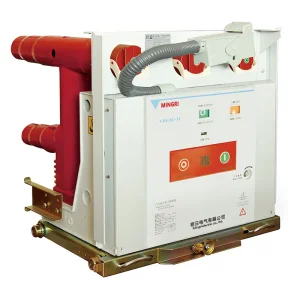
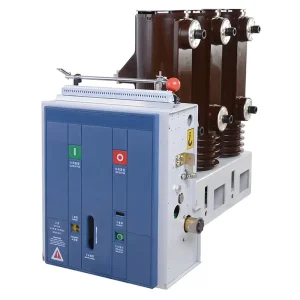
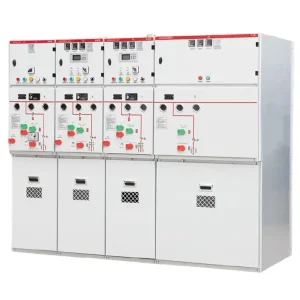
Without input line reactors, 6-pulse diode bridges typically inject 35% to 45% THD-I back into the upstream bus. Inserting a custom-tuned 4% or 5% Mingri AC Reactor drops THD-I down to < 28% to 32%, preventing upstream transformer de-rating (K-factor heating) and eliminating nuisance tripping of vacuum circuit breakers (such as the VS1-12C indoor series).
dv/dt Waveform Conditioning
Fast-switching IGBTs create steep pulse wavefronts exceeding 10,000 V/µs. Over cable lengths exceeding 50 meters, transmission line wave reflections double terminal voltage up to 2.5x the DC link bus voltage. Mingri load reactors tame dv/dt rise rates to < 500 V/µs, preventing premature breakdown of motor phase winding insulation and bearing fluting.
PFC Capacitor Protection
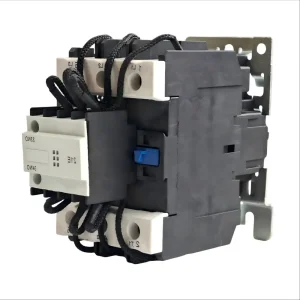
Capacitor switching contactors (such as the CJ19 series) face aggressive inrush surges and grid resonance hazards. Series-connected 7% detuned iron-core reactors shift the natural resonance frequency of the power factor correction bank below the 5th harmonic (189 Hz at 50 Hz mains), immunizing capacitors against catastrophic destruction.
Field-Validated Deployments Across Heavy Industries
From extreme deep-shaft mining environments to hyperscale computational centers, our customized AC reactors provide rugged electromagnetic resilience tailored to site-specific environmental stress factors.
Underground Hoists & Slurry Pumps
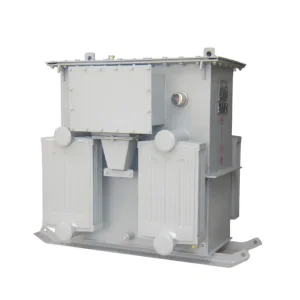
Deployed alongside flameproof mining transformers (KS9 type) and MV switchgear, high-impedance 5% input reactors protect high-torque VFD drives against destructive line voltage spikes induced by heavy conveyor starts and long subterranean feeders.
Solar Substation Interconnections
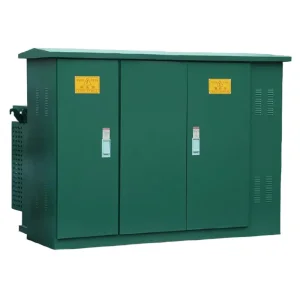
Integrated inside compact American and European prefabricated substations (YB and ZGS11 series). Custom iron-core smoothing and coupling reactors absorb high-frequency switching artifacts from MW-scale central solar inverters prior to grid injection.
Data Center Mission-Critical UPS
Custom ultra-low-noise (<50 dBA) copper-wound input filter chokes condition incoming feeds for dual-conversion UPS systems, ensuring zero harmonic cross-talk into sensitive IT server rack power distribution units (PDUs).
Wastewater Variable Pumping
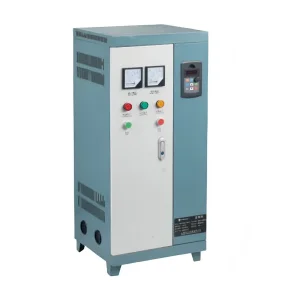
Integrated with MC3000 series variable frequency cabinets, our 3% line and load reactors maintain continuous water treatment pump operation during brownouts and suppress radiated EMI/RFI across municipal telemetry systems.
Full Lifecycle Compliance & OEM Testing Protocols
Every custom AC Reactor manufactured at Mingri Electric undergoes multi-stage automated testing in accordance with IEC 60076-6, IEEE C57.21, and UL 508 / CSA C22.2 standards to ensure 30+ year operating longevity.
Automated Routine Factory Testing
100% of manufactured units are routed through automated test cells verifying winding resistance balance, inductance linearity across variable current sweeps (from 0% up to 180% In), power loss measurement at nominal harmonic spectrum, and high-potential dielectric withstand (3 kV to 28 kV RMS).
Environmental Stress Screening
Standard production units comply with Class F (155°C), Class H (180°C), or Class C (220°C) thermal limits. Climate chamber validation verifies flawless operation in ambient extremes ranging from -40°C to +70°C, high seismic zones (Zone 4 / IEEE 693), and heavily polluted industrial atmospheres (IEC 60721-3-3 Class 3C2 / 3C3).
Full Traceability & Documentation
Global EPC clients receive exhaustive documentation packages including complete routine test reports, type-test certificates from international third-party laboratories, dimensional 3D STEP models for enclosure CAD integration, and factory FAT inspection records.
Future Frontiers in Inductive Power Electronics
Anticipating the transition to Silicon Carbide (SiC) and Gallium Nitride (GaN) semiconductor topologies with advanced magnetic materials, embedded telemetry, and sustainable manufacturing practices.
Amorphous & Nanocrystalline Magnetic Cores
To accommodate high carrier switching frequencies beyond 20 kHz generated by next-generation SiC MOSFET drives, our R&D team is standardizing ultra-thin nanocrystalline ribbon cores. These deliver over 60% lower eddy current losses compared to conventional silicon steel laminations, enabling ultra-compact reactor volumes.
Embedded Smart Thermal Sensing
OEM reactors are available with factory-embedded multi-channel PT100, PT1000, or PTC thermistors placed directly within the interior core air-gap hotspot zones. Integrated Modbus/RS-485 micro-transmitters stream real-time thermal gradient data directly into plant SCADA or cloud predictive asset management dashboards.
Decarbonized Eco-Design Manufacturing
Committed to circular manufacturing paradigms, Mingri Electric utilizes 100% recyclable copper and high-efficiency CRGO steels processed in solar-powered manufacturing bays. Our low-VOC, water-soluble VPI resins and optimized magnetic designs actively contribute to reduced total cost of ownership (TCO) and Scope 2 emission reductions.
Frequently Asked Engineering Questions
Direct engineering answers addressing critical design choices, impedance sizing calculations, acoustic mitigation, and integration within low and medium-voltage distribution switchboards.
Explore Allied Transmission & Switching Systems
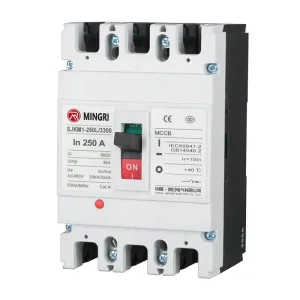
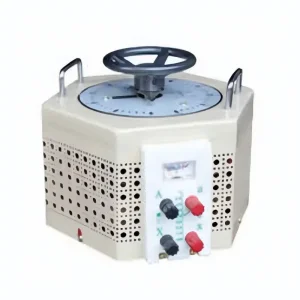
Pair your custom AC reactor solutions with Mingri Electric’s complete medium/low voltage distribution portfolios, including oil-immersed mining transformers, variacs, moulded case circuit breakers, and American/European substations.