Integrated Switchgear & Grid Protection Solutions
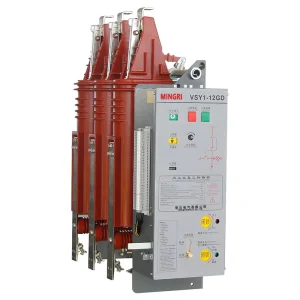
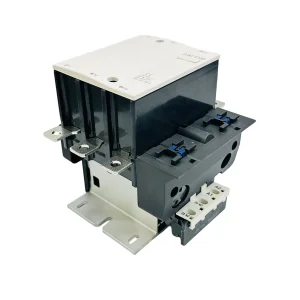
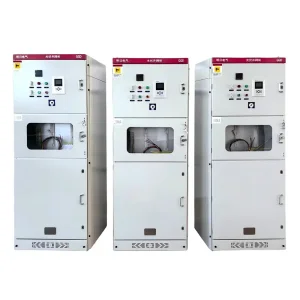
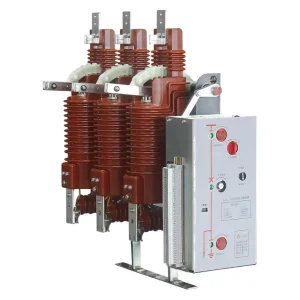
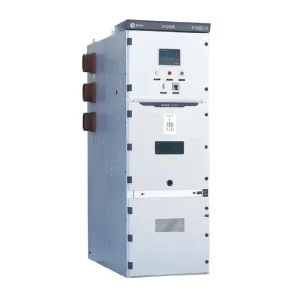
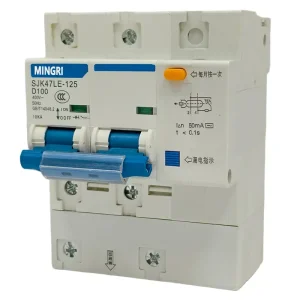
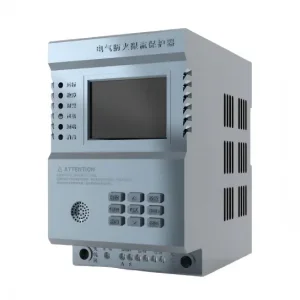
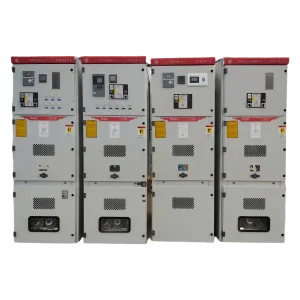
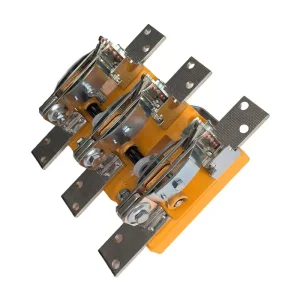
Explore high-performance electrical gear, vacuum circuit breakers, and custom distribution panels designed to interface directly with our industrial ODM voltage regulation systems.
Industry Trends: The Next-Generation Voltage Regulation Paradigm
Dynamic loads, high penetration of distributed energy resources (DER), and hyperscale computing facilities require a shift from slow mechanical servo stabilization to intelligent solid-state power conditioning.
Solid-State Fast Response
Traditional motor-driven servo contact arms struggle with instantaneous sags and surges. ODM facilities are standardizing on IGBT-based dynamic voltage restorers (DVR) and thyristor-switched tap changers (TCR) delivering correction speeds within sub-cycle intervals (<10ms), neutralizing transient harmonic distortions without contact degradation.
Wide Bandgap (SiC/GaN) Adoption
The convergence of Silicon Carbide (SiC) semiconductors into high-frequency switching stages decreases core transformer footprints by 42% while curbing thermal losses. Modern enterprise procurement favors SiC architectures for high-temperature resilience in automated plants and remote sub-stations.
Digital Twin & Edge Diagnostics
Integrated telemetry transforms the voltage stabilizer from a passive protection unit into a critical predictive maintenance node. Embedded DSP processors monitor THD (Total Harmonic Distortion), winding temperature gradients, and dielectric breakdown probabilities, interfacing via IEC 61850 and Modbus-TCP.
Global Enterprise Procurement Demands & Macro Engineering Solutions
Enterprise procurement managers, EPC contractors, and system integrators balance harsh electrical topology challenges with demanding operational cost targets across varied operating landscapes.
AI Data Centers
Requirement: Continuous sinusoidal fidelity under severe non-linear IT workloads.
Solution: ODM active power conditioners with zero phase-shift correction, sub-millisecond response, and dynamic power factor optimization.
Process Manufacturing
Requirement: High surge capacity to survive direct-on-line motor starts and welding lines.
Solution: Heavy-duty magnetic induction regulators built with Class H insulation, copper windings, and 300% overload endurance for 10 seconds.
Photovoltaic & BESS
Requirement: Bidirectional voltage swing stabilization across microgrids.
Solution: Four-quadrant active dynamic stabilizers featuring bi-directional power compensation and anti-islanding switch integration.
Healthcare Infrastructure
Requirement: Medical-grade electrical isolation, negligible acoustic noise, and leakage safety.
Solution: Multi-shielded dry-type isolation regulators featuring ultra-low leakage (<100 μA) conforming with IEC 60601 electrical standards.
Localized Compliance, Validation & Engineering Roadmap
Bridging global manufacturing efficiency with rigorous local field standards through certified quality ecosystems and future-proof architectural development.
Compliance Verification
Our collaborative manufacturing processes adhere strictly to global testing norms. Every ODM production run undergoes type verification covering dielectric withstand (up to 42 kV impulse), temperature rise testing under full rated load, short-circuit containment capability, and EMC class A/B compliance per IEC 61000-6 and IEEE 519 standards.
Localized Field Service
Global deployment demands turnkey lifecycle backing. Strategic spare parts storage (including trigger driver boards, bypass switches, and control PCBs) combines with modular plug-and-play drawer replacement designs, reducing technical Mean Time to Repair (MTTR) down to under 30 minutes in field operations.
2025-2027 Technology Roadmap
Engineering milestones focus on: 1) Full rollout of eco-gas (SF6-free) and solid dielectric insulation matrices; 2) Integration of edge machine-learning neural networks running on localized DSPs for sub-cycle load predicting; 3) Expansion of modular bidirectional DC voltage regulators tailored for ultra-fast EV fleet hubs.
Frequently Asked Questions (Technical & Procurement)
Authoritative insights addressing critical engineering trade-offs, commissioning protocols, and ODM partnership models.
What factors decide between Servo-Electromechanical and Static Solid-State ODM Regulators?
Servo regulators rely on carbon brush autotransformers and motor drives, offering an economical path for steady-state applications with high short-circuit withstand capabilities. Static solid-state (SCR/IGBT) regulators contain no moving parts, delivering corrective cycles in under 10 milliseconds, making them imperative for automated robotic lines, CNC equipment, and critical medical loads.
How do custom voltage regulation enclosures accommodate extreme environmental conditions?
ODM solutions utilize NEMA 3R, NEMA 4X, or IP54/IP65 sheet steel and stainless enclosures. Thermal loads are managed via dual-circuit heat exchangers or vortex cooling, preserving internal PCB conditions away from coastal salinity, chemical dust, or ambient field temperatures spanning from -40°C to +55°C.
Can ODM regulators mitigate severe voltage harmonic distortion (THDv)?
While primary voltage regulators stabilize RMS magnitude variations, modern ODM hybrid power conditioning platforms integrate passive or active harmonic mitigation coils. This design suppresses 3rd, 5th, 7th, and 11th harmonic orders, ensuring total voltage distortion complies with IEEE 519 targets (<5% THD).
What essential documentation is required to initiate an ODM build project?
Engineering kickoffs require a single-line schematic, incoming supply range (±15%, ±30%), targeted output stability tolerance, load crest factor, harmonic profile, system ambient variables, and upstream breaker coordination specs to guarantee optimal component sizing.
Comprehensive Electrical Distribution Portfolio
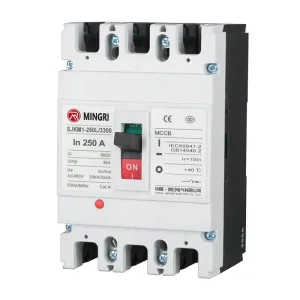
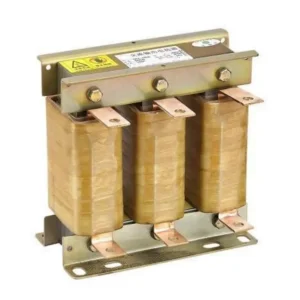
Complete your balance of plant with high-tier circuit breakers, line reactors, and secondary transformers engineered to optimize grid reliability.