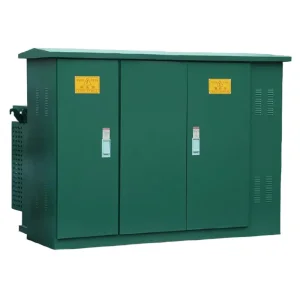
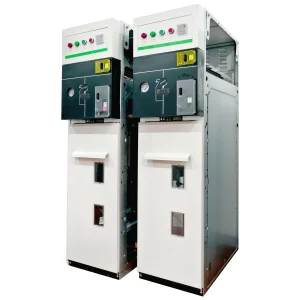
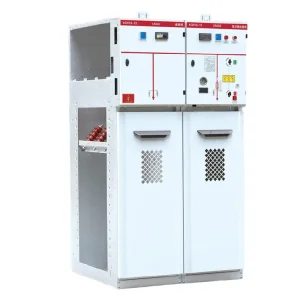
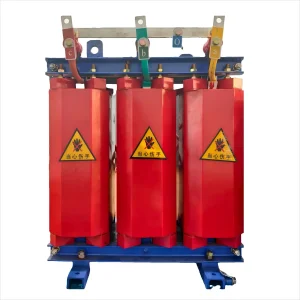
Primary Industrial Equipment Portfolio
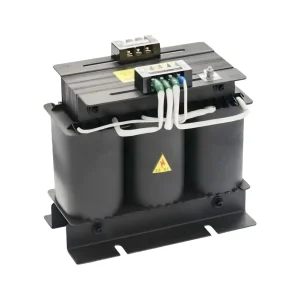
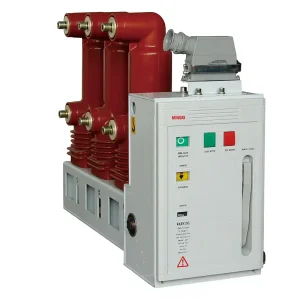
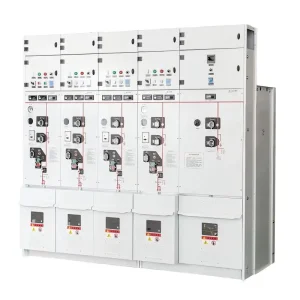
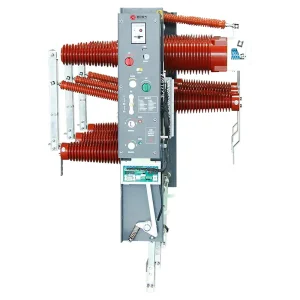
Explore certified three-phase control transformers, high-voltage vacuum interrupting units, eco-efficient gas-insulated switchgear, and digital protection systems.
The Global Landscape of Three-Phase Power Infrastructure
Decarbonization, electrification, and high-frequency power electronics are accelerating the modernization of three-phase alternating current (AC) distribution architectures globally.
Three-phase alternating current remains the undeniable cornerstone of the modern electric universe. From generation points at multi-gigawatt photovoltaic parks and offshore wind substations to complex automated shopfloors and artificial intelligence compute clusters, three-phase systems deliver unrivaled thermodynamic and electrodynamic power density. Compared with single-phase circuits, three-phase systems transfer 1.732 times more power per conductor cross-section, produce steady rotating magnetic fields essential for polyphase induction and synchronous servo drives, and significantly reduce line conduction losses across utility-scale distribution lines.
Currently, the international power engineering ecosystem is navigating a tectonic paradigm shift. Traditional rigid radial grids are transforming into bidirectional, decentralized topologies. This evolution introduces intense harmonics, transient overvoltages from rapid switching of power semiconductors (SiC and GaN inverter stages), and unpredictable reverse-power flows. Consequently, the commercial and industrial demand for high-reliability, fault-tolerant three-phase apparatus—including dry-type cast resin transformers, gas-insulated switchgear (GIS), solid-insulated ring main units (RMUs), and intelligent vacuum interrupters—has surged beyond conventional projections.
Grid Electrification & EV Megahubs
Large-scale fleet charging plazas and multi-megawatt DC fast-charging depots place massive unbalanced dynamic loads onto local transformers. Modern three-phase transformers and intelligent load-break switchgear provide the thermal overhead, harmonic mitigation, and low-impedance pathways required to avoid core saturation.
Hyperscale AI & Cloud Data Centers
Data processing nodes require continuous three-phase redundancy (2N or distributed bypass). Advanced three-phase voltage protectors, motorized vacuum circuit breakers, and dry-type transformers maintain exact sinusoidal profiles and zero phase-shift distortions under non-linear computing burdens.
Renewable Plant Step-Up Infrastructures
Solar arrays and wind turbines require rugged, prefabricated outdoor substations capable of stepping up generated voltages from 0.4 kV/0.69 kV to 12 kV, 24 kV, or 40.5 kV. Switchgear must endure extreme temperature swings, corrosive airborne salts, and severe short-circuit stresses.
China's Manufacturing Ecosystem: Precision, Speed & Economies of Scale
Centered in Yueqing, Zhejiang—the global capital of low- and medium-voltage electrical manufacturing—our industrial cluster offers unmatched engineering integration and lead-time advantages.
Global Engineering, Procurement, and Construction (EPC) firms, electrical contractors, and utility operators increasingly prioritize Chinese manufacturers not merely for cost competitiveness, but for unprecedented supply-chain velocity and advanced metallurgical engineering. China's electrical industrial clusters, anchored in Zhejiang, integrate cold-rolled grain-oriented (CRGO) electrical silicon steel slitting, robotic copper-strip coil winding, precision vacuum pressure impregnation (VPI), automated laser sheet-metal cutting, and fully shielded high-voltage test laboratories within a 20-kilometer radius.
This geographic density compresses lead times by 30% to 55% compared to North American and Western European production cycles. Prototypes and custom metal-clad switchgear architectures that traditionally require six months can be designed, type-tested, and manufactured within six to eight weeks, maintaining compliance with IEC 62271, IEC 60076, and IEEE C37 international criteria.
Vertical Component Integration
Every subassembly—from epoxy resin casting bushings, ceramic vacuum interrupters, and zinc oxide surge arresters to copper busbars—is synthesized in-house or sourced from adjacent precision partner plants.
Rigorous Factory Acceptance (FAT)
100% routine testing includes partial discharge monitoring (< 5 pC), lightning impulse dielectric withstand (up to 95 kV BIL), power frequency withstand, thermal run tests, and helium mass-spectrometer leak checks.
Modular Customization (OEM/ODM)
Whether configuring front-access gas-insulated switchgear for cramped offshore substations or dual-secondary winding servo transformers for robotic lines, engineering teams customize CAD/BIM schemas in real time.
Global Logistics Readiness
Direct proximity to Ningbo-Zhoushan and Shanghai deepwater ports enables rapid consolidated sea shipments of heavy prefabricated substations and switchgear lineups with export seaworthy packaging.
Medium & Low-Voltage Three-Phase System Topologies
Selecting the optimal equipment topology requires cross-examining insulation medium, operational safety margins, arc flash containment, and environmental footprint.
| Equipment Category | Typical Voltage / Current | Insulation / Dielectric Medium | Primary Industrial Use-Case | Key Performance Standard |
|---|---|---|---|---|
| Gas Insulated Switchgear (GIS / RMU) | 12 kV – 40.5 kV / up to 1250 A | SF6 / Eco-gas (N2/O2 or Fluoronitrile) | Compact urban substations, wind turbine towers, coastal/humid sites | IEC 62271-200, GB/T 3906 |
| Air Insulated Switchgear (AIS - KYN28) | 12 kV – 24 kV / up to 4000 A | Atmospheric Air + Solid Composite | Central industrial switchrooms, mining facilities, metallurgical mills | IEC 62271-200, IEEE C37.20.2 |
| Cast Resin Dry-Type Transformers (SCB10) | 10 kV / 0.4 kV (30 kVA – 3150 kVA) | Epoxy Resin Cast Vacuum Potting | Commercial high-rises, hospitals, subway underground substations | IEC 60076-11, EN 50541-1 |
| Vacuum Circuit Breakers (VSB / VSY2) | 12 kV – 40.5 kV / up to 31.5 kA (4s) | Ceramic Bottle High Vacuum (<10⁻⁴ Pa) | Rapid feeder fault interruption, motor protection, transformer inrush | IEC 62271-100, ANSI C37.06 |
| Prefabricated Compact Substations (YB/ZGS) | 12 kV step-down to 0.4 kV / up to 1600 kVA | Hybrid: Oil/Air/Gas compartmentalized | Public distribution grids, utility-scale photovoltaic parks, industrial parks | IEC 62271-202, GB/T 17467 |
Engineering Implementation Across Critical Infrastructure
Three-phase power apparatus operating in complex thermal, mechanical, and ambient operational environments.
Automated Manufacturing & CNC Cells
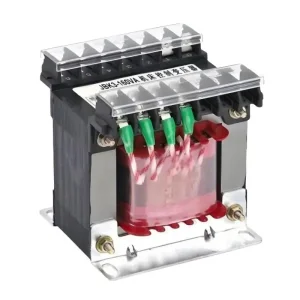
Modern machine tool controls and robotic welding units introduce steep back-EMF currents and voltage spikes. Implementing dedicated JBK3 control transformers and JSG servo isolation transformers mitigates common-mode noise, prevents servo driver burnout, and decouples sensitive PLC automation logic from noisy plant buses.
Solar Inverters & Storage Microgrids
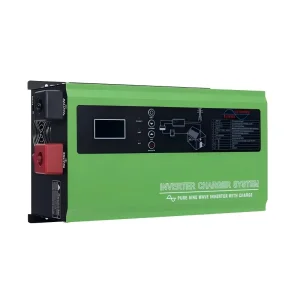
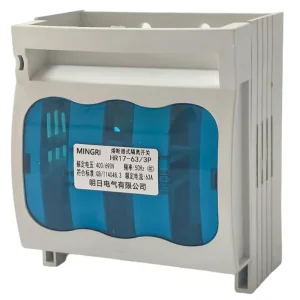
Photovoltaic installations require bidirectional synchronization and rapid disconnect capabilities. Utilizing FZ(R)N21C-40.5D vacuum load switches alongside hybrid inverters (1 kW – 12 kW) and ZGS11-12 American-type combined substations guarantees seamless islanding, anti-islanding, and step-up conversion under variable solar irradiance.
Underground Metro & Rail Traction Power
Traction substations experience extreme cyclical overloads and transient switching surges. Sealed XGN15-12 / XGN15-24 Ring Main Units and flame-retardant SC(B)10 cast resin dry-type transformers provide zero-fire-hazard operation within confined underground tunnels with zero toxic smoke emissions (F1 class fire resistance).
Emerging Technological Trends in Three-Phase Apparatus
The convergence of eco-friendly dielectric media, Internet-of-Energy (IoE) sensors, and solid-state power conversion is reshaping industrial distribution.
SF6-Free Eco-Gas Insulation
With stringent European F-Gas regulations and worldwide emissions targets, our next-generation MRHBXGN-12(F) switchgear replaces sulfur hexafluoride (GWP = 23,500) with synthetic dry air and specialized carbon-neutral gas blends, eliminating greenhouse liability without compromising dielectric strength or arc-quenching speed.
IoT-Enabled Predictive Health Monitoring
Traditional scheduled maintenance is being superseded by real-time acoustic emission sensing, optical fiber temperature measurement on busbar joints, and wireless partial discharge (PD) monitoring. Inboard microprocessor nodes predict contact erosion and insulation aging before catastrophic short-circuits occur.
High-Frequency Magnetic Cores
Through amorphous metal alloys and nano-crystalline ribbon windings, transformer no-load core losses are slashed by up to 70% relative to conventional silicon steel cores. This is critical for 24/7 commercial facilities prioritizing strict Tier 4 energy efficiency and LEED zero-carbon certifications.
Engineering Specifications for Global Tenders
Key parameters international procurement directors and chief electrical engineers must clarify before finalizing three-phase supply contracts.
1. SLD & Short-Circuit Withstand
Provide complete Single Line Diagrams (SLD). Define the symmetrical short-circuit breaking capacity (e.g., 20 kA, 25 kA, or 31.5 kA for 3s or 4s) to ensure the busbar bracing and vacuum bottles withstand peak dynamic electrodynamic forces (up to 2.5× rated rms).
2. BIL & Altitude Derating
Specify the Basic Impulse Insulation Level (BIL). For installations above 1,000 meters altitude, atmospheric air density decreases, demanding enlarged internal phase clearances or increased gas envelope pressure to maintain dielectric breakdown resistance.
3. Loss Evaluation (TCO)
Evaluate total cost of ownership by specifying capitalization formulas for No-Load (Po) and Load Losses (Pk). Precision wound SC(B) transformers often pay back their purchase price differentials within 24 months through minimized thermal dissipation.
4. Internal Arc Classification (IAC)
For personnel safety in switchgear galleries, demand IAC AFLR ratings (typically 12.5 kA to 25 kA for 1s). This ensures that accidental internal arcs vent safely upwards through dedicated pressure release flaps rather than endangering operators.
Frequently Asked Technical & Commercial Questions
Comprehensive answers addressing insulation integrity, custom modifications, compliance, and warranty guarantees for international buyers.
Q What determines whether a project should select SF6 GIS, Air-Insulated (AIS), or Solid-Insulated Switchgear?
The decision balances spatial footprint, ambient climate, and local environmental policy. SF6 Gas-Insulated Switchgear (e.g., RM6, SafeRing, XGN15) features an entirely sealed hermetic stainless steel tank, making it impervious to moisture, salt spray, and extreme dust—ideal for offshore wind, coastal plants, or compact urban substations. AIS (e.g., KYN28) requires larger switchrooms but offers easier manual maintenance and withdrawable circuit breakers. Solid-insulated switchgear provides complete SF6-free compliance by encapsulating the main circuit in solid epoxy resin.
Q How do Chinese factories handle customized voltage ratings like 440V, 480V, 3.3kV, or 6.6kV?
Our engineering design department routinely configures dual-voltage and non-standard transformation systems. Because coil-winding CNC programs and transformer core geometry are managed in-house, custom secondary tapping voltages (e.g., 480V/277V for North American industrial projects, 380V/220V for European systems, or specialized 200V Japanese standard servo supplies) require only single-line design confirmation without tooling delays.
Q What third-party type test reports are available for high-voltage vacuum circuit breakers?
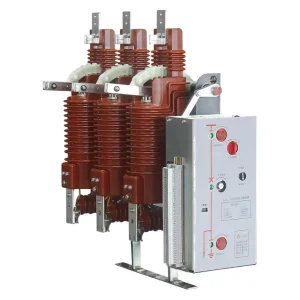
All flagship medium-voltage vacuum breakers (such as the VSB-12 and VSY2-12GD) are type-tested in accredited ISO/IEC 17025 laboratories (such as XIHARI or voluntary testing to KEMA standards). Test certificates cover short-time withstand current, peak withstand current, temperature rise limits, mechanical endurance (up to 10,000 operations, class M2), and capacitive current switching (class C2).
Q What is the advantage of Cast Resin Dry-Type Transformers (SCB series) over Oil-Immersed Transformers?
Cast resin dry-type transformers eliminate liquid dielectric oils entirely, eradicating risks of environmental soil contamination, explosion, or combustion. Classified as F1 (fire behavior), C2 (climatic), and E2 (environmental), they can be installed inside high-occupancy commercial towers, hospitals, and underground basements without building costly explosion-proof containment blast walls or drainage sumps.
Q How are three-phase electrical panels protected against phase loss and voltage unbalance?
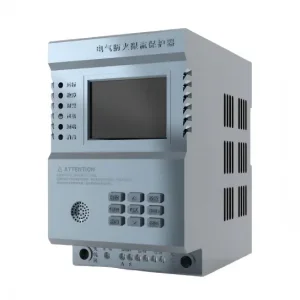
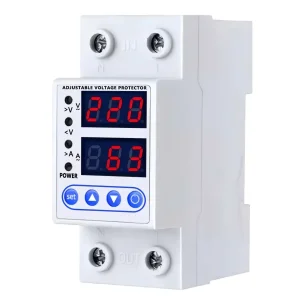
Unbalanced three-phase voltages generate negative-sequence currents, causing excessive rotor heating in motors. Our advanced three-phase adjustable voltage protectors continuously sample true RMS phase voltages. Upon detecting phase missing, under-voltage, or unbalance thresholds exceeding user-set tolerances (e.g., >5%), internal relays trigger millisecond-speed trip sequences with visual LED fault diagnostic codes.
Q What documentation and support are provided during international commissioning?
Every equipment shipment is accompanied by comprehensive Factory Acceptance Test (FAT) dossiers, calibrated routine test certificates, terminal wiring schematics, and bilingual installation manuals. For overseas EPC commissioning, our senior field application engineering team provides remote high-definition video commissioning supervision and on-site factory training.
Integrated Substations, RMU Switchgear & Protection Devices
Comprehensive secondary distribution solutions, combined substations, resin cast transformers, and hybrid solar generation interfaces.