Direct factory-engineered components, vacuum interruption systems, and switchboard matrices fully tested to IEC and GB utility standards.
An authoritative analysis of sulfur hexafluoride (SF6) applications, supply chain integrity, and manufacturing rigor within the international electrical grid infrastructure.
Thermodynamic & Quenching Prowess
Sulfur hexafluoride remains an unmatched dielectric medium, possessing an electronegativity that swiftly captures free electrons to extinguish electric arcs within microseconds. Operating at approximately three times the dielectric strength of atmospheric air at ambient pressure, SF6 permits substantial miniaturization of switchgear architecture. Leading manufacturers leverage high-purity (≥99.99%) grade gas inside laser-welded stainless steel tanks to withstand peak short-circuit clearing events without physical degradation.
Automated Quality Assurances
World-class SF6 production facilities integrate closed-loop evacuation and automated helium mass spectrometry for rigorous micro-leak detection. In compliance with strict international mandates, modern assembly plants enforce automated gas handling modules that virtually eliminate venting during processing. Each containment vessel undergoes static chamber stress testing, ensuring leak tolerances remain under 0.1% annually across full lifecycle spans.
Severe Environmental Resilience
By encasing busbars, disconnectors, and vacuum circuit breakers in hermetically sealed, gas-filled volumes, high-grade SF6 equipment guarantees absolute immunity to atmospheric moisture, industrial chemical contaminants, airborne sand, and saline intrusion. This provides unmatched operational uptime for substations sited along corrosive maritime coasts, remote desert utility plots, and high-altitude mining networks.
Tailored, application-grade power topologies engineered to solve thermal dissipation, spatial limitations, and transient stability challenges across major industries.
Dense Urban Microgrids & Subterranean Distribution
Real estate scarcity in metropolitan areas demands extremely compact switchgear. Standard Air-Insulated Switchgear (AIS) requires large electrical clearances, rendering inner-city substations prohibitively expensive. Gas-Insulated Ring Main Units (RMUs) cut equipment footprints by upwards of 70%, permitting installation inside basement vaults, high-rise utility corridors, and compact street-level enclosures without compromising personal safety or arc fault containment.
Utility-Scale Photovoltaic & Wind Renewable Plants
Renewable installations generate severe harmonic pollution, continuous operational duty, and frequent transient overvoltages. Integrated step-up substations (such as ZGS11-Z.T platforms) coupled with SF6/vacuum switching components deliver superior short-circuit resilience. Complete isolation protects sensitive trip modules from extreme ambient temperature fluctuations, direct solar radiation, and desert dust ingestion typical in expansive solar fields.
Heavy Metallurgical, Mining & Petrochemical Complexes
Corrosive gases, caustic vapors, and heavy particulate loads in chemical refining and underground extraction rapidly degrade copper conductors in standard open-air panels. Hermetic SF6 enclosures safeguard critical conductive pathways, trip coils, and disconnect mechanisms, completely eliminating flashover risks and reducing maintenance interventions over a multi-decade operational timeline.
Balancing extreme operational dependability with next-generation F-gas regulations, eco-gas development, and intelligent digital fleet monitoring.
Phase 1: Zero-Leakage Hermetics
Refining robotic laser welding, double O-ring EPDM seals, and non-destructive automated acoustic testing. Advanced digital IoT manometers continuously broadcast temperature-compensated gas pressure to cloud SCADA platforms, preventing catastrophic outages through predictive analytics.
Phase 2: Closed-Loop Gas Reclamation
Implementation of certified lifecycle reclamation processes. From factory floor charging to field retrofitting and decommissioning, dedicated mobile recovery plants purify reclaimed SF6 gas back to IEC 60480 standards, ensuring zero atmospheric release throughout switchgear lifespans.
Phase 3: Eco-Efficient Alternatives
Active scaling of next-generation solid-insulated switchgear (SIS) and eco-gas blends (including technical air, synthetic air, and C4-FN mixtures). Developing backward-compatible dimensional layouts that allow utilities to transition cleanly to low-GWP solutions without redesigning civil substation foundations.
Integrated medium- and low-voltage electrical infrastructures designed for EPC contractors, power utilities, and industrial plant engineers.
Prefabricated & Compact Substations
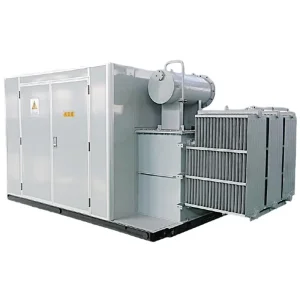
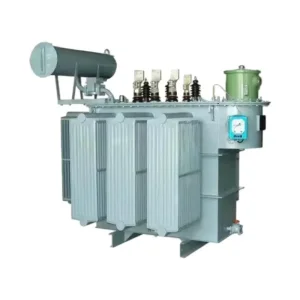
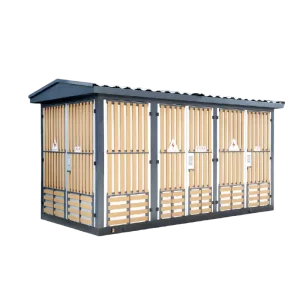
Factory-integrated package substations (European YB and American ZGS designs) harmonize MV switchgear, high-efficiency oil or dry-type transformers, and LV distribution banks in a rugged, weather-resistant outer enclosure. Pre-wired, pre-tested, and rapidly deployed, these units drastically shrink on-site construction timelines and civil works investments.
- Rated voltages spanning 10 kV, 24 kV, and 40.5 kV configurations.
- Customized internal safety baffles with automated pressure relief channels.
- Dual-shell thermal insulation to prevent internal condensation.
Smart Medium-Voltage Switchgear Lines
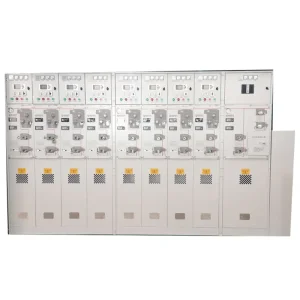
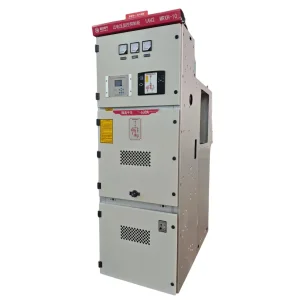
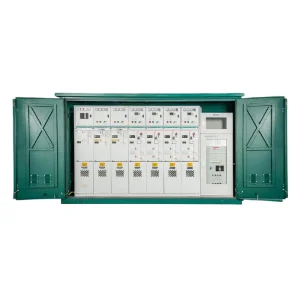
Including withdrawable metal-clad KYN28 switchgear and fully sealed SafeRing/RM6 compact rings, these systems feature vacuum circuit breakers paired with comprehensive digital relay protection. Engineered for smooth integration with smart grid standards including IEC 61850 and Modbus protocols for real-time telemetry.
- Five-fold mechanical safety interlocks to prevent operator hazards.
- Motorized switching capabilities for autonomous, centralized feeder control.
- Modular bus extension designs enabling straightforward bay expansion.
Integrated Low-Voltage Distribution & Protection
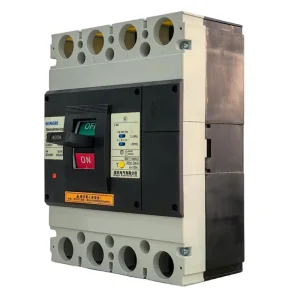
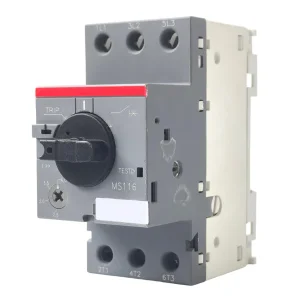
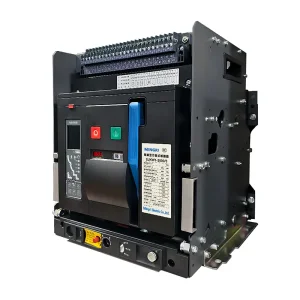
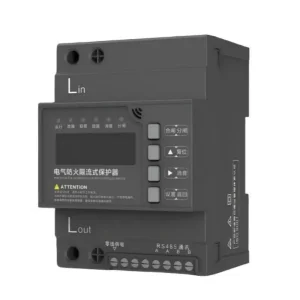
Downstream energy protection requires coordination with incoming medium-voltage switchboards. Intelligent Universal Circuit Breakers (such as SJKW1-2000), Earth Leakage units, and current-limiting devices work in harmony to prevent cascading blackouts, isolate arc faults within milliseconds, and preserve uninterrupted operation in mission-critical facilities.
- Complete discrimination across short-circuit and thermal overcurrents.
- Direct busbar compatibility with MNS, GCS, and GCK electrical switchboards.
- Advanced trip controllers with real-time oscillography capture.
Clear, authoritative technical answers addressing specification criteria, environmental compliances, and factory acceptance procedures.
What distinguishes an SF6-insulated RMU from an air-insulated (AIS) panel?
SF6-insulated Ring Main Units seal critical busbars, switches, and disconnect mechanisms inside a hermetic gas container. This dramatically decreases phase-to-phase and phase-to-ground clearance distances, shrinking the panel envelope by up to 70%. Furthermore, because the primary conductors operate in an inert gas environment, the unit is entirely impervious to ambient humidity, salt spray, and atmospheric pollutants, ensuring virtually maintenance-free operation across decades.
How do leading factories ensure gas tightness and prevent micro-leaks?
Premier switchgear manufacturing facilities employ automated robotic laser or TIG welding processes on marine-grade stainless steel tanks. Once sealed, units undergo high-sensitivity vacuum helium mass spectrometry testing capable of detecting leakage thresholds well under 0.1% per year. Each chamber is outfitted with temperature-compensated pressure gauges or integrated sensors that flag the slightest pressure drops to SCADA control rooms.
What documentation should buyers specify when sourcing medium-voltage gear?
Global procurement teams should demand comprehensive type test reports from accredited independent laboratories (such as KEMA, CESI, or certified national high-voltage testing centers) validating short-time withstand current, internal arc classification (IAC), lightning impulse withstand levels, and mechanical endurance. Detailed single-line diagrams (SLD), protection relay configurations, and ISO 9001/14001 factory quality audit records must also accompany technical submissions.
How are changing international F-gas regulations affecting switchgear procurement?
Tightening F-gas policies, particularly across the European Union, are establishing phase-out timelines for high-GWP gases in medium-voltage installations. Leading global manufacturers address this through parallel engineering tracks: continuing high-reliability, zero-leakage SF6 production for critical infrastructure applications, while simultaneously developing solid-insulated switchgear (SIS) and eco-friendly gas mixtures (air/C4-FN) designed to seamlessly replace conventional layouts.
Comprehensive field-proven apparatus designed for robust circuit isolation, automatic network reconfiguration, and plant protection.