Integrated Switchgear & Protection Portfolio
Precision Power Control & Voltage Distribution Solutions
Engineered for harsh utility environments, critical data centers, and heavy processing plants requiring certified galvanic isolation and rapid fault current protection.
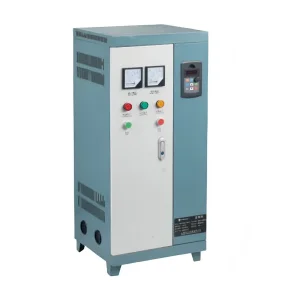
ODM MC3000 Series Variable Frequency Cabinet With Power Manufacturers, Company
View Product Specs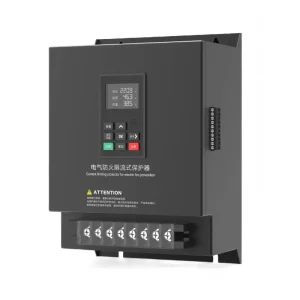
Wholesale 80A Three-Phase Intelligent Electrical Fire Current-Limiting Protector Manufacturers, Companies
View Product Specs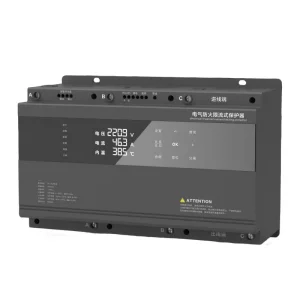
Wholesale 160A Three-Phase Molded Case Fire Protection Limiter Factory, Company
View Product Specs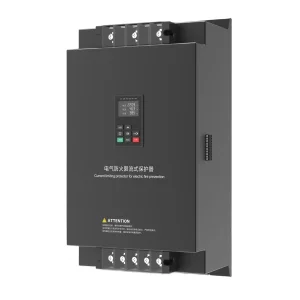
ODM 250A three phase electrical fire prevention current limiting protector Manufacturers, Factories
View Product Specs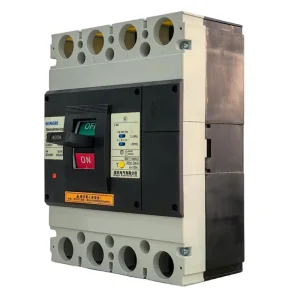
OEM SJKM3L ELCB Earth Leakage Circuit Breaker - High Sensitivity 230V/415V from China Suppliers and Factory Suppliers, Factory
View Product Specs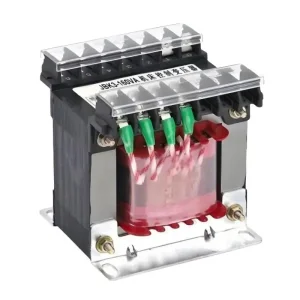
OEM High-Efficiency JBK3 Series Machine Tool Control Transformers - China Suppliers & Factory with Pure Copper Coils Manufacturers, Companies
View Product Specs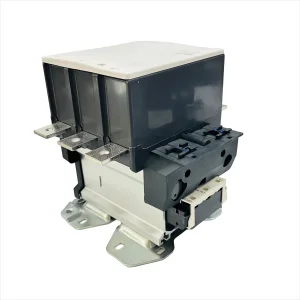
China CJX2-F Series AC Contactor for Motor Control Suppliers, Manufacturer
View Product Specs
Technical Architecture & Fundamentals
Kinematic Mechanics & Arc-Interruption in QSA Technology
Exploring the electrodynamic architecture that positions high-performance QSA Fuse Switch Disconnectors at the pinnacle of low-voltage safety and switching reliability.
Double-Break Contact Geometry
High-grade QSA disconnectors deploy a dual-break contact arrangement on each phase. When manually tripped or driven by fuse exhaustion, the current path physically severs at two series points. This doubles the effective arc length instantly, cuts recovery voltage gradients across contacts in half, and eliminates back-feed arcing hazards during maintenance interventions.
Independent Manual Spring Toggle
Operational switching speed must never depend on operator physical velocity. QSA units integrate an over-center, spring-loaded quick-make / quick-break toggle assembly. Once the mechanical trigger threshold is crossed, stored torsional kinetic energy forces contacts open or closed in under 12 milliseconds, suppressing contact teasing and erosion under AC-23A conditions.
DMC/SMC Thermoset Enclosures
Molded structural enclosures utilize high-strength, glass-fiber reinforced unsaturated polyester dough molding compound (DMC) or sheet molding compound (SMC). Formulated to UL94 V-0 flame retardance and high Comparative Tracking Index (CTI > 600V), the housing retains structural integrity during catastrophic 120 kA fault let-through thermal surges without dielectric flashover.
| Electrical Parameter | DIN NH00 / BS 88 Frame | DIN NH1 / NH2 Frame | DIN NH3 / Heavy Duty Frame | International Standard Baseline |
|---|---|---|---|---|
| Rated Operational Current (Ie) | 32A – 160A | 200A – 400A | 500A – 800A (1250A parallel) | IEC 60947-3 / EN 60947-3 |
| Rated Insulation Voltage (Ui) | 800 V AC / 1000 V DC | 1000 V AC / 1000 V DC | 1000 V AC / 1500 V DC | IEC 60664-1 Degree of Pollution 3 |
| Rated Impulse Withstand (Uimp) | 8 kV | 12 kV | 12 kV | IEC 60947-1 Overvoltage Cat. IV |
| Conditional Short-Circuit Current (Icc) | 100 kA @ 500V / 80 kA @ 690V | 120 kA @ 500V / 100 kA @ 690V | 120 kA @ 500V / 100 kA @ 690V | Backed with HRC gG/aM Fuse Links |
| Utilization Switching Category | AC-22B to AC-23A | AC-23A / DC-22B | AC-23A / DC-23B | IEC 60947-3 Motor & Resistive Duty |
| Terminal Screws & Tightening Torque | M8 (12 – 15 Nm) | M10 (25 – 30 Nm) | M12 (35 – 40 Nm) | ISO metric Grade 8.8 High-Tensile |
Enterprise Procurement Framework
Global Sourcing, Total Cost of Ownership (TCO) & Supplier Auditing
Critical technical considerations for supply chain leaders, EPC project managers, and switchgear manufacturers selecting enterprise-level QSA partners.
Direct Material Quality
Electrometallurgical Integrity & Plating Standards
A major differentiator between budget switchgear and high-reliability QSA manufacturers lies in raw contact metallurgy. Substandard vendors use brass or low-conductivity alloy substitutes that run hot under full-load continuous service.
- Electrolytic Copper Conductors: Minimum 99.95% IACS electrical conductivity ensures nominal dissipation (low millivolt drop).
- Silver Plating Thickness: Minimum 15μm to 20μm electroplated hard silver layer to inhibit micro-fretting and terminal oxidization.
- Stainless Steel Compression Springs: AISI 302/304 spring steel ensuring zero mechanical tension relaxation over a 20-year lifespan.
Lifecycle Economics
Total Cost of Ownership (TCO) vs. Initial CapEx
While unbranded switchgear can lower upfront panel-building bills by 10–15%, life-cycle operating costs exponentially increase due to thermographic anomalies, unplanned plant outages, and compliance rejection by asset insurers.
- Watt-Loss Efficiency: Premium contact designs reduce internal resistance, lowering yearly kilowatt-hour waste in enclosed switchboards.
- Modular Fuse Replacement: Ergonomically isolated fuse carriages permit fast changeouts without specialized tooling, slashing MTTR.
- Accredited Third-Party Test Certificates: Valid ASTA, KEMA, or DEKRA certification ensures zero regulatory bottlenecks at project handover.
Cross-Sector Industrial Deployment
Engineered Resilience Across Demanding Global Operating Environments
From offshore wind balance-of-plant systems to hyperscale data infrastructure, discover how advanced QSA units solve thermal, electrical, and physical fault challenges.
Renewable Energy & BESS
Solar PV central inverters and Battery Energy Storage Systems (BESS) require non-polarized disconnectors capable of clearing bidirectional DC faults. Customized QSA DC variants handle severe 1000V to 1500V DC stresses, extinguishing direct current arcs via magnetic blow-out coils and extended de-ion plates where lack of natural zero-crossing makes ordinary breakers fail.
Hyperscale Data Centers
Mission-critical server halls demand continuous uptime and selective coordination. QSA units fitted with gG low-loss fuse links offer absolute discrimination upstream and downstream. In the event of localized branch shorts, high-speed fuse action clears faults in under 3 milliseconds, containing let-through energy ($I^2t$) without tripping main busbar breakers.
Petrochemical & Mining Plants
Aggressive atmospheres containing airborne sulfur, moisture, and fine mining dust require enclosures rated up to IP65 with interlocking external padlockable handles. QSA assemblies ensure visible break verification through transparent polycarbonate viewing windows, ensuring hazardous plant technicians can lock out feeds safely.
Industry Roadmap 2025–2030
The Future of Intelligent, Eco-Designed Fuse Switch Disconnectors
Strategic vectors steering the transition from mechanical standalone disconnectors to smart, cloud-monitored, circular electrical distribution assets.
IoT Thermal & Micro-Arc Sensing
Next-generation QSA units are embedding non-invasive wireless SAW (Surface Acoustic Wave) temperature sensors directly onto the line-side fuse clips. Real-time thermal gradient tracking streams data via Modbus/BACnet or NB-IoT, predicting loose terminal bolts, contact film sulfidation, and phase unbalance weeks before thermal runaway occurs.
Zero-Halogen Circular Composites
Global environmental mandates (EU RoHS 3, REACH, and WEEE) are driving switchgear manufacturers to abandon toxic brominated flame retardants. Next-gen DMC housings utilize mineral-based, non-halogenated matrices coupled with bio-resins that maintain UL94 V-0 ratings while offering 100% post-lifecycle granulate recyclability.
Electromechanical Hybrid Tripping
Bridging the gap between circuit breakers and disconnectors, smart QSA models combine ultra-reliable HRC fuse short-circuit clearing with motorized shunt-trip actuators. This enables automated load shedding, fire alarm interlock tripping, and remote SCADA isolation without forfeiting the fail-safe 120kA rupturing capacity of the cartridge fuse.
Compliance, Quality & Global Supply Continuity
Factory Verification, Quality Standards & Custom OEM/ODM Capabilities
Bridging geographical boundaries through stringent factory acceptance testing (FAT), customized shaft designs, and comprehensive international certifications.
International Norms
Type-Testing Rigor & Testing Laboratories
A genuine industrial QSA product must hold comprehensive type-test reports certified by international bodies like ILAC-MRA member laboratories. Key mandatory evaluations include:
- Temperature Rise Verification: Continuous testing at 100% nominal current ensuring busbar and cable terminal temperature rise remains strictly under 70K above ambient (IEC 60947-1 Table 2).
- Short-Time Withstand ($I_{cw}$): Verifying copper bridge strength under extreme electromagnetic repulsive forces during un-cleared feeder faults.
- Dielectric Properties: Power-frequency withstand voltage testing (up to 3.5 kV AC for 1 minute) and 12 kV impulse withstand with no breakdown.
Flexible Engineering
OEM/ODM Customization for Switchgear Builders
Every regional electrical standard and switchboard enclosure requires tailor-made mounting layouts. Tier-1 QSA manufacturing partners support flexible configuration:
- Dual Fuse Compatibility: Interchangeable clip adapters for European DIN NH knife-blade links or British Standard (BS 88) bolted/offset-tag links.
- Extended Operating Shafts & Interlocks: Depth-adjustable shafts ranging from 150mm to 500mm with door-interlock defeatable mechanisms.
- Integrated Microswitch Auxiliaries: Early-break auxiliary contacts (1NO+1NC or 2NO+2NC) for VFD motor inverter interlocks and alarm signaling.
Technical Knowledge Base & FAQ
Frequently Asked Engineering & Procurement Questions
Get authoritative, in-depth answers regarding specifications, safety certifications, operational mechanics, and selection criteria for QSA switch disconnectors.
What is the technical definition and advantage of a "QSA" fuse switch disconnector?
"QSA" stands for Quick-make, Quick-break, Switch-fuse with Arc-control. Unlike conventional switch disconnectors that depend on downstream protection, a QSA integrates high-rupturing-capacity (HRC) fuses directly within the moving or fixed contact assembly. This design provides both manual on-load isolation under severe inductive stresses (AC-23A) and instantaneous passive clearing of short-circuits up to 120 kA without auxiliary control power.
How does AC-23A utilization differ from AC-21A or AC-22A?
Utilization categories define switching severity under IEC 60947-3. AC-21A applies to switching resistive loads with minimal power factor degradation. AC-22A covers mixed resistive and inductive loads. In contrast, AC-23A requires the disconnector to repeatedly make and break heavy motor loads (inductive currents with power factors as low as 0.35) up to 6–8 times rated operational current, guaranteeing safety when an operator interrupts a stalled motor under full load.
Why is double-break architecture critical for high fault currents?
In a single-break switch, the entire recovery voltage across the opening contacts must be extinguished across one air gap, requiring bulky arc chutes and prolonging arc duration. Double-break technology introduces two simultaneous series gaps per pole, cutting the recovery voltage gradient across each gap in half. This rapidly accelerates de-ionization, diminishes contact pitting, and provides guaranteed galvanic isolation on both the line and load terminals of the fuse link.
What derating guidelines apply when mounting QSA switches inside enclosed panels?
When installing QSA switch disconnectors inside high-density IP54/IP65 electrical enclosures, ambient internal air often reaches 50°C to 55°C. Designers must apply a thermal derating factor (typically 0.8 to 0.85 of $I_{th}$), ensure appropriate conductor cross-sections to conduct heat away from terminals, and leave adequate horizontal ventilation clearance between adjacent devices to prevent hotspot accumulation.
Can QSA disconnectors be utilized in high-voltage DC applications?
Yes, dedicated DC-rated QSA variants are designed with specific pole-series bridging links. Because direct current lacks an intrinsic zero-crossing point, the arc does not self-extinguish as readily as in AC. Series-connecting 3 or 4 poles divides the DC voltage across multiple arc chambers equipped with permanent magnetic blowout magnets that drive the DC arc into cooling splitters rapidly.
What are the maintenance requirements for industrial QSA disconnectors?
Thanks to self-cleaning wipe contacts and sealed grease mechanisms, QSA units are virtually maintenance-free under normal operating environments. Standard maintenance routines involve periodic thermographic scanning under peak load, checking torque on cable connections with a calibrated torque wrench every 24 months, and inspecting the arc chutes for carbonization following a severe short-circuit interruption.
Complete Transmission, Switchgear & Substation Portfolio
Certified Auxiliary, Transformer & Distribution Assemblies
Explore our broader medium-to-low voltage apparatus line engineered in Yueqing, China, serving utility networks, manufacturing plants, and regional substations globally.
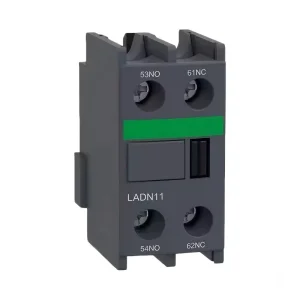
ODM LADN 1NO 1NC Auxiliary Contact For AC Contactor Manufacturers, Manufacturer
View Product Specs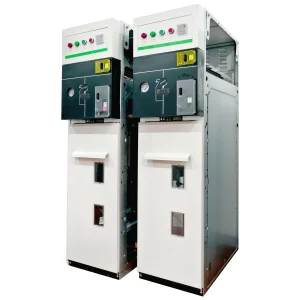
High-Quality XGN15-24 Medium Voltage Switchgear SF6 Insulated Ring Main Unit - China Suppliers Factory for Reliable Power Distribution Manufacturers, Factories
View Product Specs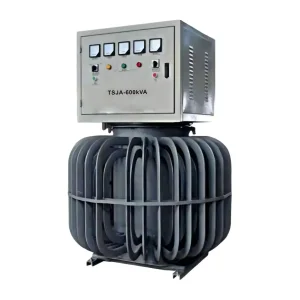
OEM TSJA Three/Single Phase Seriesoil immersed voltage stabilizer Supplier, Manufacturers
View Product Specs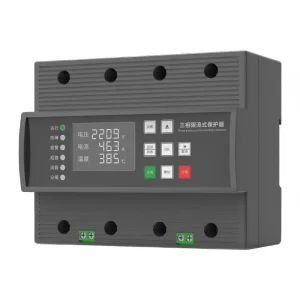
Wholesale 80125A Economic Three-phase Current-limiting Protector Manufacturer, Company
View Product Specs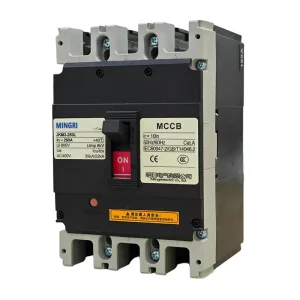
High-Quality SJKM3 MCCB Moulded Case Circuit Breaker with Overload Protection Supplier, Company
View Product Specs
High-Quality JBK3 series machine tool control transformers Manufacturer, Factory
View Product Specs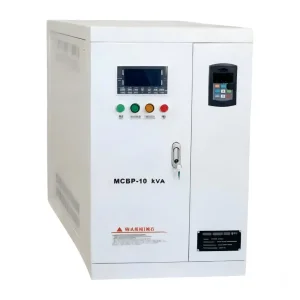
OEM MCBP Series Variable Frequency Power Supply Manufacturer, Factory
View Product Specs