Engineered Power Distribution & Switchgear Solutions
Precision-manufactured in Yueqing, China under ISO 9001, ISO 14001, and IEC type-certified methodologies. Designed for high operational safety, low total cost of ownership (TCO), and uncompromising grid reliability.
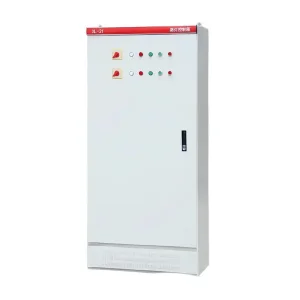
XL-21 Power Distribution Cabinet Low Voltage Switchgear
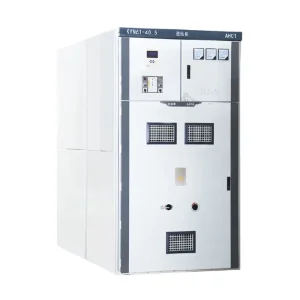
KYN61-40.5 Armoured Moving Type Metal Enclosed Switchgear
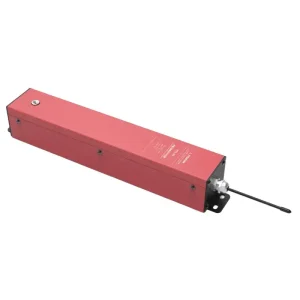
Intelligent Wireless Automatic Fire Extinguishing (Perfluorohexanone)
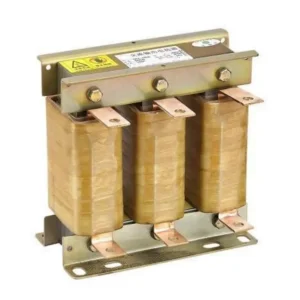
OEM Three-Phase Incoming & Outgoing Lines Power Reactor
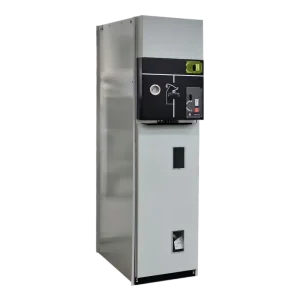
SM6 Modular Air-Insulated Medium Voltage Ring Main Unit
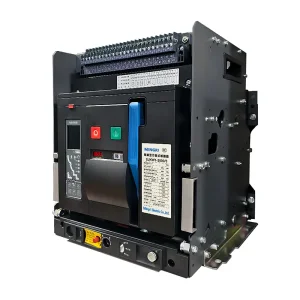
Intelligent Universal Air Circuit Breaker SJKW1-2000 Series
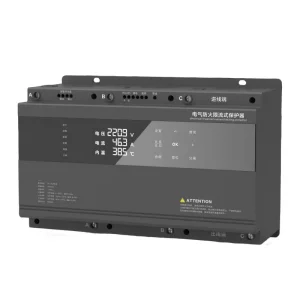
160A Three-Phase Fire Protection Current Limiter Device
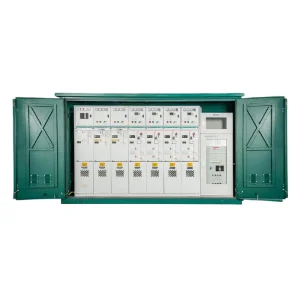
OEM High-Voltage Outdoor Intelligent Sectionalizing Switch Box
The Paradigm Shift in High-Efficiency Electrical Infrastructure
Balancing escalating fault-current levels, bidirectional power flows from distributed energy resources (DER), and stringent decarbonization mandates requires modern switchgear to deliver unprecedented physical resilience and digital agility.
Bidirectional Grid Flow & DER Integration
Conventional electrical distribution architectures were engineered around unidirectional power dissipation—from central generation plants out to passive consumers. Today, utility-scale photovoltaic arrays, commercial microgrids, and onshore/offshore wind assets inject intermittent capacity back into secondary distribution substations.
- Suppression of voltage fluctuations and dynamic harmonic distortions via integrated line reactors.
- Rapid directional overcurrent detection preventing nuisance feeder trips.
- Low-loss copper busbars configured for high cyclic current throughput.
Arc-Fault Containment & Operator Safety
Safety standards under IEC 62271-200 require Internal Arc Classification (IAC AFLR) capable of safely venting gases during 31.5 kA to 40 kA fault events. Switchgear envelopes must withstand peak thermal pressure surges while isolating sensitive control bays from hot plasma discharges.
- Precision pressure-relief flaps with mechanical interlocks and ceramic acoustic dampening.
- Perfluorohexanone automated localized fire suppression for instant switchboard extinguish.
- Robust segregation compartments (Busbar, Cable, Breaker, Instrument) using 2.0 mm Al-Zn sheet.
Thermal Density & Asset Longevity
As commercial hubs and data center server densities surge past 30 kW per rack, electrical switchgear must operate reliably in tightly contained footprints. Thermal expansion, skin-effect resistance in high-amperage lines, and contact degradation demand silver-plated electrolytic copper connections and continuous sensor telemetry.
- Contact resistance ratings held strictly below 35 μΩ across breaker tulips and joints.
- Passive convective thermal architecture dissipating heat without forced cooling failure points.
- Class M2 mechanical endurance exceeding 10,000 switching operations under IEC standards.
High-Efficiency Power Equipment in Mission-Critical Scenarios
From extreme-temperature desert photovoltaic substations to ultra-compact urban subterranean nodes, Mingri Electric equipment is customized to overcome aggressive environmental stressors and regulatory parameters.
Hyperscale Data Centers & Financial Compute Nodes
In Tier III and Tier IV computing infrastructure, power interruptions measured in milliseconds trigger catastrophic data corruption and revenue loss. Our SJKQ5 and SJKQ1 Automatic Transfer Switches (ATS), paired with high-capacity SJKW1 air circuit breakers, execute seamless transitions between grid utility feeds, onsite diesel gensets, and battery energy storage systems (BESS).
- Sub-cycle phase synchronization reducing inrush current during emergency generator cut-in.
- Microsecond-level arc flash detection optical loops initiating rapid tripping before plasma formation.
- Modbus-RTU and IEC 61850 protocol support for direct integration into Data Center Infrastructure Management (DCIM) consoles.
Renewable Energy: PV Step-Up Substations & Wind Collector Lines
Solar plants and wind turbine nacelles subject switchgear to relentless thermal cycling, extreme ambient temperatures (-30°C to +55°C), and corrosive dust ingress. Mingri's outdoor prefabricated compact substations (YB series) combine step-up transformers, KYN28/KYN61 MV switchgear, and XL-21 distribution boards inside C5-M marine-grade anti-corrosion enclosures.
- Sealed SF6 / solid-dielectric insulation preventing tracking in high-salinity and dusty environments.
- Precision harmonic filtering reactors preventing resonance generated by large-scale string inverters.
- Altitude-compensated insulation creepage distances configured for elevated high-plateau installations.
Heavy Industrial Manufacturing & Smelting Plants
Steel processing facilities, paper mills, and petrochemical refineries require heavy inductive motor starting capabilities and high-voltage circuit endurance. The MCR8 Series digital motor soft starters and ZN63A(VS1) vacuum circuit breakers buffer equipment against damaging voltage drops and peak transient stresses during motor ignition.
- Controlled torque ramping preventing water hammer in pumping stations and conveyor mechanical shearing.
- High short-circuit breaking capacity ($I_{cu}$ up to 100 kA) with instantaneous thermal-magnetic trips.
- Integrated zero-sequence current monitoring identifying subtle phase-to-ground insulation leakage.
High-Density Urban Substations & Underground Commercial Grids
Urban high-rises, metro transportation networks, and commercial hospital campuses require maximum power delivery per square meter. Our SM6 modular air-insulated RMUs and SafeRing compact gas-insulated switchgear enable multi-loop ring configurations within confined basement vaults while guaranteeing zero flammable oil contamination.
- Ultra-compact footprint: down to 375 mm panel width for standard 12 kV load-break switch units.
- Full mechanical interlock suites preventing human error during earthing, testing, and bus switching.
- Maintenance-free vacuum interrupters rated for 20- to 30-year operational lifetimes.
The Yueqing Ecosystem: Supply Chain Resilience & Speed-to-Market
How localized industrial clustering, comprehensive vertical integration, and robotic automation enable 4–6 week lead times—surpassing traditional global manufacturers without sacrificing rigorous IEC conformance.
Hyper-Localized Raw Material & Parts Sourcing
Situated in Yueqing, Zhejiang—the global capital of low- and medium-voltage electrical apparatus—Mingri Electric operates within a specialized 15 km supplier ecosystem. Silver contact metallurgy, spring operating mechanisms, epoxy resin casting, and vacuum interrupter ceramic seals are sourced and refined locally.
- Zero cross-border logistics friction on sub-components and specialized raw materials.
- Direct batch oversight over electrolytic copper purity (>99.95% IACS electrical conductivity).
- Immediate adaptation to dynamic metallurgical market fluctuations without shipping bottlenecks.
Rapid Prototyping & Flexible OEM/ODM
While legacy multinational vendors mandate 16 to 28 weeks for bespoke single-line diagram (SLD) engineering, Mingri Electric utilizes in-house parametric 3D CAD/CAM workflows, high-precision Salvagnini and Trumpf CNC sheet-metal laser stations, and automated busbar punching equipment.
- Comprehensive custom engineering approval sets delivered within 72 hours of SLD submission.
- Modular cell configurability allowing custom relay protection schemes (ABB, Schneider, SEL, or domestic).
- Expedited prototype-to-production runs supporting tight EPC contractor timelines.
Rigorous Multi-Tier Quality Assurance
Every switchgear line undergoes end-to-end electrical, mechanical, and safety verification prior to dispatch. We maintain calibrated in-house high-voltage testing laboratories alongside third-party accreditations from national testing stations such as KEMA, ASTA, and China National Quality Supervision and Inspection Centers.
- 100% routine dielectric power-frequency withstand and lightning impulse voltage testing.
- Partial discharge (PD) measurements kept below <5 pC at 1.1× rated phase-to-ground voltage.
- Automated mechanical travel, contact velocity, and synchronization trajectory profiling.
Engineering Roadmap: SF6-Free, Solid-State & AI-Enabled Diagnostics
The future of power equipment demands an aggressive phase-out of greenhouse gases, the migration from reactive maintenance to AI predictive asset health, and hyper-fast solid-state arc interruption.
Eco-Gas & Solid Dielectric Insulation
In alignment with EU F-gas regulations and global greenhouse gas commitments, Mingri Electric is driving the adoption of SF6-free medium-voltage ring main units. Utilizing synthetic dry air, C4-fluoronitrile gas mixtures, and vacuum interruption embedded in cycloaliphatic epoxy resin, our clean-gas units eliminate high-GWP liabilities.
- Global Warming Potential (GWP) reduced from 23,500 down to < 1.
- Zero toxic decomposition byproduct risks during high-energy arc flash events.
- Full mechanical interchangeability with legacy RM6 and SafeRing dimensional footprints.
AI Edge Condition Monitoring & IoT Sensing
Moving beyond scheduled calendar maintenance, Mingri's smart switchgear integrates continuous embedded fiber-optic temperature sensors on primary busbar joints, high-frequency current transformers (HFCT) for online partial discharge detection, and mechanical wear analytics on circuit breaker trip coils.
- Edge compute modules executing predictive anomaly scoring to forecast remaining asset life.
- Wireless SAW (Surface Acoustic Wave) temperature probes immune to electromagnetic interference.
- Automated warning telemetry sent via IEC 61850 MMS and encrypted MQTT to remote operations teams.
Hybrid Solid-State DC Protection
As microgrids transition to direct DC bus couplings for electric vehicle charging hubs and battery energy storage, AC zero-crossing breaking mechanics become obsolete. Mingri Electric's R&D division is developing hybrid solid-state circuit interrupters capable of terminating high-energy DC faults within 500 microseconds.
- Silicon Carbide (SiC) power semiconductors paired with ultra-fast galvanic isolators.
- Zero arc generation during high-fault current interruption at voltages up to 1500 V DC.
- Extreme thermal throttling supporting continuous high-power rapid charging infrastructure.
| Equipment Architecture | Rated Voltage (kV) | Insulation Medium | Short-Circuit Breaking | Primary Industry Use Case |
|---|---|---|---|---|
| SM6 Modular Series | 12 – 24 kV | Air / SF6 Hybrid | 20 kA / 3s | Urban Distribution, Commercial Buildings, Substation RMUs |
| KYN28-24 Metal-Clad | 12 – 24 kV | Air / Vacuum Interrupter | 25 – 31.5 kA / 4s | Heavy Industry, Power Plants, Central Utilities |
| KYN61-40.5 Heavy HV | 36 – 40.5 kV | Air / Vacuum Interrupter | 25 – 31.5 kA / 4s | Grid Subtransmission, Solar Collector Substations |
| SJKW1 Intelligent ACB | 0.4 – 0.69 kV | Air Quenching Chutes | 50 – 100 kA (Icu) | Low-Voltage Main Distribution, Data Center Power Trains |
| YB Prefabricated Substation | 12 – 40.5 kV / 0.4 kV | Oil/Dry Transformer + MV/LV | Configurable to Grid | Photovoltaic Farms, Wind Arrays, Urban Public Parks |
Localized Support, Engineering Approvals & Compliance
Navigating cross-border electrical grid codes requires rigorous design compliance, standardized technical documentation, and rapid multilingual technical field support.
Global Standards Conformance
All Mingri equipment is engineered to meet or exceed IEC 62271-1, IEC 62271-200 (MV switchgear), IEC 61439-1/2 (LV assemblies), IEEE C37, and GB standards. Type test reports confirm short-time withstand current, temperature rise limits, and mechanical endurance at verified international laboratories.
Seismic & Environmental De-Rating
We provide tailored engineering packages with altitude compensation calculations (for installations >1,000 m ASL up to 4,000 m), anti-condensation heating elements for humid tropical zones, and seismic shake-table qualifications complying with IEEE 693 High Performance criteria for seismic zones.
24/7 Remote Video Commissioning
Overseas buyers and EPC field crews receive uninterrupted technical guidance through our high-definition remote video commissioning hotline. Our senior field application engineers assist with relay logic parameterization, secondary circuit troubleshooting, and busbar torque checks in real time.
Specialized Protection, Switching & Soft Starting Systems
Modular components engineered to integrate into existing industrial switchboards, generator sets, and automation control networks with minimal retrofitting effort.
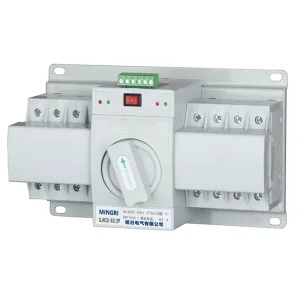
OEM SJKQ1 Manual / Automatic Dual-Use ATS Switch
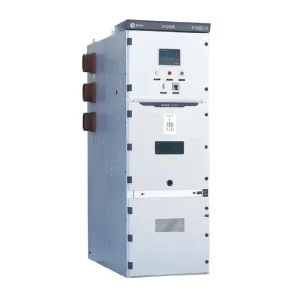
KYN28-24 Withdrawable Armored Metal-Enclosed Switchgear
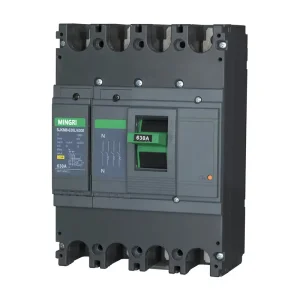
SJKM8 Moulded Case Circuit Breaker (100A to 630A Series)
SJKW1-2000 Intelligent Universal Air Circuit Breaker
ODM Intelligent Wireless Automatic Fire Extinguishing Unit
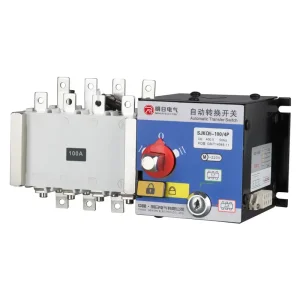
SJKQ5 ATS Dual-Power Automatic Transfer Switch (20A–3200A)
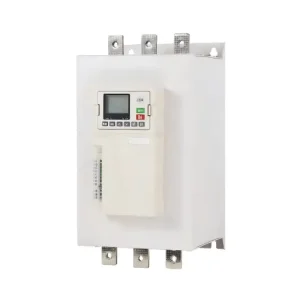
MCR8 Series Heavy-Duty Digital Motor Soft Starter
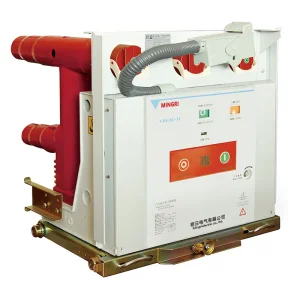
ZN63A(VS1)-12/24 Indoor High-Voltage Vacuum Circuit Breaker
Frequently Asked Technical & Engineering Questions
Essential insights into insulation selection, short-circuit current sizing, high-altitude de-rating, and international compliance factors.
The decision hinges primarily on physical footprint, environmental exposure, and lifecycle maintenance expectations. Air-Insulated Switchgear (such as our SM6 modular unit) is cost-effective, straightforward to maintain, and accommodates standard utility metering requirements in clean, temperature-moderated indoor rooms. In contrast, Gas-Insulated Switchgear (such as our SafeRing or RM6 series) hermetically encloses all live primary components in a sealed stainless steel tank filled with SF6 or synthetic eco-gas. GIS is mandatory for compact underground substations, seaside sites subject to heavy salt-spray condensation, dusty industrial mines, or regions where footprint restrictions make a 375–450 mm panel width indispensable.
At altitudes exceeding 1,000 m, lower atmospheric pressure decreases both air density and thermal convective cooling efficiency. This reduces the dielectric breakdown strength of external air insulation clearances and elevates conductor operating temperatures. For installations between 1,000 m and 4,000 m, Mingri Electric applies compensation factors in accordance with IEC 62271-1: increasing clearance distances across external busbars, deploying higher Basic Impulse Level (BIL) porcelain/epoxy bushings (e.g., specifying 24 kV BIL insulation levels on a 12 kV operating network), and de-rating thermal current capacity by approximately 1% per 100 m above 1,000 m unless enhanced busbar cross-sections are engineered.
KYN28-24 is engineered specifically for secondary and primary distribution at rated nominal voltages up to 24 kV with short-circuit breaking currents up to 31.5 kA. KYN61-40.5 is a substantially larger, heavily reinforced metal-clad switchgear designed for 40.5 kV subtransmission systems, heavy industrial smelters, and utility-scale solar/wind collector feeder lines. KYN61 uses larger withdrawable vacuum or SF6 circuit breaker trucks with phase center distances expanded to ≥300 mm to maintain dielectric creepage integrity under 40.5 kV power frequency withstand requirements (95 kV / 1 min dry, 185 kV BIL lightning impulse).
Perfluorohexanone (FK-5-1-12) is a clean chemical agent that is stored as a liquid and vaporizes instantly upon discharge. Mounted directly inside enclosed cable and breaker compartments, our wireless automatic fire extinguishing units continuously monitor temperature and ionization spikes. Upon detection of an incipient electrical arc or thermal runaway, the unit discharges the agent directly into the micro-environment within seconds, cooling the fault below its thermal combustion threshold without leaving conductive residues, damaging sensitive micro-relays, or depleting atmospheric oxygen in occupied substation rooms.
To generate a finalized engineering proposal, our engineering team requires: (1) Single-Line Diagram (SLD) depicting incoming/outgoing feeders and metering; (2) System nominal and operating voltage (e.g., 11 kV, 22 kV, 33 kV) and system frequency (50 Hz or 60 Hz); (3) Required symmetrical short-circuit breaking capacity (e.g., 20 kA, 25 kA, 31.5 kA for 3 seconds); (4) Enclosure environmental rating (IP4X, IP54, IP65) and indoor vs outdoor deployment; (5) Protection relay preferences (brand, model, protocol requirements such as IEC 61850 or Modbus); and (6) Cable entry location (bottom or top entry with specific conductor cross-sections).
The ZN63A(VS1) vacuum circuit breaker is certified as a Class M2 mechanical endurance device under IEC 62271-100 standards, validating over 10,000 full operational switching cycles (open-close-open) without mechanical adjustment or component replacement. Under rated short-circuit breaking current (such as 31.5 kA), the vacuum interrupter contacts are qualified for 50 full short-circuit interruptions (Class E2 electrical endurance), ensuring multi-decade performance under standard grid duty.
The SJKQ5 ATS features integrated programmable transition control logic. When switching between two asynchronous sources (e.g., utility grid and an emergency diesel generator), the controller monitors phase-angle differences and executes an in-phase transition if within safe synchronization limits (±10 electrical degrees). If phase displacement is severe, the SJKQ5 can be configured for a delayed transition (open-transition with an adjustable neutral-dwell time), allowing residual inductive motor back-EMF to decay to safe levels before reconnecting to the alternate power rail, eliminating high mechanical rotor shock and nuisance breaker tripping.
Yes. While the standard domestic designation is XL-21, our export configurations are fully upgraded to comply with IEC 61439-1/2 and can be engineered to incorporate NEMA / UL specifications upon request. Customizations include neutral and ground bus sizing (50% or 100% full rating for harmonic loads), Form 2b, 3b, or 4b internal segregation barriers, UL-recognized terminal blocks, CE-compliant circuit breakers, and tropicalized internal control wiring labeled with international alphanumeric wire numbering schemes.