Industrial Isolation, ATS & Medium Voltage Assemblies
Engineered in compliance with IEC 60947-3, IEC 60269, and GB/T 14048.3 standards to deliver superior breaking capacity, thermal endurance, and fail-safe circuit isolation.
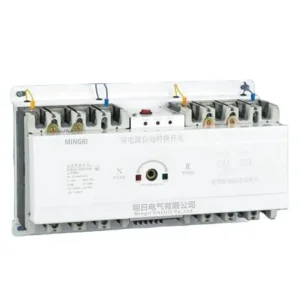
High-Quality SJKQ2 Dual Power Automatic Transfer Switch Factories, Company
View Technical Specs
Wholesale D165T LV Moulded Case Pole Mounted Breaker Digital Trip Unit Manufacturer, Factories
View Technical Specs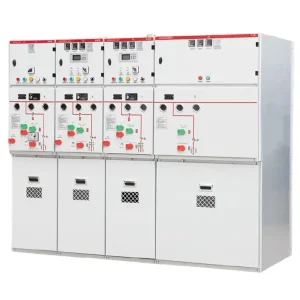
ODM GXGN-12 Solid-Insulated Fully Enclosed Ring Main Unit Switchgear Manufacturers, Company
View Technical Specs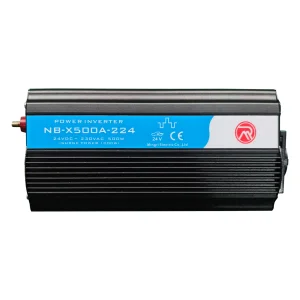
High-Quality 500W DC to AC Power Inverter X500 with EU Socket - China Suppliers & Factory
View Technical Specs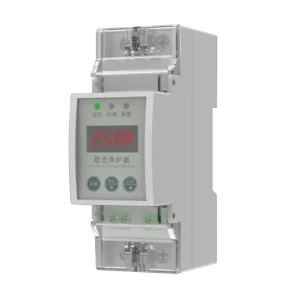
High-Quality China Economical Electrical Fire Current-Limiting Protector - Reliable Solutions
View Technical Specs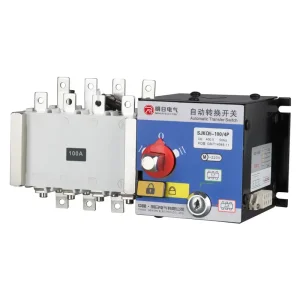
China SJKQ5 ATS Dual Power Automatic Transfer Switch - 20A-3200A Suppliers & Factory
View Technical Specs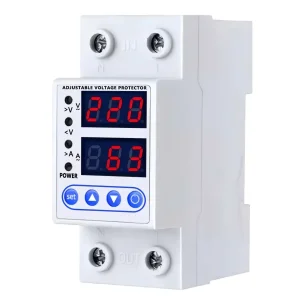
ODM Three-Phase Adjustable Voltage Protector with LED Screen Suppliers, Factory
View Technical Specs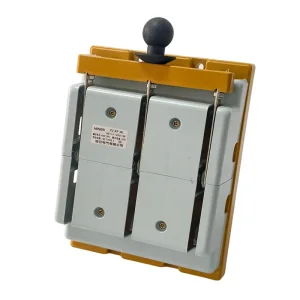
ODM China HD11F Double Throw Anti-Error Knife Switch Factory - Reliable 200A to 1500A Circuit Isolation
View Technical SpecsGlobal Landscape: Fuse Isolation Switches in Modern Grid & Industrial Systems
Understanding the transition from passive disconnectors to high-breaking-capacity, fast-extinguishing fuse-switch combinations in decentralized energy networks.
Grid Decarbonization & High Fault Energies
As utility infrastructures integrate intermittent solar PV and wind generation, short-circuit current dynamics experience high prospective peak stresses. Standard circuit breakers frequently lack the instantaneous energy-limiting speed of high-rupture-capacity (HRC) fuse links. Low-voltage fuse-switch disconnectors (such as NH00 to NH4a systems) and medium-voltage vacuum/load break switches with fuse combinations ensure sub-cycle interruption, preventing upstream equipment devastation and maintaining grid resilience.
Visible Physical Air-Gap Isolation
Under international occupational safety frameworks like OSHA and EN 50110, physical circuit disconnect verification is mandatory during maintenance shutdowns. Modern fuse isolation switches feature transparent inspection shields, rotary handles with multi-padlock hasps, and positive contact indication. When drawn or switched off, they guarantee an undeniable physical air gap, mitigating arc-flash hazards for maintenance technicians working on downstream low- and medium-voltage distribution switchboards.
Cost-to-Performance Ratio in Industrial Distribution
Compared to fully electronic molded case circuit breakers (MCCB) or withdrawable air circuit breakers (ACB), fuse isolation switches offer zero electronic calibration drift, immune immunity against electromagnetic interference (EMI), and unmatched prospective short-circuit withstand values up to 120kA at 400V/690V. This makes them the primary economic backbone in distribution feeder pillars, motor control centers (MCC), and utility transformer secondary protection.
Engineering Velocity: Chinese Factory Ecosystem & Supply Chain Economics
Why leading global EPCs, panel builders, and regional utilities source electrical isolation assemblies and switchgear from certified Chinese manufacturers.
Complete Vertical Supply Integration
Based in the epicenter of Yueqing, Zhejiang, manufacturing ecosystems contain copper continuous-casting plants, electrolytic silver plating lines, and high-strength Sheet Molding Compound (SMC/DMC) compression presses within a 15-kilometer radius. Raw material transit overhead is virtually non-existent, cutting procurement cycles by 60% compared to Western counterparts.
Automated Precision Tooling & Quality
Modern factories utilize multi-axis CNC punching, robotized fiber laser cutting, and automated continuous progressive stamping dies. Contacts feature 99.99% pure T2 electrical copper coated with 10–20 microns of silver plating, guaranteeing micro-ohm contact resistance, zero overheating under continuous full-load, and rigorous dimensional tolerance control.
Accelerated Lead Times & Rapid Scalability
Where Western OEMs demand 18 to 36 weeks lead time for custom switchgear enclosures and high-ampere fuse disconnectors, top Chinese suppliers maintain standardized component modularity. Pre-certified base frames and switch carriers enable custom-configured orders to ship within 2 to 4 weeks with full factory acceptance testing (FAT).
Stringent Type Testing & Accreditations
Elite manufacturers operate in-house accredited laboratories certified for temperature-rise limits, mechanical endurance cycles, and dielectric breakdown tests. Products strictly adhere to IEC 60947-3, IEC 60269, CE, and CCC criteria, backed by independent test reports from KEMA, TUV, and national electrical testing stations.
Technical Topologies: Fuse Isolation & Load Break Switch Architectures
A comparative engineering evaluation across low-voltage NH disconnectors, enclosed knife switches, and medium-voltage vacuum combination units.
| Switch Technology Class | Rated Voltage (Ue) | Current Range (In) | Arc Extinguishing Medium | Primary Industrial Use Case | Maintenance & Safety Profile |
|---|---|---|---|---|---|
| NH Fuse Switch Disconnector (Busbar / Base Mounted) | AC 400V / 690V | 160A – 1600A (NH00 to NH4a) | Ceramic fuse chamber quartz sand arc-quenching | Secondary distribution boards, LV feeder pillars, industrial motor switchboards | Visual fuse state window; isolated fuse puller or hinged cover opening; IP20 touch protection |
| Load Break Knife Switch (e.g., HD11F Anti-Error series) | AC 380V / 660V | 200A – 1500A | Open-air arc chutes with de-ion grid plates | Factory main incoming panels, dual-throw manual transfer systems, bypass circuits | Positive mechanical linkage; visible dual-throw position; high mechanical durability |
| DC High-Voltage Disconnector (PV / BESS Systems) | DC 1000V – 1500V | 32A – 630A | Magnetic blowout fields & high-pressure arc dividers | Solar combiner boxes, central inverters, battery rack isolators | Polarity non-sensitive; DC-PV2 utilization category; extreme ambient heat endurance |
| MV Vacuum Load Switch + Fuse Unit (e.g., FZRN21-40.5D) | 12kV – 40.5kV | 630A – 1250A | High-vacuum interrupter bottle + striker pin fuse link | Ring Main Units (RMU), compact substations, distribution step-up transformers | Three-phase mechanical trip upon single-fuse strike; zero phase-loss hazard; earthing interlocking |
| Solid-Insulated Fully Enclosed Switchgear (e.g., GXGN-12) | 12kV – 24kV | 630A – 1250A | Epoxy resin embedded pole (SF6-Free) | Modern green city grids, mining, chemical refineries, humid coastal tunnels | Hermetically sealed against moisture and salts; maintenance-free lifetime exceeding 30 years |
Localized Application Scenarios: Engineered for Extreme Realities
Deploying dependable circuit isolation across harsh thermal, chemical, and continuous-duty operating environments worldwide.
Utility Solar Photovoltaic & BESS
Utility-scale solar farms and Battery Energy Storage Systems generate sustained DC voltages reaching 1500V with steep short-circuit rise rates. Specialized DC fuse disconnectors and load switches isolate faulty inverter blocks or battery arrays within milliseconds. Encapsulated in anti-UV, IP65/NEMA 4X enclosures, they withstand desert temperature swings (-30°C to +70°C) without derating or false arc events.
- Rated operating voltage: DC 1500V class
- Category: DC-PV1 & DC-PV2 breaking
- Integrated striker trip mechanisms
Hyperscale Data Centers & UPS Systems
Critical computing campuses require continuous tier-4 availability where downstream short-circuits must never cause cascade trips of upstream main distribution panels. Vertical fuse isolation switches deliver absolute selective coordination (1:1.6 ratio). If a server branch faults, the dedicated HRC fuse clears the error instantly, leaving the remaining ATS and UPS battery busbars completely undisturbed.
- Selectivity assurance under high prospective fault currents
- Zero false trips from harmonic frequencies
- Compact form-factor saving switchroom real estate
Heavy Industry, Mining & Metallurgy
Rolling mills, cement kilns, and chemical plants generate intense ambient vibrations, corrosive sulfur gases, and extreme inrush currents during heavy motor start-ups. Reinforced knife switches and solid-insulated switchgear feature copper parts treated with anti-corrosion tin-silver alloy coatings and glass-fiber reinforced polyester bodies that resist mechanical shock and chemical degradation.
- Vibration resistant mechanical latching locks
- Self-cleaning wiping contact action during operation
- Flame retardant UL94-V0 non-hygroscopic insulation
Global Procurement Vectors & Next-Gen Technology Roadmap
Key considerations for international EPCs, electrical panel builders, and procurement directors evaluating Chinese switchgear supply chains.
1. IoT Digitalization & Predictive Monitoring
Traditional passive fuse carriers are rapidly modernizing. Next-generation fuse switches feature embedded fiber-optic or infrared temperature sensors at primary contact blades. These telemetry modules broadcast thermal gradient metrics via Modbus/RS485 and wireless LoRaWAN directly to SCADA frameworks, alerting operators to terminal loosening or contact oxidation weeks before thermal runaway occurs.
2. SF6-Free Eco-Friendly Decarbonization
With environmental directives such as the European Union F-Gas regulations progressively restricting sulfur hexafluoride (SF6) gas across medium-voltage switchgear, Chinese manufacturers have pioneered solid-insulated vacuum load switches (e.g., GXGN-12) and clean dry-air/nitrogen insulated ring network panels. These deliver zero greenhouse gas emission profiles while retaining compact, hermetically sealed operational safety.
3. Rigorous Sourcing & Compliance Audits
International procurement executives prioritize Tier-1 suppliers possessing verified ISO 9001, ISO 14001, and ISO 45001 factory operational systems. Essential procurement verifications include raw material copper purity certificates (minimum 99.9% Cu-ETP), salt-spray test certifications exceeding 96 hours for tropical environments, and complete third-party type test certificates covering short-time withstand current (Icw).
Engineering Q&A: Technical FAQ for Specifiers & Buyers
Expert technical answers addressing selection, safety compliance, thermal management, and switchgear configuration.
What is the fundamental difference between an isolator, a disconnect switch, and a fuse switch disconnector?
Under IEC 60947-3, an isolator (or disconnector) is an off-load device designed solely to provide a safe, visible physical air-gap disconnection when no current is flowing. A switch disconnector possesses load-break capacity, allowing it to make, carry, and break normal operating load currents while also satisfying safety isolation distances. A fuse switch disconnector combines this mechanical load-break and isolation function with high-breaking-capacity fuse links in a single unified assembly, providing both full manual circuit isolation and automatic, ultra-fast short-circuit/overload protection up to 100kA–120kA.
How do striker-pin mechanisms in medium-voltage fuse-switch units prevent single-phasing damage?
In three-phase distribution networks, when a fault occurs on a single phase, an ordinary fuse only clears that specific phase, leaving the remaining two phases live—a condition known as single-phasing that can overheat and destroy downstream induction motors and transformers. Chinese MV vacuum load switch-fuse combinations (such as the FZRN21 series) utilize DIN-standard MV fuses equipped with pyrotechnic or spring-loaded striker pins. When any single fuse melts, the striker pin violently shoots out, actuating a synchronized mechanical trip bar that instantaneously trips all three switch poles open within 30 milliseconds.
Why is a Fuse Isolation Switch often preferred over an MCCB in high-fault industrial distribution?
There are three major technical reasons: 1) Current Limiting Dynamics: HRC fuse links cut off the prospective peak fault current within milliseconds (often in the first quarter of an AC cycle), significantly reducing electromechanical stress on busbars compared to MCCBs which take longer to trip. 2) Breaking Capacity: Standard fuse disconnectors easily achieve 100kA–120kA breaking capacity without substantial cost escalation, whereas 100kA MCCBs require complex internal construction and command huge price premiums. 3) Zero Wear Over Time: Fuses do not contain mechanical latches, springs, or electronic trip sensors that can jam or drift over years of inactivity in harsh environments.
What parameters must overseas engineering clients provide to receive an accurate factory quotation?
To deliver an accurate, fast engineering quotation and single-line diagram (SLD) layout, provide: 1) Rated operational voltage ($U_e$) and frequency (50Hz or 60Hz); 2) Rated continuous current ($I_n$) and prospective short-circuit breaking capacity ($I_{cu}$ / $I_{cw}$); 3) Utilization Category required (e.g., AC-21B for resistive loads vs AC-23A for inductive motor switching); 4) Mounting architecture (baseplate mounting, DIN rail, or direct 60mm/100mm/185mm busbar mounting); 5) Environmental ambient extremes (altitude above 1000m, high ambient temperature, coastal humidity); and 6) Desired accessories (auxiliary contacts, shunt trips, padlockable handles, motor drives).
How does China's Yueqing electrical cluster maintain competitive pricing without sacrificing reliability?
The economic edge stems from massive regional industrial clustering. Yueqing is the electrical equipment capital of China, housing hundreds of specialized auxiliary manufacturers within a tight geographical radius. Components like contact terminals, silver electroplating, BMC/SMC thermoset housings, and precision springs are manufactured at immense scale. This dense horizontal and vertical integration eliminates secondary transportation costs, optimizes material scrap rates, and allows Chinese manufacturers to offer tier-one quality at 30% to 50% lower total procurement cost than European or North American producers.
Are these switches fully compatible with IEC and UL standards for export projects?
Yes. Export-oriented switchgear products are engineered according to harmonized global standards, predominantly IEC 60947-1 (General Rules), IEC 60947-3 (Switches, disconnectors, switch-disconnectors and fuse-combination units), and IEC 60269 (Low-voltage fuses). For medium-voltage systems, compliance adheres to IEC 62271-105. For projects targeting North America, UL 98 and UL 508 / 508A compliant architectures and components are engineered upon request with appropriate creepage, clearance distances, and dielectric test verifications.
Transformers, Switchgear, Breakers & Fire Safety Assemblies
Heavy-duty power conversion, circuit protection, and integrated distribution equipment engineered for continuous operation in demanding environments.
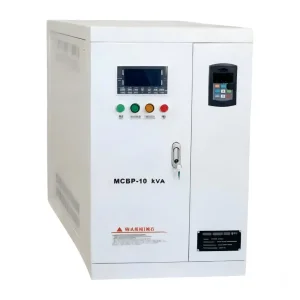
OEM MCBP Series Variable Frequency Power Supply Manufacturer, Factory
View Technical Specs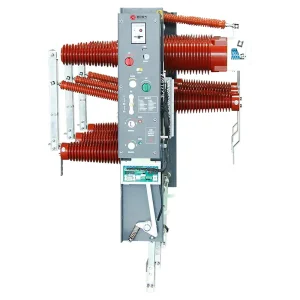
China FZ(R)N21C-40.5D AC Indoor High-Voltage Vacuum Load Switch Supplier, Companies
View Technical Specs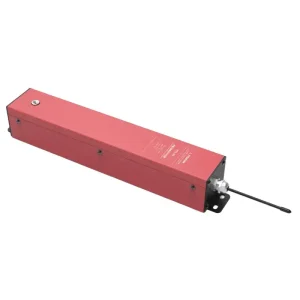
ODM Intelligent Wireless Automatic Gas Fire Extinguishing Device - Perfluorohexanone Series
View Technical Specs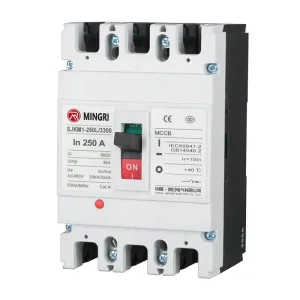
Wholesale SJKM1 Moulded Case Circuit Breaker (MCCB) from China Suppliers
View Technical Specs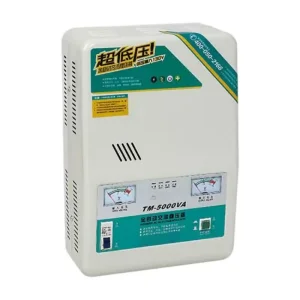
OEM TM Single-Phase Series Relay Type Fully Automatic AC Voltage Regulator Manufacturers
View Technical Specs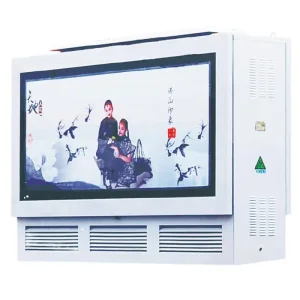
OEM YBD Landscape-Type Underground Compact Substation Suppliers, Supplier
View Technical Specs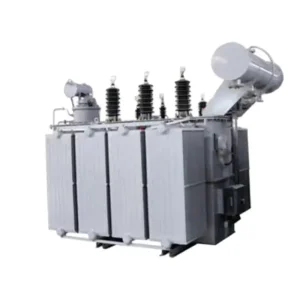
High-Quality China S11 Type 35kV Series Distribution Transformer - Reliable Factory Suppliers
View Technical Specs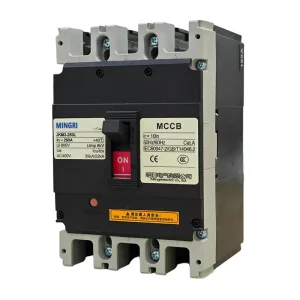
ODM China SJKM3 MCCB Moulded Case Circuit Breaker Supplier - Factory-Direct Overload Protection
View Technical SpecsPartner with China's Premier Switchgear & Fuse Isolation Engineering Hub
Whether you require custom OEM sheet-metal enclosures, specialized busbar-mounted NH disconnectors, or complete solid-insulated RMU substations, our engineering team provides end-to-end electrical design, custom CAD drawings, and certified factory acceptance testing.