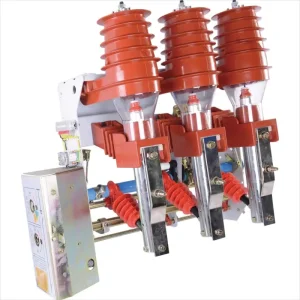
China AC Contactor Manufacturer & Companies
Precision electromagnetic switching architectures, medium/low voltage power distribution, and international OEM/ODM manufacturing ecosystems built for high-duty global power grids.
⚡ Flagship Industrial Switching & Protection Portfolio
Engineered to international IEC/EN 60947-4-1 standards. Integrated auxiliary controls, rapid arc-suppression modules, and high mechanical-endurance ratings.
-
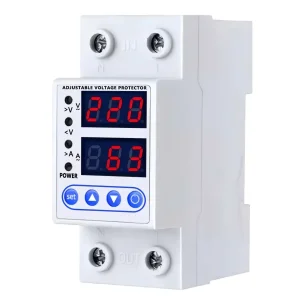
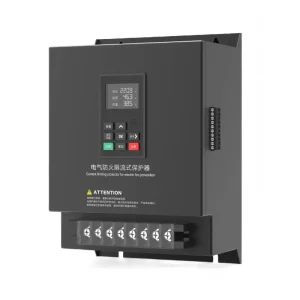
ODM Three-Phase Adjustable Voltage Protector with LED Screen Suppliers, Factory
-
-
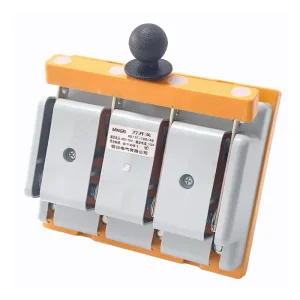
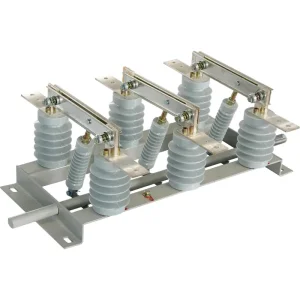
OEM HD11F Single Throw Anti-Error Knife Switch Suppliers, Factory
-
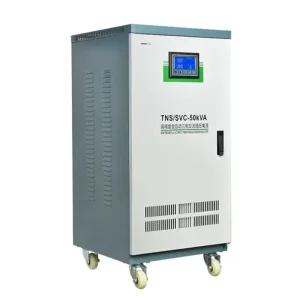
High-Quality TNS 3-Phase Series Fully Automatic Ac Voltage Regulator Supplier, Factories
-
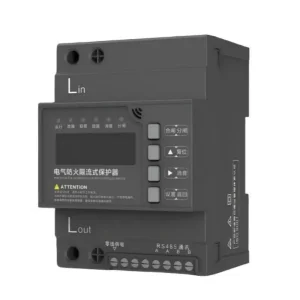
ODM Single phase small electrical fire-resistant current limiting protector Supplier, Companies
-
-
-
🌐 Global Commercial & Industrial AC Contactor Landscape
Strategic transition toward decarbonization, heavy electrification, and solid-state hybrid contact architectures across international power infrastructure.
In modern low-voltage motor control centers (MCC), building automation systems, and renewable energy substations, AC contactors serve as the fundamental electro-mechanical interface. As industrial automated machinery experiences unprecedented operational frequency, procurement requirements have shifted beyond mere electrical connectivity. Global EPC contractors, utility developers, and panel builders demand robust contact assemblies that mitigate contact bounce, eliminate welding under peak starting currents, and ensure extended thermal ratings across 50Hz and 60Hz architectures.
The contemporary macro landscape is marked by the relentless expansion of commercial HVAC systems, electric vehicle (EV) charging superhubs, and decentralized photovoltaic plants. These continuous and cycling loads necessitate low holding-power coils (electronic coils) capable of tolerating wide operational voltage deviations (0.7 to 1.2 Us) without chattering, thereby safeguarding automated systems from voltage dips and transient surges common in stressed grid topologies.
Electromagnetic Precision
Utilizing high-permeability cold-rolled silicon steel laminations, vacuum-impregnated copper coils, and silver-nickel (AgNi) or silver-tin-oxide (AgSnO2) alloy contact points to achieve minimal residual magnetism and zero contact bouncing.
Arc-Quenching Dynamics
Advanced aerodynamic split-splitter arc chambers rapidly partition and cool electric arcs within 8-12 milliseconds during severe AC-3/AC-4 inductive breaking maneuvers, significantly suppressing ionization build-up.
Eco & Thermal Balance
Halogen-free, fire-retardant thermoplastics (UL94-V0) deliver high structural rigidity up to 130°C continuous heat exposure, meeting stringent European RoHS and REACH environmental directives.
🏭 The Yueqing Advantage: Manufacturing Efficiency & Supply Chain Resilience
How concentrated supply clusters deliver cost-efficiency, deep customization, and rapid lead-time execution without technical compromise.
Hyper-Clustered Supply Chains
Located in Yueqing, Wenzhou—China's electrical capital—production facilities source raw copper, precision bimetal strips, stamping dies, and terminal hardware within a 15-kilometer radius, drastically reducing production cycle friction.
Automated Robotic Assembly
High-speed automated winding, laser spot welding, and CCD optical sorting inspect terminal tolerances within ±0.02mm, assuring uniform contact pressure and spring tension across millions of units.
Type-Testing Laboratories
In-house testing rigs verify temperature rise limits, mechanical life cycles, short-time withstand current (Icw), and dielectric withstand strength prior to third-party witness certifications.
Dynamic Scalability & OEM/ODM
From private labeling, bespoke control voltage coils (24V, 48V, 110V, 220V, 380V), and integrated transient suppressors to custom auxiliary terminal spacing, rapid tooling facilitates agile market entry.
| Evaluation Parameter | Western Tier-1 Producers | Leading Yueqing Manufacturers (Mingri Ecosystem) | Value Benefit for Global Buyers |
|---|---|---|---|
| Lead Times (Standard / Custom) | 12 – 24 Weeks | 3 – 5 Weeks | 75% Reduction in Supply Lead Time |
| MOQ Requirements | High Volume Batches (1,000+ units) | Flexible Batches (100 - 500 units) | Optimized Working Capital & Inventory Turns |
| Bespoke Coil / Terminal Configurations | Rigid catalog standards, high NRE fee | Modular coils, rapid laser marking, tailored enclosures | Direct drop-in compatibility for retrofits |
| Material Traceability | Full standard compliance | ISO 9001/14001, RoHs, Mill Test Reports (MTRs) provided | Guaranteed electrical performance verification |
📐 Utilization Categories & Mission-Critical Deployments
Mapping contactor load characteristics according to IEC 60947-4-1 operational profiles.
AC-1: Resistive Loads & Data Centers
Configured for non-inductive or slightly inductive loads such as server bank resistive heaters, industrial furnaces, and ATS power routing systems. Characterized by cos φ ≥ 0.95 with continuous thermal capacity.
AC-3: Squirrel-Cage Motor Control
Standard starting and switching off motors during running condition. Handles starting currents of 5 to 7 times rated motor current (In) in pump stations, centrifugal chillers, conveyor lines, and heavy-duty ventilation fans.
AC-4: Inching, Plugging & Hoisting
Engineered for harsh operating cycles involving rapid reversing, jogging, and plugging of cranes, hoists, and metal processing machinery requiring extreme anti-weld contact contact pad alloys.
🛠️ Strategic Integration with Medium and Low Voltage Gear
An AC contactor cannot operate in isolation. In mission-critical municipal, manufacturing, and generation facilities, it integrates seamlessly into broader protection schemes. It works in coordination with vacuum circuit breakers (VS1 series) and withdrawable switchgear (KYN28 series) upstream for short-circuit interruption, alongside earth leakage circuit breakers (ELCB), automatic transfer switches (ATS), and surge voltage regulators downstream. This hierarchical coordination guarantees full selectivity, ensuring that thermal overloads or line imbalances trip local contactors without bringing down primary substation feeders.
📈 Industry Trends: The Next Generation of AC Contactors
Technological advancement focusing on digital communication bus integration, hybrid solid-state architectures, and broad-spectrum energy efficiency.
IoT-Enabled Smart Contactors
Direct integration of Modbus-RTU, IO-Link, and Ethernet/IP microchips into the contactor housing allows real-time telemetry: operating cycle count, coil temperature, remaining contact life, and transient voltage spikes.
Hybrid Arc Elimination
Combining antiparallel IGBT/thyristor bypass circuits with mechanical contacts. The solid-state switch conducts at current zero-crossing during breaking, totally suppressing physical arcing and extending electrical life to 2 million operations.
Universal Voltage Electronic Coils
Microprocessor-controlled coils accepting inputs from 24V to 250V AC/DC. Eliminates coil humming, cuts steady-state holding energy consumption by up to 70%, and survives severe brownouts without contact drop-out.
❓ Engineering & Procurement FAQ
Direct technical answers addressing system integration, certification criteria, and operating durability.
⚡ Comprehensive MV/LV Electrical Distribution Solutions
Complete medium to low voltage protection, switching, and transformation infrastructure engineered by certified Chinese manufacturing facilities.
-
-
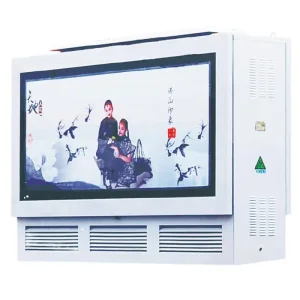
OEM YBD Landscape-Type Underground Compact Substation Suppliers, Supplier
-
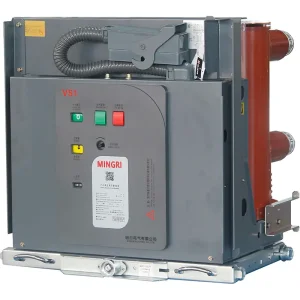
Wholesale VS1-12/24 withdrawable indoor high voltage vacuum circuit breaker Supplier, Companies
-
-
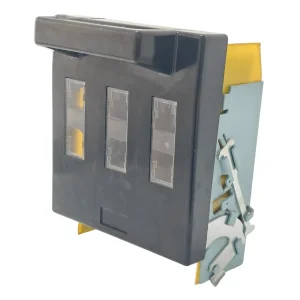
OEM HR5 Fused Disconnect Switch with Visible Contacts Supplier, Factory
-
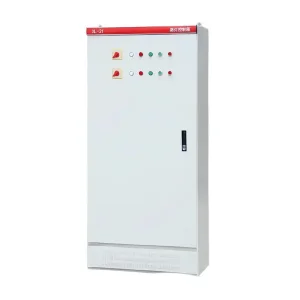
Wholesale XL-21 Power Distribution Cabinet Low Voltage Switchgear Factory, Companies
-
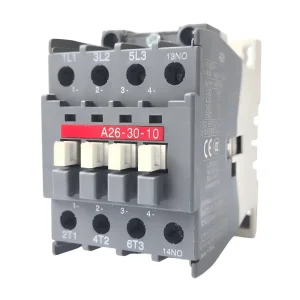
China A9~300 Series AC Contactors 50/60Hz 380V Manufacturers, Factories
-