Featured Universal Circuit Breakers & Protection Devices
High-reliability low-voltage switchboard components engineered for extreme electrical endurance, selective discrimination, and smart industrial automation.
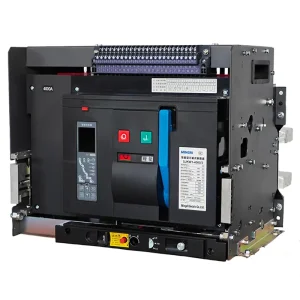
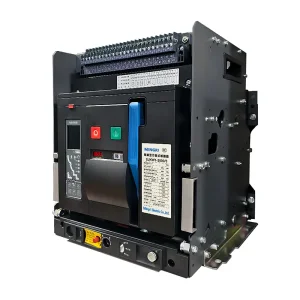
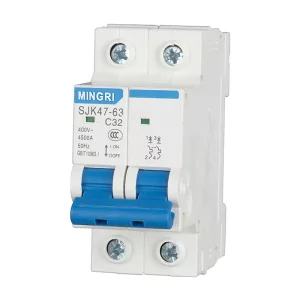
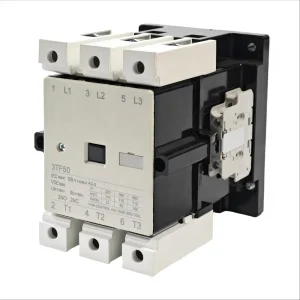
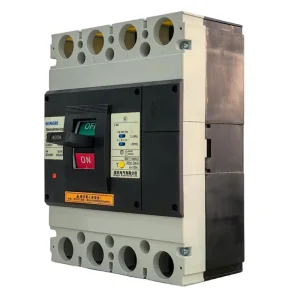
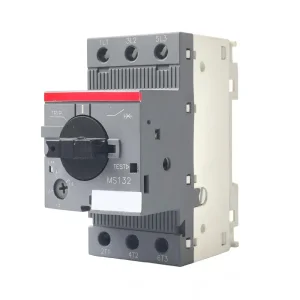
Engineering Architecture of Modern Intelligent Air Circuit Breakers
Air Circuit Breakers (ACBs)—frequently designated as Universal Circuit Breakers (智能型万能式断路器)—form the foundational backbone of low-voltage electrical distribution networks rated from 400V up to 1140V AC. Operating primarily as the incoming main breaker (Incomer) or high-capacity tie breaker in Low-Voltage Switchgear assemblies (such as MNS, GCS, GCK, and KYN systems), modern ACBs are designed to isolate faults, safeguard power transformers, and coordinate sub-distribution circuits against severe thermal, electromagnetic, and transient stress.
Arc Chute & De-ionizing Grid
At extreme fault levels up to 120kA, the physical air gap between contacts experiences severe thermal ionization. Our advanced metallic de-ion splitter plates rapidly divide the electric arc into series sub-arcs, cooling the plasma plume and directing exhaust gases through flame-retardant ceramic filters. This design prevents phase-to-phase flashovers and maintains switchgear cabinet integrity during cataclysmic short circuits.
Microprocessor Intelligent Trip Units (ETU)
The brain of the universal circuit breaker utilizes multi-core 32-bit DSP microprocessors calculating true RMS values across complex harmonic profiles. Providing 4-stage selective protection (LSIG: Long-time overload delay, Short-time short-circuit delay, Instantaneous protection, and Ground-fault protection), modern trip units incorporate integrated transient harmonic analysis and event logging.
Modular Withdrawable (Drawout) Chassis
Drawout configurations provide three mechanical positions (Connected, Test, Disconnected) with secondary disconnect plugs for control logic verification without energizing main busbars. Integrated safety interlocks, shutter mechanisms, and anti-misinsertion guide rails protect maintenance engineers according to IEC 61439 Form 4b internal separation standards.
| Electrical Parameter | Air Circuit Breaker (ACB) | Molded Case Breaker (MCCB) | Vacuum Circuit Breaker (VCB) |
|---|---|---|---|
| Nominal Rated Current ($I_n$) | 630A to 6300A | 16A to 1600A | 630A to 4000A |
| Rated Voltage Operational ($U_e$) | Low Voltage (400V – 1140V AC / 1500V DC) | Low Voltage (≤ 690V AC) | Medium to High Voltage (3.6kV – 40.5kV) |
| Short-Time Withstand ($I_{cw}$ 1s/3s) | Extreme: 50kA – 100kA (Category B Selective) | Limited: Category A (Non-selective default) | High: 25kA – 50kA (MV Grid Level) |
| Arc Extinguishing Medium | Atmospheric Air with De-ionizing Arc Chutes | Contained Air & Ablative Gas Matrix | Hermetic Vacuum Bottle Interrupters |
| Primary System Role | Main Incomer, Bus-Tie, Generator Protection | Feeder Protection, Branch Motor Loads | Substation MV Distribution, Ring Main Units |
Strategic Manufacturing Advantages of China's Yueqing Electrical Hub
Situated in Yueqing, Wenzhou—the acknowledged epicenter of global low and medium voltage electrical apparatus manufacturing—Mingri Electric leverages a fully integrated, vertically dense industrial cluster. This concentrated ecosystem enables unmatched lead-time agility, stringent component quality assurance, and unprecedented cost efficiencies.
Sub-30-Minute Tier-1 Component Sourcing
Over 85% of critical mechanical and electrical sub-components—such as silver-nickel (AgNi) contact rivets, high-permeability silicon steel stampings, DMC thermoset molding bases, and copper busbars—are sourced within a 15-kilometer radius. This hyper-localized ecosystem slashes raw component procurement lead times from months to hours.
High-Precision Automated Assembly & Calibrations
Automated robotic stamping and laser-welding lines guarantee strict dimensional repeatability for stored-energy spring charging mechanisms. Every breaker undergoes computerized contact-gap laser triangulation, instantaneous tripping threshold calibration, and thermal dissipation mapping before packaging.
Rigorous IEC 60947-2 Type Testing Validation
Equipped with internal CNAS-certified testing stations, our production models undergo rigorous short-circuit test sequence validations (Test Sequence I, II, III, and Combined Sequence IV). From dielectric breakdown tests at 3500V AC to temperature rise endurance under continuous rated currents, zero defect tolerances are enforced.
30%–45% Capex Optimization for Switchgear OEM Builders
By cutting intermediate supply margins, optimizing mass-scale manufacturing processes, and retaining sovereign assembly IP, Chinese ACB manufacturing provides Tier-1 Western functional equivalence at substantial capital expenditure savings. This capability empowers switchboard builders worldwide to secure competitive tenders profitably.
Future Directions: Digitalization, Microgrids & Eco-Engineering
The convergence of Industrial IoT, renewable distributed generation, and aggressive decarbonization goals is fundamentally transforming air circuit breaker design. Today’s ACBs transcend passive mechanical overcurrent trip elements to serve as intelligent power management gateways.
Edge-Computing & IoT Telemetry
Digital trip units feature dual high-speed microcontrollers that process internal waveforms at 64 samples per cycle. Standardized Modbus-RTU, Profibus-DP, Ethernet/IP, and native IEC 61850 protocol stacks eliminate standalone transducers, streaming active power (kW), reactive energy (kVARh), voltage sag indices, and Total Harmonic Distortion (THD up to the 31st order) directly to SCADA and Cloud EMS platforms.
Predictive Health & Contact Wear Algorithms
Leveraging continuous current interruption monitoring ($\sum I^2t$ calculation), internal infrared busbar temperature thermistors, and mechanical spring latch release velocity counters, intelligent ACBs evaluate remaining contact life in real time. Maintenance alerts notify facility directors prior to physical contact erosion or spring fatigue failures.
High-Voltage Direct Current (HVDC) & BESS Architecture
The rapid rise of Battery Energy Storage Systems (BESS) and commercial photovoltaic microgrids demands circuit breakers engineered for non-zero-crossing DC current arcs. Specialized 1000V DC and 1500V DC air circuit breakers incorporating strong permanent neodymium magnetic blow-out fields are rapidly superseding conventional switchgear in multi-megawatt energy storage assemblies.
Localized Application Scenarios: Engineered for Hostile Real-World Demands
From Tier IV data centers prioritizing uninterruptible power supply continuity to marine switchboards enduring continuous roll, pitch, and salt spray, Mingri Electric ACBs are optimized for mission-critical installations worldwide.
Hyperscale Data Centers & Financial Server Hubs
In digital enterprise infrastructure, power discontinuity of even a single half-cycle (10ms) is catastrophic. Deployed as incoming mains for transformer-UPS distribution lineups, our W1 and SJKW1 series feature Zone Selective Interlocking (ZSI) and ultra-fast bus tie transfer logic. By eliminating downstream fault clearance delays while preventing upstream main tripping, Tier IV 99.999% uptime compliance is systematically maintained.
Heavy Industrial Manufacturing & Steel Mills
Harsh industrial environments involve frequent motor starting currents, rapid cyclical load surges, high harmonic distortions from massive variable frequency drives (VFDs), and heavy ambient dust. Our breakers feature up to 100kA 1-second short-time withstand ($I_{cw}$), DMC high-temperature composite housings, and conformal-coated electronic control modules capable of sustained operations up to 70°C without nuisance tripping.
Offshore Platforms & Marine Naval Vessels
Shipboard electrical networks are ungrounded (IT networks) with compact switchroom footprints subject to engine vibrations and corrosive saline moisture. Mingri drawout ACBs are configured with anti-vibration locking pins, zero-clearance arc chutes, high-grade anti-fungal varnishes, and auxiliary contacts compliant with leading international classification society marine standards.
Utility Renewable Substations & PV Step-Up Plants
In utility-scale photovoltaic solar parks, low-voltage AC collectors aggregate outputs from multiple central inverters up to 690V or 800V AC. Our heavy-duty breakers provide reliable bidirectional current interruption, protecting step-up oil-immersed transformers against reverse-feed faults during sudden cloud transient surges or utility grid decoupling events.
Commercial High-Rises & Smart Hospitals
Urban life-safety systems require strict selective discrimination between main incoming switchboards and emergency branch ATS generators. Using precision low-current ground-fault sensing ($I_{\Delta n}$) and adjustable instantaneous thresholds, our devices prevent whole-building blackout cascades while sustaining vital life-support, HVAC, and fire pump feeder networks.
Mining, Extraction & Underground Tunnels
Underground installations present volatile explosion-proof requirements and voltage drops across miles of heavy trailing cables. Our specialized 1140V-rated ACBs provide robust under-voltage release mechanisms and phase-loss detection, safely tripping within milliseconds of a mechanical rock-fall severed line or motor stall condition.
Macro Industry Solutions: Integrated LV Power Distribution Frameworks
True electrical protection transcends isolated components. Mingri Electric delivers turnkey low-voltage protection ecosystems designed to optimize safety, selective coordination, and total life-cycle asset performance.
1. Total Selective Coordination (Discrimination) Strategy
Unplanned outages caused by non-selective downstream tripping cost industrial plants millions in lost production. Our engineering engineering team coordinates comprehensive time-current characteristic (TCC) curve studies. By pairing Category B intelligent ACBs ($I_{cw}$ up to 100kA 1s) at the main switchboard with current-limiting MCCBs at the motor control center (MCC), downstream faults are isolated strictly by the local branch device, allowing upstream incomers to maintain critical operations undisturbed.
2. Dual-Source Main-Tie-Main (MTM) Automatic Transfer Schemes
For high-reliability power configurations incorporating dual utility grid feeds and emergency diesel generators, Mingri delivers pre-engineered Main-Tie-Main architectures. Using mechanical interlocking cables coupled with microprocessor ATS controllers, our W1 and SJKW1 air circuit breakers execute closed-transition or open-transition transfers in under 100 milliseconds, eliminating cross-connection risks while keeping voltage dips well within ITIC curve tolerances.
3. Active Arc-Flash Mitigation & Operator Safety Protocols
Arc flash events release destructive thermal energy that endangers operating personnel. Mingri ACBs feature Maintenance Mode switches (ARMS: Arc Flash Reduction Maintenance System). When an engineer enters the switchgear perimeter, the breaker’s trip unit instantly bypasses programmed selective time delays, shifting to an instantaneous pickup threshold that limits incident arc flash energy to below Hazard Risk Category 2 levels.
4. Thermal Derating & Enclosed Switchgear Engineering Support
When operating inside compact, unventilated Form 4b IP54 switchboard compartments, high ambient temperatures degrade conductor current ratings. Mingri provides certified thermal derating calculation matrices for busbar cross-sections, silver plating thicknesses, and natural/forced ventilation air volumes, guaranteeing continuous full-load operations without premature contact overheating.
Global Corporate Procurement & OEM/ODM Engineering Specifications
International EPC firms, switchboard panel manufacturers, and industrial plant owners adhere to precise technical criteria when sourcing air circuit breakers from Chinese manufacturers. Below is our standard engineering verification matrix designed to streamline cross-border tender specifications.
Harmonized International Certifications
All Mingri ACB models hold full compliance type-test certificates from internationally accredited laboratories (such as KEMA, ASTA, and CE conformity under IEC 60947-2, GB/T 14048.2, and ISO 9001:2015 management frameworks). Complete short-circuit, impulse dielectric (up to 12kV), and mechanical endurance reports (up to 20,000 mechanical operations) are readily accessible for engineer review during bidding stages.
Mechanical & Dimensional Flexibility
Whether retrofitting existing switchgear lineups or designing next-generation compact boards, we provide both Fixed and Drawout configurations across 3-Pole (3P) and 4-Pole (4P) platforms with 100% or 50% neutral protection. Busbar terminal connection plates can be configured in horizontal, vertical, or mixed front-accessible orientations to match bespoke panel cabling layouts.
Factory Acceptance Testing (FAT) & Auditing
We facilitate on-site or high-definition remote live video Factory Acceptance Testing (FAT). Overseas procurement teams can witness secondary injection testing, contact resistance micro-ohm verification, dielectric withstand tests, and opening/closing synchronization timing before shipping, ensuring hassle-free on-site commissioning.
Frequently Asked Technical Questions (FAQ)
In-depth engineering answers addressing key specification, operational, and maintenance inquiries regarding high-capacity Air Circuit Breakers.
Medium-Voltage Switchgear, Transformers & Ancillary Solutions
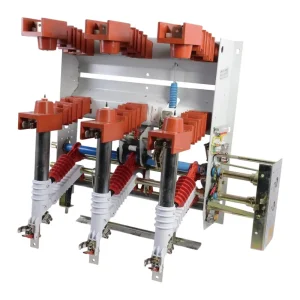
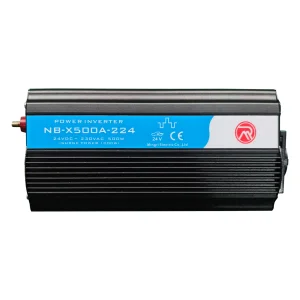
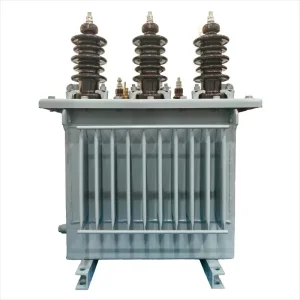
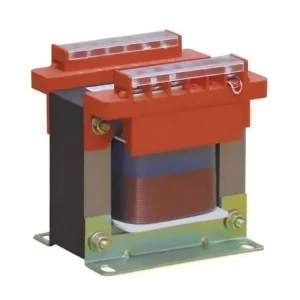
Complete your power distribution infrastructure with our full spectrum of medium-voltage switchgear, vacuum breakers, step-up transformers, and automatic safety peripherals.