High-Efficiency Conversion & Circuit Management Units
Pre-engineered electrical distribution platforms configured for Tokyo commercial installations, substations, and integrated solar inverter stations.
The Greater Tokyo Solar Ecosystem: Technical Imperatives & Grid Demands
Navigating the complex technical requirements of the Tokyo Metropolitan Government's aggressive decarbonization goals, dense urban constraints, and stringent electrical safety codes.
TMG Rooftop Solar Mandate
Under the revised Environmental Security Ordinance instituted by the Tokyo Metropolitan Government (TMG), all new residential, logistics, and commercial structures exceeding designated square meter thresholds must incorporate on-site distributed solar generation. This dynamic drives an unprecedented demand for compact, high-string-density PV combiner boxes that integrate within restricted architectural footprints.
TEPCO Grid Interconnection Strictures
Tokyo Electric Power Company (TEPCO) enforces rigorous criteria regarding reverse power flow, voltage swell mitigation, and instantaneous anti-islanding switch-off times. Combiner units serving the Kanto grid must house precision telemetry components, enabling string-level monitoring and bi-directional communications for dynamic active-power curtailment during low-consumption peak-irradiance cycles.
Seismic & Coastal Atmospheric Stress
The Tokyo basin faces dual environmental vulnerabilities: intense ground-motion events requiring verification against JIS C 8955 horizontal design earthquake coefficients ($k_h \ge 0.6\text{–}1.0$), combined with corrosive maritime salt spray sweeping along Tokyo Bay (Chiba, Yokohama, Kawasaki ports). Balance-of-System (BOS) combiner boxes must deploy IP66/NEMA 4X UV-stabilized polycarbonate or 316 stainless enclosures.
Macro-Level Engineering Solutions for Next-Gen PV Combiner Arrays
Mitigating energy loss, preventing DC arc hazards, and scaling balance-of-system cost efficiencies in commercial megawatt deployments.
Transition to 1500V DC High-Density Arrays
Worldwide and within Japan's forward-looking large-scale commercial arrays, developers are rapidly pivoting from legacy 1000V setups to 1500V DC topologies. This engineering shift reduces cable cross-sectional requirements, limits thermal $I^2R$ power dissipation, and shrinks the total volume of combiner units required across multi-megawatt configurations by up to 33%.
Our Tokyo-market combiner boxes utilize specialized 1500V ceramic touch-safe gPV fuse carriers, ultra-durable DC disconnect switches, and internal trace separation distances compliant with IEC 61439-2 and JIS C 8201-1 clearance/creepage thresholds.
Integrated Fire Safety: Rapid Shutdown & AFCI
Tokyo Fire Department directives for commercial and industrial rooftops demand fast DC de-energization. Combiner arrays incorporate high-speed Arc-Fault Circuit Interrupters (AFCI) calibrated to distinguish between typical operational switching noise and dangerous series or parallel micro-arcing events, breaking circuits in fractions of a second.
Intelligent String-Level SCADA Telemetry
Manual string fault detection in the Greater Tokyo area's dense urban environments is labor-prohibitive. Our smart combiner boxes integrate Hall-effect non-contact DC current sensors and precision internal voltage monitors directly linked to an onboard microprocessor, communicating via Modbus-RTU / RS485 or fiber-optic industrial Ethernet.
Real-time analytics monitor individual string yields, pinpointing dust contamination, micro-cracks, module degradation, blown fuses, and anomalous temperature differentials before costly field failures escalate into downtime or structural hazards.
Multi-Stage Surge Overvoltage Protection (SPD)
Summer convective thunder cells over the Kanto plain create extreme risk of indirect lightning surges. Combiners feature pluggable Type 1+2 DC Surge Protection Devices rated up to $I_{total} = 40\text{kA}\,(8/20\,\mu\text{s})$, featuring integrated remote status signaling contacts directly connected to central plant SCADA.
| Performance Specification | Standard Global Utility Spec | Tokyo Metropolis Industrial Rooftop Spec | Compliance Reference |
|---|---|---|---|
| Nominal System Voltage | 1000V / 1500V DC | 1000V / 1500V DC Dual-Rated with Zero-Neutral Bleed | JIS C 8955 / IEC 61439-2 |
| Enclosure Construction | Standard Mild Steel or GRP | SMC UV-Polycarbonate or SUS316 Marine Grade | JIS C 0920 / IP66 / NEMA 4X |
| Seismic Acceleration Resistance | 0.2g – 0.4g | Horizontal Acceleration $k_h \ge 0.6\text{g} \text{ to } 1.0\text{g}$ | JIS C 8955 Structural Standard |
| Arc Fault Extinguishment (AFCI) | Optional / Dependent on EPC | Mandatory Fast Response (<1.5 ms shutdown) | UL 1699B / Tokyo Fire Directives |
| String Monitoring Interface | Basic Analog Shunts | Hall-Effect Digital Telemetry + Modbus/TCP Gateways | TEPCO Telemetry Guidelines |
Global Photovoltaic Trends vs. Tokyo's High-Density Reality
Why conventional commodity utility-scale combiner boxes fail in Tokyo’s unique operational ecosystem.
Land Scarcity & Roof Densification
Unlike utility-scale solar farms in the American Southwest, Australia, or Inner Mongolia with boundless horizontal acreage, Tokyo developers must squeeze maximum power density onto non-penetrating logistics roofs, shopping malls, parking canopies, and BIPV curtain walls. Combiners must be featherweight, thermally optimized for unventilated parapet mounts, and serviceable from front-only clearance.
Severe Typhoon Wind Loads
Tropical storms entering Tokyo Bay produce catastrophic peak wind gusts exceeding 50 to 60 meters per second. Standard sheet-metal junction boxes shear or buckle under dynamic turbulence. Our factory implements high-tensile glass-fiber reinforced polyester (GRP) and cold-rolled stainless structures with custom bracketry tested for dynamic aero-elastic resonance.
Grid Stability & Harmonics
Kanto's high grid penetration creates localized overvoltage conditions that trigger automatic inverter curtailment. Modern combiners interface with edge controllers to handle sub-second reactive power commands, matching grid phase parameters and mitigating unwanted harmonic distortion in accordance with JET (Japan Electrical Safety & Environment) benchmarks.
Rigorous Japanese Compliance & Factory Verification Roadmap
Ensuring complete risk mitigation for foreign EPC contractors, asset managers, and domestic Japanese builders.
JIS C 8462 & METI
Every internal terminal block, busbar connection, and insulating separator adheres to Japan's Ministry of Economy, Trade and Industry (METI) technical criteria for high-voltage DC equipment.
JET Pre-Certification
Electrical layouts, touch-safety designs, and disconnection switchgear components are aligned with JET inspection standards to eliminate delays during official grid commissioning inspections.
Seismic Vibration Tests
Factory prototypes endure full three-axis shake-table harmonic vibration sweeps matching severe earthquake waveforms to verify mechanical integrity and busbar fastener torque retention.
Automated AOI & HIPOT
100% factory routine testing includes high-potential dielectric withstand (HIPOT) up to 5000V AC/DC, optical torque verification, and digital thermal camera analysis under continuous full current load.
Tokyo-Specific Photovoltaic Application Scenarios
Engineered to adapt to distinct regional spatial, thermal, and atmospheric variables across the Greater Tokyo Metropolitan area.
1. Logistics Hubs in Tokyo Bay (Chiba, Yokohama & Koto-ku)
Massive flat-roof logistics centers along waterfront port zones demand 24-to-32 string input combiner boxes equipped with dual 1500V DC outputs. Due to aggressive maritime salt humidity, units feature SUS316 stainless bodies, silicone neoprene gaskets, and pressure compensation breather plugs to equalize thermal pressure without allowing moisture ingestion.
2. Urban Commercial High-Rises & BIPV (Shinjuku & Roppongi)
High-rise building integrated photovoltaics (BIPV) demand micro-combiner boxes small enough to install in vertical utility chases and façade service voids. These systems prioritize zero-toxic off-gassing (Halogen-Free flame retardancy UL94-V0) and low-profile form factors with autonomous fast-shutdown actuation connected directly to central building management systems (BMS).
3. Airport Peripheral Solar Carports (Haneda & Narita)
Large-scale corporate parking canopies around aviation corridors require high-impact enclosures rated for public spaces (IK10 mechanical impact protection). Combiner units are integrated with internal ground-fault current interrupters (GFCI) and tamper-resistant security locking hardware to eliminate unauthorized access while sustaining continuous full-ampacity DC operations.
4. Suburban Agrivoltaic Microgrids (Western Tama Region)
Dual-use agricultural solar projects in Western Tokyo's open zones feature ground-mounted framing vulnerable to agricultural dust, organic fertilizer off-gassing, and wide seasonal temperature swings (-5°C winter to +38°C summer). Enclosures incorporate UV-resistant polycarbonate with anti-fungal internal surface treatments.
Technology Roadmap: The Evolution of Intelligent Solar Convergence
Pioneering the intersection of solid-state circuit breaking, AI-driven diagnostics, and digital-twin integration.
Silicon Carbide (SiC) Solid-State Switching
Our R&D factory pipelines are transitioning mechanical contactors to ultra-low-loss SiC semiconductor disconnects. This reduces switching arc generation to zero, drastically extends operating lifespans beyond 25 years without maintenance, and enables microsecond isolation of failing strings.
Edge AI & Cloud Telemetry Protocols
Combiners are migrating beyond simple Modbus communication toward onboard Neural Processing Units (NPUs) running edge inferencing. By evaluating localized voltage/current wave distortions in real time, combiners automatically distinguish between cloud shadow patterns and genuine panel cell delamination.
Digital Twin & Automated I-V Tracing
Future Tokyo commercial deployments will interface with municipal virtual power plant (VPP) software. Combiner boxes will execute automated scheduled string I-V curve tracing at sunset or cloudy periods without external technicians, uploading health diagnostics straight to facility twin models.
Advanced DC Breakers, Regulators & Medium-Voltage Grid Panels
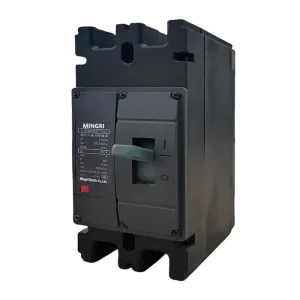
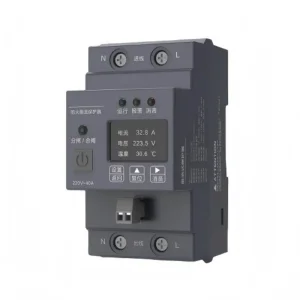
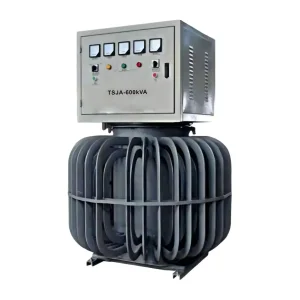
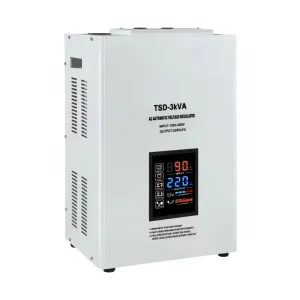
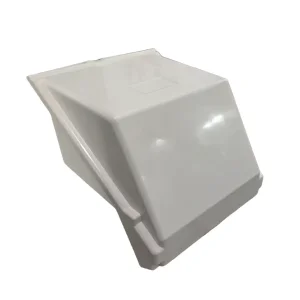
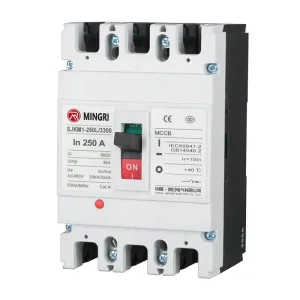
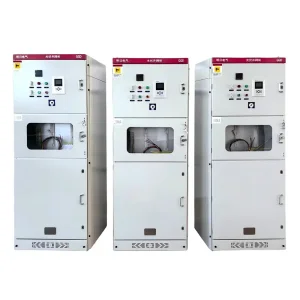
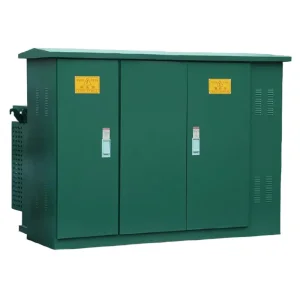
Factory-direct components for solar string protection, low-voltage industrial distribution, and regional substation interconnects.
Engineering Inquiries & System Selection Guidelines
Addressing essential technical, contractual, and regulatory questions regarding PV combiner procurement for the Tokyo market.
Commercial rooftops across Greater Tokyo often involve long cable runs from rooftop arrays down to electrical basement rooms or ground-level inverter pads. 1500V systems cut current in half for identical wattage, reducing resistive power loss ($I^2R$), allowing smaller copper cable cross-sections, and reducing the total count of required combiner boxes and string inputs by roughly 30%.
JIS C 8955 requires structural resilience against horizontal acceleration coefficients of $k_h \ge 0.6\text{g}$, extending to $1.0\text{g}$ for critical roof setups. Our factory-engineered enclosures feature reinforced corner gussets, high-grade 304/316 stainless mounting brackets, vibration-proof spring-clamp internal terminals, and torque-retaining thread lockers that have been fully dynamic-shake tested.
For installations in coastal zones like Yokohama, Chiba, and Koto-ku exposed to maritime salt fog, we supply enclosures crafted from SMC UV-resistant glass-fiber reinforced polyester or marine-grade SUS316 stainless steel with an electro-polished finish. All exterior hardware, hinges, and quarter-turn latches are rated for over 1,000 hours of continuous salt-spray testing under JIS Z 2371.
Yes. Our internal intelligence hubs support open Modbus-RTU (RS485) and Modbus-TCP communication protocols over shielded industrial bus lines. Data frames report individual string current, array DC voltage, internal enclosure temperature, SPD health status, and breaker switch positions, which integrate seamlessly into leading Japanese SCADA and power monitoring architectures.
Standard configured units (8, 16, or 24 strings) typically manufacture within 12 to 18 business days. Custom engineering configurations requiring specialized Japanese-labeled switchgear, specific fuse ratings, or non-standard enclosure dimensions typically require 3 to 4 weeks, backed by expedited sea freight directly to Tokyo or Yokohama ports.
Every shipment is accompanied by complete technical dossiers: Factory Acceptance Test (FAT) reports, dielectric insulation test certificates, single-line wiring diagrams (SLDs), CAD dimensional layouts, materials declarations (RoHS/REACH compliant), and certificate copies validating fuse holder and switchgear ratings under relevant IEC and JIS benchmarks.
Connect with our Tokyo Market Engineering Team
Whether you are designing a high-density rooftop solar array in Marunouchi, a port logistics plant in Chiba, or a megawatt distribution center in Kanagawa, our engineers provide the exact Balance-of-System protection hardware your single-line diagram specifies.