Critical Power & Voltage Regulation Devices for Seoul Commercial Facilities
Precision-manufactured electrical protection and conditioning architectures engineered to safeguard heavy-duty industrial automation, IT infrastructure, and urban power loops.
The Electrical Grid Dynamics of the Seoul Metropolitan Area (SMA)
Navigating dense underground distribution lines, ultra-low tolerance fault recovery, and strict fire prevention safety mandates across Korea's core commercial engine.
Subterranean Urban Infrastructure in Gangnam, Yeouido & Jongno
The Seoul Metropolitan Area (SMA) constitutes one of the most densely loaded electrical environments worldwide. Over 70% of Seoul’s medium-voltage (MV) distribution topology operates via an extensive subterranean network, driven by strict urban aesthetic directives and high land valuations. Substation physical footprints in districts like Gangnam-gu, Yeouido financial center, and the historical center of Jongno are severely constrained. As a result, switchgear engineering requires maximum volumetric density, uncompromising thermal dissipation, and definitive arc-suppression dynamics.
Korea Electric Power Corporation (KEPCO) sets rigorous distribution standards, primarily utilizing 22.9 kV-y multi-grounded neutral systems. Load isolating switches installed across commercial basement complexes, utility tie-ins, and industrial sub-distribution boards must handle heavy continuous ampacities while maintaining galvanic isolation during fault conditions without emitting hot ionized gases into confined operator vaults.
Hyperscale Data Corridors & Semiconductor Cleanroom Reliability
Surrounding Seoul, technological epicenters like Sangam Digital Media City (DMC), Magok High-Tech Complex, and the southern Pangyo Techno Valley corridor house mission-critical computing and advanced microelectronics assembly lines. In these environments, transient power aberrations, harmonic distortions, and micro-interruptions represent multi-million-dollar failure risks.
The role of the OEM load isolating switch is paramount: providing a verified visible break, high-speed switching capabilities under maximum inductive loading (AC-23A utilization categories), and seamless coordination with downstream intelligent motor controls and automated bus transfers. Original equipment manufacturers targeting the Seoul engineering procurement market must deliver products that exceed conventional IEC guidelines, incorporating South Korean building fire containment mandates.
Technical Architecture: Load Isolating Switches vs. Standard Disconnectors
An authoritative engineering breakdown of arc chute physics, contact metallurgy, and switching dynamics per KS C IEC 60947-3 standards.
Rotary Double-Break Contacts
Engineered with dual contact gaps per phase that divide the dynamic switching arc into two distinct paths. This design halves the thermal dissipation load, reduces contact erosion by over 65%, and ensures instantaneous arc stretching during high-current opening sequences under full rated load.
De-Ion Arc Chute Plates
Configured with staggered, nickel-plated steel cooling splitter plates. When an electric arc occurs during load interruption, magnetic blowout forces drive the plasma column directly into the splitter matrix, quenching voltages up to 1000V AC within 8 to 12 milliseconds.
UL94-V0 Glass-Polyester Enclosure
Fabricated using thermoset Sheet Moulding Compound (SMC) or Bulk Moulding Compound (BMC). Demonstrates superior comparative tracking index (CTI > 600V), zero halogen emissions, and total dimensional stability up to 140°C, strictly meeting Seoul fire-prevention safety protocols.
Critical Technical Distinctions for Electrical Engineers & Specifiers
A simple Disconnector (Isolator) can only open a circuit under no-load or negligible load conditions (<0.5A). In contrast, an OEM Load Isolating Switch (Switch-Disconnector) combines the thermal switching authority of a load break switch with the definitive galvanic security of an isolator. It is type-tested to make, carry, and break currents under normal network overload states (AC-23A for inductive motor loads) and carry fault currents for specified short-circuit durations ($I_{cw}$ up to 50kA/1s).
Engineering Ratings Matrix: Seoul Heavy Industrial Distribution Class
| Electrical Parameter | IEC 60947-3 / KS C Standards | Commercial Grade (SMA Building) | Heavy Industrial & Infrastructure |
|---|---|---|---|
| Rated Operational Voltage ($U_e$) | 415V / 690V / 1000V AC | 400V / 415V AC | 690V / 1140V AC, up to 1500V DC |
| Rated Operational Current ($I_e$) | 63A to 3150A | 160A – 630A | 800A – 3150A continuous |
| Rated Impulse Withstand ($U_{imp}$) | 8 kV to 12 kV | 8 kV (Line-to-Ground) | 12 kV (Enhanced isolation barrier) |
| Short-Time Withstand ($I_{cw}$) | Per frame size (1s / 3s) | 18 kA / 1s | 50 kA / 1s – 100 kA peak ($I_{cm}$) |
| Utilization Category | AC-21A / AC-22A / AC-23A | AC-22A (Mixed resistive/inductive) | AC-23A (Frequent heavy motor duty) |
| Mechanical Life Cycles (M2) | 8,000 – 20,000 operations | 10,000 operations | 20,000 operations without grease reload |
Macro-Industry Solutions for Key Seoul Economic Sectors
Deploying customized load break topologies across urban transit, energy storage microgrids, high-rise buildings, and cleanroom plants.
Seoul Metro & Underground High-Speed Transit
The Seoul Metropolitan Subway system is one of the world's most extensive rapid transit networks, powered by multi-substation redundant 1500V DC and 22.9kV AC step-down architectures. In underground traction power and auxiliary tunnel ventilation plants, atmospheric carbon dust and iron particulate accumulate rapidly.
Our OEM load isolating switches provide IP54 to IP65 fully enclosed modular footprints with hermetically sealed contact chambers. They allow tunnel operators to safely de-energize individual ventilation fans, tunnel pumps, and signaling boards while high-voltage catenary lines remain live.
Mega EV Charging Hubs & Urban BESS Architecture
Aligned with the Seoul Metropolitan Government's Net-Zero 2050 roadmaps, widespread installation of 350kW+ ultra-fast electric vehicle chargers is expanding across municipal parking facilities, bus depots, and commercial transport terminals.
DC load break switches customized for 1000V/1500V DC (DC-PV2 and DC-22B ratings) provide vital galvanic disconnection between battery energy storage systems (BESS), solar arrays, and high-frequency DC fast-charging converters. Patented permanent magnet arc-blowout systems suppress persistent DC arcs without structural breakdown.
Tier IV Colocation Data Hubs (Sangam DMC & Pangyo)
Data center facilities serving global technology firms demand 2N or N+1 electrical distribution fault tolerance. In continuous power distribution units (PDUs) and automatic transfer switch (ATS) bypass lineups, load isolating disconnectors must guarantee zero micro-weld incidents under high inrush conditions.
Our load switches incorporate hard silver alloy (AgNi or AgSnO2) contact surfaces, preventing contact chatter and thermal runaway during non-linear harmonic surges common in modern IT power supplies.
High-Rise Residential & Mixed-Use Supertalls
Supertall complexes such as Lotte World Tower and major residential redevelopments throughout Songpa and Gangnam house deep basement power transformation yards. Local fire laws require rapid mechanical or remote load isolation to prevent catastrophic transformer fires.
Our OEM motorized load isolating units connect with automated building management systems (BMS) over Modbus-RTU and BACnet, allowing sub-second regional grid separation in emergency seismic or fire scenarios.
South Korea Regulatory Compliance & OEM Customization Standards
Aligning international manufacturing precision with domestic certification mandates, seismic standards, and KEPCO operating guidelines.
KC Certification & KS Standards
All equipment imported into or distributed in South Korea must strictly conform to the Korea Certification (KC) scheme under the Electrical Appliances and Consumer Products Safety Control Act. Our OEM switches are tested against KS C IEC 60947-3, ensuring compliance with insulation coordination, creepage distance, and temperature rise standards ($ΔT ≤ 65K$ at nominal rated current).
Seismic Qualification (KBC 2016)
Under South Korea's Ministry of Land, Infrastructure and Transport building codes (KBC 2016 / MOCT), non-structural components and emergency electrical switchgear must withstand horizontal seismic accelerations up to 0.5g. Our units are shake-table validated to ensure mechanical interlocks, contact alignment, and housing integrity remain fully functional during seismic events.
Lockout-Tagout (LOTO) Mechanics
Korea Occupational Safety and Health Agency (KOSHA) enforces stringent worker safety measures for electrical equipment maintenance. Our load isolating switches feature padlocking mechanisms configurable in the "OFF" position with up to 3 individual operator padlocks, door interlocks with defeat mechanisms, and positive break indication linkages.
Technology Roadmap: Next-Generation Load Disconnect Architecture
Pioneering SF6-free eco-gas, solid dielectric isolation, smart telemetry, and wide-bandgap solid-state switching for smart grid distribution.
SF6-Free Clean Air & Solid Dielectric
With South Korea targeting net-zero greenhouse targets, switchgear insulation is shifting rapidly away from SF6 gas (Global Warming Potential = 23,500). Our next-gen roadmap uses synthetic dry air and vacuum interrupters, completely eliminating fluorinated gases while fitting compact urban switchrooms.
Predictive IoT Thermal Telemetry
Continuous, non-contact infrared thermal sensors and surface-acoustic wave (SAW) monitoring embedded directly onto primary busbar terminals. Operators in remote SCADA network centers can monitor temperature dynamics in real time, detecting loose junctions and contact degradation before thermal runaway occurs.
Solid-State Hybrid Switching Units
Integrating silicon carbide (SiC) semiconductor matrices in parallel with traditional mechanical isolation blades. The solid-state switch quenches currents in microseconds with zero arcing, after which the mechanical isolator rotates to provide physical, zero-leakage galvanic clearance.
Frequently Asked Questions: Switchgear Procurement for South Korea
Clear, technically rigorous answers for engineering directors, EPC contractors, and global supply managers operating in Seoul.
What is the practical difference between AC-21A, AC-22A, and AC-23A categories?
Per KS C IEC 60947-3, utilization categories define breaking and making duties. AC-21A covers non-inductive or slightly inductive resistive loads (cos φ ≥ 0.95). AC-22A covers mixed resistive and inductive loads (cos φ ≥ 0.65). AC-23A covers heavy inductive motor circuits (cos φ = 0.35 to 0.45) where the switch must break full locked-rotor current (typically 6× $I_e$) without contact welding or arc flash containment failure. For Seoul commercial mechanical rooms, AC-23A is the baseline standard.
How do you guarantee visible galvanic clearance in enclosed metal-clad switchgear?
Our OEM load isolating switches provide positive break indication. A mechanical linkage drives an external pointer indicator directly coupled to the main contact drive shaft (compliant with IEC 60947-3 Annex A). In addition, our enclosures feature transparent viewing ports rated to IK08 impact strength, allowing operators to verify physical contact separation without opening the enclosure door.
Can your OEM factory accommodate custom terminal spreaders for Korean busbars?
Yes. Korean distribution panels often use standardized KEPCO copper busbar drillings and phase spacing that differ from standard European din-rail setups. We provide tailored terminal extension adapters, high-grade tin- or silver-plated copper bridge plates, and multi-cable lug spreaders accommodating up to 4×240 mm² conductors per phase.
What documentation and factory acceptance testing (FAT) are provided for Seoul projects?
Every OEM batch is supplied with an exhaustive documentation dossier: ISO 9001, ISO 14001, and ISO 45001 certificates, routine factory acceptance test reports (dielectric withstand at 2.5kV/1min, main circuit contact resistance measurement in micro-ohms, and mechanical operational cycling), material composition compliance (RoHS/REACH), and full CAD/BIM (.step and .dwg) drawings for panel engineering.
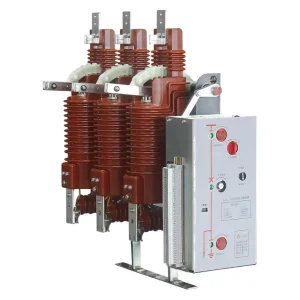
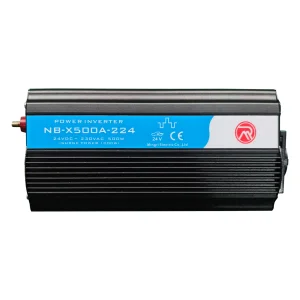
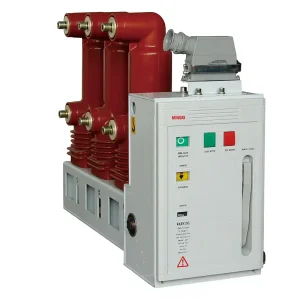
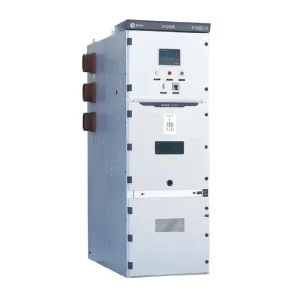
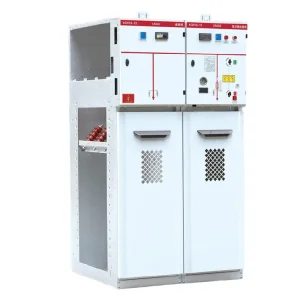
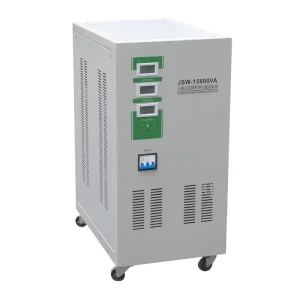
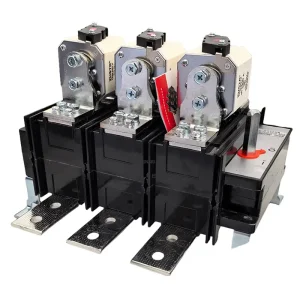
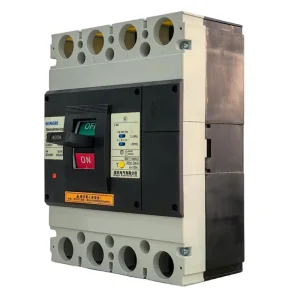
Engineered High & Low Voltage Switchgear for Seoul Infrastructure
Complete portfolio of vacuum breakers, ring main units, heavy-duty switch disconnectors, and clean power conversion solutions.
Global OEM Supply Chain Protocols for South Korean Engineering Partners
Structured manufacturing engagement designed for Korean EPCs, original brand manufacturers (OBMs), and regional switchboard builders.
1. Engineering Spec & SLD Review
Submit single-line diagrams (SLD), continuous amperage specifications, short-time withstand requirements ($I_{cw}$), and target physical enclosure dimensions. Our mechanical and electrical engineering departments evaluate thermal clearances, busbar routing, and Korean building code compliance.
2. Rapid Prototyping & KC Pre-Scan
Functional sample units are built with custom terminal adapters, motorized actuators, or special auxiliary switches. We support client pre-compliance scans with Korean certification testing bodies (KTR, KTL, or KKERI) for safety verification and thermal testing.
3. Scaled Production & Incheon Logistics
With automated manufacturing cells in Yueqing, Zhejiang, we provide short sea transit to Incheon Port and Busan Port (typical sea freight transit of 2–4 days). Guaranteed batch consistency, barcoded tracking, and bilingual Korean/English documentation dossiers.
Looking to Upgrade Switchgear Reliability for Seoul Infrastructure?
Contact our technical sales team for single-line diagram analysis, customized OEM enclosure designs, and comprehensive factory pricing schedules.
Send Inquiry Now