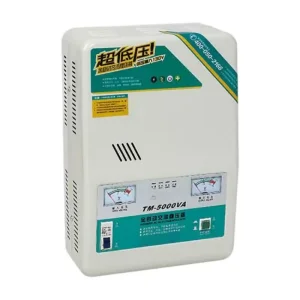
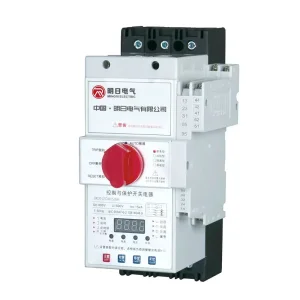
Primary Power Protection & Switching Systems
Direct-from-factory wholesale modular electrical isolation, protection, and power distribution systems engineered to IEC 60947 and GB/T international low-voltage industrial safety benchmarks.
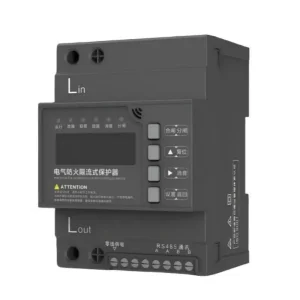
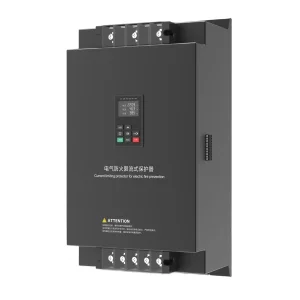
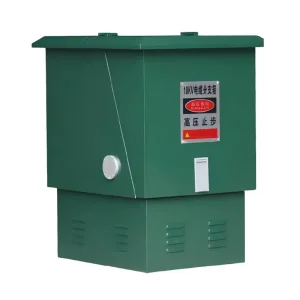
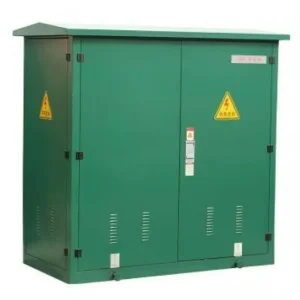
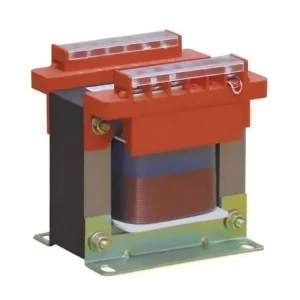
The Technical Mandate: Why 4-Pole (4P) Switching Is Critical
Modern electrical systems face unprecedented challenges from non-linear loads, multi-source power integration, and sophisticated earthing topologies. A conventional 3-pole switch leaves the neutral line tied together, exposing installations to devastating circulating currents, residual fault tripping, and transient overvoltages.
Eliminating Circulating Currents
When multiple power supplies (such as grid utility and backup diesel generators) share a solid neutral conductor, subtle impedance mismatches trigger high-frequency zero-sequence circulating currents. A precision-engineered 4-Pole (4P) Switch completely severs the fourth pole, ensuring physical and galvanic separation between divergent supply neutrals.
Mitigating Triplen Harmonics
In facilities with dense VFDs, LED drivers, and server compute infrastructure, 3rd, 9th, and 15th harmonic currents aggregate destructively on the neutral conductor. By deploying a true 4P switchgear architecture, operators prevent harmonic return currents from destabilizing offline backup systems or inducing false differential ground-fault trips.
Neutral Shift & Floating Prevention
Unbalanced 3-phase systems that experience a loose or intermittently grounded solid neutral suffer catastrophic phase-to-neutral overvoltages up to line voltage (400V/480V). 4P switches feature synchronized, early-make/late-break neutral contacts, guaranteeing the neutral circuit closes first and opens last to preserve baseline voltage references.
Engineering Specifications: 3-Pole (3P) vs 4-Pole (4P) Architecture
Comprehensive electrical matrix comparing mechanical and operational parameters according to IEC 60947-6-1, IEC 60947-3, and NFPA 70 standards.
| Evaluation Parameter | Standard 3-Pole (3P) System | Solid Neutral (3P+N Disconnect) | Integrated 4-Pole (4P) Switch / ATS |
|---|---|---|---|
| Galvanic Neutral Isolation | None (Shared Continuous Neutral) | Manual Isolation Only | Full Dynamic Isolation (Overlapping or Synchronized) |
| Earthing Compatibility | TN-C, specific TN-S zones | Restricted TN-S, IT configurations | TN-S, TN-C-S, TT, IT, Dual-Fed Separately Derived |
| Harmonic Zero-Sequence Block | Zero Protection | Passive Dampening Only | Complete Physical Decoupling |
| Residual Ground Fault Accuracy | Susceptible to Ghost Tripping | Moderate Calibration Drift | 100% Precise Vector Summation (Zero False Trips) |
| Maintenance Safety Profile | High Risk (Neutral Shock Hazards) | Medium Risk | Optimal (Zero Stray Voltage on Isolated Buses) |
Localized Application Scenarios & Earthing Scheme Adaptability
Tailoring 4P switch solutions to diverse national grid codes, harsh environments, and mission-critical electrical installations across Europe, the Americas, Asia-Pacific, and the Middle East.
Tier III / IV Mission-Critical Power
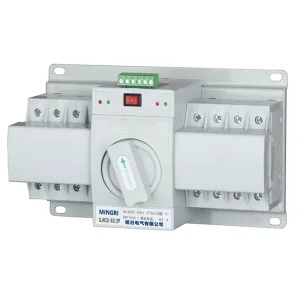
In Tier-rated data center operations where dual bus architectures (System A + System B) feed redundant power supplies, 4-pole Automatic Transfer Switches (ATS) ensure ground fault protection sensors (GFP) read precise downstream current balances without stray neutral return paths back-feeding through standby gensets.
Solar PV & BESS Grid Interconnections
Commercial energy storage systems (BESS) transitioning between on-grid and islanded microgrid modes require instantaneous, certified galvanic isolation. 4P switches eliminate voltage differentials between local inverter reference grounds and volatile utility transmission grids.
Heavy Industrial & Chemical Plants
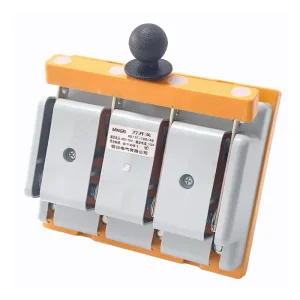
In automated metallurgy, petrochemical, and manufacturing complexes where heavy inductive motor loads generate significant back-EMF, 4-pole rotary knife disconnects and enclosed MCCB assemblies deliver robust arc-quenching and guaranteed zero neutral float during maintenance lockouts.
Hospitals & Emergency Surgery Theaters
Compliant with IEC 60364-7-710, medical environments require dedicated IT isolated power networks. 4P transfer switches prevent hazardous leakage currents from crossing between normal utility lines and clean emergency diesel generator sources.
Shipboard & Shore-to-Ship Power
Vessels connecting to municipal port shore power face differing hull grounding configurations. 4-Pole switching guarantees complete galvanic break across all active phases and neutral, preventing electrolytic corrosion and shock hazards to onboard personnel.
Outdoor Cable Distribution Cabinets
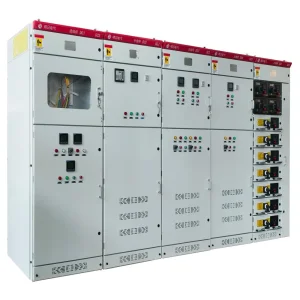
Deploying 4P switching units inside modular DFW cable branch boxes and compact substations allows utility line operators to isolate downstream commercial sectors without cross-contaminating phase-to-ground fault circuits during monsoon or high-humidity operations.
China Factory Supply Chain Resilience & Manufacturing Superiority
Leveraging the world's most sophisticated electrical engineering industrial cluster in Yueqing, Zhejiang, we deliver unprecedented economies of scale, vertical integration, and hyper-agile custom manufacturing.
Complete In-House Tooling
From precision stamping of high-conductivity AgCdO/AgSnO2 silver alloy contact rivets to injection molding of high-dielectric BMC/SMC thermosetting housings, every component is fabricated in-house to maintain total dimensional accuracy.
Shortened Delivery Horizons
Our synchronized tier-1 supply network eliminates component shortages. Standard 4P wholesale orders dispatch in 7–14 days, with bespoke OEM customized busbar switchgear panels delivered within 21 days globally.
100% Automated Testing
Every switchgear unit undergoes automated multi-pole contact resistance testing (micro-ohm metering), dielectric withstand tests at 2500V, and mechanical endurance cycling before dispatch, eliminating early mortality rates.
Bypass Intermediary Markups
Procuring direct from our China manufacturing floor cuts EPC project procurement overhead by 30% to 45% compared to Western branded equivalents, while matching or exceeding mechanical endurance and interrupting capacity.
Next-Generation Technology Roadmap: Smart & Solid-State Switching
The landscape of 4P switching is evolving beyond purely electro-mechanical mechanisms into intelligent, telemetry-driven, and arc-free architectures.
Microprocessor Integration
Integration of onboard DSP trip logic, digital RS485/Modbus-RTU & Ethernet protocols into 4P MCCB and ATS devices. Real-time logging of contact wear, phase balancing, neutral conductor temperature, and millisecond-level transfer recording.
Solid-State Hybrid Switching
Eliminating arcing entirely during phase/neutral transfer by combining silicon-controlled rectifiers (SCRs) or IGBTs in parallel with bypass mechanical contacts. Result: sub-cycle (<4ms) seamless transfers for micro-second critical data centers.
Eco-Insulated AI Switchgear
Phasing out SF6 across medium-voltage integrated ring units in favor of clean air and solid dielectric eco-resins. AI-driven edge inference models deployed directly on switchboard controllers predict insulation breakdown and mechanical contact degradation before faults happen.
Global Compliance Matrix & Local EPC Support
Ensuring full compliance with international regulatory bodies and providing field-tested documentation for smooth engineering sign-offs.
IEC 60947 Standards Alignment
Our complete range of 4P switches complies rigorously with IEC 60947-1 (General Rules), IEC 60947-2 (Circuit Breakers), IEC 60947-3 (Switches, Disconnectors), and IEC 60947-6-1 (Transfer Switching Equipment). Full type-test verification covers short-circuit withstand (Icw) up to 100kA and rated impulse withstand (Uimp) up to 12kV.
Dual Frequency & Voltage Flexibility
Engineered for global deployment across 50Hz and 60Hz systems, handling nominal voltages from 220V/380V to 415V, 480V, and 690V. Terminal busbars feature multi-standard mounting options accepting DIN standard, ANSI NEMA two-hole lugs, or direct copper flexibar integration.
EPC Technical Support Package
Every wholesale contract includes comprehensive CAD 2D dimension drawings, 3D STEP models for BIM integration, detailed single-line schematics (SLD), and certified factory inspection test certificates (FAT) overseen by certified Quality Assurance engineers.
Technical FAQ: Wholesale 4P Switch Engineering
Clear answers to complex technical and procurement questions from consulting engineers, electrical contractors, and wholesale buyers.
Under what national electrical codes is a 4-Pole (4P) switch legally mandated?
Under IEC 60364-4-44, IEC 60364-7-710 (Medical locations), and NEC Article 250 / 700 / 702 (when the alternate power source is classified as a "Separately Derived System" with an independent grounding electrode), switching the neutral via a 4-pole mechanism is mandatory. Failing to switch the neutral in these topologies violates safety codes by creating parallel neutral-to-ground return paths, causing ground fault detection relays to malfunction.
What is the difference between an "Overlapping Neutral" and a "Switched Neutral"?
A standard switched neutral breaks and makes simultaneously with the three active phase poles. However, if slight contact wear occurs, the neutral might momentarily break before the phases, causing disastrous neutral floating where single-phase loads experience overvoltage up to phase-to-phase ratings. An "Overlapping Neutral" (Make-Before-Break for the neutral pole) ensures that during transfer, the neutral of the incoming source closes before the active phases connect, and the outgoing neutral disconnects only after the active phases break, completely eliminating neutral displacement transients.
How do Chinese manufacturing facilities maintain tight tolerances on high-amperage 4P switches?
Leading factories in the Yueqing electrical hub utilize CNC progressive stamping dies for phase and neutral contact bridges, vacuum brazing furnaces for silver alloy tips, and coordinated robotic assembly stations. Every multi-pole unit undergoes automated dynamic contact bounce testing (<2ms bounce specification) and high-current millivolt drop verification to ensure perfectly balanced contact pressure and low thermal dissipation across all four poles.
Can 4P transfer switches be customized for hybrid PV, battery storage, and grid systems?
Yes. We supply OEM/ODM customized controllers with programmable transfer delays (0–30s), in-phase monitor algorithms for zero-crossing switching, and auxiliary dry contacts for battery inverter signaling and generator auto-cranking. Custom enclosure ratings from IP31 (indoor switchboard) up to IP65/NEMA 4X (outdoor stainless steel) are readily configured to your project needs.
What documentation and quality testing certificates are supplied with wholesale shipments?
Wholesale shipments are accompanied by comprehensive factory routine test reports (measuring insulation resistance, dielectric withstand, mechanical switching timing, and contact resistance). In addition, customers receive CE declarations of conformity, ISO 9001:2015 audit certificates, third-party type-test summaries (such as DEKRA, KEMA, or CCC laboratories), and English engineering connection diagrams.
Industrial Switchgear, Control & Circuit Isolation Catalog
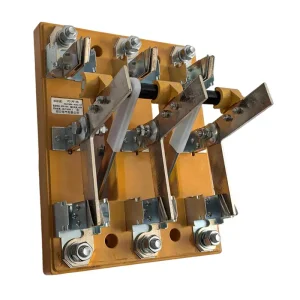
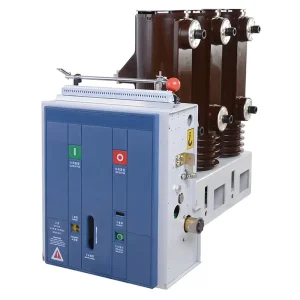
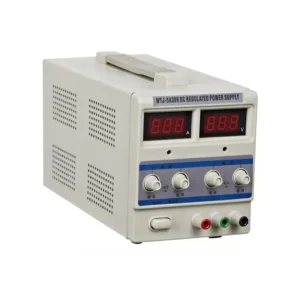
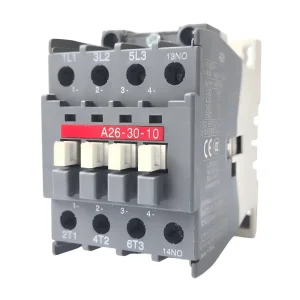
Complete your electrical distribution architecture with our heavy-duty rotary knife disconnects, vacuum breakers, regulated power systems, and contactor apparatus direct from our manufacturing facility.