Featured Industrial Grid & Protection Solutions
Explore our flagship OEM/ODM manufactured apparatus engineered for stringent electromagnetic resilience, low-voltage control, and distribution safety.
The Strategic Role of OEM Surge Protective Devices (SPDs) in Mission-Critical Grids
In contemporary electrical infrastructure, switching transients, electromagnetic pulses (EMP), and indirect or direct lightning strikes create volatile microsecond-duration overvoltages. Without coordinated surge mitigation, these transients degrade dielectric insulation, trigger catastrophic failure in microprocessors, disrupt SCADA networks, and compromise multi-megawatt facilities.
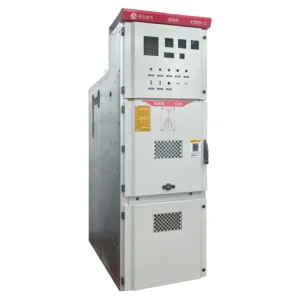
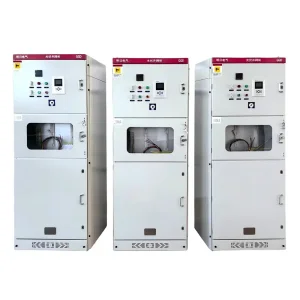
As a dedicated OEM surge protector supplier & company, Mingri Electric engineers industrial-grade Surge Protective Devices (SPDs), metal-oxide varistor (MOV) arresters, and transient voltage suppression systems integrated directly into medium-voltage (MV) and low-voltage (LV) distribution apparatus—ranging from withdrawable switchgear like KYN28-12 to compact substations and motor branch panels.
- Multi-stage cascaded protection: Type 1 (Class I / 10/350µs direct strike) down to Type 3 (Class III terminal level).
- Thermally decoupled disconnect mechanisms preventing violent arc ignition during MOV end-of-life runaway.
- Optimized residual voltage (Voltage Protection Level - Up) engineered below terminal insulation withstand limits (Uw).
Transient Physics & Dissipation Dynamics
Transients generated by inductive load disconnection, utility power factor correction capacitor bank switching, and high-energy atmospheric strikes exhibit steep rise times (dv/dt). Our OEM surge protection cartridges integrate high-density sintered Zinc Oxide (ZnO) grains alongside gas discharge tubes (GDT) and fast silicon avalanche suppressors. This composite topology ensures instantaneous impedance collapse from mega-ohms to milliohms, diverting tens of kiloamperes safely to earth potential before downstream microelectronics sustain gate-oxide punch-through.
Underlying Suppression Topologies & Material Science
Evaluating internal surge suppression components, thermal protection architectures, and surge divertive mechanisms engineered within our Yueqing manufacturing hub.
Metal Oxide Varistors (MOV)
Engineered with uniform polycrystalline Zinc Oxide microstructures doped with Bismuth, Cobalt, and Manganese oxides. Provides highly symmetrical non-linear V-I curves, high surge energy absorption densities (Joules/cm³), and ultra-low leakage current (<5µA) during normal continuous operating voltage (Uc).
Thermal Disconnect Fail-Safe
Prolonged overvoltage or repeated lightning surges push varistors into thermal runaway. Our proprietary spring-loaded mechanical solder bridges melt instantaneously at critical temperatures, decoupling the degraded MOV block while pivoting a mechanical visual flag (Green-to-Red) and actuating an isolated SPDT dry contact for remote telemetry.
Encapsulated Spark Gaps
Tailored for Type 1 heavy-duty main intake boards handling 10/350µs lightning impulse waveforms (Iimp up to 50kA per pole). Heavy graphite or tungsten-copper electrodes quench primary and secondary follow currents (Ifi up to 50kA rms) safely without exhausting ionizing plasma into switchboard enclosures.
| Classification Parameter | Type 1 (Class I / Class B) | Type 2 (Class II / Class C) | Type 3 (Class III / Class D) | DC Photovoltaic SPD |
|---|---|---|---|---|
| Standard Reference | IEC 61643-11 / UL 1449 | IEC 61643-11 / UL 1449 | IEC 61643-11 / UL 1449 | EN 50539-11 / IEC 61643-31 |
| Waveform Characteristic | 10/350 µs (Direct lightning flash) | 8/20 µs (Indirect/switching surge) | 1.2/50 µs + 8/20 µs (Combination) | 8/20 µs (DC atmospheric transient) |
| Nominal Discharge (In) | 25 kA – 50 kA / pole | 20 kA – 40 kA / pole | 3 kA – 5 kA / pole | 15 kA – 20 kA |
| Max Discharge (Imax) | N/A (Categorized via Iimp) | 40 kA – 100 kA / pole | 10 kA | 40 kA |
| Typical Installation Node | Main Incomer MV/LV Transformers | Sub-Distribution Switchgear/MCCs | Sensitive Control Boards & PLCs | Combiner Boxes & String Inverters |
| Response Time (tA) | < 100 ns (Spark Gap) / < 25 ns (MOV) | < 25 ns | < 1 ns (Hybrid Silicon) | < 25 ns |
China Factory 4.0: Supply Chain Resilience & OEM Scalability
Based in Yueqing, Zhejiang—the epicenter of global electrical engineering—Mingri Electric leverages end-to-end vertical integration to maximize quality, output velocity, and cost performance.
Automated Varistor Sintering
Precision automated dosing, spray-granulation drying, and multi-zone computer-controlled tunnel kilns ensure consistent density, zero voids, and atomic homogeneity across every ZnO wafer batch. This minimizes localized thermal channeling under heavy impulsive discharge currents.
100% Impulse Verification Lab
Every production batch undergoes strict quality gates: 1mA DC reference voltage testing (U1mA), dynamic leakage current verification at 0.75 U1mA, and destructive 8/20µs and 10/350µs high-energy impulse tests using calibrated lightning generator test benches up to 120kA.
Deep Vertical Supply Synergy
By integrating stamping, precision silver soldering, injection molding of flame-retardant UL94-V0 polyamides, and final assembly under cleanroom standards, we eliminate multi-tier contractor overheads, guaranteeing high-yield manufacturing and swift lead times for volume OEM/ODM contracts.
Customized OEM Surge Strategies Across Key Verticals
Overvoltage protection cannot adopt a one-size-fits-all approach. We engineer system-specific surge suppression modules matching precise field impedances and load environments.
Renewable PV & BESS
DC protection optimized for 1000V and 1500V solar arrays and battery racks. Features Y-configuration circuits with dual MOV branches to maintain fire protection even under earth-fault isolation breakdown.
Hyperscale Data Centers
Zero-follow-current suppression arrays protecting uninterruptible power supplies (UPS), PDU distribution units, and server racks from inductive load switching and utility grid harmonics.
Traction & Rail Transit
High shock-and-vibration rated DIN-rail and chassis mount arresters designed for wayside signaling, catenary sub-distribution, and heavy locomotive auxiliary power conversion equipment.
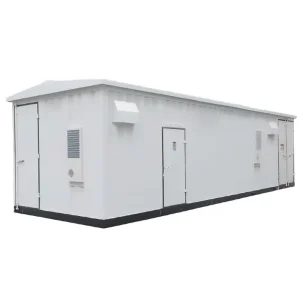
Smart Prefabricated Cabin Substation
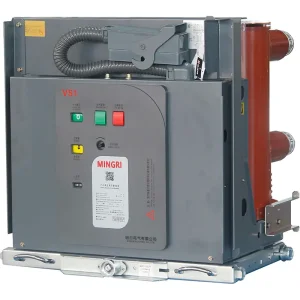
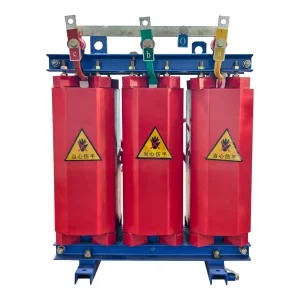
Coordinated medium-to-low voltage integration shielding dry-type transformers, air circuit breakers (ACB), and vacuum switchgear within compact, weather-sealed outdoor installations.
Stringent Conformance to International Testing Directives
When partnering with an offshore OEM supplier, regulatory harmonization and third-party laboratory verification represent non-negotiable requirements for EPC contractors and brand owners. Our entire surge protection and switchgear lineup complies with global testing regimes:
- IEC 61643-11: Low-voltage surge protective devices – Requirements and test methods for AC power distribution circuits.
- UL 1449 5th Edition: North American standard for Surge Protective Devices, verifying Short-Circuit Current Ratings (SCCR) and Voltage Protection Ratings (VPR).
- EN 50539-11 / IEC 61643-31: Dedicated testing parameters for SPDs deployed within the direct current (DC) regime of photovoltaic systems.
- IEEE C62.41.1 & C62.41.2: Recommended practice on surge voltages in low-voltage AC power circuits.
- RoHS & REACH Compliance: Completely free from toxic heavy metals, cadmium solder, and hazardous halogenated flame retardants.
OEM / Private-Label Adaptation Framework
We provide turnkey private-label engineering for global power distribution brands, panel builders, and regional suppliers. Our customization capabilities encompass:
Technological Roadmap: The Evolution of Intelligent SPDs
Transient protection is transitioning from reactive sacrificial components to proactive, IoT-enabled edge diagnostic nodes within the Smart Grid 2.0 paradigm.
Real-Time Degradation Telemetry
Next-gen Mingri intelligent SPDs feature embedded digital leakage current sensors and high-speed surge peak counters. By measuring microampere shifts in leakage current across line cycles, our units broadcast degradation percentages to SCADA platforms well before mechanical failure occurs.
Integrated Communication Protocols
Moving beyond simple dry-contact relays, our future-facing OEM portfolio integrates RS-485 Modbus, Ethernet IP, and wireless LoRaWAN modules. This provides predictive asset monitoring for unmanned wind turbines, remote offshore platforms, and distributed telecommunication base stations.
Hybrid Solid-State Architectures
Mingri R&D is pioneering hybrid topologies that combine high-speed Silicon Carbide (SiC) fast recovery clamping diodes with heavy-duty gas plasma arresters. This architecture eliminates MOV aging under high-frequency harmonics while delivering sub-nanosecond response times with near-zero residual voltage.
Strategic Procurement Framework: Minimizing Lifecycle TCO
When international utility authorities and EPC engineering firms evaluate surge protective devices, the initial unit procurement price represents less than 15% of the total cost of ownership. Premature varistor burnout, improper coordinating upstream back-up fuses, or field catastrophic fires trigger substantial downtime expenses and reputational liabilities.
Mingri Electric provides comprehensive engineering guidance to ensure our OEM solutions deliver optimal financial and operational longevity:
- Upstream Overcurrent Coordination: We specify matched Type gG/gL backup fuses or dedicated SCB (Surge Circuit Breakers) preventing nuisance tripping while preserving lightning divertive capabilities.
- Thermal Stability in Tropical Climates: Enhanced potting compound encapsulations rated for -40°C to +85°C operating ambients and up to 95% non-condensing relative humidity.
- Modular Cartridge Replacement: Hot-swappable plug-in topologies allow replacement of exhausted cartridges without de-energizing the main distribution board or using specialized tools.
Technical Inquiry Checklist for EPC Buyers
When submitting an RFQ (Request for Quotation) to our OEM technical team, provide the following parameters for rapid dimensioning:
• Nominal system voltage (Un): 230V, 400V, 690V AC or 1000V/1500V DC
• Exposure class: Direct lightning strike risk (Type 1, Iimp) or indirect surge risk (Type 2, In/Imax)
• Voltage protection level (Up required): e.g., <1.5kV for sensitive digital apparatus
• Back-up fuse coordination: Maximum permissible short-circuit current (Isccr)
• Auxiliary signaling: Dry-contact remote status alarm requirement
Frequently Asked Questions: Industrial Surge Protection
Direct answers to crucial commercial and engineering questions faced by electrical engineers, EPC contractors, and global OEM buyers.
Type 1 SPDs are tested using the severe 10/350µs current waveform, which simulates the high energy and sustained charge transfer of a direct lightning strike. They are mandatory at the primary service entrance of structures equipped with external lightning rods. Type 2 SPDs are evaluated using the 8/20µs waveform, designed to clamp faster, lower-energy transient overvoltages resulting from switching operations or indirect lightning strikes.
Our modules utilize an integrated dual-protection fail-safe mechanism. A calibrated low-temperature eutectic alloy solder bridge acts as a thermo-dynamic disconnector. When leakage current induces internal heat exceeding 120°C, the spring mechanism releases instantaneously, severing the path to earth and mechanically actuating an arc-shield barrier before thermal fire ignition can propagate.
The Voltage Protection Level (Up) defines the maximum peak clamping voltage that downstream equipment will experience across the SPD terminals during impulse diversion. To achieve true protection, Up must remain at least 20% lower than the impulse withstand voltage category (Uw) of the connected load, as categorized under IEC 60664-1 (e.g., Category I sensitive electronics withstand only 1.5kV).
Yes. We provide complete OEM/ODM industrialization services including custom housing colors, silk-screen or laser-etched corporate logos, customized product literature, regional language packaging, barcoding, and coordinated type-test certification assistance for global markets.
All production runs are backed by factory routine test reports, Certificate of Conformity (CE), and compliance test reports aligning with IEC 61643-11 or UL 1449. For project evaluations, third-party type tests conducted by accredited international testing laboratories (such as TUV, KEMA, or national high-voltage apparatus centers) can be provided upon request.
DC current lacks a natural zero-crossing point, making electrical arcs extremely persistent and difficult to extinguish. Solar PV SPDs engineered according to EN 50539-11 / IEC 61643-31 incorporate special DC arc-extinguishing chambers, wider contact separation gaps, and dedicated internal micro-breakers capable of interrupting continuous DC short-circuit currents without sustaining sustained plasma arcs.
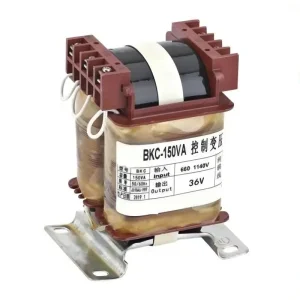
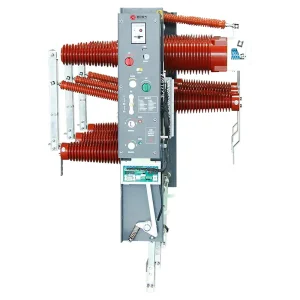
Auxiliary Distribution, Protection & Step-Up Apparatus
Comprehensive power equipment engineered in Yueqing, China to complete your substation, switchyard, and motor control configurations.