Subsurface Distribution & Protection Modules
High-performance low and medium-voltage components rigorously engineered for subterranean vaults, motor control centers, and mission-critical power networks.
Global Evolution of Subterranean Power Architectures
As mega-cities expand and climate vulnerabilities escalate, the transition from overhead distribution lines to hardened underground networks has become an engineering imperative. Explore the structural dynamics driving modern underground ODM procurement.
Subsurface Grid Hardening
Severe meteorological anomalies, wildfire propagation risks, and spatial scarcity in metropolitan cores have catalyzed a universal push toward underground electrical topology. Traditional aerial grids suffer catastrophic failure rates during extreme wind and icing events; conversely, subsurface vaults isolate switchgear, power transformers, and busbars from aerial hazards.
However, subterranean environments present distinct operational challenges: localized flooding, sediment accretion, galvanic chemical corrosion, and intense thermal confinement. Tier-1 ODM manufacturers solve this via fully hermetic 304 or 316L stainless steel laser-welded enclosures, nitrogen-sealed gas tanks, and hydrophobic solid dielectric encapsulation.
Eco-Gas & SF6 Alternatives
Regulatory mandates—including the European Union's revised F-gas directive and North American decarbonization standards—are rapidly penalizing SF6 gas, which possesses a Global Warming Potential (GWP) of 24,300. The underground ODM landscape is actively transitioning toward eco-efficient fluoronitrile gas mixtures (C4-FN / CO2), dry synthetic air insulation, and solid-dielectric epoxy busways.
Our engineering teams specialize in vacuum interruption combined with zero-GWP gas or solid cast-resin insulation (e.g., GXGN-12 and solid-insulated switchgear architectures), ensuring that utility vaults eliminate leakage hazards while maintaining short-circuit ratings up to 31.5 kA for 4 seconds without greenhouse gas liabilities.
IoT-Enabled Vault Telemetry
Subterranean enclosures remain inherently difficult to inspect. Modern underground ODM specifications necessitate embedded IoT telemetry: optical fiber temperature sensors (OFTS) directly attached to vacuum interrupter contacts, UHF partial discharge (PD) monitoring antennas, and electrochemical hydrogen/gas sensors linked to standard IEC 61850 SCADA gateways.
Integrated smart automation eliminates blind spots in below-grade vaults. When micro-arcing, insulation degradation, or chamber water ingress is detected, edge-computing Remote Terminal Units (RTUs) instantly execute automated sectionalizing and ping utility control rooms before flashovers occur.
Global Procurement Benchmarks & EPC Standards
Procuring engineering systems for underground applications requires navigating stringent safety, ingress, and modularity thresholds. Learn what international utility leaders prioritize when selecting an ODM partner.
Submersible IP68 & Flood Inundation
Standard switchgear ratings (such as IP4X or IP54) prove catastrophic in subgrade utility vaults exposed to flash floods, storm surges, or rising groundwater tables. International procurement contracts universally demand true IP68 hermetic ingress ratings, verifying equipment survivability under continuous water immersion at depths up to 3 to 5 meters for over 72 consecutive hours.
- Corrosion-proof 3.0mm 304/316L stainless steel robotically welded tanks.
- EPDM push-on cold shrink and screened separable elbow connectors.
- Submersible rotary operating mechanisms with double O-ring shaft seals.
Internal Arc Classification (IAC AFLR)
In confined subterranean chambers, an uncontrolled internal electrical arc produces immense overpressure and thermal blast waves that cannot easily vent to the atmosphere. Procurement specifications mandate internal arc testing certified to IEC 62271-200 IAC AFLR (Accessibility Front, Lateral, Rear) ratings of up to 25 kA / 1.0 second.
- Pressure-relief rupture discs exhausting into dedicated subterranean cooling ducts.
- Integrated ultrafast perfluorohexanone clean-agent fire suppression modules.
- Mechanical and magnetic 5-prevention interlocking systems preventing incorrect switching.
Thermal Runaway & Compactness
Subsurface utility civil works represent exorbitant capital expenses; every cubic meter of excavation costs thousands of dollars. EPC buyers demand ultra-compact footprints (e.g., modular RMUs measuring under 450mm width per feeder). Yet, compact dimensions compound thermal dissipation difficulties within unventilated vaults.
- High-conductivity silver-plated electrolytic copper busbars (IACS > 100%).
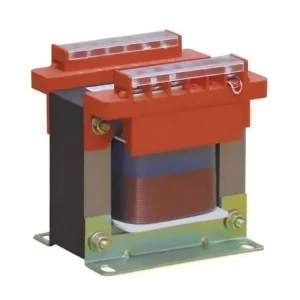
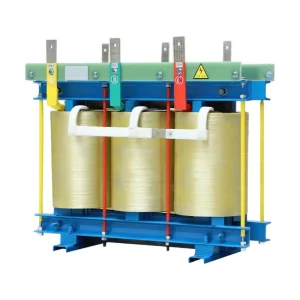
- Dry-type transformers with Class H Nomex insulation withstand up to 180°C hot-spots.
- Computational Fluid Dynamics (CFD) modeled internal convection thermal pathways.
China Factory 4.0: Supply Chain Resilience & Yueqing Cluster Dominance
Rooted in Yueqing—the world-renowned capital of electrical manufacturing—our Industry 4.0 smart plant integrates upstream raw metallurgy, precision automated robotics, and sovereign type-testing verification.
Yueqing Industrial Density
Over 85% of core switchgear inputs—including high-purity electrolytic copper, cold-rolled grain-oriented silicon steel (CRGO), epoxy insulation bushings, vacuum interrupters, and contactor mechanisms—are fabricated within a 15-kilometer radius. This extreme clustering eliminates international maritime bottlenecks for components, slashing project cycle times by up to 60%.
Robotic Automation & Welding
Hermetically sealed stainless steel tanks demand immaculate weld seam integrity to prevent gas leakage over 30+ year service lives. Our production lines feature multi-axis robotic laser cutting and continuous automated fiber-laser seam welding inside inert argon gas atmospheres, ensuring zero porosity and micro-crack tolerances below 0.01mm.
Helium Leak & PD Verification
Every manufactured gas tank passes through dedicated high-vacuum helium mass spectrometer detection chambers, achieving annual leakage measurement accuracy down to less than 0.05% per annum. Furthermore, shielded partial discharge testing bays guarantee zero electrical discharge (< 5 pC at 1.2x rated operational voltage).
Full ODM Customization Agility
From North American ANSI/IEEE C37 ratings to European IEC 62271 standards, our dedicated R&D engineering hub converts bespoke Single-Line Diagrams (SLDs) into production-ready CAD/BIM deliverables within 48 to 72 hours. We customize busbar configurations, CT/PT specifications, dual-power automatic transfer schemes, and proprietary SCADA protocols.
Subterranean Application Scenarios & Case Engineering
Tailoring electrical apparatus to specialized environmental stressors across dense commercial vaults, subterranean transit lines, deep industrial extraction tunnels, and renewable offshore transitions.
Dense Urban CBD Vaults
Operating Profile: Below sidewalk pavements, pedestrian plazas, and skyscraper basement chambers. High public safety sensitivity, minimal acoustic tolerance, and severe spatial confinement.
Engineered Solution: Compact SM6 or RM6 modular Ring Main Units paired with SG(B)10 dry-type transformers and automatic perfluorohexanone clean-agent fire suppression. Noise levels suppressed below 45 dB with zero oil explosion hazards.
Metro & Rail Transit Tunnels
Operating Profile: Sustained physical vibration from rolling stock, conductive metallic brake dust, continuous air turbulence, and strict 24/7 traction continuity demands.
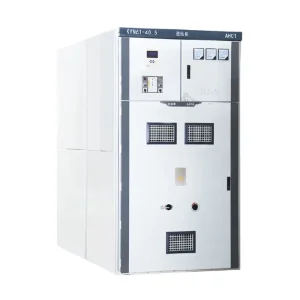
Engineered Solution: KYN28-12 and KYN61-40.5 armored moving-type AC metal-enclosed switchgear with heavy-duty mechanical interlocking, dual-redundant power transfer, and high-frequency harmonic filtering modules.
Deep Mining & Excavation
Operating Profile: High atmospheric humidity (up to 100% RH), corrosive hydrogen sulfide or methane gas traces, rough terrain transport, and high motor-start inrush currents.
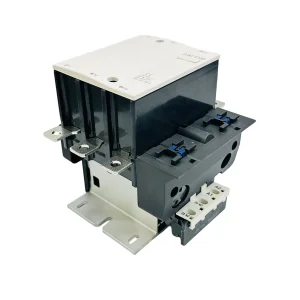
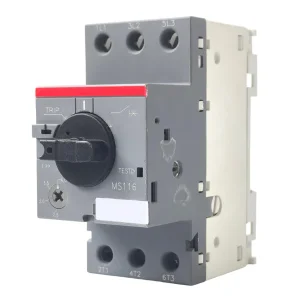
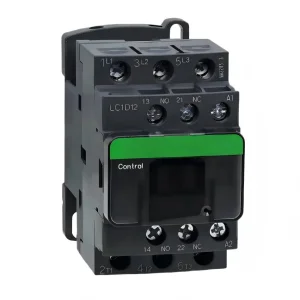
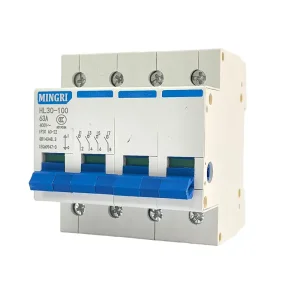
Engineered Solution: Explosion-proof and flameproof motor protection circuit breakers (MS116 series), heavy-duty LC1D vacuum contactors, and high thermal capacity non-encapsulated step-down transformers.
Subsurface Renewable Vaults
Operating Profile: Transition substations linking offshore wind turbine sea-cables to onshore subterranean networks, utility-scale solar step-up vaults, and subterranean battery storage yards.
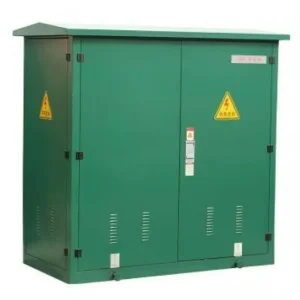
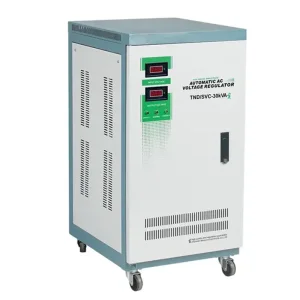
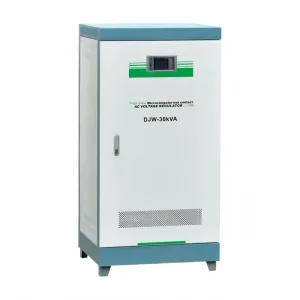
Engineered Solution: Combined European (YB series) or American-style (ZGS11) integrated underground compact substations equipped with automated bi-directional microcomputer non-contact voltage regulators.
| Architecture Type | Rated Voltage (kV) | Insulation Medium | Short-Time Withstand (kA/s) | Ingress Level | Primary Subterranean Application |
|---|---|---|---|---|---|
| RM6 / SafeRing Gas RMU | 12 / 24 / 40.5 | SF6 / Fluoronitrile Gas Blend | 20 / 25 kA (3s) | IP67 / IP68 Submersible | Flood-Prone Urban Sidewalk Vaults |
| GXGN Solid Insulated RMU | 12 | Solid Epoxy Resin + Shielding | 20 kA (4s) | IP67 Sealed Core | Eco-Mandate CBDs, Metro Underground Stations |
| KYN28-12 / KYN61-40.5 | 12 / 40.5 | Air Insulated Metal-Clad | 31.5 / 40 kA (4s) | IP4X / IP54 Enclosure | Subterranean Power Substations & Rail Tunnels |
| SG(B)10 Series Dry Transformer | 10 / 0.4 | Non-Encapsulated Class H Air | Self-Extinguishing | IP00 to IP23 Enclosed | Commercial Basements, Deep Mining Caverns |
| YB-12 / ZGS11 Prefabricated | 12 / 0.4 | Hybrid Gas/Oil Substation | 20 kA (2s) | IP54 Outdoor / Vault Grade | Underground Landscape Parks & Solar Parks |
Underground Switchgear & Substation Engineering FAQ
Authoritative answers to the most critical technical, compliance, and customization inquiries posed by power utility engineers, procurement directors, and EPC leaders.
High-Voltage Switchgear & Substation Infrastructure
Armored switchgear assemblies, combined step-up transformers, and precision industrial regulation units engineered for resilient utility grid tie-in.