High-Performance Switching & Power Control Systems
Explore frontline medium-voltage and low-voltage distribution components manufactured under stringent ISO 9001, IEC 62271, and GB/T standards for modern utility, commercial, and industrial topologies.
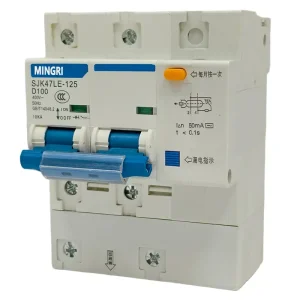
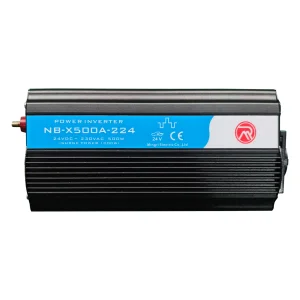
The Strategic Role of AC Load Break Switches in Power Distribution
Decarbonization, distributed renewable generation, and urbanization are redefining global medium-voltage (MV) and low-voltage (LV) grid architectures.
Engineering Definition & Core Switching Responsibilities
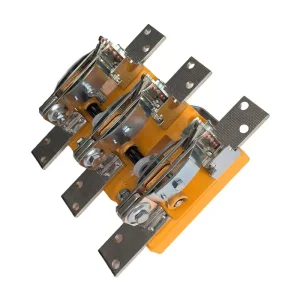
An Alternating Current (AC) Load Switch—technically classified as an AC Load Break Switch (LBS) or Disconnector Switch under IEC 62271-103—is a purpose-built mechanical switching device designed to close, carry, and interrupt currents under normal operating circuit conditions. Beyond normal operational switching, an industrial-grade AC load switch must sustain designated overload profiles and maintain short-circuit making endurance under abnormal conditions (such as closing onto a pre-existing feeder fault).
In modern Ring Main Units (RMUs), compact secondary substations (CSS), and industrial motor control centers, the AC load switch functions as the primary point of physical isolation and branch sectionalizing. When integrated with high-breaking-capacity current-limiting fuses (Load Break Switch-Fuse Combinations per IEC 62271-105), it provides an exceptionally economical yet highly dependable alternative to full-scale vacuum circuit breakers for downstream distribution transformer protection up to 1250 kVA and 2000 kVA ratings.
Macro-Market Drivers & Industrial Demand
The global commercial and industrial switchgear sector is undergoing massive structural evolution. Rapid expansion of commercial photovoltaic systems, utility-scale battery energy storage systems (BESS), electric vehicle fleet charging plazas, and mission-critical cloud compute facilities has driven unprecedented demand for compact, modular switching equipment. According to recent transmission and distribution data, the global MV load switch market is projected to expand significantly through 2032, with the Asia-Pacific region serving as both the fastest-growing consumer market and the dominant manufacturing epicenter.
Engineering procurement teams (EPCs), public utility operators, and original equipment manufacturers (OEMs) increasingly source from verified Chinese manufacturing clusters. These tier-one production centers deliver customized, type-tested, and IEC-compliant AC load switch units at lead times and cost structures that European and North American legacy facilities struggle to match in today's high-demand environment.
Deep Technical Anatomy of Chinese AC Load Switches
Examining arc-extinguishing methodologies, contact metallurgies, operating mechanisms, and mechanical-electrical endurance classification.
Arc Quenching Media
Chinese factories specialize in three core interruption methodologies:
- Vacuum Interruption: Sealed ceramic vacuum bottles with Cu-Cr (copper-chromium) contacts provide rapid dielectric recovery, minimal contact erosion, and zero greenhouse gas emissions.
- Gas Insulated (SF6 & Eco-Gas): Puffer-type rotary contacts within stainless steel hermetic tanks utilize electronegative gases to extinguish arcs within half-cycle intervals.
- Air-Blast & Gas-Generating Materials: Hard-gas organic liners emit de-ionizing vapor under thermal arc pressure for indoor dry distribution.
Kinematic Operating Mechanisms
Operational integrity depends on stored-energy mechanical drives engineered for independent snap-action closing and tripping:
- Single-Spring Mechanism (K-Type): Common for manual incoming feeders; spring charge and release occur in one continuous rotational motion.
- Dual-Spring Mechanism (A-Type): Separate closing and opening springs; permits remote electrical tripping via shunt release coils or thermal striker pins from linked MV fuses.
- Motorized Actuators: Integrated 24V/48V/110V/220V DC gear-motors with microswitch feedback tailored for automated SCADA and RTU control.
Endurance & Protection Classes
Standard compliance benchmarks according to IEC 62271-102 and IEC 62271-103:
- Mechanical Class M1/M2: Certified for up to 1,000 cycles (M1) or 5,000 to 10,000 extended maintenance-free cycles (M2).
- Electrical Class E1/E2/E3: Up to 100 rated full-load breaking operations and multiple short-circuit fault-making cycles without contact refurbishment.
- Three-Position Logic: Positive interlocking preventing human error across three clear states: 'Closed', 'Open', and 'Earthed' (grounded).
| Switch Technology Type | Nominal Voltage (kV) | Rated Current (A) | Interrupting Medium | Key Operational Strength | Primary Sector Application |
|---|---|---|---|---|---|
| Vacuum LBS (e.g., FZN25/FZR25) | 12 – 24 kV | 630 – 1250 A | High Vacuum (<10⁻³ Pa) | Zero gas handling, excellent capacitive breaking | Renewables, Urban substations, Capacitor banks |
| SF6 Gas-Insulated LBS (e.g., FLN36) | 12 – 40.5 kV | 630 A | Sulfur Hexafluoride / Gas blend | Extremely compact footprint, fully sealed tank | Modular Ring Main Units (RMU), Wind towers |
| Solid-Insulated LBS (Eco-Friendly) | 12 – 24 kV | 630 A | Epoxy resin casting + Vacuum | 100% greenhouse-gas-free, explosion-proof | Green cities, Data centers, European metro grids |
| Air-Break Knife Switch (e.g., HD13BX) | 0.4 – 1.14 kV | 100 – 3150 A | Atmospheric Air + Arc chutes | Visual physical break, robust thermal rating | Heavy industrial LV MCC panels, Mining plants |
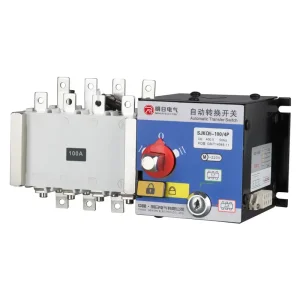
| Automatic Transfer Switch (ATS) | 0.4 kV | 63 – 3200 A | Molded silver contacts | Dual-power auto switching <80ms transfer | Hospitals, Emergency power, Telecom towers |
Why China Leads in AC Load Switch Engineering & Export
A granular look at the Yueqing (Wenzhou) electrical industrial belt, vertical component integration, automated quality gates, and cost agility.
The Yueqing Industrial Cluster Synergy
Yueqing in Zhejiang Province is recognized worldwide as the electrical manufacturing capital of China. Within a 30-kilometer radius, factories source raw oxygen-free electrolytic copper, high-purity silver-tungsten alloy contacts, epoxy resin bushings, specialized spring-steel coils, and precision micro-switches. This immediate physical proximity slashes sub-component transit times from weeks to hours, dampening global supply chain shocks.
Vertically Integrated Tooling & Production
Unlike Western equipment aggregators that outsource mechanical stamping, Chinese tier-1 enterprises maintain in-house automated robotic laser cutting, CNC sheet-metal punching, specialized vacuum brazing chambers, and automated electrostatic powder coating. Direct ownership of critical manufacturing processes eliminates contractor markup margins and yields rapid OEM/ODM engineering turnarounds for custom terminal adaptations.
Automated Quality Control Infrastructure
Modern Chinese AC load switch manufacturers deploy digital Helium Mass Spectrometry leak-detection stations capable of identifying micro-fissures down to 1×10⁻⁸ mbar·L/s, ensuring leak-free performance over 30-year design lifespans for sealed-tank units. Dynamic mechanical timing analyzers check contact velocity, travel displacement curves, and contact bounce under high-speed digital sensors prior to palletization.
Engineering Procurement Insight: The Total Cost of Ownership (TCO) Paradigm
Evaluating an AC Load Switch purely on FOB unit cost introduces severe lifecycle risk. Leading international EPCs evaluate Chinese switchgear through a comprehensive TCO framework: initial equipment acquisition (averaging 35-50% lower than European legacy brands), MTBF (Mean Time Between Failures) validated across 10,000 cycles, thermal loss reduction via optimized contact silver-plating thicknesses (≥20µm), and interchangeable spare-part logistics availability.
Technology Roadmap: The Next Decade of Switching Innovations
Strategic transformations toward F-Gas regulatory compliance, solid insulation chemistry, and cyber-physical grid integration.
SF6-Free Eco-Gas Innovations
With the European Union F-gas Regulation (EU 2024/573) and global clean air mandates penalizing high-GWP gases, Chinese R&D centers are leading the commercialization of clean-air, synthetic air, and C4-FN/C5-FK fluoronitrile gas mixtures. Advanced eco-gas load switches achieve equivalent arc suppression at lower operating pressures while driving Global Warming Potential (GWP) metrics to less than 1.
Solid Dielectric Encapsulation
Solid-insulated switchgear (SIS) eliminates insulating gases entirely. Each phase is cast separately in hydrophobic cycloaliphatic epoxy resin (HCEP) or polyurethane. This modular physical architecture prevents phase-to-phase internal arc propagation, withstands extreme high-altitude atmospheric thinning, and creates an explosion-proof, completely submergible switching device.
Smart IoT Sensors & IEC 61850
Future-ready load break switches integrate non-invasive optical fiber temperature sensors directly onto primary contact jaws, paired with miniature Rogowski current transducers. Real-time contact wear monitoring, mechanical vibration signature profiling, and native IEC 61850 GOOSE messaging empower predictive condition-based maintenance (CBM) without unscheduled substation shutdowns.
Targeted Deployment Scenarios Across Global Terrains
From solar fields in hyper-arid deserts to subterranean metro rings and offshore wind platforms.
Renewable Energy Step-Up Substations (Solar & BESS)
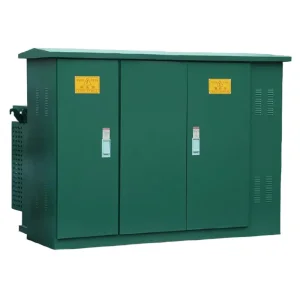
Photovoltaic generation assets and battery energy storage facilities experience extreme daily thermal load cycling and bidirectional power swings. Chinese 24 kV and 40.5 kV vacuum and gas load switches are deployed inside compact prefabricated skid substations (such as ZGS11 American-type or European-style step-up enclosures). Specialized contact profiles withstand repeated capacitive cable-charging interruptions and inrush currents without micro-welding.
High-Density Urban Underground Cable Grids
Metropolitan power authorities across Europe, Southeast Asia, and Latin America face critical footprint constraints. Compact SF6-insulated and Solid-Insulated modular Ring Main Units (RMUs)—featuring 3-position integrated AC load switches—enable multi-feeder loop connections within compact footprint kiosk basements. The sealed design guarantees immune operation against annual flood events, ambient subterranean moisture, and rodent intrusion.
Corrosive Coastal & Marine Operations
Offshore wind turbines, commercial shipyards, and coastal desalination infrastructure subject switchgear to severe salt spray, relative humidity exceeding 95%, and sulfur-laden marine atmospheres. Chinese export configurations utilize 3mm marine-grade AISI 304 or AISI 316L robotic laser-welded stainless-steel enclosures with IP67 ingress ratings for all active switching contacts, preventing galvanic oxidation.
Heavy Industrial & Mining Motor Control
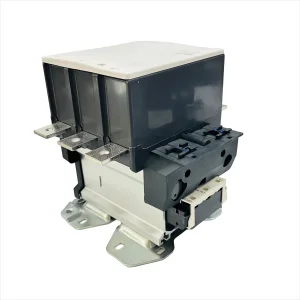
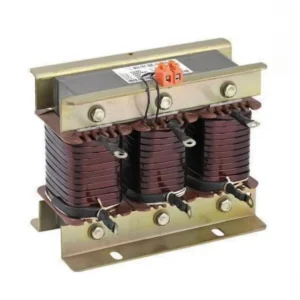
Large cement kilns, mineral extraction hoists, and petrochemical pumps impose heavy inductive switching loads with severe transient recovery voltage (TRV) spikes. Chinese heavy-duty AC contactors (e.g., CJX2-F series) combined with upstream rotary isolation knife switches (HD13BX) and series reactors (CKSG) provide harmonically filtered, arc-free motor commutation rated for millions of cycles.
Type-Testing Rigor & International Compliance Assurance
Stringent compliance benchmarks that bridge Chinese factory production with utility acceptance standards across every continent.
Mandatory Type Test Regimes
Export-grade Chinese switches undergo exhaustive validation at accredited independent laboratories (such as XIHARI, KEMA, ASTA, and CESI). Key test sequences cover:
- Short-time withstand current (Ik up to 31.5 kA / 4s)
- Peak withstand current (Ip up to 80 kA)
- Temperature rise verification under full rated current
- Lightning impulse voltage (BIL up to 125 kV at 24 kV)
- Internal arc classification (IAC AFLR 20 kA / 1s)
Harmonized Global Standards
Leading companies design and fabricate in strict parity with dual domestic and international normative standards:
- IEC 62271-1: Common specifications for MV switchgear
- IEC 62271-103: Switches for rated voltages above 1 kV up to 52 kV
- IEC 62271-105: MV alternating current switch-fuse combinations
- IEEE C37.20.3 & C37.22: Metal-enclosed interrupter switchgear standards
- CE / Low Voltage Directive (LVD): For all auxiliary systems
Factory Acceptance (FAT) Routine Protocols
Prior to sea or air freight departure, every batch undergoes serialized routine testing documented by individual inspection certificates:
- Power frequency withstand voltage on main circuits
- Main circuit DC resistance measurement (μΩ)
- Gas tightness and pressure leak rate checks
- Mechanical operation interlock validation
- Wiring verification of secondary control circuits
How EPCs and Utilities Effectively Audit Chinese Suppliers
A systematic framework for evaluating engineering capability, material pedigree, and risk mitigation.
Phase 1: Raw Material & Sub-tier Traceability
Elite manufacturers enforce metallurgical spectral analysis on raw copper conductors to guarantee >99.95% IACS electrical conductivity. When conducting factory technical audits, EPC inspection teams should inspect raw epoxy resin certificates (confirming halogen-free, self-extinguishing UL94-V0 compliance) and verify that mechanical springs undergo high-frequency cyclical stress annealing to prevent premature fatigue failure in field operations.
Phase 2: Factory Acceptance (FAT) via Video & On-Site
International clients routinely perform remote live FAT protocols using high-definition borescope cameras and synchronized test benches. Critical audit milestones include witnessing 50 continuous motorized open-close-ground cycles, contact synchronization checks across all three phases (phase variance <2ms), and millivolt-drop contact resistance testing before packaging in anti-humidity vacuum-sealed export wooden crates.
Frequently Asked Questions: Sourcing & Engineering
Detailed technical answers for consulting engineers, utility procurement directors, and system integrators.
Integrated Switchgear, Substations & System Solutions
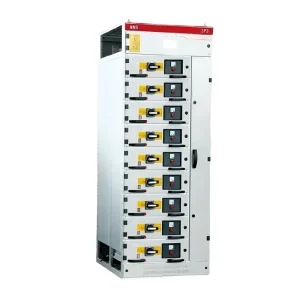
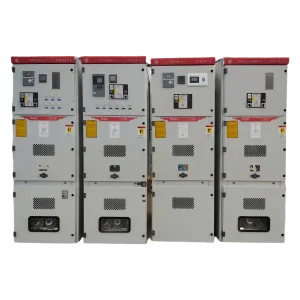
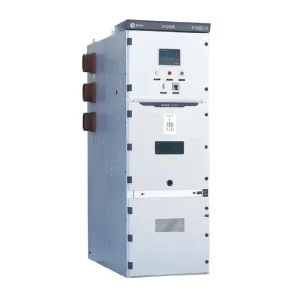
Explore heavy-duty withdrawable switchboards, prefabricated step-up substations, and intelligent protection apparatus engineered for utility and industrial applications.