Choosing the right Modular Substation manufacturer can influence project safety, installation speed, operating costs, and long-term reliability. These systems arrive with factory-assembled equipment, protection panels, transformers, switchgear, and control connections. They can reduce on-site construction, especially where space, weather, or outage windows create serious constraints. Yet a compact design does not automatically mean a better project.
John D. McDonald, an IEEE Fellow and recognized substation engineering specialist, has described the substation as “the heart of the power system.” That perspective remains useful when comparing manufacturers. A strong supplier must coordinate electrical design, thermal performance, protection settings, civil interfaces, transportation, commissioning, and maintenance support. One weak interface can delay the entire installation.
This guide examines leading Modular Substation manufacturers through practical criteria. These include engineering depth, manufacturing quality, customization, testing procedures, delivery capability, and service coverage. It also considers applications across utilities, renewable energy, mining, data centers, and industrial facilities. Real project conditions matter. A manufacturer with global resources may not always provide the best local support. A lower quoted price may hide transport limits, spare-part delays, or difficult commissioning work.
Details matter.
The comparison is not perfectly simple. Public information differs between companies, and project results depend on site conditions, specifications, and contractor performance. Therefore, readers should verify certifications, references, factory acceptance tests, warranty terms, and regional service capacity before making a decision. The leading name on paper may not be the safest choice in the field.
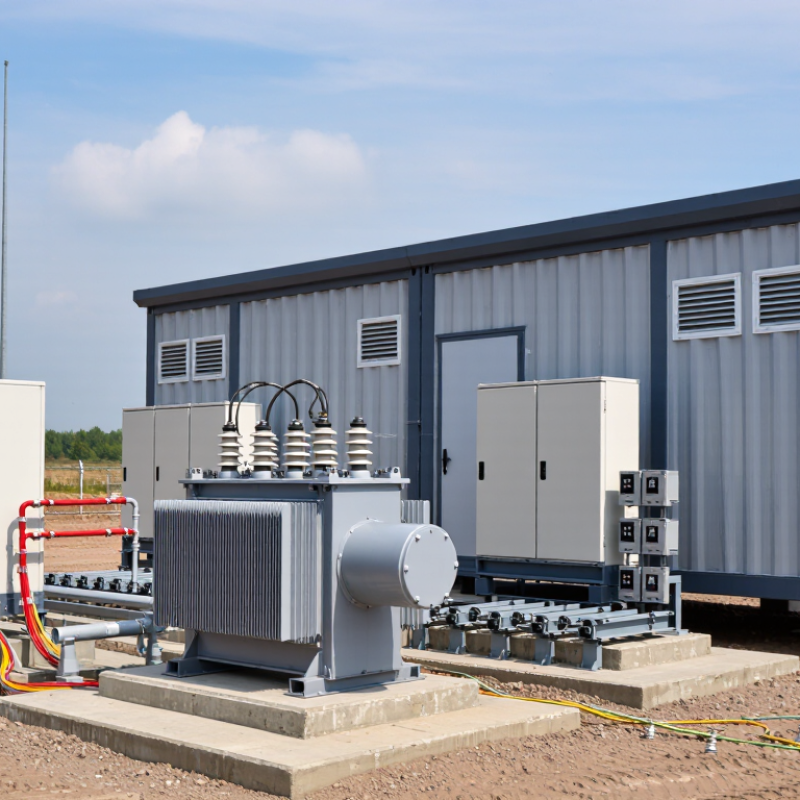
A modular substation is a factory-assembled power facility delivered in transportable sections. It commonly includes transformers, switchgear, protection relays, control systems, and compact enclosures. Instead of building everything on-site, engineers test major assemblies before shipment. A crane then places each module on prepared foundations. Cables are connected, settings are verified, and commissioning can begin faster.
The operating principle is straightforward. Incoming high-voltage electricity enters the switchgear, where breakers isolate faults and control power flow. The transformer reduces voltage for industrial equipment or distribution networks. Protection relays continuously compare current and voltage readings. If abnormal conditions appear, they signal a breaker to open within milliseconds. This controlled separation protects people, assets, and grid stability. It is not entirely plug-and-play.
The IEA’s Electricity 2025 report expects global electricity demand to grow by about 4% annually through 2027. That pressure is increasing demand for faster grid expansion and renewable-energy connections. Industry buyers should assess manufacturers through testing records, IEC compliance, thermal design, seismic performance, and local service capacity. The U.S. Department of Energy has also highlighted long grid-equipment lead times as a resilience concern. A modular design can reduce site work, but transport limits and future expansion still matter. A neat drawing can hide difficult maintenance. Experienced teams inspect access doors, spare capacity, grounding, and relay coordination before approval.
Evaluating modular substation manufacturers requires more than comparing prices. Proven experience matters first. Ask for project references, factory acceptance test records, and commissioning results. A credible supplier should explain transformer ratings, protection coordination, thermal performance, and enclosure design clearly. Independent testing against IEC 62271 requirements adds authority, especially for medium-voltage equipment. The IEA’s Electricity Grids and Secure Energy Transitions report estimates that annual grid investment must exceed 600 billion dollars by 2030. Faster, dependable deployment is becoming essential.
Delivery capability also deserves close inspection. Review manufacturing capacity, component traceability, spare-parts access, and response times during failures. Modular systems may shorten installation, but poor integration can create expensive site delays. Compare lifecycle costs, not only the purchase quotation. Include transport, civil works, maintenance, energy losses, and future expansion. Cybersecurity should be assessed for digital protection systems, even when the substation looks mostly physical. No scorecard is perfect. I would still question polished presentations without site evidence.
Tips: Request a sample inspection plan. Visit a comparable installation if possible. Check whether the quoted design reflects local temperature, altitude, humidity, and seismic conditions. Record every assumption. A missing detail today may become a commissioning problem later. Compare at least three technically equivalent proposals, and let an independent engineer review the scoring before approval.
Leading modular substation manufacturers are usually defined by engineering depth, not advertising reach. The strongest companies design complete systems for utilities, renewable projects, mines, and industrial facilities. Their teams integrate transformers, switchgear, protection relays, control panels, and communication equipment inside factory-built modules.
Experienced manufacturers provide tested layouts for medium- and high-voltage applications. A reliable supplier can show factory acceptance records, wiring diagrams, thermal calculations, and clear maintenance access. It should also explain how the enclosure handles dust, humidity, salt air, and temperature changes. That matters.
Manufacturers serving solar and wind projects often lead through flexible design. They adapt modules to uneven sites, limited transport routes, and short installation windows. Some suppliers deliver compact units with 33 kV switchgear, remote monitoring, and fire-resistant construction. Others focus on heavy-duty substations for mines or manufacturing plants, where vibration and continuous loading create different risks.
The best companies still need careful evaluation. A polished factory visit does not guarantee smooth field performance. Buyers should compare protection settings, spare-part support, commissioning experience, and local service coverage. Ask how many similar units are operating, not merely how many were sold. Small details can expose weak planning, such as a crane lift exceeding the site limit or a door blocking relay access. Real expertise appears when manufacturers acknowledge these limitations and revise the design before shipment.
Common nominal voltage classes used in modular substation specifications
Modular substations are manufactured for multiple grid applications, from medium-voltage distribution to high-voltage transmission. The voltage classes shown are representative nominal system levels referenced in IEC 60038 and commonly used in utility and industrial specifications. They describe market application requirements rather than rankings or performance data for individual manufacturers.
Top modular substation manufacturers distinguish themselves through disciplined engineering, not attractive brochures. Their systems arrive factory-assembled, wired, and tested before reaching the site. This reduces installation errors and shortens outage windows. Experienced manufacturers also design for local weather, seismic conditions, salt exposure, and restricted access. A compact enclosure may need reinforced lifting points and corrosion-resistant coatings. Small details matter.
Advanced monitoring is another clear differentiator. Sensors can track temperature, humidity, partial discharge, breaker operation, and gas pressure. Connected systems send alarms to a control room before a minor defect becomes a costly failure. Many suppliers support IEC 61850 communication, digital protection relays, and secure remote diagnostics. Cybersecurity should include access controls, encrypted communication, event logs, and regular software updates. A digital twin can also help operators test switching scenarios without touching live equipment.
Strong manufacturers provide more than hardware. Their services may include site surveys, load studies, protection coordination, transport planning, commissioning, and operator training. Independent inspection records and traceable test results build confidence. Clear maintenance schedules are equally important, especially for fan filters, battery systems, seals, and fire protection equipment. No design is flawless. Even a well-tested substation can face delayed parts, unclear drawings, or communication gaps during installation. Reliable suppliers acknowledge these risks and provide practical recovery plans, responsive technical support, and documented performance reviews throughout the equipment’s service life.
When buyers ask which modular substation manufacturers lead, the better question is how performance gets proven.
IRENA’s Renewable Capacity Statistics 2024 recorded 473 GW of renewable capacity added in 2023. Renewables represented 86% of new power capacity. That growth increases pressure on compact, rapidly deployable substations. The IEA Electricity 2024 report projects average global electricity-demand growth of 3.2% from 2024 to 2026. Demand is not the only test.
Compare suppliers through a documented technical matrix.
Check rated voltage, short-circuit withstand, thermal performance, protection coordination, and enclosure ratings. Require routine factory tests and witnessed design-validation tests, aligned with IEC 62271-202 where applicable. Ask for drawings, heat-rise results, relay settings, cable schedules, and clear interface responsibilities.
A polished brochure proves little. Site references matter, but verify the operating conditions. A coastal installation needs different corrosion controls than an inland industrial site.
Commercial comparison should include delivered cost, installation hours, spares, training, warranty exclusions, and response times.
Request a realistic schedule, not an optimistic promise. IRENA’s data also suggests that renewable projects will create more varied grid environments, making adaptability valuable. Ask whether the supplier supports firmware updates and cybersecurity evidence throughout the asset life.
I would not rank suppliers by price alone. That shortcut often hides integration work. The strongest evaluation combines audited quality records, measurable testing, transparent assumptions, and references that survive questioning.
Review project references, factory test records, and commissioning results. Ask for evidence from similar installations. Polished presentations are not enough.
Request transformer ratings, protection settings, thermal calculations, wiring diagrams, and enclosure details. Maintenance access should be clearly shown. Missing drawings can create site problems.
Factory tests confirm wiring, protection functions, alarms, and equipment integration before shipment. They reduce installation errors and commissioning delays. Test records should be traceable.
Include transport, civil works, installation, maintenance, energy losses, spare parts, and future expansion. The lowest quotation may become expensive later. Compare technically equivalent proposals.
Review manufacturing capacity, component traceability, delivery schedules, and failure-response times. Confirm spare-parts availability. A modular design cannot fix poor planning.
Check temperature, altitude, humidity, salt exposure, seismic risk, and transport restrictions. Reinforced lifting points may be necessary. Record every design assumption.
Useful systems may include temperature sensors, humidity monitoring, event logs, remote alarms, and secure digital protection. Digital testing can support safer switching studies. Technology alone proves little.
Look for site surveys, load studies, protection coordination, transport planning, commissioning, and operator training. Clear maintenance schedules also matter. Support after delivery should be documented.
Check access controls, encrypted communication, software updates, and event logging. Ask how remote access is monitored. The physical enclosure does not remove digital risks.
Yes, especially when proposals use different assumptions. An independent review can expose weak protection settings, blocked relay access, or excessive crane loads. No scorecard is perfect.
A Modular Substation is a prefabricated electrical facility designed to manage, transform, and distribute power in a compact and efficient format. Its main components, including transformers, switchgear, protection systems, control equipment, and auxiliary systems, are assembled in factory-built modules before being transported and installed on-site. This approach can shorten construction schedules, improve quality consistency, reduce on-site labor, and support projects with limited space or demanding timelines.
Leading Modular Substation manufacturers are evaluated by engineering expertise, product reliability, safety performance, customization capabilities, manufacturing quality, and compliance with applicable industry standards. Buyers should also compare suppliers based on system integration, digital monitoring, automation, energy efficiency, testing procedures, delivery capacity, technical support, maintenance services, and total lifecycle cost. The best supplier is not necessarily the one offering the lowest initial price, but the one providing a well-designed, scalable, and dependable solution that matches the project’s technical requirements and long-term operational goals.
