Top 10 Compact Substation Suppliers Worldwide?

Time:2026-10-16 Author:Oliver
0%

Choosing the right Compact Substation supplier requires more than comparing catalogue prices. Buyers must examine engineering depth, manufacturing consistency, testing methods, delivery records, and after-sales support. A compact unit may serve a rural feeder, a factory, a solar project, or a crowded urban site. Each application creates different technical pressures.

Power-systems specialist Dr. A. K. S. Chaudhary offers a practical reminder: “A substation is only as reliable as its weakest interface.” That principle guides this review of the Top 10 Compact Substation Suppliers Worldwide. Their performance is considered across transformer quality, medium-voltage switchgear, enclosure protection, monitoring systems, customization, and service coverage. These details matter when equipment operates beside dusty roads, coastal air, or high-load industrial machinery.

The leading suppliers usually combine global standards with local project experience. Still, no ranking can represent every buyer’s reality. A supplier may excel in Europe but provide slower support in remote markets. Another may offer strong customization but weaker documentation. That distinction is easy to overlook.

This guide compares established manufacturers using publicly available information, industry presence, product capabilities, and practical buyer considerations. It does not treat company size as proof of reliability. Site conditions, grid codes, maintenance skills, and spare-parts access can change the final decision. Readers should verify current certifications, references, warranty terms, and factory-testing records before signing contracts. Some supplier claims also deserve closer examination. A polished brochure is not a substitute for measured field performance.
Top 10 Compact Substation Suppliers Worldwide?

What Is a Compact Substation and How Does It Work?

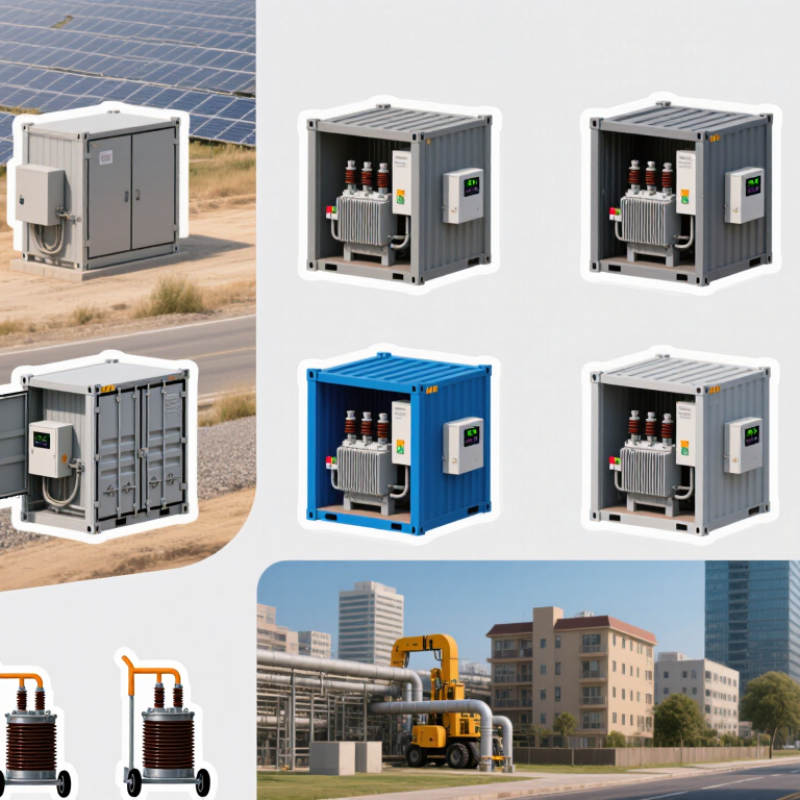
A compact substation combines medium-voltage switchgear, a transformer, and low-voltage distribution equipment in one factory-built enclosure. Its compact layout reduces installation space, cabling distance, and on-site construction time. Common designs serve commercial buildings, factories, renewable energy sites, and temporary construction areas.

Power enters through medium-voltage cables and reaches the switchgear first. Protection devices detect faults, overloads, and abnormal current levels. The transformer then reduces voltage to a usable level. Low-voltage panels distribute electricity to connected loads, while meters monitor voltage, current, and energy use.

Earthing systems provide a controlled path for fault current. The enclosure also limits contact with energized parts and protects equipment from dust, moisture, and weather.

During commissioning, technicians verify insulation, relay settings, cable connections, and transformer temperature performance. Small errors matter. A loose termination can create heat long before a failure becomes visible.

Supplier selection should therefore consider tested designs, documented quality controls, spare-part access, and technical support after delivery. Compliance with applicable IEC requirements and local grid rules is essential, but paperwork alone cannot prove field reliability.

Real performance also depends on ventilation, drainage, maintenance access, and correct loading. Some compact units look efficient on drawings yet become difficult to service in narrow sites. That practical weakness deserves closer review.

Main Types and Technical Components of Compact Substations

Compact substations combine medium-voltage distribution, voltage transformation, and low-voltage delivery in a protected enclosure. Their compact design suits factories, solar sites, commercial buildings, and urban developments.

Common types include kiosk, pad-mounted, indoor, outdoor, and prefabricated modular substations. Kiosk units usually place the transformer and switchgear inside a weather-resistant housing. Pad-mounted designs sit on a concrete foundation and support underground cable networks. Indoor versions require careful ventilation, fire separation, and access planning. Modular substations offer faster installation, but transport limits can affect their dimensions.

The transformer is the central component. It changes medium voltage into usable low voltage, often through oil or dry-type insulation. Medium-voltage switchgear controls incoming power and isolates faults. Low-voltage boards distribute power to final circuits. Protection relays, circuit breakers, surge arresters, cable terminations, busbars, and earthing conductors support safe operation. Temperature sensors and remote monitoring can reveal abnormal loading before damage occurs.

Small details matter. A poorly placed cable bend can increase stress at its termination. In field inspections, loose earthing connections often deserve more attention than polished enclosure surfaces. Ventilation must match the transformer’s heat output, not just the room size. A clean layout is helpful, but it does not guarantee reliable service. Engineers should verify clearances, fault levels, maintenance access, and local electrical requirements before approval. Some projects still underestimate future load growth. That mistake is expensive.

How to Evaluate Compact Substation Suppliers Worldwide

Top 10 Compact Substation Suppliers Worldwide?

How to Evaluate Compact Substation Suppliers Worldwide

Evaluating compact substation suppliers requires more than comparing quoted prices. Review their documented experience with similar voltage levels, climates, and load profiles. Ask for project references from factories, renewable sites, or utility networks. A supplier’s practical field experience often reveals weaknesses that brochures hide.

Check technical evidence carefully. Request short-circuit withstand results, temperature-rise data, enclosure ratings, protection settings, and earthing details. Confirm compliance with applicable IEC or regional standards. Factory inspection records can support reliability. However, certificates alone are not enough. A polished document may still conceal weak assembly control.

Examine the complete service offer. Can the supplier provide drawings, factory acceptance testing, installation guidance, spare parts, and remote support? Confirm delivery history and component traceability. Compare total ownership costs, including maintenance, outages, transport, and future expansion. Speak directly with engineers, not only sales staff. Ask how they handled a failed relay, delayed shipment, or unexpected humidity problem.

The answer may be imperfect.

A site visit remains valuable. Observe cable termination areas, insulation storage, testing equipment, and quality records. Also, challenge the supplier’s standard design. A compact unit may fit the footprint but restrict ventilation or maintenance access. Some evaluations overlook this detail. That mistake can become expensive after energization.

Top 10 Compact Substation Suppliers Worldwide? - How to Evaluate Compact Substation Suppliers Worldwide

Anonymized worldwide supplier benchmark based on commonly used technical, commercial, compliance, and service evaluation criteria. Verify project-specific data during the tender process.
Rank Supplier Profile Primary Market Coverage Typical MV Voltage Typical Transformer Capacity Enclosure Rating Standards Coverage Typical Lead Time Customization Capability Warranty Benchmark Evaluation Score
1 Supplier Profile 01 Global projects; strong utility and industrial focus 6–36 kV 250–2,500 kVA IP54–IP65 IEC; selected IEEE/ local codes 12–24 weeks High 24 months 94/100
2 Supplier Profile 02 Europe, Middle East, Africa, and selected Asia-Pacific markets 6–33 kV 315–3,150 kVA IP54–IP66 IEC; EN; project-specific requirements 14–26 weeks High 18–24 months 92/100
3 Supplier Profile 03 Asia-Pacific, Africa, and export-oriented industrial markets 6–35 kV 100–2,500 kVA IP43–IP65 IEC; selected national standards 10–22 weeks High 18 months 90/100
4 Supplier Profile 04 North America, Latin America, and selected international projects 4.16–34.5 kV 300–3,000 kVA NEMA 3R; IP54–IP65 IEEE; ANSI; selected IEC 16–28 weeks Medium–High 24 months 88/100
5 Supplier Profile 05 Europe, Central Asia, and renewable-energy applications 6–36 kV 160–2,000 kVA IP54–IP65 IEC; EN; environmental specifications 12–25 weeks Medium–High 18–24 months 87/100
6 Supplier Profile 06 Middle East, Africa, South Asia, and infrastructure projects 6.6–33 kV 250–2,500 kVA IP54–IP66 IEC; utility-specific standards 14–27 weeks Medium 18 months 85/100
7 Supplier Profile 07 Latin America, Southeast Asia, and commercial developments 6–24 kV 100–1,600 kVA IP43–IP65 IEC; local electrical codes 10–20 weeks Medium 12–18 months 83/100
8 Supplier Profile 08 Asia-Pacific and price-sensitive industrial applications 6–35 kV 100–2,000 kVA IP43–IP65 IEC; selected regional standards 8–18 weeks Medium 12–18 months 81/100
9 Supplier Profile 09 Domestic utility markets with limited export support 6–24 kV 100–1,250 kVA IP43–IP54 IEC or national standards 12–24 weeks Medium 12 months 78/100
10 Supplier Profile 10 Regional markets and small-to-medium commercial installations 6–20 kV 50–1,000 kVA IP43–IP54 IEC or applicable local standards 8–16 weeks Basic–Medium 12 months 75/100
Recommended evaluation method: Compare suppliers using a weighted score covering technical compliance, transformer and switchgear ratings, enclosure protection, type-test evidence, delivery capability, lifecycle support, spare-parts availability, total cost of ownership, and local service resources.

Top 10 Compact Substation Suppliers Worldwide

Top 10 Compact Substation Suppliers Worldwide

The top 10 compact substation suppliers worldwide should be assessed beyond catalog prices. Experienced buyers examine transformer efficiency, enclosure strength, protection settings, and field support. A reliable supplier should provide tested medium-voltage switchgear, low-voltage distribution, and transformers in one coordinated design.

Typical projects may require 11 kV input, 0.4 kV output, and capacities from 630 to 2,500 kVA.

Site Conditions and Supplier Capability

Site conditions change the decision. Coastal installations need stronger corrosion protection, while dusty industrial sites may require sealed enclosures and filtered ventilation. Suppliers should show evidence from factory acceptance tests, temperature-rise checks, insulation testing, and routine protection verification.

Clear drawings matter. So does spare-parts availability. A technically strong unit can still create delays if replacement components are difficult to obtain.

Project Verification and Installation Details

No ranking is perfect. Project records may be incomplete, and advertised performance can differ from field results. Buyers should request recent references, maintenance data, delivery records, and local compliance documents.

I would also inspect cable access, lifting points, earthing arrangements, and space for future upgrades. Small design details often decide installation time. Independent engineering review remains useful, especially where weather, grid quality, or operator training is uncertain.

Applications, Standards, and Purchasing Considerations

Top 10 Compact Substation Suppliers Worldwide: Applications, Standards, and Purchasing Considerations

Compact substations combine medium-voltage switchgear, transformers, and low-voltage distribution equipment in one enclosure. They support commercial buildings, factories, transport facilities, solar farms, and remote infrastructure. Urban projects value their small footprint. Outdoor projects need stronger weather protection. Coastal sites also require corrosion-resistant materials and careful sealing.

Field experience shows that application details often matter more than brochure ratings. Check load patterns, future expansion, ambient temperature, altitude, dust, humidity, and access for maintenance. A unit suitable for a clean indoor plant may fail early in a dusty outdoor location. Not every compact substation belongs outside.

Standards provide a practical technical framework. IEC 62271-202 covers prefabricated substations, while IEC 60076 addresses power transformers. IEC 60529 helps verify enclosure ingress protection. Local utility rules may also define earthing, protection settings, fault levels, and inspection procedures. Ask suppliers for routine test reports, type-test evidence, wiring diagrams, and material certificates. Factory acceptance testing should verify insulation, temperature rise, mechanical operation, and protection functions.

Purchasing decisions should include total ownership cost, not only the initial quotation. Compare transformer efficiency, spare-part access, warranty terms, delivery time, installation support, and operator training. Request a clear maintenance schedule. Confirm the short-circuit rating under the actual network conditions. A lower price can conceal thinner metalwork, limited testing, or difficult repairs. I would also question unclear exclusions in the offer. No specification is perfect. A careful technical review still prevents expensive surprises.

Top 10 Compact Substation Suppliers Worldwide: Applications, Standards, and Purchasing Considerations

Representative specifications commonly used when comparing compact substations for utility distribution, renewable-energy plants, commercial buildings, industrial facilities, and infrastructure projects. Voltage classes and transformer ratings are typical procurement values rather than supplier market-share data.

The most frequently specified medium-voltage ranges are 11 kV, 22 kV, and 33 kV, while common compact-substation transformer ratings extend from 500 kVA to 2,500 kVA. Buyers should verify compliance with IEC 62271-202 or IEEE C37.20.3, transformer requirements under IEC 60076, enclosure protection under IEC 60529, local grid rules, fault-level performance, cooling method, environmental conditions, testing, and after-sales support.

FAQS

How should I compare compact substation suppliers?

Compare documented experience, not only quoted prices. Ask for projects with similar voltage, climate, and load conditions. Request references from factories, renewable sites, or utility networks. Brochures can hide weaknesses.

Which technical documents should a supplier provide?

Request short-circuit results, temperature-rise data, enclosure ratings, and protection settings. Review earthing details, wiring diagrams, routine test reports, and material certificates. Factory inspection records can reveal process weaknesses. Certificates alone are not enough.

How can I assess a supplier’s field experience?

Ask engineers about failed relays, delayed shipments, and unexpected humidity problems. Request project references with comparable operating conditions. A supplier should explain corrective actions clearly. Vague answers deserve careful review.

What site conditions affect compact substation selection?

Check ambient temperature, altitude, dust, humidity, corrosion, and maintenance access. Coastal locations may need corrosion-resistant materials and stronger sealing. Indoor equipment may not suit dusty outdoor areas. Check the details.

What standards and tests should I consider?

Confirm compliance with applicable international and regional standards. Review transformer, prefabricated enclosure, and ingress-protection requirements. Factory acceptance testing should verify insulation, temperature rise, mechanical operation, and protection functions. Testing should match actual network conditions.

What services should be included in the supplier’s offer?

Check whether the supplier provides drawings, factory testing, installation guidance, spare parts, and remote support. Confirm operator training, warranty terms, and a practical maintenance schedule. Component traceability can simplify future repairs. Support matters later.

How should I evaluate the total ownership cost?

Include maintenance, transport, outages, installation, spare parts, and future expansion. Also compare transformer efficiency and delivery reliability. A lower price may hide limited testing or difficult repairs. The cheapest option is not always cheaper.

Why is a site visit useful before purchasing?

Observe cable termination areas, insulation storage, testing equipment, and quality records. Check whether maintenance access remains practical after installation. Challenge the standard design for ventilation and expansion needs. A compact footprint can create expensive access problems. The answer may be imperfect.

Conclusion

This article provides a practical overview of the Compact Substation, explaining its function as an integrated power distribution unit that combines medium-voltage equipment, transformers, low-voltage systems, protection devices, and enclosures in a compact structure. It introduces the main types, including indoor, outdoor, pad-mounted, and skid-mounted designs, while outlining key technical components such as switchgear, transformers, busbars, monitoring systems, cooling arrangements, and safety features.

The article also presents a structured approach to evaluating Compact Substation suppliers worldwide, focusing on engineering capability, product quality, customization, testing procedures, certifications, delivery performance, technical support, and lifecycle service. It compares the general strengths of ten leading supplier categories without emphasizing any specific brand, then discusses common applications in industrial facilities, commercial buildings, renewable energy projects, infrastructure, and utility networks. Finally, it reviews relevant standards, environmental conditions, capacity requirements, installation factors, maintenance needs, and purchasing considerations to help buyers make informed and reliable decisions.

Oliver

Oliver

Oliver is a seasoned marketing professional with a wealth of expertise in driving brand awareness and engagement. With a deep understanding of our company's product offerings, he consistently delivers high-quality content that enriches our professional blog. His insights not only shed light on......