China Top 10 Smart Ring Main Unit Manufacturers?

Time:2026-10-25 Author:Henry
0%

China’s Smart Ring Main Unit industry has expanded with urban grid upgrades, renewable integration, and stronger distribution automation requirements. This guide introduces ten manufacturers that deserve careful attention from utilities, contractors, and international buyers.

The selection considers engineering capability, product reliability, manufacturing experience, and documented project performance. Key details include medium-voltage ratings, vacuum switching technology, protection relays, remote terminal units, and communication protocols. Factory acceptance testing also matters. It can reveal wiring errors, insulation weaknesses, or unreliable interlocking before shipment. Field support matters more.

Several manufacturers offer compact 12kV or 24kV configurations for substations, industrial parks, commercial buildings, and renewable-energy projects. Some provide SF6-free designs, while others focus on proven gas-insulated architectures. Buyers should compare enclosure protection, partial-discharge control, operating mechanisms, and maintenance access. A polished brochure is not enough.

Certifications, type-test reports, export records, and customer references provide stronger evidence. However, public information is not equally complete for every company. No list is perfect. Rankings can change as factories improve, projects mature, and certification records are updated. This article therefore presents a practical starting point, not an absolute verdict.

Readers should verify technical data against site conditions, grid codes, climate requirements, and procurement standards. A unit installed beside a coastal substation may need different corrosion protection than one used indoors. Response time for spare parts can also affect lifecycle cost. These details often decide whether a Smart Ring Main Unit performs reliably after installation, not merely during a factory demonstration.
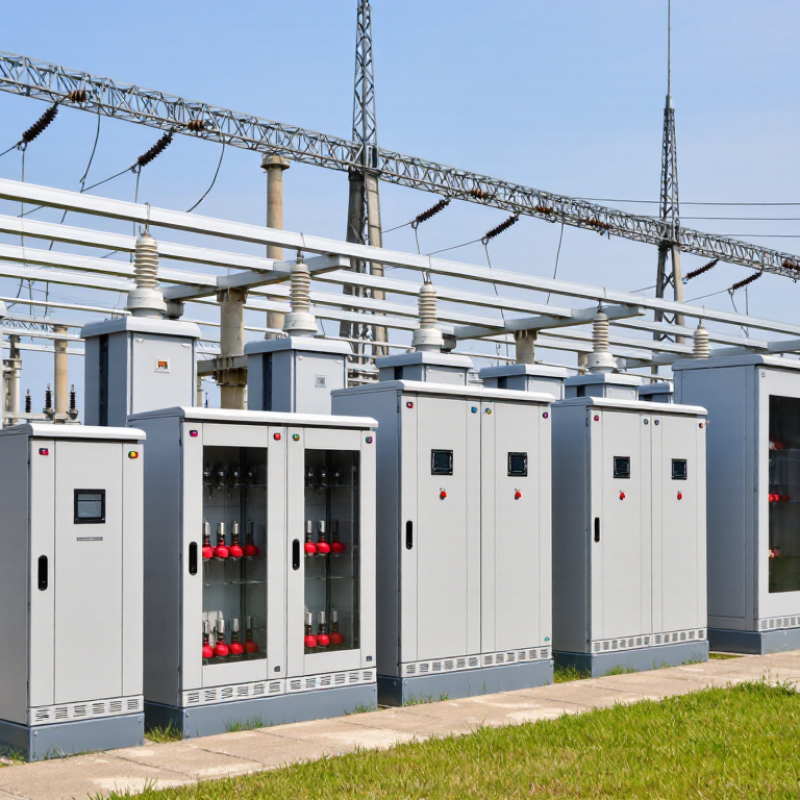
China Top 10 Smart Ring Main Unit Manufacturers?

What Is a Smart Ring Main Unit and How Does It Work?

A smart ring main unit is a compact medium-voltage switchgear assembly used in distribution networks. It connects several cable sections around a ring-shaped supply route. The enclosure commonly contains load switches, circuit breakers, earthing switches, sensors, and a protection controller. The ring arrangement keeps power available when one cable section needs maintenance or develops a fault.

Its operation begins with continuous measurement. Sensors track current, voltage, temperature, and sometimes partial discharge signals. The controller compares these readings with configured protection limits. When a fault appears, it can identify the affected section and command the related switch to open. Other sections may remain energized through the opposite direction of the ring. This limits outage areas and reduces manual switching work.

Remote communication adds another layer of control. Operators can view equipment status, receive alarms, and record switching events from a control center. Local control remains important when communication fails. In site inspections, technicians should check cable terminations, mechanical interlocks, battery condition, and sensor accuracy. A clean screen does not prove safe equipment. Moisture, loose connections, or outdated settings may remain hidden.

Selection for China’s distribution projects should consider voltage level, short-circuit capacity, enclosure protection, environmental conditions, and service support. Digital features are useful, but they can create false confidence. No smart unit removes the need for testing, trained personnel, and disciplined operating procedures. Even reliable automation needs review.

Typical Smart Ring Main Unit Ratings by Medium-Voltage Class

Smart RMUs combine medium-voltage switching, protection, measurement, remote control and communication. The chart shows common IEC-aligned nameplate configurations; exact ratings vary by equipment design and utility requirements.

Rated current is shown in amperes, while short-circuit withstand capability is shown in kiloamperes. Typical voltage classes include 12 kV, 24 kV and 36 kV for medium-voltage distribution networks.

Key Criteria for Evaluating Chinese Smart RMU Manufacturers

China Top 10 Smart Ring Main Unit Manufacturers?

Key Criteria for Evaluating Chinese Smart RMU Manufacturers

Choosing among China’s top ten smart ring main unit manufacturers requires more than comparing prices, photos, or delivery promises. The IEA’s Electricity Grids and Secure Energy Transitions report states that annual global grid investment must rise from about USD 400 billion to USD 600 billion by 2030. This demand increases the value of reliable, scalable RMU engineering.

Check compliance with IEC 62271-200 and applicable national standards. Review type-test reports for temperature rise, short-circuit endurance, internal arc protection, and mechanical operation. For smart functions, examine sensor accuracy, communication protocols, event recording, and remote-control safeguards. Ask for factory acceptance records, calibration certificates, and traceable component data. Marketing language is not evidence.

Field experience matters. Request installation references under similar voltage, climate, and pollution conditions. A serious supplier should explain maintenance intervals, spare-part availability, software updates, and fault-response procedures. Cybersecurity deserves attention too, especially when RMUs connect with distribution automation systems. The IEC 62443 series offers a useful framework for assessing industrial control security.

I would not rank a supplier from a website alone. A less polished factory may still produce better equipment. Audited evidence matters more. Visit the factory, inspect routine testing, and question unusual performance claims. The evaluation can remain imperfect, because operating data is often limited. That limitation should be recorded, not hidden.

China’s Top 10 Smart Ring Main Unit Manufacturers

China’s Top 10 Smart Ring Main Unit Manufacturers are increasingly judged by field performance, not brochure claims. Industry rankings should examine engineering depth, factory quality, protection logic, and after-sales response. MarketsandMarkets projects the global smart grid market to grow from about USD 110 billion in 2023 to more than USD 200 billion by 2028. This expansion supports stronger demand for intelligent medium-voltage distribution equipment.

The leading ten Chinese manufacturers typically offer 12 kV or 24 kV ring main units, remote monitoring, fault indicators, and communication through IEC 61850-based systems. Buyers should verify short-time withstand current, enclosure protection, temperature rise, and switching endurance. IEC 62271-200 remains a key reference for metal-enclosed switchgear. A practical inspection includes cable-compartment access, pressure relief paths, and sensor accuracy beside a live substation.

Details matter.

Wooden export crates, readable wiring labels, and stable firmware often reveal manufacturing discipline. The China Electricity Council’s industry reports also show continuing investment in distribution automation and grid digitalization. However, a top-ten list is never flawless. Public rankings may favor export visibility, while local maintenance records remain difficult to compare. Some suppliers publish impressive automation features but provide limited evidence from dusty, humid, or high-altitude sites. Independent testing, customer references, and spare-parts availability should therefore carry more weight than marketing language.

Product Features, Technologies, and Market Applications

China Top 10 Smart Ring Main Unit Manufacturers: Product Features, Technologies, and Market Applications

A credible top-ten shortlist should examine tested performance, service records, and export compliance, not just factory size. Smart ring main units commonly use compact vacuum interrupters, sealed gas-insulated chambers, and motorized load-break switches. IEC 62271-200 remains a key reference for metal-enclosed medium-voltage switchgear. Modern units also support remote operation, fault indicators, temperature sensors, and battery-backed control circuits. Some designs are easier to maintain than others.

Digital communication is becoming central. IEC 61850-based interfaces can connect protection devices with distribution management systems, while cellular or fiber links enable remote switching. However, cybersecurity and communication failure deserve more attention. A clever interface cannot replace dependable local protection.

The market need is visible in wider electricity data. The International Energy Agency’s Electricity 2024 report expects global electricity demand to grow by an average 3.4% annually from 2024 to 2026. China’s National Energy Administration reported electricity consumption of about 9.22 trillion kWh in 2023. This expansion supports demand for compact RMUs in industrial parks, rail systems, data centers, commercial buildings, and renewable-energy substations. Outdoor units need corrosion resistance and stable sealing. Indoor units often prioritize low noise and a smaller footprint. Engineers should also check partial-discharge results, temperature-rise records, enclosure protection, and spare-parts availability. Performance claims need independent evidence. That is where many comparisons remain incomplete.

How to Select the Right Chinese Smart RMU Manufacturer

How to Select the Right Chinese Smart RMU Manufacturer

Choosing a Chinese smart ring main unit manufacturer requires more than comparing prices. Check the factory’s engineering records, production controls, and completed project experience. A reliable supplier should provide type-test reports, routine-test records, protection data, and clear product specifications. Confirm compliance with applicable IEC requirements and your local grid standards. Ask whether the unit supports remote monitoring, fault indication, load switching, and secure communication protocols.

Tips: Request a factory video audit or an in-person visit. Inspect the assembly line, testing instruments, cable compartments, and nameplate details. Ask for references from projects with similar voltage levels and harsh operating conditions. Verify delivery capacity, spare-part planning, installation guidance, and after-sales response times. Do not accept vague claims.

The enclosure should match the site environment. Check the rated current, short-time withstand current, insulation method, IP rating, temperature range, and corrosion protection. For digital functions, review sensor accuracy and communication stability under poor network conditions. A polished catalog is not proof. Practical procurement often exposes small gaps, such as unclear test dates or incomplete wiring diagrams. Those details deserve attention. A lower quotation may hide weaker documentation, limited customization, or slower technical support. Require a sample approval process before mass production, and record every change in the contract. Even experienced buyers can overlook field maintenance access. That mistake becomes expensive after installation.

China Top 10 Smart Ring Main Unit Manufacturers? - How to Select the Right Chinese Smart RMU Manufacturer

Anonymous technical-selection matrix based on commonly specified medium-voltage RMU requirements. Company names and brand information are intentionally excluded.
No. Anonymous Supplier Profile Typical RMU Voltage Class Typical Rated Current Short-Time Withstand Rating Insulation and Switching Options Smart Monitoring Functions Applicable Standards Factory Capability to Verify Best-Fit Application
1 Profile 01
Utility-focused
12 kV / 24 kV 630 A; up to 1,250 A on selected feeders 20 kA for 3 s; project-dependent SF6-insulated or solid-insulated; load-break switch and vacuum circuit breaker configurations Current, voltage, temperature, partial-discharge and switch-position monitoring IEC 62271-200; IEC 62271-103; IEC 62271-100; applicable GB/T standards Type-test reports, routine-test records, busbar and enclosure quality control Urban distribution networks and utility substations
2 Profile 02
Compact-design
12 kV / 24 kV 630 A 20 kA for 3 s Compact gas-insulated or solid-insulated enclosure with modular cable compartments Remote switching, fault indication, local/remote control and battery status monitoring IEC 62271-200; IEC 62271-1; IEC 62271-105 Dimensional drawings, IP rating, interlock testing and cable-termination compatibility Space-constrained commercial and residential projects
3 Profile 03
High-fault-duty
24 kV / 36 kV 630 A; 1,250 A for selected designs 25 kA or 31.5 kA for 3 s, subject to design Vacuum circuit breaker feeder with load-break switch and earthing switch Protection relay integration, fault recording, trip-coil supervision and event logs IEC 62271-200; IEC 62271-100; IEC 62271-102 High-current temperature-rise testing and verified internal-arc classification Industrial plants and high-load distribution systems
4 Profile 04
Renewable-energy
12 kV / 24 kV / 36 kV 630 A 20 kA or 25 kA for 3 s Vacuum switching technology with transformer, ring-feeder and metering units Power quality data, feeder current, voltage, temperature and renewable-plant SCADA interface IEC 62271 series; IEC 61850 communication where specified Protection coordination, communication protocol testing and anti-islanding interface review Solar farms, wind farms and battery-energy-storage facilities
5 Profile 05
Export-oriented
12 kV / 24 kV 630 A 16 kA, 20 kA or 25 kA for 3 s Gas-insulated, air-insulated or solid-insulated options with configurable cable entry RTU-ready control panel, remote indication, motorized operation and alarm contacts IEC 62271-200; IEC 62271-1; destination-country requirements Third-party certification, export packing, FAT procedures and multilingual documentation International EPC projects and overseas distribution networks
6 Profile 06
Harsh-environment
12 kV / 24 kV 630 A 20 kA for 3 s Sealed insulated tank, corrosion-resistant enclosure and enhanced cable-compartment protection Humidity, temperature, gas-density or pressure monitoring where applicable IEC 62271-200; IEC 62271-1; enclosure protection according to IEC 60529 Salt-mist, humidity, temperature-rise and enclosure ingress-protection evidence Coastal areas, mining sites and high-humidity installations
7 Profile 07
Industrial automation
12 kV / 24 kV 630 A; up to 1,250 A for main incomers 20 kA or 25 kA for 3 s Vacuum circuit breaker, motorized disconnector and mechanically/electrically interlocked earthing switch PLC/SCADA integration, sequence-of-events recording and remote diagnostic access IEC 62271-100; IEC 62271-102; IEC 61850 or other specified protocols Control logic simulation, FAT scripts, wiring inspection and relay-setting validation Manufacturing facilities, data centers and process industries
8 Profile 08
Cost-optimized
12 kV / 24 kV 630 A 16 kA or 20 kA for 3 s Standardized modular RMU with load-break switch, fuse-switch or compact breaker feeder Basic fault passage indicator, voltage presence indication and auxiliary contacts IEC 62271-200; IEC 62271-103; relevant GB/T standards Bill of materials, component traceability, routine-test scope and spare-parts policy Small commercial buildings and standard distribution extensions
9 Profile 09
Secondary-substation
12 kV / 24 kV 630 A 20 kA for 3 s Ring-feeder arrangement with transformer protection and integrated metering provisions Feeder status, load current, fault indication, low-voltage interface and remote alarm output IEC 62271-200; IEC 62271-105; transformer-interface requirements Protection selectivity, transformer compatibility, cable stress control and installation clearances Compact substations and public distribution systems
10 Profile 10
Custom-engineered
12 kV / 24 kV / 36 kV 630 A to 1,250 A 20 kA to 31.5 kA for 3 s Customized combination of vacuum breaker, load-break switch, metering and earthing modules Engineering-specific sensors, IEC 61850 gateway, condition monitoring and cybersecurity options IEC 62271 series; IEC 61850 where required; project-specific national standards Design review, interface-control documents, prototype validation and complete FAT/SAT support Large infrastructure, rail transit and technically complex projects
Selection note: Rated voltage, current, short-time withstand current, internal-arc classification, insulation technology, communication protocol and certification must be confirmed against the final project specification. Supplier rankings should be based on verified type-test reports, factory-audit results, delivery records, after-sales capability and total lifecycle cost rather than catalogue claims alone.

FAQS

What is a smart ring main unit?

It is medium-voltage equipment for controlling and protecting power distribution. It often uses vacuum interrupters, sealed chambers, and motorized switches. Compact design matters.

Which voltage levels are commonly available?

Many units support 12 kV or 24 kV systems. Buyers should match the unit with local network requirements. A mismatch can create costly problems.

What features should buyers examine?

Check remote operation, fault indicators, temperature sensors, and battery-backed controls. Also review switching endurance and short-time withstand current. Brochures are not enough.

How does digital communication improve operation?

Digital interfaces can connect protection equipment with distribution management systems. Fiber or cellular links may support remote switching. Local protection must still work during communication failure.

Which standards are relevant to smart ring main units?

IEC 62271-200 is an important reference for metal-enclosed switchgear. IEC 61850-based systems support communication between protection and control devices. Compliance should be independently verified.

Where are smart ring main units commonly used?

They serve industrial parks, rail systems, data centers, commercial buildings, and renewable-energy substations. Indoor models favor low noise and small footprints. Outdoor models need strong sealing and corrosion resistance.

What physical inspection details should buyers check?

Inspect cable-compartment access, pressure-relief paths, wiring labels, and enclosure protection. Review temperature-rise and partial-discharge records. Look beside a working substation when possible.

How can buyers judge manufacturer reliability?

Compare test reports, customer references, service records, and spare-parts availability. Packaging can reveal discipline. Readable labels and sturdy export crates are small but useful clues.

Are published industry rankings fully reliable?

No ranking is flawless. Export visibility may receive too much attention, while local maintenance data stays difficult to compare. I would question impressive claims without field evidence.

What weaknesses deserve extra attention?

Check cybersecurity, communication loss, firmware stability, and maintenance access. Some suppliers provide limited evidence from humid, dusty, or high-altitude sites. Comparisons remain incomplete.

Conclusion

This article provides a practical guide to China’s top 10 Smart Ring Main Unit manufacturers, explaining how these compact medium-voltage distribution systems operate and why they are increasingly used in modern power networks. It introduces the basic structure and working principles of a Smart RMU, including switching, protection, insulation, remote monitoring, and communication functions. The discussion also outlines key criteria for evaluating manufacturers, such as product reliability, safety design, manufacturing capability, customization options, testing standards, technical support, delivery performance, and after-sales service.

In addition, the article compares typical product features, intelligent technologies, and market applications across utility, industrial, commercial, renewable energy, and infrastructure projects. It concludes with a clear selection framework to help buyers identify the most suitable Chinese manufacturer according to voltage requirements, operating environment, automation level, budget, integration needs, and long-term maintenance expectations.

Henry

Henry

Henry is a dedicated marketing professional with a profound expertise in the company's offerings. With years of experience in the industry, he possesses an impressive understanding of the market dynamics and consumer behaviors that drive success. Henry is committed to sharing his insights through......